
What Parents Should Know About Youth Basketball Tryouts Before Committing
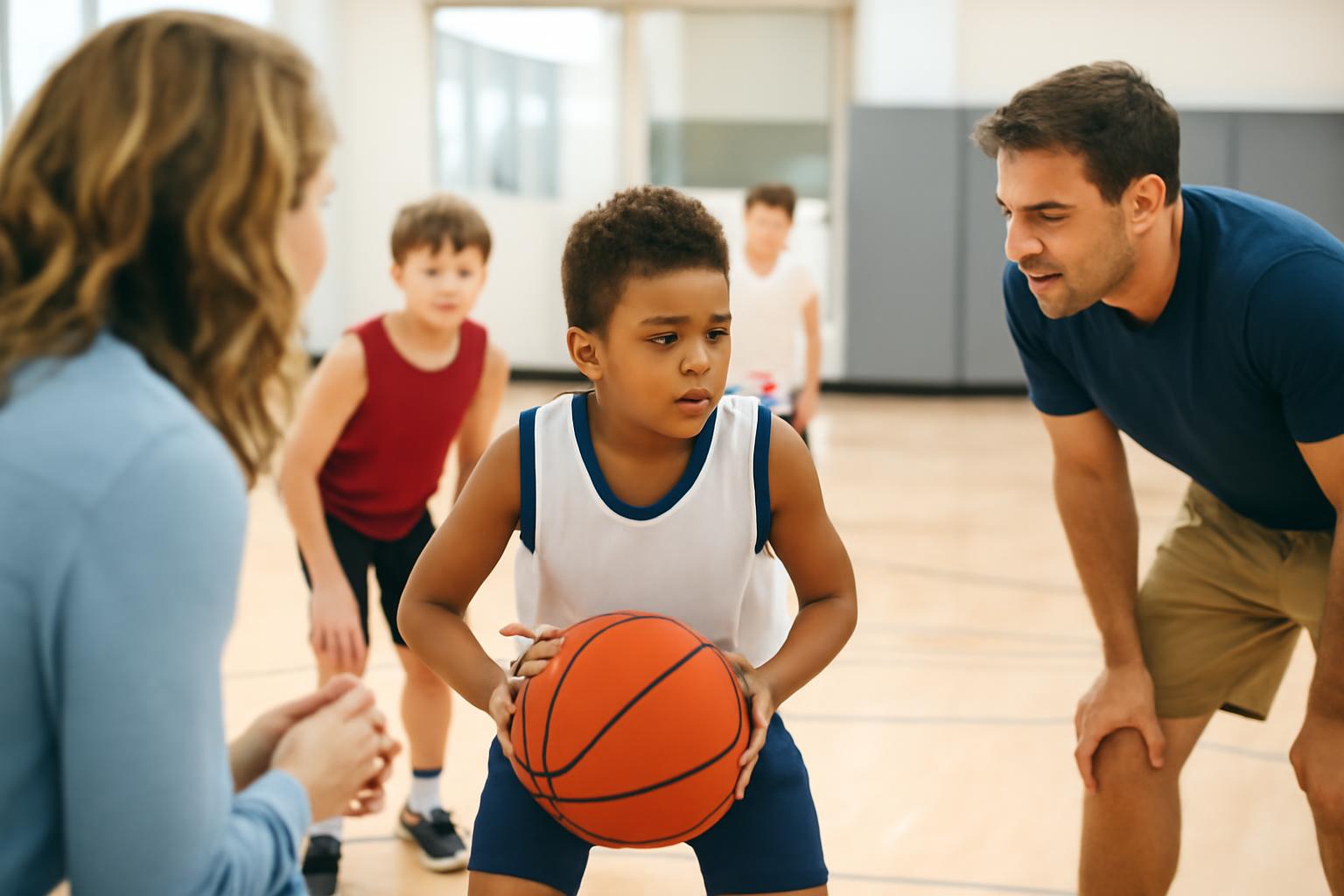
One club lists a $25 tryout, a $120–$165 camp and $215–$230 monthly dues after an invitation. Jerseys and league fees are separate from those costs.
A youth basketball tryout is rarely just a one-day skills check. For many families, it is the opening step into a bigger commitment that can include practices, tournaments, uniforms, travel, coach communication, parent expectations, and a season structure that may run for a few months or much longer.
That is why parents should evaluate the program as seriously as the program evaluates the player. A clean website, a polished social feed, or a low tryout fee tells you very little by itself. The better question is not only, “Can my child make this team?” It is also, “If they do, what exactly are we joining?”
Like our broader coverage of youth sports program decisions, this guide focuses on practical fit questions: transparency, cost, schedule, development level, and family readiness. Because basketball tryout pages are local, seasonal, and often promotional, the examples below are best used as models for what to verify directly, not as promises about what every club will do.
If you treat basketball tryouts as information-gathering instead of a pass-fail verdict, the process becomes much more useful. Even a successful tryout result is only a good outcome if the team’s expectations, structure, and budget fit your child and your household.
Why Programs Hold Basketball Tryouts
At their best, basketball tryouts are meant to sort players into the right developmental and competitive environment, not simply label some kids as “good enough” and others as not. One youth-program tryout guide describes the purpose as grouping players by comparable skill so they can grow against appropriate competition, with coaches setting expectations before tryouts and then ranking players, building teams, assigning coaches, and publishing rosters afterward (Lehi Youth Basketball).
That distinction matters for parents. In recreational basketball, the emphasis is often broader participation and a shorter, simpler season. In club, select, and similar competitive settings, tryouts are more likely to be used to build rosters, balance positions, and place players into different levels of competition or development.
So the tryout is answering two questions at once. First, where does this player fit right now? Second, what kind of team structure can this program actually support? A clear program should be able to explain whether it is forming one team, several teams, a top team plus developmental teams, or some mix of travel and training options.
Parents should also pay attention to how organized the process feels before the first whistle. A trustworthy program usually explains who is evaluating, whether more than one session is involved, how players will be notified, and what commitment follows an offer. If those basics are fuzzy, the basketball may still be real, but the administration around it may not be ready for families.
This is one reason tryouts can be valuable even when a player does not make the first team they wanted. The process reveals how the organization thinks: whether it plans ahead, whether it communicates clearly, whether it respects parents’ time, and whether it sees player placement as development or just sales.
Typical Tryout Process and Timeline
A basketball tryout is usually a short, structured evaluation rather than a normal team practice. One coaching guide recommends keeping tryouts to about 90 minutes, with drills and stations planned in advance so coaches can evaluate different skills efficiently and keep the gym flowing safely (SkillShark).
That short format is important for parents to remember. A tryout often compresses a lot of judgment into a very small window. Coaches may only get a few looks at ball-handling, passing, shooting, rebounding, transition habits, defensive movement, and how a player responds when something goes wrong. Because the session is brief, organization matters: dead time, unclear instructions, or overcrowded drills can make the evaluation less reliable for everyone.
Many tryouts also include some form of live play, because drill work alone does not show the full picture. A child may look smooth in a line drill and then struggle once spacing, pace, communication, and decision-making are involved. From a parent’s point of view, that is actually fair. Basketball is not only an isolated-skill sport; coaches are trying to see how a player functions around other players.
Some programs make decisions right after the first session. Others use a step-by-step model. One club page lays out a sequence of tryouts first, then an invite-only training camp, then roster invitations, then the official practice start. On that page, the numbers are also clear: a $25 tryout fee, a separate camp fee of $120 or $165 depending on location, and monthly dues of $215 or $230 after an invitation, with league fees and jerseys separate (Club Utah Basketball Academy). That example should not be treated as a universal template, but it does show why parents need to ask whether “tryout” is truly the whole evaluation or only phase one.
Timing also varies by market and by program type, but posted club examples often cluster in late summer. A multi-city club listing shows August tryouts in several locations, with posted evaluation fees commonly in the $15 to $30 range depending on city, age group, and format (Pro Skills Basketball city listings). That does not establish a national standard. It does show how quickly the decision window can arrive for families already juggling school calendars and fall activities.
The timeline questions worth asking are practical, not abstract: How many sessions are there? Are callbacks possible? Is there a camp after the tryout? When are rosters considered final? When does payment start? If your child is “still being evaluated,” what is the actual decision deadline? Families can handle a selective process much more easily than a vague one.
A good rule is this: the shorter the tryout, the clearer the communication needs to be. If the session lasts only an hour and a half, parents should not have to spend the next two weeks guessing what happens next.
Costs Associated with Basketball Tryouts and Teams
The tryout fee is usually the first basketball cost parents see, but it is often the smallest. Posted examples from one multi-city club page show tryout or evaluation fees commonly around $15 to $30 for different cities and grade bands (Pro Skills Basketball city listings).
Where families get surprised is everything after that. The clearest cautionary example in this evidence set comes from one club page that lists a $25 tryout fee, then an invite-only camp costing $120 or $165, then monthly dues of $215 or $230, with jerseys and league fees not included in those monthly amounts (Club Utah Basketball Academy). Again, that is one program’s posted structure, not a market average. But it illustrates the main budgeting lesson: the first invoice is almost never the full bill.
Parents are usually better served by thinking in cost categories than by chasing a single headline number. Basketball expenses can come from several places at once:
- tryout or evaluation fees;
- callback or camp fees;
- monthly dues or season dues;
- uniforms, warmups, and team gear;
- league or tournament entry fees;
- travel, hotels, fuel, and food;
- private training or extra skill sessions; and
- replacement costs when something “optional” becomes expected.
That layered structure is also why “monthly” can be misleading. Two programs can quote similar monthly numbers and still ask very different things of a family. One may be a short, local season. Another may stretch across most of the year, bring more travel, or add extra events along the way. Parents should ask not just, “What does it cost per month?” but, “What is the full commitment from first payment to last event?”
It also helps to separate mandatory from likely. A program may say that private training, extra tournaments, or add-on gear is optional. Sometimes that is true. Sometimes those extras gradually become the normal expectation inside the team culture. That does not make the program dishonest, but it does mean parents should ask how often those add-ons actually happen in practice.
For families who are still deciding how serious basketball should be this year, a lower-commitment path may make more sense than jumping straight into a travel-style structure. Rec leagues, school-based teams when age-appropriate, or skill clinics can provide reps without immediately turning basketball into the center of the family calendar. The point is not that competitive basketball is bad; it is that price, travel, and intensity should match the player’s current goals.
A parent budget conversation before registration is much easier than a parent regret conversation in the middle of the season. Ask for the full written breakdown. If the answer keeps arriving in fragments—one fee on the registration page, another in a follow-up email, another from veteran parents—you probably still do not know the real cost.
What Coaches Evaluate in Tryouts
Parents watching from the bleachers often notice scoring first because it is the easiest thing to see. Coaches usually work from a broader picture. One youth coaching guide recommends documenting tryout decisions with a rubric that includes shooting, defense, dribbling, passing, rebounding, athleticism, overall game play, and coachability, while also warning that oversized rosters can create playing-time problems. The same guide says many teams land best in the 12-to-15-player range, with 10 players as a practical minimum for productive practices (The Youth Basketball Coach’s Guide to Fair, Effective Tryouts).
That broader lens explains why a child who scores less during tryouts may still rank highly. Coaches are building a team, not awarding a points title. A steady ball-handler who protects the ball, a rebounder who finds contact early, or a defender who rotates on time may be more valuable to a specific roster than another volume shooter.
Positional needs matter too. The same coaching guide suggests thinking about team construction by role rather than simply taking the top scorers: point guards who can handle pressure, wings who can defend and move the ball, and post players who rebound and play inside. Parents do not need coaches to publish a depth chart, but they should understand that “best player” and “best fit for this roster” are not always identical.
Attitude and coachability can also be tiebreakers. That same guide gives a sample weighting system in which positional skill might carry the biggest share, but attitude and coachability still matter substantially. In practical terms, that means coaches notice who listens, who adjusts after feedback, who competes after a mistake, and who helps the tryout run better instead of making it about themselves.
This is also why a child should not judge their performance only by whether shots fell that day. Coaches may remember sprinting back on defense, talking through screens, boxing out, or making the right extra pass just as much as a hot shooting stretch.
Parents do not need every coach to use a formal scoring sheet. Some do. Some rely more on observation and discussion. What matters is whether the program has a real evaluation method and can explain it without turning the process into a mystery. A consistent system signals seriousness. A vague “we just know when we see it” answer may be acceptable for a tiny local gym, but it is harder to accept when families are paying meaningful money and planning months ahead.
If feedback is available after selections, that is usually a positive sign. Even a brief explanation—ball security, conditioning, defensive awareness, confidence under pressure—tells families that the program sees development as part of the job, not just gatekeeping.
How to Prepare Your Child for Tryouts
For most players, useful preparation starts a few weeks before the tryout, not a few days before it. One youth tryout-prep guide recommends starting roughly 2 to 4 weeks ahead, with conditioning, fundamental skill work, and game-scenario practice rather than last-minute cramming (Rockline Basketball).
That does not mean trying to transform your child’s game overnight. The aim is simpler: help them arrive ready to compete through the full session and show the version of their game they already own. In that short lead-up, the most practical areas are usually:
- conditioning to run hard from start to finish;
- clean ball-handling and passing under control;
- layups and basic finishing with either hand;
- defensive stance, slides, and closeouts;
- basic transition habits;
- communication; and
- mental recovery after mistakes.
Most parents help best by lowering the chaos, not raising it. If the final two weeks become a blur of private lessons, panic shooting sessions, and nervous sideline speeches, the player may arrive more exhausted than prepared. A calmer plan usually works better: a few focused skill sessions, some conditioning, some live play, normal sleep, steady meals, and less emotional noise.
It is also worth helping your child understand what kind of player they are trying to be in that gym. Tryouts reward clarity. A strong rebounder should rebound hard. A reliable passer should organize the floor and move the ball. A defender should communicate and take pride in that role. Players sometimes hurt themselves by trying to audition as a completely different athlete for one day.
Parents can also talk about what success looks like before the tryout starts. Success might mean making the team, of course. But it can also mean hustling every rep, staying coachable, competing after mistakes, and walking out knowing the effort was honest. That definition matters because tryouts are short and imperfect. A child who treats the whole day as one referendum on their worth will feel much more pressure than one who understands the bigger picture.
Private training and camps can help, but mainly as feedback tools. A good coach can point out sloppy footwork, weak ball protection, or hesitation under pressure. What those sessions cannot do is guarantee the right roster fit, erase a mismatch in commitment level, or substitute for a healthy attitude on tryout day.
On the day itself, simple usually wins. Arrive early. Bring water. Know the check-in plan. Make sure your child has the gear they need. Then let the coaches coach. The parking lot is rarely the place for a final technical lecture.
Red Flags and Risks in Tryout Programs
The biggest warning sign in youth basketball is often not strict coaching or a hard roster cut. It is a lack of clarity. If the program talks confidently about competition but cannot answer basic questions about cost, schedule, level placement, or next steps after tryouts, families should slow down.
Another red flag is stale or mixed information. Local tryout listings can age badly, especially when old pages stay live or multiple clubs use “contact us for current openings” language long after a published season has passed. One Utah-area listing page is a good example: it combines clearly dated July 2024 tryout information with ongoing “contact the coach” opportunities and entries that may or may not still be current (Utah AAU youth tryout listings). That does not mean the programs are illegitimate. It means search results are not verification.
Marketing language deserves the same caution. Phrases like elite coaching, player-first culture, high basketball IQ, or long-term development may be sincere, but they are still marketing until the family can verify who the coaches are, how often they change, how teams are grouped, and how much direct contact the named coach actually has with the team.
Mismatch is the larger risk behind almost every bad youth sports experience. A year-round or high-travel basketball setup can be excellent for a child who truly wants that amount of repetition and competition. The same setup can be a poor fit for a player who still wants other sports, more weekends at home, or a lighter school-year rhythm. More intense is not automatically more appropriate.
This is why parents should pay attention to what the program leaves unsaid. Does it describe the basketball but not the calendar? Does it show game photos but not practice frequency? Does it advertise development but never define how roster levels work? Does it use broad terms like seasonal or standard without spelling out what those actually mean for the family?
A simple rule helps here: if you have to assemble the true program structure from a website, social posts, and parent rumors, you do not yet have a clear offer. Transparent programs make it easy to understand what you are trying out for, what happens after the tryout, and what the commitment will really feel like.
Questions to Ask Before Registering
These basketball-specific questions align with our broader guidance on how to read a youth sports program before you register.
If you want fewer surprises, go into basketball tryouts with a written parent checklist. Asking clear questions is not rude. It is exactly what families should do before committing money, transportation, and months of time.
Start with the cost questions:
- What is the full cost from tryout to end of season?
- Which items are included, and which are billed separately?
- Are uniforms, league fees, tournaments, and travel part of the stated price?
- Are there callback, camp, or evaluation fees after the first tryout?
- When do payments start, and when do they stop?
Then move to the schedule:
- Is this a seasonal team or a longer membership?
- How many practices are expected each week?
- How many games or tournaments happen in a typical month?
- Where are practices usually held?
- How much travel is realistic, not just possible?
Next, ask about coaching and team structure:
- Who will actually coach this team?
- Will that person also run practices?
- How many teams exist at this age group?
- How are players placed between levels?
- What roster size is the program aiming for?
Then ask about the evaluation process itself:
- Is this a one-session tryout or a multi-step evaluation?
- Are callbacks or camps part of selection?
- When are rosters considered final?
- How will families be notified?
- Is feedback available if a player is not selected?
Finally, ask the fit questions that parents often avoid because they sound less exciting:
- Is this environment meant for kids already playing serious year-round basketball, or is it designed to teach newer competitive players too?
- What happens if my child is not selected for the top team?
- Is there a developmental team, clinic, or other next step?
- What level of parent travel or volunteering is expected?
- If our family wants a shorter or lighter season, is there a better program inside the same organization or somewhere else?
These questions matter because basketball programs do not all use the same vocabulary. One club’s “development team” may still travel a lot. Another club’s “seasonal” option may still run for months. A “skills class” may be a great bridge for one player and a disappointing surprise for another. Good programs do not mind being asked to define their own terms.
Alternatives If Not Selected
Not making a basketball team is disappointing, but it is not a final verdict on a child’s future in the sport. It usually means only that the fit was not right for that roster, on that date, in that gym.
The next best option is often the one that increases touches and confidence fastest. That can mean a recreational league, a lower-commitment team, school basketball when age-appropriate, open gym time, skill clinics, or targeted training around one or two obvious weaknesses. The useful question is not, “What is the most prestigious next step?” It is, “What will give this player more good reps and a healthier experience right now?”
Parents should ask for feedback if the program offers it. The most productive version of that conversation is specific: What should my child work on before the next opportunity? Ball security, conditioning, defensive stance, communication, and confidence are all areas that can improve quickly when the player knows what to target.
It can also help to reframe the timeline. Youth sports feels urgent in the moment, but many players simply need another season, a better match, or more game reps. Especially with younger athletes, the wrong lesson from a missed tryout is “I am not a basketball player.” The better lesson is “I need the next right environment.”
For some families, a school team may later feel more natural because it comes with classmates, a school calendar, and a clearer season boundary. For others, a rec path keeps the sport fun while a child figures out how competitive they really want basketball to be. Neither choice is lesser if it matches the child and keeps them engaged.
The goal of tryouts should be clarity, not panic. If the process shows that the team is a real fit, great. If it shows that the commitment is too heavy, the costs are too layered, or the level is not right yet, that information is useful too.
Treat this article as informational guidance, then verify the current details directly with any program before paying or registering. In youth basketball, the best decision is usually the one that keeps your child improving without making the whole household resent the season.
Do all youth basketball programs require tryouts?
No. Some programs separate recreational basketball from more competitive tracks and require tryouts only for the select or elite teams. One example is Koa Sports, which says tryouts are required for its Select and Elite teams while listing Rec Basketball separately (Koa Sports basketball).
How early should preparation start for basketball tryouts?
A few weeks is a practical starting point for most players. One youth tryout-prep guide recommends beginning about 3 to 4 weeks ahead so players can build conditioning, sharpen fundamentals, and practice game situations without cramming (Rockline Basketball).
What is a typical roster size after basketball tryouts?
There is no universal number, but one coaching guide says many teams function best with about 12 to 15 players, while also noting that coaches generally want at least 10 available for productive practices (The Youth Basketball Coach’s Guide to Fair, Effective Tryouts).
How do club tryouts differ from school basketball tryouts?
The basketball itself may look similar, but the surrounding commitment often differs. One comparison article frames club basketball as the costlier path with more private-program structure, while school basketball is described as more tied to a school season and usually less expensive for families (The Differences Between AAU, Club and School Basketball). The practical takeaway for parents is to compare not just level of play, but also calendar, travel, and total cost.
Are basketball tryouts open to beginners?
Sometimes, yes. Some clubs explicitly say their tryouts are for both experienced players and beginners, then place players by development level rather than assuming one roster fits everyone. TN United, for example, says its tryouts are intended for seasoned players or beginners and references placement into different levels based on development (TN United Basketball Club).