
A Practical Guide for Parents Considering Youth Dance Teams
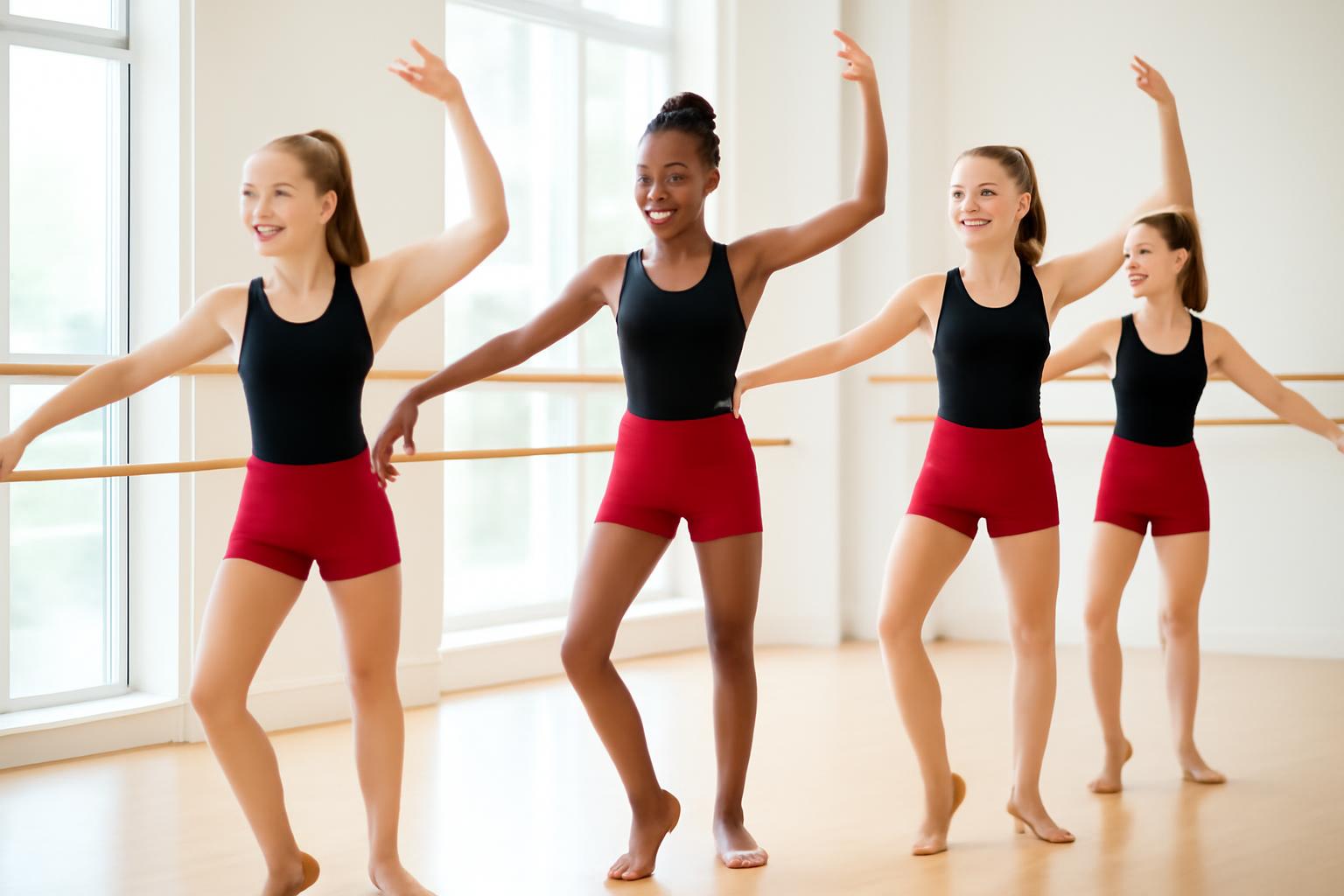
Terminology around dance teams is not standardized, and regional culture matters. Identify the local format before weighing its schedule, costs and fit.
For many families, dance teams sit in the space between a simple recreational class and a full elite studio path. They can offer more structure than recital-only dance, more public performance experience, and a stronger sense of team identity. They can also introduce a level of commitment that feels much closer to a school sport: auditions, attendance rules, uniform requirements, travel, competition weekends, and fees that are not obvious from the first tuition number.
That mix is why dance team can be a great fit for one child and a poor fit for another. A child who loves performing in front of crowds, likes polished routines, and enjoys belonging to a group may thrive. A child who wants flexible scheduling, lower pressure, or freedom to try several activities at once may be happier in a recreational program.
The practical question for parents is not whether dance teams are “worth it” in the abstract. It is whether a specific local program matches your child’s goals, your family calendar, and your budget for a full season.
That means looking past the marketing language and asking four concrete questions early:
- Is this mainly a game-performance team, a competition team, or both?
- How many hours each week are actually required once technique classes and rehearsal are combined?
- What will we pay besides the advertised monthly tuition?
- What happens if school, illness, another activity, or family travel creates a conflict?
If you get clear answers to those four questions before registering, most of the later surprises become easier to avoid.
What Are Youth Dance Teams?
At the most basic level, a youth dance team is a group program built around shared routines, rehearsals, and performances. In school settings, teams commonly perform at football and basketball games during pre-game, halftime, and sidelines, and routines may include hip hop, jazz, or lyrical elements along with leaps, turns, kicks, splits, jumps, and sometimes pom-poms or cheers. A pom squad is a more specific version of that idea: it uses pom-poms in all routines and often leans heavily on kicklines and strong visual uniformity, according to Wikipedia’s dance squad overview.
That definition matters because many parents first picture one narrow version of dance team—usually teens in matching uniforms at a game—when the real category is broader. A team might perform at pep rallies and sports events, compete on weekends, appear in community showcases, or do all three in the same year. It might emphasize jazz lines and turns, hip hop texture and attack, crowd-facing game-day energy, or a pom look built around precision and sharp formations.
Private studios use the term too. In those programs, “dance team” may mean a youth competition group rather than a school spirit squad. Elite Dance Academy, for example, describes a dance team for ages 5–18 that combines ballet, jazz, and team choreography, trains 2 days a week, and attends 2–3 competitions during the year, showing how the label can apply well beyond middle school and high school settings (Elite Dance Academy).
For parents, the most useful mindset is this: dance team is a format, not a single standard product. Two programs can both use the same words and still produce very different family experiences. One may mean “perform at games and do one or two local competitions.” Another may mean “multiple weekly technique classes, mandatory rehearsals, travel, and a season built around judges’ score sheets.”
Types of Youth Dance Teams
Terminology around dance teams is not standardized, and regional culture matters. Dance Spirit breaks high school dance groups into categories including dance team, song team/pom team, drill team, color guard/winter guard, majorette, and step, noting that schools do not use the same labels everywhere and that traditions differ by geography and culture. The same piece notes that song teams are especially common in California, drill has deep Texas roots, and majorette and step carry strong ties to HBCU and Southern performance culture (Dance Spirit).
A few parent-friendly buckets help make sense of the landscape:
- Dance team: often a mixed format combining jazz, hip hop, and game-day performance.
- Song or pom team: usually more pom- and jazz-centered, especially for games and spirit events.
- Drill team: associated with Texas traditions, larger visual formations, kicklines, and recognizable hats-and-boots styling.
- Majorette or step team: culturally distinct forms with their own movement vocabulary, theatricality, rhythm, and performance goals.
- Color guard/winter guard: related in school culture even when some parents do not initially group it with dance; performance centers on flags, sabers, or rifles, often with marching band or indoor guard seasons.
Regional examples show why parents should not assume that every “dance team” is basically the same. A commonly cited description of Texas drill teams places them at roughly 25–75 members, while a cited description of Minnesota State High School League high-kick competition notes routines of about 2:30 to 3:00 with roughly 45–60 kicks. That is a very different performance tradition from a smaller jazz-hip hop game-day squad or a studio pom team built for weekend competitions, according to Wikipedia’s summary of dance squad subtypes.
Studio and all-star programs add another layer. Some divide dancers by age bands, some by skill, and some by style. Phoenix Dance Studio, for example, advertises teams spanning ages 5–7, 7–10, 10–13, 13–15, and older elite levels, which is a useful reminder that “dance team” may describe a progression system inside a studio rather than a school-affiliated extracurricular (Phoenix Dance Studio).
The main practical takeaway is simple: before comparing options, ask what kind of team this actually is. Parents save themselves a lot of confusion by asking three questions up front:
- What styles does this team actually train and perform?
- Where does it perform—games, showcases, competitions, or all of the above?
- How serious is the commitment at this age level?
Those answers are usually more informative than the label on the website.
Tryouts and Auditions for Dance Teams
Most dance team tryouts evaluate three things: basic technique, how quickly a dancer learns choreography, and how confidently they perform it. Programs may build a team by invitation, teacher recommendation, open tryout, or some blend of those methods. A studio operations guide aimed at competition teams recommends being explicit with families about time, travel, payments, and behavior expectations before selection, then choosing dancers either by invitation or through tryouts that may include cuts and feedback (dance-studio guide).
Studio auditions can be more varied than school tryouts. Phoenix Dance Studio describes private auditions for hip hop or elite divisions that include technique evaluation, a choreographed routine, and callbacks communicated by email. That is a more individualized process than a single large-group school tryout, and it shows why parents should ask not just “when are auditions?” but also “what is actually being judged?” (Phoenix Dance Studio).
For a child preparing for tryouts, the practical checklist is usually straightforward:
- show clean basics rather than trying to impress with tricks you cannot control;
- be ready to learn choreography quickly;
- perform full-out instead of marking timidly;
- listen to corrections without melting down;
- look like someone coaches can trust in a group setting.
For parents, the more important question often comes after selection. Some programs treat auditions mainly as placement: everyone gets a team, but dancers are sorted by age or readiness. Others treat auditions as entry into a much more demanding contract than the word “team” initially suggests. Ask directly whether selection means:
- placement only,
- placement plus mandatory class requirements,
- mandatory competition weekends,
- attendance restrictions,
- or limits on other activities.
A child can be technically ready for a team and still be a poor fit for the schedule that comes with it.
A Typical Dance Team Season Timeline
Most dance team seasons follow a familiar pattern even when exact calendars differ. Families usually start with placements or evaluations, receive a season schedule and expectations, move into learning choreography in sections, then spend the middle of the season cleaning timing, spacing, formations, and performance quality before major performance dates arrive. Dance Athletics describes this progression as a common arc: team formation first, choreography in pieces, then weekly practices that include warmups, technique, review, run-throughs, and feedback (Dance Athletics).
A school-team handbook from Fort Calhoun High School shows how early that season can start. It describes tryouts in March, summer practices after the school year ends, fall practices beginning in August, performances at varsity football games and selected basketball games, and a competition season that typically runs from November through February (Fort Calhoun High School handbook).
Studio seasons can run on a similar rhythm but with different anchor points. Elite Dance Academy’s youth dance team, for dancers ages 5–18, trains 2 days a week, includes weekly ballet, jazz, and team choreography, and attends 2–3 competitions during the year. In that kind of setup, the schedule may revolve less around football or basketball and more around showcases, local events, and spring competition weekends (Elite Dance Academy).
In practical terms, parents can think about a season in five stages:
-
Placement and orientation You learn the calendar, fee structure, communication system, costume deadlines, and attendance rules.
-
Choreography phase Dancers learn sections, transitions, counts, and formations.
-
Cleaning phase Coaches tighten details: angles, spacing, timing, energy, facings, and unison.
-
Performance and competition phase Games, pep rallies, showcases, convention weekends, and competitions begin to dominate the family calendar.
-
Wrap-up The season ends with a final event, banquet, or showcase, followed by conversations about whether the child should return next year.
That early paperwork stage matters more than many new parents realize. If a program cannot give you a reasonably clear season calendar, fee schedule, or attendance policy before the season starts, the commitment rarely becomes easier to manage once routines are set and competitions are booked.
Weekly Commitments and Practice Requirements
This is where many decisions are really made. “Dance team” can sound manageable until you add up all the moving pieces: required technique classes, rehearsal, costume prep, travel, hair and makeup, weekend events, and commute time.
East Bay Dance Company’s published requirements are a good example of how quickly hours can expand. Its Jazz Teams require 1 weekly jazz technique class of 60–75 minutes, 2 weekly ballet classes of 60 minutes each, and 1 weekly rehearsal of 30 minutes—about 3.5 to 3.75 hours per week before commute time. Its Hip Hop Teams require 45 minutes of technique plus a 30-minute rehearsal, or about 75 minutes per week. Its Lyrical/Contemporary Teams require 2 ballet classes, 1 lyrical/modern technique class of 60 minutes, and rehearsal time, putting the weekly studio total at roughly 200–210 minutes before travel (East Bay Dance Company).
That range matters because parents often compare programs by the word “team” instead of by the actual weekly load. A lower-commitment introductory team might be manageable alongside another activity. A style-specific or competition-heavy team can function more like a major family schedule anchor.
Fort Calhoun’s handbook requires students to maintain passing grades, meet district attendance standards, and follow practice rules that include proper attire, no phones, and no food or gum at practice. The handbook also distinguishes excused from unexcused absences and makes clear that school obligations, illness, and other approved reasons are treated differently from conflicts that the program does not accept (Fort Calhoun High School handbook).
Some elite studio tracks become even more restrictive. Parents should pay close attention to phrases such as “mandatory,” “exclusive commitment,” “highly encouraged not to participate in other activities,” or “limited tolerance for missed rehearsals.” Those are not just tone choices. They are warnings about how the program expects to rank itself in your child’s life.
A realistic parent framework looks like this:
Lower-commitment team - roughly one or two classes plus rehearsal; - a few performances or local competitions; - easier coexistence with school and another activity.
Mid-commitment team - multiple technique classes plus rehearsal; - more polished expectations; - several event weekends during the year; - more frequent costume, schedule, and attendance demands.
High-commitment or elite team - several hours of training each week; - stricter attendance language; - heavier travel; - summer workshops or intensives; - a family calendar that increasingly gets built around dance dates first.
This is also the section where parents should stop asking “How many days?” and start asking “How many total hours, including required classes, rehearsal, travel, and weekends?” Those are not the same question.
Costs of Youth Dance Teams
Dance team costs are almost never just one number. Families may pay for tuition, rehearsals, competition entry fees, choreography, costumes or uniforms, shoes, tights, team apparel, camps, photos, recital participation, spectator passes, travel, makeup, and optional add-ons such as solos, duets, or private lessons.
If you are weighing dance team spending against other activities in the same household budget, what youth sports actually cost can help provide broader context.
Because published fee structures vary so much, the most honest budget model is to think in layers:
- monthly training costs
- season-specific fees
- apparel and appearance costs
- travel and extras
Anecdotal public estimates gathered in one discussion of competitive dance put lower-level monthly spending around $100–$200, mid-level programs around $300–$700, and elite programs at roughly $700–$2,000+ once training, competition participation, and related extras are included. Those are not market-wide averages, and they vary by region and program type, but they are useful as rough budgeting illustrations rather than as promises (Quora discussion).
What often surprises parents are the exclusions. One studio cost page from Starlight Dance Studios says its team packages do not include items such as privates, solo or duo entry fees, shoes, tights, team jackets, water bottles, backpacks, summer camps or intensives, first-competition photos, and some recital fees. The same page notes a 20% sibling discount on tuition, reduced pricing of $15 each for a fifth and sixth team, and a no-refund policy, which is a useful reminder that “team tuition” rarely equals total season cost (Starlight Dance Studios).
That is why the most useful parent question is not “What is tuition?” but:
- What is billed monthly?
- What is billed once or twice a season?
- What apparel is mandatory?
- What is optional in theory but strongly expected in practice?
- What is non-refundable?
A strong budgeting conversation also separates fixed commitments from choice-based add-ons. Families often get in trouble when they mix the two. For example:
Usually fixed once you join - monthly classes and rehearsal; - required costume or uniform package; - mandatory competition or performance fees; - team warmups or basic apparel.
Sometimes optional, sometimes socially hard to decline - solos, duets, or trios; - private lessons; - extra convention classes; - souvenir photos and videos; - optional trips or nationals.
If you want a realistic number before registering, ask the program to write down the cheapest realistic season for your child’s level, not the broadest possible one. “Starting at” and “optional” can hide a lot.
Competitions: Rules, Judging, and Divisions
Competition weekends feel chaotic from the audience, but most are built on a structured system: age divisions, performance divisions by style, group sizes, time limits, and a scoring rubric.
Revel’s published competition rules give a clear example. It lists Solo at $200 with a 2:30 time limit, Duo/Trio at $105 with a 3:00 limit, and group routines at $80 per dancer across Small Group (4–9 dancers), Large Group (10–17), Line (18–29), and Production (30+), each with its own maximum time. Its age-division fees range from $55 in RevKids, Mini, and Junior to $75 in Teen and $145 in Senior. The same rules divide entries into styles such as ballet, jazz, tap, contemporary, lyrical, Broadway, hip hop, acro, specialty, and open; weight judging at 50 points for technique, 20 for dynamics, and 10 each for musicality, performance, and overall impression; and require purchased extra time at $15 per dancer per minute for routines that exceed their limit. Revel also states that fees are non-refundable, teachers and professionals are not eligible to compete in the standard way, the event is YPAD certified, and dancers may not jump off the front of the stage (Revel rules).
For parents, the important lesson is not that every organizer uses Revel’s exact system. It is that every organizer has a system, and it affects your bill, your schedule, and what your child is being judged on. Before your first competition, you should know:
- your child’s age division;
- the routine’s style division;
- the group-size category;
- the time limit;
- whether spectator access costs extra;
- what happens if a routine goes over time;
- whether props, costumes, music edits, or certain acro elements face restrictions.
This is also why parents should ask which competition circuit a team actually attends. A school-based program may spend most of its year in school-centered events and game-day pathways. A studio team may attend local invitationals, convention competitions, or national events built around very different language and rulebooks. If you assume all competitions work alike, the first weekend can be a rude surprise.
Judges are also not rewarding only raw talent. Even in systems where technique carries the biggest weight, teams also rise or fall on spacing, timing, style accuracy, musical connection, transitions, formations, and whether the group looks unified rather than like a cluster of individually strong dancers.
School Dance Teams vs. Studio Programs
This is the comparison many parents are actually trying to make, and it deserves more than a quick paragraph.
In interviews with a studio owner and a school dance coach, DancePlug presents school teams as especially strong for camaraderie, belonging, and connection to the high school experience, while studio training is described as the stronger route for technical progression and for students with dance-major or professional goals. The same piece also notes that time and money can make dual participation difficult, and that team-related costs can still reach around $5,000 once uniforms, camps, and related expenses are included (DancePlug).
That expert framing is useful because these paths usually solve different problems.
School team: what it often does best
A school team tends to offer the clearest built-in community identity. Your child performs for classmates, shows school spirit, attends school events, and becomes part of a visible campus group. For many teens, that social connection is the point, not a side benefit.
Other common strengths: - school-based friendships and belonging; - performances at games, pep rallies, and assemblies; - easier visibility in the school community; - a natural fit for students who want dance to be part of school life rather than a separate outside world.
Common tradeoffs: - academic eligibility rules; - school attendance and conduct standards; - less individualized technique progression than a serious studio ladder may offer; - calendars tied to school obligations, not just dance training.
Studio competition program: what it often does best
A studio team usually offers a clearer technical ladder. Families often choose this route when the child wants more training hours, more style-specific instruction, or a longer runway toward advanced auditions later.
Common strengths: - more structured progression in technique classes; - more style variety or specialization; - more direct competition focus; - training that can continue independent of the school calendar.
Common tradeoffs: - higher cost ceiling; - more required weekly classes; - heavier travel and rehearsal load; - some programs strongly discouraging outside commitments.
Recreational dance: the comparison parents should not skip
Many families are not actually choosing between school team and studio team. They are choosing between team dance and not-team dance.
That decision matters because a recreational program often serves a very different child well. If your child mainly wants weekly classes, a recital, and steady skill-building without contracts, travel, or strict attendance rules, recreational dance may already be enough. There is no prize for moving into a team environment before a child or family actually wants what the team structure offers.
A dance team tends to be the better fit when the child actively wants: - a defined group identity; - repeated rehearsal of the same routine; - performance for crowds or judges; - a stricter attendance culture; - goals that require more polish and repetition than a basic class schedule provides.
A recreational path tends to be the better fit when the child prefers: - trying several activities; - lower-pressure performance settings; - a more flexible family calendar; - enjoyment of class itself more than group competition or game-day visibility.
A simple parent test
If you are stuck between options, ask these five questions:
-
What kind of kid is this right now? Not the child you hope will become more disciplined, but the child you are registering today.
-
What is the goal? Team identity? Better technique? School community? Competition experience? College preparation? Simple enjoyment?
-
What conflicts will this create? Another sport, theater, band, tutoring, sibling logistics, or family travel?
-
What will frustration look like in this house? Surprise bills? Missed dinners? Constant weekend driving? Homework battles? Tears over attendance penalties?
-
Would recreational dance already solve the actual problem? If the answer is yes, a team may be more commitment than benefit right now.
A good program can build confidence, discipline, artistry, and friendships. The wrong program can turn dance into a source of stress for the entire household. Fit matters more than label.
What ages can join dance teams?
Elite Dance Academy advertises a dance team for dancers ages 5–18, and other studio models create even younger entry points or age-banded team tracks, while school teams typically begin in middle school or high school depending on the district.
For parents, readiness usually matters more than the birthday itself. Can your child handle repeated corrections, remember group choreography, wait their turn, stay regulated in a busy rehearsal room, and keep showing up cheerfully when the fun part involves a lot of repetition? If not, a recreational class may still be the better bridge.
How much do dance team uniforms and costumes cost?
There is no reliable universal price because programs package costs differently. Some school teams charge a large upfront uniform bill. Some studios spread costume and teamwear costs across the season. Others keep tuition separate from shoes, tights, jackets, photos, recital participation, camps, or optional extra routines.
That is why parents should ask for a written list of: - required costumes or uniform pieces; - shoes and tights; - warmups or jackets; - hair and makeup requirements; - replacement or alteration fees; - recital costs if team dancers also perform in other classes.
A cost page such as Starlight’s is useful mainly because it shows how much can sit outside the main package, including shoes, tights, jackets, backpacks, camps, photos, and some recital-related costs. That is the right mindset to bring into every pricing conversation, even if your local studio uses different numbers.
What dance styles are most common in youth teams?
The most common styles are usually jazz, hip hop, and pom, especially in school-team and studio-team settings. Depending on the program, you may also see lyrical, contemporary, acro, Broadway-style jazz, or open routines.
The style mix tells you a lot about the program. A school team may lean toward game-day performance, pom, jazz, and hip hop. A studio team may still do those styles but add contemporary or lyrical work because the program has a different competition focus.
If a parent says, “My child is on a dance team,” the follow-up question should usually be: what kind of routines do they actually do?
Can kids do dance team and other activities?
Sometimes yes. Sometimes not in any realistic way.
Lower-commitment teams may be built specifically to leave room for school and other extracurriculars. Some introductory programs are clearly designed for families who want team experience without making dance the center of the entire weekly calendar.
Higher-commitment teams can be much less flexible. Even when a program does not explicitly ban other activities, the combination of required classes, rehearsal, performances, travel, and limited tolerance for absences can make dual participation very difficult in practice.
This is one of the clearest places to ask direct questions: - How many absences are allowed? - What counts as excused? - Are other sports or performing arts conflicts acceptable? - What happens if a competition and another event land on the same weekend? - Is summer training optional, expected, or mandatory?
If the answer sounds like dance must be the priority, believe that answer the first time.
How to offset dance team costs with fundraising?
Fundraising works best when it is tied to a specific bill rather than a vague hope that “we’ll figure it out later.”
The most useful rules are simple: - pick one clear target, such as uniforms or one competition weekend; - decide in advance whether credits go to individual families or the whole team; - choose something easy enough that parents will actually participate; - avoid running so many fundraisers that fundraising becomes its own extracurricular.
Used well, fundraising can reduce pressure. Used poorly, it becomes another layer of work on top of an already crowded season.
If you are choosing between local dance teams, the most useful next step is still the simplest one: ask for the season calendar, fee sheet, attendance rules, class requirements, and list of excluded costs before you register. Once you see the real schedule and the real bill, the right fit usually becomes much clearer.