
Navigating the DeBeer Clincher 16-Inch Softball in Recreational Slowpitch Programs
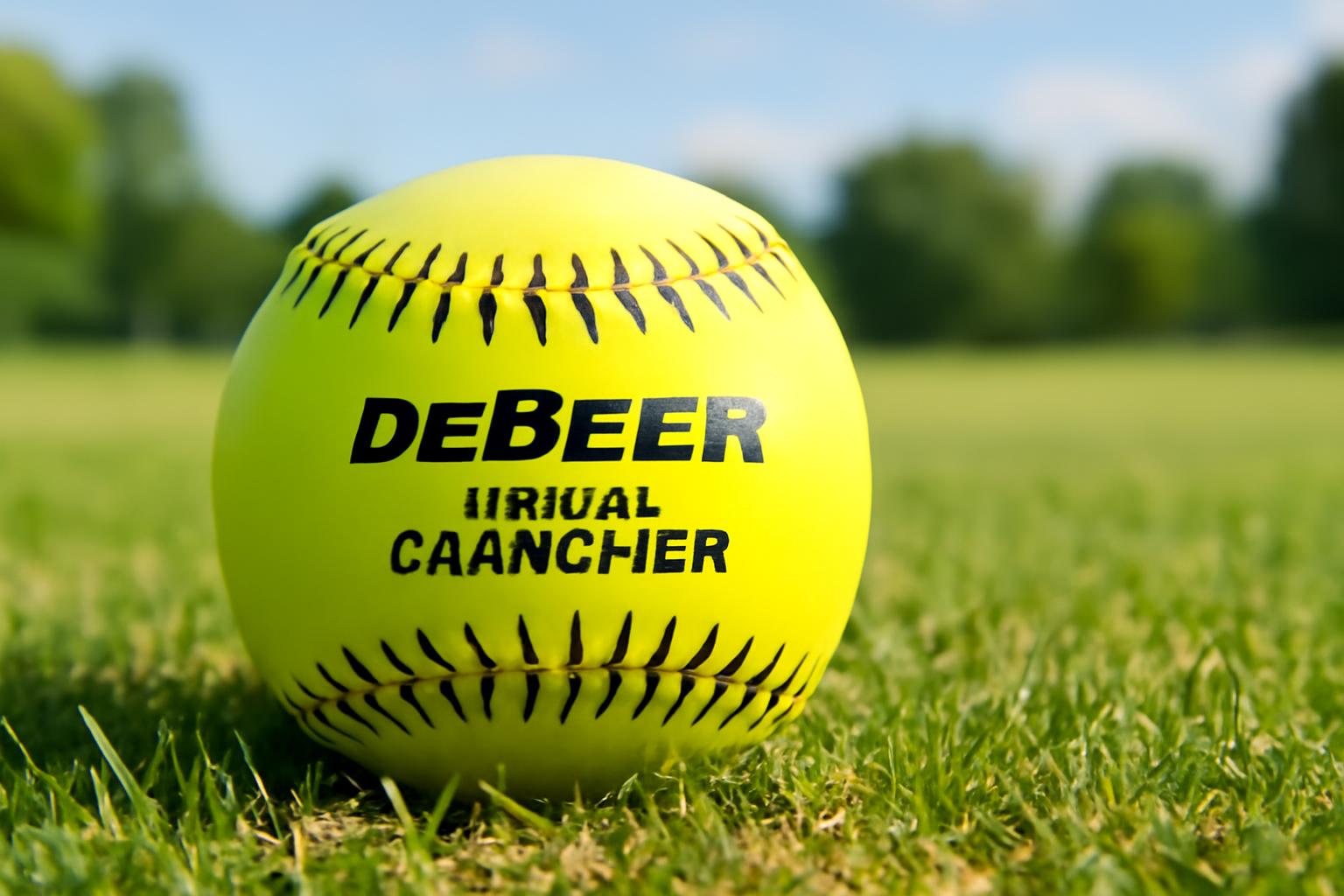
Buy it when a program or local playing tradition specifically calls for it. Then verify pack size, color and conflicting core descriptions.
If you searched for the debeer official clincher 16 in. softball, you are probably not trying to identify a generic youth-practice ball. You are usually looking at a very specific product tied to 16-inch slowpitch play, and you want to know three things before you buy: what it actually is, what current listings consistently say about it, and whether it fits the rules and costs of the program you are joining.
That is the right way to approach this product. With a niche ball like this one, the biggest mistakes are rarely about picking the “wrong brand” in the abstract. They are more often about buying the wrong size, assuming every listing with “Clincher” in the title is the same item, missing whether the page is selling one ball or one dozen, or treating “official” as proof that every local league requires that exact ball. Those are expensive mistakes precisely because 16-inch softball is a niche lane rather than a default equipment category.
This guide is written with buying intent first. The goal is to help a shopper, coach, organizer, or parent decode what the DeBeer Official Clincher 16-inch softball appears to be in current listings, what evidence is strong, where seller descriptions conflict, what current price snapshots look like, and what to verify before checkout. The parent angle still matters, but only in the narrow situations where a family event, community program, or mixed-age recreational game explicitly uses 16-inch play.
In short, this is a product you buy because a program or local playing tradition specifically calls for it. If nobody has told you “16-inch,” “Clincher,” or “Chicago-style,” you should pause before buying anything.
What Is the DeBeer Official Clincher 16-Inch Softball?
At the simplest level, this is a 16-inch slowpitch softball sold in the Clincher line rather than a standard youth softball format. Current retailer listings identify it as model F16 and place it in the slowpitch category, which is the clearest product-level signal about where it belongs in the market (DICK’S Sporting Goods).
That sounds straightforward, but the product is still easy to misread online because “Clincher” is a family name, not a complete description. A buyer often sees only a shorthand label on a flyer, a team email, or a marketplace listing. One retailer, for example, lists the deBeer Official Clincher Softball F16 in both yellow and white, which is helpful because it confirms that color alone does not identify whether you are looking at the right ball. The key identifying signals are the 16-inch size, the slowpitch positioning, and the F16 model language, not just the word Clincher by itself (Bagger Sports).
If your shopping context is ordinary youth softball and nothing in the program materials mentions 16-inch balls, this is probably the wrong lane entirely.
That distinction matters because the search term itself can mislead. Someone sees “official,” “softball,” and a known sporting-goods brand name and assumes the ball sits inside the same equipment universe as everyday school or youth-league softballs. The evidence reviewed here does not support that. What it does support is a recurring identity: 16-inch, slowpitch, Clincher, and strong association with Chicago-style play.
It also helps to separate product identity from sanctioning language. Retailers clearly use “official” in product titles. What the evidence reviewed here does not show is a governing-body document saying that one exact DeBeer 16-inch Clincher SKU is the official required ball across all leagues. For a buyer, the practical reading is simple: treat “official” as part of the product labeling unless your organizer or league rules specifically name that ball.
So what should a shopper confirm before buying?
- that the program actually uses a 16-inch ball;
- that it specifically wants a Clincher rather than just any oversized softball;
- that the listing is for one ball or one dozen;
- that the color matches league preference if color matters; and
- that “official” in a listing title is not being mistaken for universal league approval.
Those checks sound basic, but they are the difference between buying one correct niche ball and buying the wrong case of gear.
Key Specifications and Construction Details
Across current retailer descriptions, the broad construction picture is fairly consistent. The repeated signals are a 16-inch size, slowpitch use, a TruTech or Trutech leather cover, and Clincher stitching.
That gives buyers a useful “stable core” of the product description. If a listing says 16-inch, slowpitch, F16, TruTech leather, and Clincher stitch, you are probably looking at the same basic product family described across the strongest retail sources in the evidence set. The most buyer-relevant spec cluster is not hidden in technical certification data. It is the simpler identification set: size, construction wording, color, and pack size.
There is, however, one important wrinkle: not every seller describes the core the same way. School Health’s product page for the yellow DeBeer 16-inch Clincher uses “cork center” and “Trutech” leather cover language rather than the kapok wording used elsewhere. That does not automatically mean the other sellers are wrong or that School Health is wrong. It means the product description landscape is inconsistent enough that a buyer should verify the live listing if core wording matters for league acceptance or for matching an older house ball (School Health).
That conflict is more important than it sounds. Many equipment pages get copied, refreshed, or partially updated over time. With a niche item, small wording differences may reflect different production runs, stale product copy, or retailer-side catalog habits rather than a clean, industry-wide spec sheet. So the right takeaway is not “the core is definitely kapok” or “the core is definitely cork.” The right takeaway is that kapok-based language appears repeatedly in several current listings, but at least one seller uses different core wording, so exact-material assumptions should be checked rather than guessed.
The physical behavior of a 16-inch ball also helps explain why buyers describe it differently from a standard softball. In a paper focused on 16-inch bat selection, S. Brady Phillips cites a 16-inch ball at 9 ounces and .22 g/cc density, compared with a 12-inch softball at 6 ounces and .36 g/cc density. His discussion emphasizes that the bigger ball absorbs more energy and deforms differently on contact, which is part of why 16-inch play gets talked about as its own equipment environment rather than just “bigger softball” (S. Brady Phillips, Choosing A Club To Crush A Clincher).
That difference in feel matters more to a buyer than a long list of marketing adjectives. If a program expects a 16-inch Clincher, the ball is not interchangeable in use with the smaller ball many youth-softball families picture first. Even without diving into laboratory-style certification data, the evidence shows enough to say this is a distinct playing object with different size, mass, and feel characteristics.
Color is the other easy-to-miss specification. Yellow and white both appear in current retail listings, so buyers should not assume one color is universally required. Sometimes color is simply a visibility preference; other times it is just what a seller happens to stock. Unless the league or organizer specifies yellow or white, the smarter move is to ask rather than assume.
Taken together, the practical specification picture looks like this:
What seems consistent across current listings - 16-inch size; - slowpitch positioning; - Clincher-stitch language; - TruTech/Trutech leather cover wording; and - F16 identification in at least part of the retail market.
What deserves live verification before checkout - core wording, because seller descriptions conflict; - exact color needed by the program; - whether the page sells a single ball or a dozen; and - whether the listing is using “official” as branding rather than as league proof.
That is the real buyer’s spec sheet: not just what the ball is, but what parts of the listing you can trust broadly and what parts you should still confirm.
History of the Clincher Softball and DeBeer Legacy
The DeBeer Clincher matters partly because it is not just another oversized softball. The historical identity of the ball is bound up with the Clincher design itself. The 16-inch Softball Hall of Fame’s Frederick DeBeer profile says DeBeer patented a covered stitch for the 16-inch ball in 1934, a design intended to hold up better than exposed stitching on rougher playground surfaces. That same profile ties the Clincher directly to the game’s long-running identity in Chicago and New York (16-inch Softball Hall of Fame).
That history explains several things modern buyers still notice. First, the ball is part of a real tradition, not a novelty listing invented for ecommerce search traffic. Second, the covered-stitch story helps explain why the Clincher name carries so much recognition in 16-inch circles. Third, the cultural association with Chicago-style play is not just modern retailer shorthand; it is built into the product’s historical reputation.
The Hall of Fame profile also describes the DeBeer family continuation of the line, saying that Frederick DeBeer’s son Fritz helped perfect and market the ball and that the family tradition continued after that. Modern commerce evidence does not give a clean, complete corporate lineage from those origins to today’s retail shelves, so buyers should be careful not to overstate ownership history. What the current evidence does show is that the product line now appears in Rawlings- and Worth-connected sales channels and in at least one team-supply listing with a Rawlings warranty, which is enough to show a contemporary retail bridge even if it does not resolve every brand-history detail.
For a shopper, the practical lesson is that “Clincher” is a name with historical weight, but that does not remove the need to verify the current listing in front of you. Heritage helps explain why the ball still matters. It does not eliminate modern catalog confusion.
Pricing and Availability Across Retailers
Price is one of the few areas where buyers can quickly go wrong, because the DeBeer Clincher shows up in both single-ball and dozen-pack listings, and the sticker shock changes a lot depending on which type of page you land on first. In the current evidence reviewed here, single-ball pricing starts around $19.95 and rises into the high $20s depending on seller and stock conditions (Play Softball, Walmart).
That range is useful, but it should be read as a snapshot, not a permanent market rule. The lower end comes from a dedicated sporting-goods listing, while the higher end in this evidence set comes from a marketplace page that also shows the item as out of stock. That matters because a price attached to an unavailable listing does not help much if you need the ball this week.
Bulk pricing lands in a very different part of the budget. In the same evidence set, dozen-pack pricing starts around $239.95 for yellow or white 16-inch Clinchers through Worth/Rawlings-connected commerce and goes up to $286.99 on School Health’s dozen-pack listing (Worth/Rawlings, School Health).
That single-versus-dozen split changes how a buyer should think about the purchase. If you are an individual player who only needs a replacement ball or one practice ball, a dozen-pack is usually the wrong first click. If you are supplying a team or a program, single-ball shopping may look cheap at first and become the more expensive route once you add quantity. The problem is not that either format is deceptive on its own. The problem is that buyers often search the generic product name and do not realize they are comparing fundamentally different pack sizes.
It also helps to think about where these listings sit in the market. That does not mean one seller type is automatically better. It means the market itself treats this as both a consumer item and a bulk-supply item, and the buyer needs to choose the right lane.
Availability is equally variable. The Walmart listing in this evidence set is out of stock. School Health shows its single yellow ball in stock while the dozen pack is marked “Ships Soon.” Other pages indicate standard ecommerce availability without guaranteeing how long that will last. With a niche product, that kind of volatility is not a side note. It is part of the buying decision. If your first game is close, waiting for the “best” listing may matter less than confirming what is actually available.
A practical buying sequence helps:
- Confirm whether you need one ball or a dozen.
- Confirm the required color, if any.
- Check whether the page is describing the same 16-inch Clincher/F16 family.
- Treat listed price and listed stock as current snapshots, not promises.
- If a program is involved, ask whether the league or organizer supplies game balls before you buy your own.
That last point is especially important for parents and casual participants. A niche format can still be inexpensive compared with many sports, but it stops being inexpensive the moment a family buys the wrong quantity, the wrong ball type, or duplicate game balls the program already provides.
There is one more subtle pricing lesson here: in a standard equipment category, buyers often comparison-shop on brand alone. In a niche category like this, comparison-shopping on pack size and listing clarity may matter more than chasing a two-dollar difference on the headline price. A clean, current single-ball listing may be more valuable than a lower-looking number buried in a pack-size misunderstanding.
Customer Reviews and Real-World Performance
For buyers who want reassurance that this is an established product rather than an obscure dead listing, the review footprint is helpful. In the evidence reviewed here, Amazon shows a 4.6 out of 5 rating from 127 reviews for the Debeer Official Clincher 16-inch softball, which makes it the largest review sample in the source set even if it is still a retailer-specific platform signal rather than independent testing (Amazon).
That does not prove universal satisfaction, and it should not be read as a performance certification. What it does show is that the product has a meaningful enough buyer base to generate substantial feedback over time. Smaller retailer pages in the evidence set also trend positive, which supports the broader idea that this is a recognizable, repeat-purchase item in its niche rather than a random oversized softball page sitting untouched online.
The smarter way to use those reviews is as context, not verdict. Retailer reviews can tell you whether buyers broadly received what they expected. They can help surface common complaints about feel, construction, or obvious mismatch. What they cannot do is settle whether your local program accepts that exact ball, whether a seller’s spec copy is up to date, or whether one listing’s materials language should override another’s.
Review interpretation also needs a little discipline because this product carries a lot of tradition language. When buyers say the ball “feels right” or “plays like the Chicago ball they know,” that may be useful if you are shopping for that exact tradition. It is less useful if you are coming from outside 16-inch softball and trying to infer universal performance rules from nostalgia-heavy feedback.
So the review summary is positive, but it should be kept in the right box. Reviews suggest the ball is familiar, established, and generally well received in its use case. They do not replace program rules, current stock checks, or live product-page verification.
League Rules and Program Fit for 16-Inch Play
This is the section where most buying mistakes can still be prevented. The evidence reviewed here points much more strongly toward adult and recreational slowpitch use than toward standard youth-softball use. One large marketplace listing, for example, identifies the ball with an adult age range, which fits the broader pattern of the evidence far better than a youth-league interpretation (Amazon).
That does not mean a child will never encounter a 16-inch Clincher. It means the evidence here does not support treating it as default youth-softball equipment. If a child is participating in an event that really uses this ball, the event should say so clearly. Otherwise, the safer assumption is that you are looking at a specialty rec-softball product whose main documented market is outside standard youth play.
That matters because the buying question is really a rules question in disguise. A shopper may think, “Should I buy this ball?” But the prior question is, “Does this program actually use 16-inch Clinchers?” If the answer is yes, then the product starts to make sense. If the answer is no, or nobody knows, then even a perfectly authentic DeBeer Clincher is still the wrong purchase.
This is also why the word “official” needs restraint. Retail titles clearly use it, but the evidence set does not establish one universal governing body naming this exact model as official across all formats. Local leagues, park districts, informal Chicago-style games, and specialty rec groups may each have their own accepted ball habits. So a serious buyer should never rely on title wording alone where a quick rules email would settle the matter.
For program fit, a short decision framework is usually enough:
You are probably in the right lane if the program materials explicitly mention - 16-inch softball; - Clincher; - slowpitch in a Chicago-style context; or - a house rule or equipment list built around 16-inch play.
You should slow down before buying if - the program simply says “softball” with no size mentioned; - the event is described like ordinary youth softball; - the organizer has not specified whether game balls are provided; or - nobody can tell you whether yellow and white are both acceptable.
For parents, this is where the article’s site fit becomes clearer. The best reason to read about this product on a program-guidance site is not because every family needs to shop for one. It is because a very specific family or community event may use one, and the cheapest mistake is catching the mismatch before registration or checkout rather than after.
The most useful pre-purchase questions are therefore not complicated:
- Does this event really use a 16-inch Clincher?
- Does the program provide game balls?
- Is there a required color?
- Is the equipment list written for adult rec players, mixed participation, or another specific group?
- Are there separate bat rules I need before buying anything else?
Those questions respect the evidence. They do not pretend this is a universal youth-softball product, and they keep the buyer focused on the actual use case.
Bat Recommendations and Safety for 16-Inch Clincher
The best-supported bat guidance in the evidence set comes from 16-inch-specific physics and testing rather than from retailer slogans. Phillips argues that because the 16-inch ball is larger, softer, and more energy-absorbing than a standard 12-inch softball, lighter “trampoline effect” logic does not translate neatly. He cites manufacturer recommendations for 32-ounce-or-heavier bats and reports test results in which a 36-ounce DeBeers 1510DB and a 36-ounce C405 both produced 76 mph exit-speed results in his setup (S. Brady Phillips, Choosing A Club To Crush A Clincher).
That is useful, but it should be read precisely. It does not prove that every player needs one exact bat, or that heavier always means better regardless of the hitter. What it does support is the more limited conclusion that 16-inch play often favors a different bat profile than smaller-ball play, and that heavier bats were not an arbitrary old-school preference in the source’s analysis.
Anecdotal player discussion points in the same general direction. In a SoftballFans thread about bats for DeBeer Clincher balls, posters repeatedly prefer older one-piece metals, heavier or end-loaded options, and a general “heavier metal over light composite” mindset, while also reminding each other that personal preference still matters and that hitter skill matters more than chasing a magic model (SoftballFans forum).
The right synthesis is to combine those two ideas without overclaiming. The testing source suggests that 16-inch ball behavior really does change bat-selection logic. The forum suggests that experienced players feel that difference in practice and often respond by favoring heavier, simpler bats. But neither source turns bat choice into a universal recipe. Even in the forum, the more thoughtful comments resist pretending that one bat solves everything.
This is also where buyer caution matters most. The evidence here is centered on adult-oriented 16-inch play and on heavier-bat preferences within that context. It does not establish youth bat legality, age-appropriate bat weights, or a universal safety rule for mixed-age events. So if a child or beginner is involved, the safest interpretation is procedural rather than technical: do not infer that adult 16-inch bat preferences automatically apply to your event. Let the organizer’s bat rules decide what is actually acceptable.
That procedural caution is important because this is exactly the kind of niche equipment topic where families can overbuy. A shopper reads that 32-ounce-plus bats are often preferred, sees a tradition-heavy forum thread praising heavy one-piece metal, and assumes that means “buy the heaviest bat possible now.” The evidence does not justify that leap. It justifies asking what the event allows and whether a specialized 16-inch bat setup is even relevant to your game.
So the practical bat takeaway is this:
- If you are shopping for adult 16-inch play, expect heavier-bat discussion to dominate.
- If you are shopping for a family, school, or mixed-participation event, do not guess from adult-rec bat talk.
- Verify allowed bats before buying anything specialized.
- Treat forum talk as expectation-setting, not rule-setting.
That is not a flashy answer, but it is the answer most consistent with the evidence.
Team Costs and Budgeting for Clincher Programs
The strongest budgeting fact in the evidence set is the dozen price. BSN Sports lists the DeBeer Clincher 16-inch softball at $239.99 per dozen, which is a realistic starting point for thinking about program-level ball cost even before you compare other sellers or ask whether the organizer already supplies game balls (BSN Sports).
That single number matters because it turns a vague “softballs aren’t that expensive” assumption into an actual planning item. In a niche format, the ball itself can be a modest but real line item rather than a background purchase. If one team is expected to supply a dozen game-quality 16-inch Clinchers, you are already looking at roughly a $240 starting point from the evidence here before you talk about bats, registration, or anything else. If the program expects multiple dozen over a season, the ball line scales quickly.
Just as important, the evidence set does not provide full, verified registration-fee schedules or broad bat-price ranges for this exact context. That means a responsible budget discussion should stay anchored to what can actually be supported: the ball cost itself, the difference between single and bulk purchase patterns, and the need to confirm whether those costs are included in program fees or passed through to participants.
For a buyer evaluating a rec program, that leads to a much better budgeting conversation than generic “sports are expensive” talk. The useful questions are:
- Are game balls included in the fee?
- Is the team buying one dozen or replenishing through the season?
- Does the organizer already have approved bats?
- Are players expected to bring their own Clinchers for practice?
- Is this a one-time event or a recurring purchase?
Those questions keep the cost analysis honest. They also prevent a common error: assuming that because the sport is recreational, the equipment decisions will also be generic. They are not generic if the format itself is specialized.
For parents, this section is also where the product and program angles finally meet in a sensible way. A family may never need to buy a DeBeer Official Clincher at all. But if a program really uses 16-inch play and does not provide equipment, then the cost becomes part of the true entry price. That is exactly the kind of hidden practical detail worth checking before you register.
What is the difference between yellow and white DeBeer Clincher 16-inch softballs?
The clearest supported difference is the color itself. Current listings show both yellow and white 16-inch Clincher variants, so buyers should not assume one color is automatically “more official” or more correct. In practice, yellow versus white is best treated as a seller option or league preference question unless your organizer specifies otherwise. If a program cares, it should tell you; if it does not, the main buying priority is still getting the correct 16-inch Clincher format.
Is the DeBeer Clincher suitable for no-glove play in rec leagues?
It is strongly associated with that style of play in the reviewed evidence, especially in Chicago-style context and in user feedback on retailer pages. That makes it a reasonable choice when a program is explicitly built around that tradition. But the important phrase is when a program is explicitly built around that tradition. The ball’s historical identity and user feedback do not replace local rules, so buyers should still follow the event’s own equipment instructions.
How does 16-inch Clincher pricing compare for single vs. dozen?
Singles and dozens sit in completely different buying lanes. A single ball is the right purchase if you only need one replacement or one practice ball. A dozen makes sense when a team, league, or organizer is supplying game balls at scale. The practical danger is not just paying more; it is accidentally buying the wrong quantity because the product name is similar across listing types. Always confirm pack size before you check out.
What bats do players recommend for 16-inch Clincher balls?
The broad pattern in the evidence leans toward heavier bats and older one-piece metal options, often with some end load, rather than light composite-first thinking. But that is still a pattern, not a universal rule. Testing and anecdotal player discussion agree that 16-inch play behaves differently, yet neither one says every hitter should use the same bat. The safest buyer move is to verify what the league allows before treating any preference trend as a shopping command.
Is this ball used in standard youth softball programs?
The evidence reviewed here does not support that as the default use case. The product is consistently presented as a 16-inch slowpitch Clincher and is more clearly tied to adult and recreational contexts than to mainstream youth-softball equipment. If a youth-adjacent event really uses this ball, the program should say so clearly. Without that kind of explicit instruction, it is better to assume you need to ask before buying.
For most buyers, the bottom line is straightforward: the DeBeer Official Clincher 16-inch softball is a real, current niche product with a recognizable identity, a stable slowpitch/16-inch listing pattern, and current market pricing that usually sits around the $20 single-ball level or roughly the $240-plus dozen level in the sources reviewed here. But it is still a product you should buy because the format requires it, not because the title sounds broadly “official.” Verify the size, the pack size, the color, the live listing details, and the program’s bat and ball rules before you spend money. That is how you keep a specialized rec-softball purchase simple instead of turning it into the wrong ball, wrong quantity, or wrong gear setup.