
What Every Parent Should Know About the Defensive Specialist in Youth Volleyball
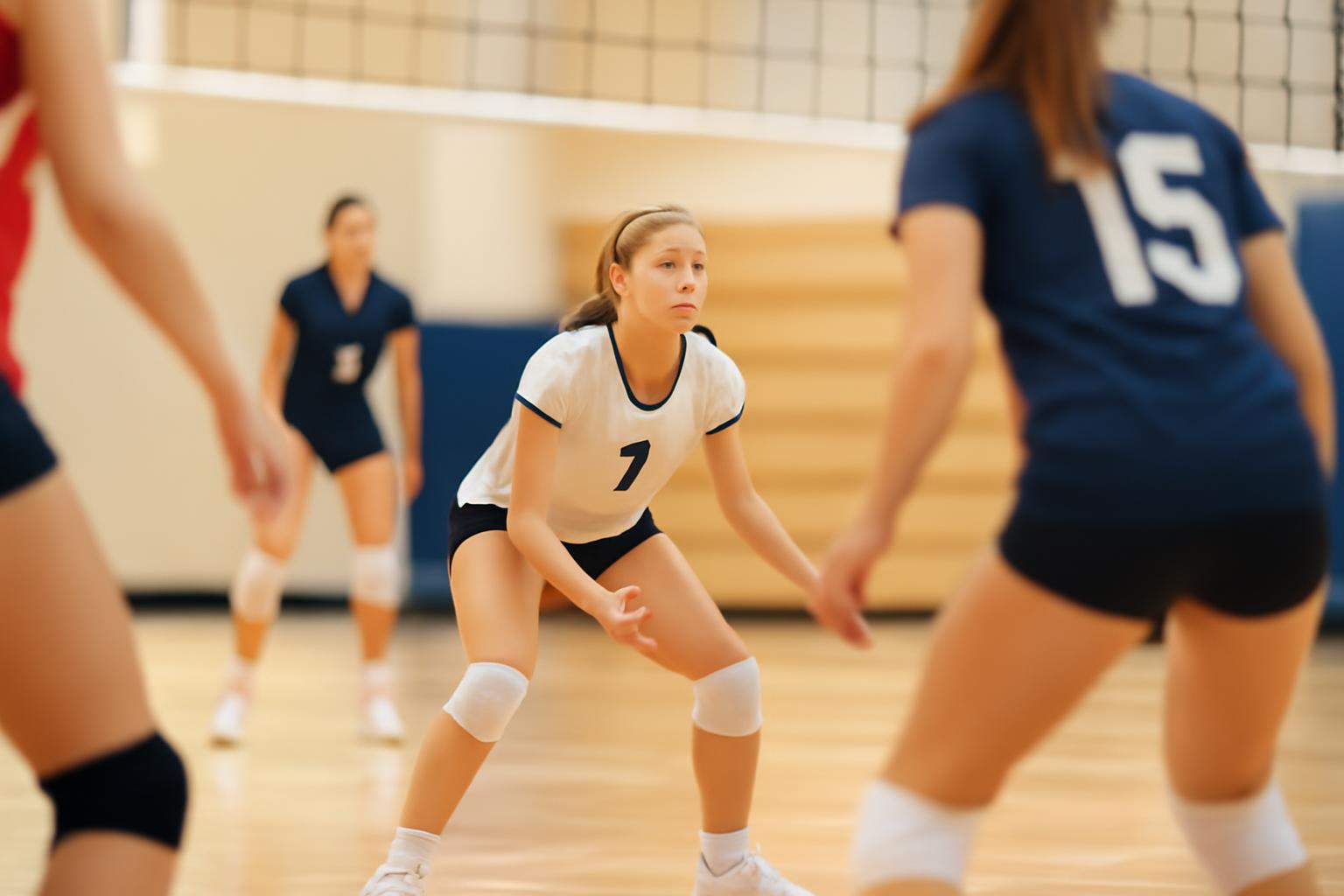
Rules do not lock a DS into libero-style back-row restrictions, although many coaches still use the player almost entirely in the back row.
If you have watched a match and seen a player in a regular team jersey repeatedly enter for someone in the back row, you have probably seen a DS in volleyball.
DS stands for Defensive Specialist. The role is built around back-row defense: passing, serve-receive, digging, and general ball control. The easiest parent-level distinction is this:
- a libero is the defense-first player in the contrasting jersey, using special libero replacement rules;
- a DS is a regular-uniform player used for defense through the team’s normal substitution process.
That sounds simple, but it explains a lot of what you see on a lineup card.
It also helps to keep one important qualifier in mind from the start: some volleyball details vary by competition level and ruleset. Across common indoor descriptions, the broad picture is consistent—a DS is separate from the libero, enters through regular substitutions, and is used to improve back-row play—but finer points like substitution bookkeeping and libero serving permissions can differ.
For parents, the practical takeaway is straightforward. When a coach uses a DS, the team is usually trying to strengthen one specific rotation or one specific stretch of the match without changing the whole lineup.
What Does DS Stand For in Volleyball?
DS stands for Defensive Specialist.
In volleyball, that usually means a player whose main job is to improve the team’s back-row defense through:
- serve-receive;
- passing;
- digging; and
- keeping difficult balls playable.
The role is separate from the libero, even though the two are often discussed together. Both are defense-oriented. Both are associated with ball control. But they are not the same job, and they do not enter the court the same way.
A good way to think about the DS is as a defense-first substitute. The coach uses that player because the team wants steadier first contact in a certain rotation or situation. That could mean protecting a weaker passer, adding more digging range, or calming down serve-receive when a match gets tight.
Depending on the team and level, you may hear people talk about DS as either:
- a formal position; or
- a specialized role within normal substitutions.
Both ways of describing it show up in volleyball conversation. What matters most for parents is the function. If a coach says your child is playing DS, that usually means the coach trusts that player’s passing, reads, effort, and ball control in the back row.
You will also often hear that DS players are usually shorter, quicker defenders. That pattern appears in several volleyball explanations because many DS players are chosen for mobility, reflexes, and control rather than height. But that should be treated as a common tendency, not a rule. Coaches are not selecting a DS just for being smaller. They are selecting someone who can handle first contact well.
On teams that use both a libero and a DS, the two can work together to give the back row more coverage. The libero is more visible because of the contrasting jersey and special rules. The DS is less obvious from the stands, but can still be very important in passing and defense.
Just as important is what the DS role usually is not.
A DS is generally not the team’s primary front-row attacker or blocker. The role exists to improve defense, extend rallies, and help the offense start with a better pass. In other words, the DS is there to make the next touch easier.
Parent-friendly definition: A DS is a defense-focused player used in the back row to improve passing, serve-receive, digging, and overall ball control through regular substitutions.
DS vs Libero: Key Differences Every Parent Needs to Spot
For most parents, the clearest way to understand the DS role is to compare it directly to the libero.
Both players help on defense. Both are often among the better passers on the roster. Both may spend much of the match in the back row. But there are a few easy differences to watch for.
| Feature | DS | Libero |
|---|---|---|
| Jersey | Regular team jersey | Contrasting jersey |
| How they enter | Standard substitution | Special libero replacement process |
| Do entries count like normal team subs? | Yes | No, under libero replacement rules |
| Typical use | Situational or rotation-specific defensive sub | Near-constant back-row defensive presence |
| Front-row status | Normal player rules apply if left in and rotated forward | Back-row only |
| Serving | May serve under ordinary player rules | Depends on the ruleset |
The uniform is the fastest clue. A DS wears the same general jersey style as the rest of the team. A libero wears a contrasting jersey so officials and spectators can identify that player immediately.
The next big difference is the one coaches care about most: how the player enters the match.
A libero uses a special replacement process. A DS does not. A DS comes in through standard substitution procedures, which means those entries count the way regular substitutions count in that competition. That is why the role is more tactical. Coaches cannot use a DS the way they use a libero without thinking about substitution management.
This also helps explain why the libero is usually a more constant presence. The libero is designed to stay involved in the back row throughout the match. A DS is more often used for:
- one particular rotation;
- one weaker back-row player;
- one server the team is trying to handle; or
- one high-pressure stretch late in a set.
There is another distinction that often confuses parents: rules versus coaching choices.
Rule: the DS is a regular player
A DS does not carry the libero’s built-in back-row restrictions. Under ordinary player rules, if that player is left in and rotates forward legally, the player is still a normal player.
Common coaching practice: the DS is usually used as a back-row defender
Even though the rules do not automatically lock a DS into libero-style restrictions, many coaches still use the DS almost entirely in the back row. That is the role’s main purpose.
Team-specific tactic: some coaches use the DS for more than defense
Some teams like a DS who can serve, provide an emergency second contact, or stay available if the rotation develops in an unusual way. Others treat the role as almost purely passing and digging.
That distinction matters. Parents often hear, “The DS is back-row only,” and assume that is a formal rule. Usually it is not. More often, it is a description of how that coach chooses to use the role.
In everyday terms, you can usually tell the difference like this:
- Different jersey + special back-row entry pattern = libero
- Regular jersey + ordinary substitution + defense-first assignment = DS
Once you know that, substitution patterns start to make much more sense.
Core Responsibilities of a Defensive Specialist
A DS may not get the same attention as a setter or a hitter, but the job carries a lot of responsibility.
At its core, the role is about keeping the ball off the floor and making the next touch playable.
1. Dig opponent attacks
A DS is often responsible for defending a range of attacks, including:
- cross-court swings;
- line shots;
- roll shots;
- off-speed balls;
- tips; and
- setter dumps.
Good DS play is not just reactive. The player is reading the hitter, recognizing where the block is taking away space, and moving early enough to get balanced before contact.
That also includes some of the less obvious work parents may miss from the stands:
- covering a hitter in case the attack is blocked back;
- sliding behind the block for deflections;
- reading short tips into open space; and
- handling awkward broken-play contacts.
2. Pass serves in serve-receive
For many teams, this is the heart of the role.
A DS is often inserted because the coach wants a cleaner first pass. If serve-receive stabilizes, the setter has more options and the whole offense works better. If serve-receive breaks down, the team becomes predictable fast.
That is why a DS can matter so much even without flashy highlights. A few controlled passes to target can be more valuable than one diving dig and several reception errors.
3. Improve overall ball control
A lot of volleyball rallies do not stay neat for long. The DS is often the player trying to keep chaos under control.
That may mean:
- chasing a shanked pass;
- sending up a safe out-of-system ball;
- taking the second contact when the setter had first touch; or
- simply giving the team one more chance to reset.
Several descriptions of the role also note that a DS may provide out-of-system sets when the rally breaks down. For parents, that means the DS is not only a digger. The player often has to make smart emergency touches too.
4. Replace a weaker back-row defender
This is one of the most common tactical uses.
A coach may replace a front-row-focused player—often a hitter—once that player rotates to the back row. The purpose is simple:
- let the attacker contribute most in the front row;
- let the DS handle more of the passing and defense in the back row.
Some volleyball guides describe this as specializing jobs within the lineup. Instead of asking every player to be equally strong at every task, the coach uses substitutions to put stronger defenders in defensive rotations.
A useful parent summary of the DS job is this:
- pass tough serves;
- dig attacks;
- read tips and off-speed shots;
- cover teammates;
- keep broken plays alive; and
- help the team control the first contact.
The DS role is fundamentally about ball control under pressure.
DS Court Positioning: Where They Line Up
Parents often hear “back-row specialist” and picture one exact spot on the court. In reality, DS positioning is more flexible than that, although there are common patterns.
First, here are the standard court numbers:
- 1 = right back
- 2 = right front
- 3 = middle front
- 4 = left front
- 5 = left back
- 6 = middle back
A DS is most commonly used in the back-row zones, especially left back (5) and middle back (6).
Several volleyball explanations describe the DS as playing opposite the libero. In practical terms, that usually means the coach is trying to spread strong defenders across the back row. For example:
- if the libero is covering middle back, the DS may take left back;
- if the libero is in left back, the DS may take middle back.
That is a pattern, not a universal law. The exact alignment can change based on:
- where the libero is assigned;
- where the setter is in the rotation;
- how much court the setter needs protected in serve-receive;
- the team’s defensive system; and
- what the opponent tends to attack.
So if a parent hears that the DS “plays opposite the libero,” the best way to interpret that is: the two defenders are being arranged to complement each other.
You may also hear about the DS appearing in right back (1). That is possible, but common descriptions treat it as less typical and more associated with advanced systems. For most youth and school spectators, it is enough to know that the DS is usually found in 5 or 6, with 1 appearing more selectively.
This is another place where separating rule from coaching practice helps.
Common coaching practice
The DS is usually used in the back row, because that is where the role helps most.
Rule
Because the DS is a normal substitute rather than a libero, the player is not automatically barred from becoming a front-row player if left in and rotated there legally.
What parents usually see
Most coaches will substitute again before that happens, because they want a stronger blocker or hitter back at the net.
So when people say the DS is “back-row only,” that is often true in practice, but not always the cleanest way to describe the rules. A more accurate version is:
- Strategically: the DS is a back-row defender.
- Tactically: the coach places that player where passing and digging help most.
- Legally: the player is still entering as a regular substitute.
That three-part distinction clears up a lot of sideline confusion.
How DS Substitutions Work in Rotations
This is the part many parents find hardest to follow during a live match.
A DS is typically subbed in when a player whose main value is in the front row rotates into the back row and the coach wants stronger defense there. Common examples include replacing:
- an outside hitter;
- a middle hitter; or
- another player the coach would rather not use heavily in serve-receive.
A common coaching tendency, mentioned in multiple volleyball explanations, is that teams usually do not use a DS for a true six-rotation hitter. If a player is trusted all the way around, the coach often leaves that player on the court. That is best understood as a pattern, not an absolute rule.
The key point is that a DS uses normal substitutions. Unlike libero replacements, those entries count as regular substitutions under the competition’s substitution procedures. Since substitution limits and tracking can vary by level, parents should treat this as the practical takeaway:
A DS is a limited tactical resource in a way the libero usually is not.
That affects when coaches choose to use one. Common moments include:
- a serve-receive rotation that keeps breaking down;
- a close set where one passer is being targeted;
- a tough opposing server;
- a need for steadier defense late in the game; or
- a matchup where the coach wants more ball control without changing the whole lineup.
A simple parent example
Imagine a team’s outside hitter starts in the front row and is strong at attacking but weaker in serve-receive.
- The outside hitter plays normally in the front row.
- That player rotates to the back row.
- The coach uses a standard substitution to bring in the DS for that hitter.
- The DS now handles serve-receive and defense during that back-row stretch.
- When the original hitter’s turn in the front row comes back around, the coach can bring that player back in, subject to that competition’s substitution procedures.
From the stands, this can look repetitive or random. It is usually not. It is often one deliberate exchange: offense in the front row, defense in the back row.
Some sources also describe coaches using a DS to serve and then stay on the court for defense. That is a legitimate tactical use under ordinary player rules, but it should be framed carefully:
- Rule: a DS does not have special libero serving restrictions.
- Coaching reality: not every team uses the role this way.
- What varies: how often a DS serves depends on the coach, roster, and ruleset.
That is a better description than saying a DS always serves or rarely serves.
For parents, the larger meaning of DS substitutions is this: the coach is trying to improve back-row ball control without giving up the front-row player’s offensive value.
Once you see that pattern, the rotation board stops feeling mysterious.
Skills and Qualities That Make a Great DS
A great DS is rarely the loudest or flashiest player on the court. The role is built more on trust than on spotlight.
The first core skill is passing.
If a player cannot handle serve-receive consistently, the DS role becomes much less useful. Coaches want someone who can angle the platform well, control the ball, and produce a playable first contact over and over again—not just once in a while.
The second core skill is digging.
A DS has to defend different tempos and ball types:
- hard-driven attacks;
- roll shots;
- line and cross-court swings;
- deflections;
- tips; and
- emergency scrambles.
Digging is not just reflex. It also depends on posture, balance, and reading the attacker early enough to get behind the ball.
The third major trait is quick decision-making.
Volleyball moves fast, and a DS often has to sort out broken plays in a fraction of a second. That includes deciding when to:
- chase a ball;
- leave it for a teammate;
- take second contact;
- cover a hitter; or
- shift for a dump or short tip.
This is why coaches often value more than hustle alone. Effort matters, but a good DS combines effort with judgment.
Important DS traits often include:
- quick feet and fast reactions;
- clean passing mechanics;
- calm behavior in serve-receive;
- ability to read hitters and seams;
- willingness to handle unglamorous touches;
- discipline in coverage assignments; and
- composure after mistakes.
That last point matters a lot. A DS is often used in pressure situations. If the team is struggling in one rotation, the coach wants someone who looks settled, not rushed.
Several descriptions of the role also mention the value of an emergency set. When the setter takes first contact, someone else must send the second ball to a hittable area. A DS who can make that touch cleanly becomes more useful than a player who only handles straightforward forearm passes.
There can also be some bonus value in versatility. Some teams prefer a DS who can serve well, attack a back-row ball if needed, or stay playable if the rotation gets unusual. But those are extras. The main job remains simple:
control the ball, keep rallies alive, and help the team side out.
If you hear a coach praise a DS, it often sounds like this:
- “She settled serve-receive.”
- “He kept a lot of balls alive.”
- “She reads the game well.”
- “He doesn’t look rattled.”
- “She does the little things right.”
That is the profile of a strong defensive specialist.
The DS Role in Youth Volleyball Programs
The DS role does exist in youth volleyball, but it is not equally common at every age or level.
Some volleyball sources describe a dedicated DS as less common in younger club divisions, especially around 11U to 13U, while noting that usage varies by coach and competition level. That is an important qualifier. Parents should treat age-group patterns as common tendencies, not universal rules.
At younger levels, teams may be less specialized for a few practical reasons:
- rosters may not be deep enough to carry clearly separated roles;
- coaches may keep substitution patterns simpler; and
- players may still be learning broad all-around skills.
As teams get older or more tactically detailed, the DS role often becomes easier to use. Older youth club teams and high school teams are more likely to separate front-row offense from back-row defense when the roster allows it.
Still, parents should be careful not to overread the label.
A team using a DS may simply mean:
- the coach likes more specialized rotations;
- the roster has enough defensive depth to do it; or
- certain players are stronger in the front row than the back row.
A team not using a DS may simply mean:
- the starters already play well all the way around;
- the coach prefers a simpler system; or
- the level of play does not make that substitution pattern worth it.
Those are roster and coaching choices, not automatic signs that one team is better than another.
For families, the useful lesson is modest but real: if you suddenly start hearing “DS” more often as your child gets older, that is normal. The term tends to appear more once the game becomes more rotation-specific and specialized.
It is also worth remembering that DS can be a developmental role for some players. A steady passer or defender may begin in that job and later grow into other responsibilities. Since rules and team needs vary, parents should avoid treating “DS” as a permanent ceiling or a fixed identity.
The safest parent takeaway is this:
In youth volleyball, the DS role is common enough to know, but variable enough that you should not expect to see it used the same way on every team.
Tactical Value: Why Coaches Rely on a DS
A DS gives a coach flexibility.
That is the role’s biggest value.
The simplest benefit is better back-row defense without rebuilding the entire lineup. If one rotation is weak in serve-receive, or one player is being targeted, the coach can use a DS to improve that stretch of the match without making a wholesale change.
That can help in several ways:
- cleaner first contacts;
- fewer easy points for the opponent;
- more rallies extended;
- more stable side-out play; and
- less pressure on a weaker back-row defender.
This is also where the DS-libero combination becomes useful. On teams that carry both, the coach can put two strong defenders across key back-row areas at the same time. Some volleyball sources use the informal phrase “two liberos” effect for that kind of setup. It is not a rulebook term, just coaching shorthand for the practical result: more ball control in the back row.
That can matter most when:
- an opponent has a tough server;
- a close set makes every pass more important;
- the team needs one steadier defender on the floor; or
- a front-row attacker needs help in the back row.
Some sources describe the DS as a luxury or a nice-to-have role rather than a required one. That is a useful framing for parents because it keeps expectations realistic.
A DS is not something every team must have.
On some rosters, the role makes a major difference. On others, the team does fine with a libero and six-rotation players. The usefulness of a DS depends on:
- roster depth;
- who can pass;
- how specialized the lineup is; and
- how the coach prefers to manage substitutions.
Another tactical advantage is specialization of labor. If a hitter’s biggest strengths are attacking and blocking, the coach may prefer to let that player do those jobs while the DS handles more of the defensive load in the back row. That does not reduce the hitter’s value. It is just a way of dividing responsibilities more efficiently.
In pressure moments, a DS can also be a controlled solution rather than a dramatic one. Instead of changing multiple players or abandoning the system, the coach can solve one problem rotation with one defensive substitution.
For parents watching from the stands, that is the main strategic meaning of the role:
the DS is a tool for improving ball control exactly where the team needs it most.
FAQ
What does DS stand for in volleyball?
DS stands for Defensive Specialist.
It refers to a player used primarily for back-row defense, especially serve-receive, passing, digging, and ball control. The DS is separate from the libero, even though both roles are defense-oriented.
Can a DS serve or play front row?
Under ordinary player rules, a DS does not carry the libero’s special back-row restrictions. That means a DS may be able to serve and, if left in and rotated forward legally, play in the front row.
But parents should separate what is allowed from what is common:
- Allowed in general descriptions: a DS is a normal substitute, not a libero.
- Common coaching practice: many teams still use the DS mostly or entirely in the back row.
- Important qualifier: exact match procedures can vary by ruleset and competition level.
So the clearest answer is: often yes by rule status, but not always yes in actual coaching use.
Is a DS used in younger youth volleyball?
Sometimes, but generally less often than at older levels.
Some volleyball sources describe the role as uncommon in younger club divisions such as 11U to 13U, while also noting that usage depends on the coach, roster, and level of competition. As teams get older and more specialized, the DS role tends to appear more often.
Who usually plays DS: shorter players or any skilled defender?
Usually, coaches choose the defender who best fits the job, not automatically the shortest player.
It is true that many DS players are described as quicker, lower-to-the-floor defenders and are often on the shorter side. But height alone is not the deciding factor. Passing, digging, reading the game, and staying composed under pressure matter more.
Does every volleyball team need a DS?
No.
Some teams benefit a lot from having a DS, especially if they want help in certain back-row rotations or have stronger front-row attackers than passers. Other teams are fine without one because their starters can handle all six rotations well enough or because the coach prefers a simpler system.
A DS is best understood as a tactical option, not a requirement.