
Start Fencing When Kids Follow Safety Rules Reliably
Around ages 7-10, many families can look for a trial. Readiness comes down to club rules, following safety directions, gear fit and genuine interest.
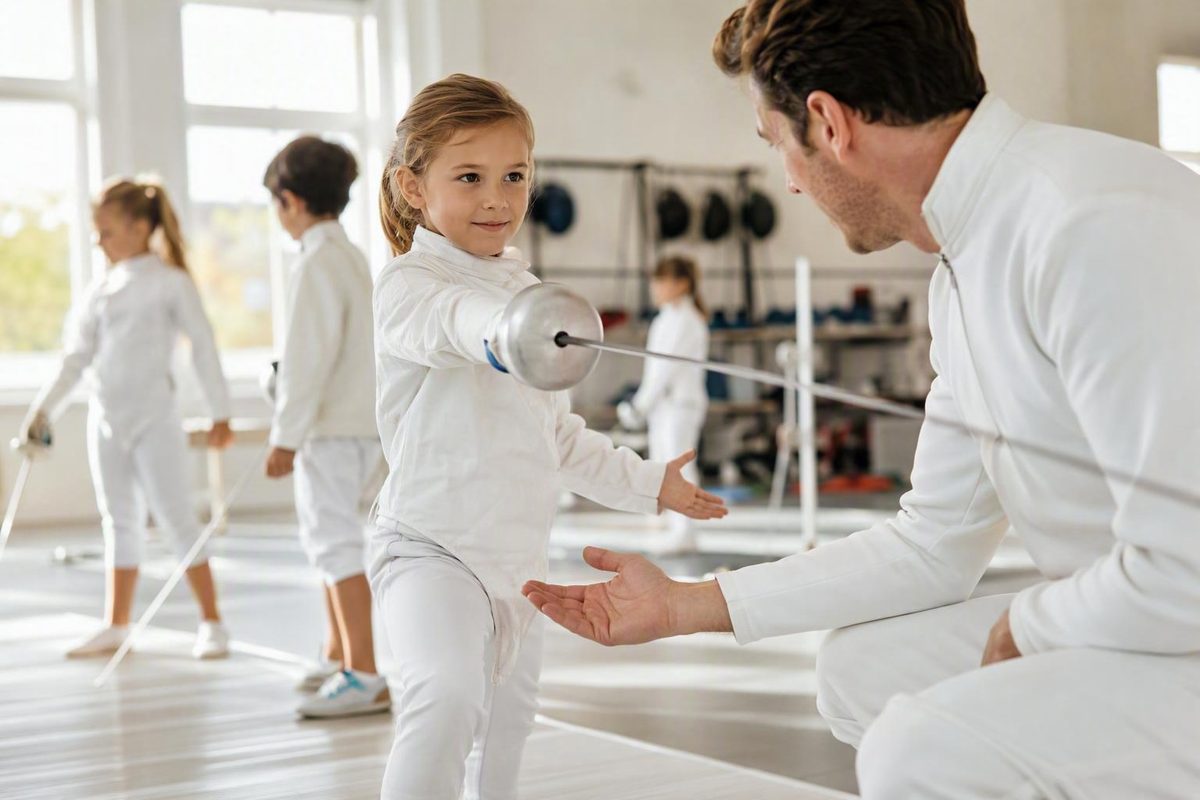
For many children, the elementary-school years are a sensible time to try fencing, but there is no single best starting age. The practical answer is: start when a local beginner program accepts your child, the equipment fits, and your child can follow the coach’s safety directions for the whole class. For one child that may be seven or eight; for another it may be ten or later.
Do not treat the youngest competition category as a recommendation to begin competing. USA Fencing’s 2025–26 age eligibility table includes Y8 and Y10 events, but those categories tell families who may enter particular competitions—not whether an individual child is ready for lessons.
The short answer by age
Use these ranges as a search guide, not a developmental verdict:
- Under 7: Look specifically for play-based, plastic-weapon, or movement classes. Many standard fencing classes will not be designed for this age.
- Ages 7–9: Some children are ready for a structured beginner class if the club accepts them and has child-sized gear. For example, Indianapolis Fencing Club currently lists beginner youth classes from age eight and provides the required equipment.
- Ages 10–12: This is still an ordinary time to begin. Children in this range may find more programs available and may be able to manage a longer group lesson, but readiness still matters more than the number on the birthday cake.
- Teens: It is not “too late” to start. A teen can fence recreationally, join a school or club program, and decide later whether competition is appealing.
A fencing-parent guide says many fencers in its community started around age nine and notes that club minimums vary. That is useful context, not a rule; even the guide begins by saying there are no hard-and-fast starting-age rules.
Five signs your child is ready for a beginner class
Age gets you to the program directory. These checks help you decide whether to register.
1. They can stop immediately when instructed
A beginner needs to freeze, lower the weapon, or step back when a coach calls stop. Your child does not need perfect concentration, but they should be able to listen during a demonstration and respond to a safety command without repeated negotiation.
Ask the club how it teaches this. A good answer should describe clear commands, supervised pair work, and what happens when a child is too distracted to fence safely that day.
2. They can handle a structured group lesson
Fencing alternates between action and waiting: watching a demonstration, practicing footwork, taking turns with a partner, and receiving corrections. A child who enjoys short bursts of activity but becomes miserable during every pause may prefer a shorter trial, camp, or small-group session first.
Do not confuse quietness with readiness. An energetic child may do well with a coach who keeps instructions brief and movement frequent. The useful question is whether the class format fits the child.
3. They are interested in fencing itself
Interest does not have to look like a lifelong commitment. Wanting to try the mask, learn a lunge, or understand how a point is scored is enough for a trial.
Be cautious if the only enthusiasm belongs to the parent. Let the first class answer a small question—“Would you like to do this again?”—instead of asking a child to commit to a season before they know what practice feels like.
4. The club has equipment that fits
Adult-sized equipment is not a harmless inconvenience. Ask whether the club has masks, jackets, gloves, and weapons sized for children in your child’s age and height range. British Fencing’s current safety guidance, for example, recommends shorter blades for younger fencers: size 0 for children under ten and shorter-than-full-size blades for under-14s. Those are British rules and recommendations, not universal requirements, but they show why “we have loaner gear” is not a complete answer unless that gear fits.
5. The program matches the child’s current goal
“Beginner fencing” can mean a one-day foam-weapon taster, a six-week fundamentals course, a competitive youth squad, or mixed-age open fencing. A first-timer usually needs an actual introductory class—not simply permission to join experienced fencers.
If your child wants fun and novelty, prioritize a welcoming trial and provided equipment. If they already want competition, ask how the club moves beginners into bouts without rushing them past basic control and safety.
What a good first fencing program should provide
Before paying for a term, look for a program that can explain:
- its minimum age and whether that is firm;
- the lesson length, group size, and age range;
- whether the first classes use plastic, foam, dry, or electric weapons;
- which equipment is supplied and what families must bring;
- how children are paired by size, experience, and control;
- the coach’s experience teaching the stated age group;
- the progression from solo footwork to drills and supervised bouts;
- whether a trial class is available before a longer commitment.
Program rules can legitimately differ. A club may choose age eight because its beginner course is one hour long and uses standard youth equipment. Another provider may accept younger children into a shorter, game-based class. The minimum tells you what that program is built to handle; it does not rank your child against other children.
Equipment and safety questions to ask
Fencing is taught with protective clothing and controlled weapons, not by handing children swords and letting them improvise. The exact kit depends on the activity, weapon, governing body, and local rules.
For context, British Fencing’s beginner-class guidance lists a jacket, under-plastron, mask, glove, suitable leg coverage, socks, and shoes for supervised pair work and sparring, with additional requirements depending on the activity and participant. International competition has a different and stricter specification: the FIE’s December 2025 material rules set detailed standards for competition clothing, masks, gloves, and protective equipment. A new family should not try to translate elite competition rules into a shopping list; the club should state which local rules apply and inspect the equipment it uses.
Ask these questions before the first lesson:
- Is all required protective equipment included?
- How do coaches check mask, jacket, glove, and weapon fit?
- Will children spar in the first class, or begin with movement and target drills?
- What footwear and clothing should my child wear underneath the supplied gear?
- Who should a child tell if something feels loose, painful, or damaged?
If the answers are vague, keep looking. “We have never had a problem” is less useful than a clear equipment checklist and a coach who can describe the class’s stop rules.
How to judge the first lesson
You do not need to decide whether your child has talent. Watch for fit.
After class, ask specific, neutral questions:
- What part was most fun?
- Was any instruction confusing?
- Did the equipment feel comfortable and secure?
- How did it feel to work with a partner?
- Would you like one more class?
Also notice whether the coach learned names, kept pair work controlled, corrected unsafe behavior promptly, and gave beginners something achievable to practice. A child can be tired or frustrated and still have had a good lesson. The stronger signal is whether they felt safe, understood what they were trying to do, and remain curious.
If the class was a poor match, separate the sport from the provider. A long mixed-age session may overwhelm a child who would enjoy a shorter youth class. An equipment-fit problem may disappear at a club with a better range of loaner gear. Conversely, a child who simply is not interested does not need to be persuaded into another term.
When to wait
Waiting is reasonable when the available class is below the club’s stated minimum, the gear does not fit, your child cannot yet follow immediate stop instructions, or the child does not want to participate. None of those means they will never be ready.
Try again later, or look for a lower-commitment introduction built for younger children. The goal is not to secure the earliest possible start. It is to find a first experience that makes safe instruction, skill-building, and enjoyment possible at the same time.
Bottom line
There is no universal age when kids should start fencing. Around ages seven to ten, many families can begin looking for an age-appropriate trial, but the deciding factors are the local program’s rules, the child’s ability to follow safety directions, correctly fitted equipment, and genuine interest. Older beginners have not missed their chance. Choose the class that fits the child you have now—not an imagined competitive timeline.
Use the US youth fencing club snapshot to find a starting list, then verify age groups, safeguarding, coaching, and fees directly.