
Most Lacrosse Games Have Four Quarters—But the Ruleset Matters
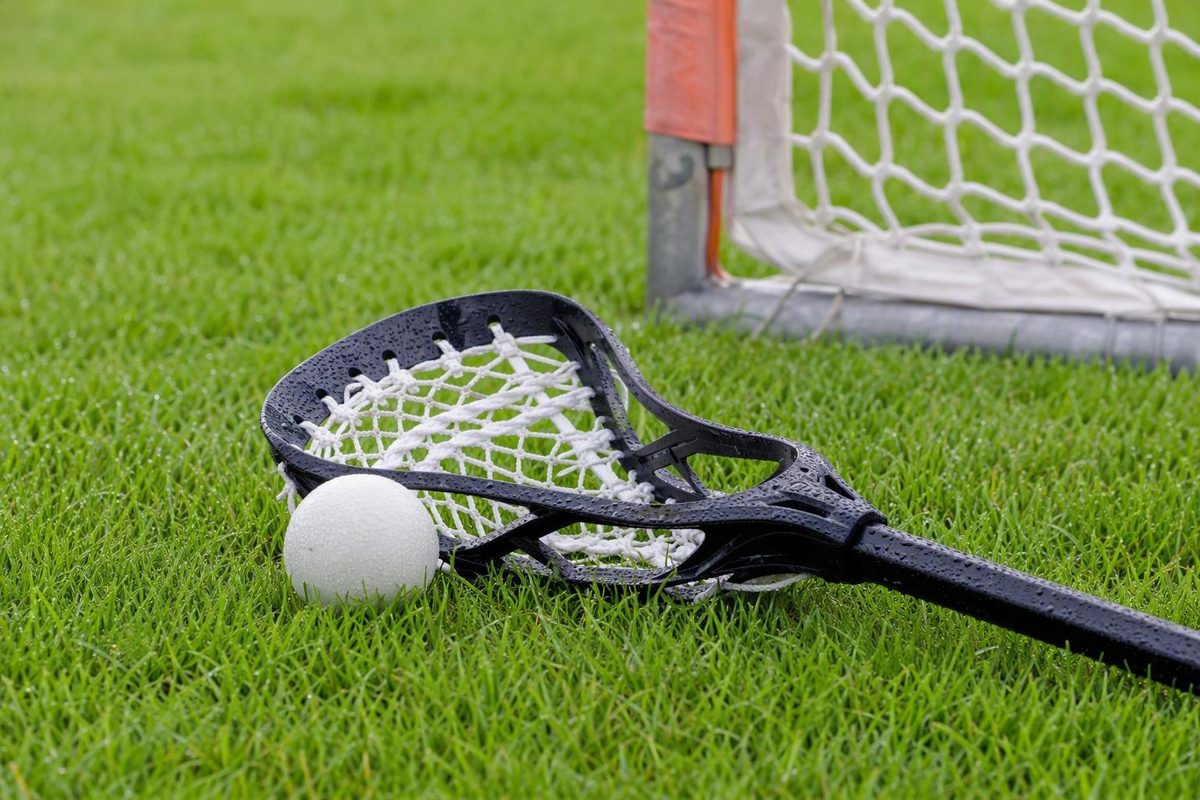
Usually four regulation quarters. Youth and some box formats may use halves or other periods. Overtime is not a fifth regulation quarter.
The short answer: lacrosse usually has four quarters
Most standard lacrosse games have four regulation quarters. That is the best quick answer for a new player, parent, or spectator, but it is not universal. Youth divisions, tournament formats, recreational leagues, and some forms of box lacrosse may divide games into halves or another period structure.
The number of quarters and the length of each quarter are separate questions. A high school game and a college game may both have four quarters while placing different amounts of time on the regulation clock. Two youth competitions can also have the same number of quarters but use different quarter lengths or clock-stoppage rules.
Quick answer
- Usual structure: Four regulation quarters
- Common quarter lengths: Shorter periods in youth play; commonly reported formats extend to 15-minute quarters in college and the NLL
- Important exception: Some youth and box formats use halves or other periods
- Final authority: The current league, governing-body, or tournament rules
Comparative summaries describe the progression from shorter youth periods to 15-minute NCAA and NLL quarters, but the exact format still depends on the competition.Signature Lacrosse compares timing across youth, school, college, PLL, and NLL play
Regulation ends after the fourth quarter in a four-quarter game. If the score is tied, additional play may follow under the applicable overtime rules. Overtime is separate from regulation; it does not convert the game into a five-quarter regulation contest.
This distinction matters when reading schedules. “Four quarters” identifies how regulation is divided, but it does not tell a family exactly when the game will end. Quarter breaks, halftime, clock stoppages, timeouts, injuries, administrative delays, and possible overtime all add elapsed time.
The practical answer to “how many quarters are in lacrosse?” is therefore: usually four, but identify the ruleset before relying on an exact quarter length or expected finish time.
Lacrosse quarter lengths at a glance
The table below compares widely used formats. “Total regulation playing time” means the time allocated on the game clock. It does not include scheduled breaks, stoppages, warmups, delays, or overtime.
| Level or league | Regulation structure | Length of each quarter | Total regulation playing time | Important qualification |
|---|---|---|---|---|
| Youth lacrosse | Often 4 quarters; some divisions use 2 halves | Variable; shorter quarters are commonly described as 8–12 minutes | Variable | Age group, boys’ or girls’ rules, small-sided format, league, and tournament modifications can change the structure. A boys’ youth overview describes 8-minute quarters as typical, not universal.Westborough Youth Lacrosse explains its boys’ game-length framework |
| U.S. high school | Commonly 4 quarters | Commonly 12 minutes | Commonly 48 minutes | This is a broad planning baseline. The governing state association, boys’ or girls’ rules, junior varsity policies, and event modifications should be checked.Bownet summarizes commonly used high school timing |
| NCAA men’s and women’s lacrosse | Commonly described as 4 quarters | 15 minutes | 60 minutes | The supplied support is from secondary summaries rather than a current NCAA rulebook, so current NCAA competition materials should control.Signature Lacrosse summarizes the commonly reported NCAA format |
| Premier Lacrosse League | Commonly described as 4 quarters | 12 minutes | 48 minutes | The PLL is an outdoor professional field league. Current league materials should be checked when exact timing or clock operation matters.LacrosseMonkey summarizes the PLL’s quarter format |
| National Lacrosse League | 4 quarters | 15 minutes | 60 minutes | This is an NLL-specific professional box format, not a universal rule for all box lacrosse.SHOC compares NLL timing with other commonly used formats |
Youth is deliberately listed as variable. “Youth lacrosse” covers a wide range of ages, field sizes, roster structures, and competition types. A format intended for young beginners may not resemble the timing used in a full-field contest for older players. Local leagues and weekend tournaments can also modify a national or regional starting point.
High school requires similar care. Four 12-minute quarters are a useful general expectation, but the strongest supplied official evidence applies specifically to NFHS high school girls’ lacrosse. That rule change is discussed in detail below. Boys’ timing is commonly reported in the same four-by-12-minute structure, but the applicable state or competition rules remain the final authority.
The NCAA and PLL entries also require qualification. The supplied evidence consistently describes NCAA men’s and women’s games as four 15-minute quarters and PLL games as four 12-minute quarters. Because those figures are supported here by secondary summaries rather than current official NCAA and PLL rulebooks, they should be treated as reliable orientation rather than a substitute for competition documents.
The NLL provides a more clearly bounded example: its professional box format uses four 15-minute quarters. That answer applies to the NLL. It should not be extended automatically to youth box leagues, recreational indoor programs, or international competitions.
Finally, do not add the quarter lengths and assume that the result is the full duration of the event. Four 12-minute quarters place 48 minutes on the regulation clock, but the game necessarily lasts longer once quarter breaks and halftime are included. Stop-clock rules and overtime can extend it further.
Why youth lacrosse may use quarters or halves
Youth lacrosse has the greatest timing variation because the category includes many ages and several distinct game formats. A small-sided introductory game for young children does not necessarily use the same structure as a full-field game for older players. Boys’ and girls’ rules may differ, and field and box programs may be governed by different organizations.
Many youth games use four quarters that are shorter than college quarters. Third-party summaries commonly place youth quarter lengths around 8–12 minutes, but that is a descriptive range rather than a rule that every program follows. Some younger or modified competitions instead use two halves. One youth-oriented comparison, for example, describes four 8-minute quarters as one common format while also giving an example of an 8U game played in two 12-minute halves.Lacrosse Balls Direct illustrates the variation in youth timing
Once the local format is known, calculating regulation time is straightforward:
- Four 8-minute quarters produce 32 minutes of regulation play.
- Two 20-minute halves produce 40 minutes of regulation play.
- Four 10-minute quarters also produce 40 minutes, despite using a different period structure.
These are arithmetic examples, not promises about a particular child’s game. They show why the number of periods and the total playing time must be checked separately. Two games can put the same number of minutes on the clock while dividing them differently, and two four-quarter games can have different regulation totals.
Before estimating the length of a youth game, identify five things:
- The age division. Programs may use labels such as 8U, 10U, 12U, or 14U, but the label alone does not establish the timing.
- The applicable boys’ or girls’ rules. The two rule families may prescribe different youth structures, even for players of similar ages.
- Whether the program plays field or box lacrosse. The discipline can point toward a ruleset, but it does not settle the period structure by itself.
- The governing organization. National recommendations, state associations, local leagues, clubs, and independent organizers may not use identical rules.
- Any event-specific modifications. Tournament operators may shorten periods, use a running clock, omit overtime, or impose a hard end time.
Start with the registration page and team schedule. Those materials often identify the age division and may link to the applicable rules. Next, check the league handbook or current rulebook for period length, clock operation, breaks, and overtime.
If those documents disagree, ask the coach, program director, or tournament organizer which one controls. In that situation, the tournament modification governs that event.
Parents should also check whether a posted game time is the opening whistle or the required arrival time. Those expectations do not change the number of quarters, but they do change how much time the family needs to reserve.
The safest conclusion is not that youth lacrosse always has four short quarters. It is that youth formats vary more than higher-level formats, making local confirmation especially important.
High school boys’ and girls’ lacrosse
U.S. high school lacrosse commonly uses four 12-minute quarters, producing 48 minutes of regulation play. That is a useful planning baseline, but “high school lacrosse” is not a single, completely uniform rules category. The state association, boys’ or girls’ rules, school classification, competition level, and event format can all matter.
The clearest official example in the supplied evidence is NFHS high school girls’ lacrosse. Beginning with the 2024 season, the format changed from two halves to four 12-minute quarters, providing 48 minutes of regulation play. Teams receive a two-minute break after the first and third quarters, a 10-minute halftime, and change ends after every quarter.The NFHS announced the girls’ quarter format and scheduled breaks
That change explains why older articles may describe high school girls’ lacrosse as a two-half game. Such an article may accurately reflect an earlier NFHS season, but it should not be treated as evidence for the quarter structure adopted beginning in 2024. A reference to halves could also describe a different league or tournament, so the key question is which rules govern the game.
For high school boys’ lacrosse, four 12-minute quarters are commonly reported. The supplied evidence, however, does not include a current official national boys’ rulebook. The figure should therefore remain a general expectation rather than a claim that every boys’ contest in every state follows identical timing.
High school-age players may encounter modified formats in:
- junior varsity or developmental games;
- middle school contests held at high school facilities;
- recreational leagues organized by age rather than school enrollment;
- club and summer showcase events;
-
competitions governed by local rather than scholastic rules;
-
tournaments operating within fixed scheduling windows.
A schedule that says only “high school lacrosse” does not identify the complete ruleset. A varsity NFHS girls’ game, a boys’ club contest, and a summer showcase can involve athletes of similar ages while using different clock procedures or event modifications.
For practical planning, look for the sanctioning organization on the schedule or registration page. If it is not listed, ask whether the contest follows NFHS rules, a state association’s adaptations, a club league handbook, or tournament-specific rules. That answer is more useful than relying on the players’ ages alone.
College and professional lacrosse use four quarters, with different clocks
College and major U.S. professional formats demonstrate why “four quarters” does not answer “how long is each quarter?”
The supplied secondary sources consistently describe NCAA men’s and women’s lacrosse as using four 15-minute quarters, totaling 60 minutes of regulation play. The same comparisons describe the PLL as using four 12-minute quarters, totaling 48 regulation minutes.Bownet compares commonly reported NCAA, PLL, and NLL regulation formats
Those descriptions also show why a blanket statement that women’s lacrosse always uses two halves is unreliable. Major women’s rulesets may use quarters, while an older article, local league, or different competition could use another structure. The discipline and governing body matter more than the word “women’s” by itself.
Professional lacrosse must be labeled by league:
- The Premier Lacrosse League is an outdoor field league commonly described as using four 12-minute regulation quarters.
- The National Lacrosse League is a professional box league using four 15-minute regulation quarters.
These figures do not conflict. The leagues offer different forms of lacrosse and use different timing rules. “Professional lacrosse” is therefore not precise enough to establish quarter length.
The NLL’s official overview also specifies two-minute breaks between quarters and a 15-minute halftime. Its four 15-minute quarters produce 60 minutes of regulation play, but those scheduled pauses already make the event longer than an hour before other stoppages are considered.The NLL details its quarters, breaks, halftime, and overtime structure
Clock operation creates another important distinction. Quarter length tells you how much regulation time is allocated, not how quickly that time passes in the venue. A running clock continues through situations in which a stop clock would pause. Competition rules may also prescribe different clock treatment after goals, during penalties, around timeouts, or late in a period.
As a result, two games can each contain 60 regulation minutes yet occupy different amounts of real time. A game with frequent stoppages can run substantially longer than one using continuous or mostly running time. Even games within the same competition may finish at different times because the number of goals, penalties, injuries, reviews, or other interruptions is not fixed.
For general understanding, four 15-minute quarters is the commonly reported NCAA format, and four 12-minute quarters is the commonly reported PLL format. Anyone making a rule-sensitive decision—such as preparing event operations, publishing a competition guide, or building a precise travel schedule—should consult the current NCAA or PLL materials rather than treating a secondary comparison as the final authority.
Field lacrosse, box lacrosse, and period-format exceptions
Field lacrosse commonly uses four quarters across major U.S. high school, college, and professional formats. Box lacrosse does not have one universal period structure.
The NLL is a concrete example of box lacrosse played in quarters. Its professional games use four 15-minute regulation quarters. That establishes the format for the NLL, not for every indoor, youth, recreational, Canadian, or international box competition.
One supplied third-party comparison describes international box lacrosse as using three 20-minute periods rather than four quarters.Lacrosse Ball Store contrasts common field structures with a three-period box format Because that description does not come from a current rulebook for a named international competition, the precise format should be confirmed before it is used for scheduling or presented as a universal international rule.
The broader point is sound even without generalizing the three-period example: some lacrosse competitions divide regulation into something other than four quarters. The named competition’s current rules must settle the question.
The terminology is useful:
- A period is a generic segment of play.
- A quarter is specifically one of four regulation segments.
- A half is one of two regulation segments.
- Quarters and halves are both types of periods.
- A game with three periods does not have “three quarters.”
Do not infer the structure solely from whether a game is indoors or outdoors. An indoor venue may suggest box lacrosse, but the league or event still determines the format. An outdoor youth tournament may use quarters, halves, or another running-time structure.
Likewise, “field lacrosse” narrows the possibilities but does not identify the exact clock. NFHS girls’ field lacrosse, NCAA field lacrosse, the PLL, and a local youth field league can all use four quarters while assigning different lengths or clock rules to those quarters.
The most reliable labels are specific: NLL box, a named international box competition, NCAA field, NFHS girls’ field, or a named youth league and age division. The more precisely the ruleset is identified, the more reliable the answer about period structure becomes.
Overtime and real-world game length
Overtime occurs after regulation and is not a fifth regulation quarter. If a ruleset provides four regulation quarters, that remains the regulation structure even when additional play is needed to resolve a tie.
There is no single overtime procedure for every form of lacrosse. The governing rules determine:
- whether overtime is used at all;
- how long each overtime period lasts;
- whether play is sudden victory;
- whether additional overtime periods follow;
- whether teams receive breaks or timeouts; and
- whether a tournament permits a tie because of scheduling limits.
The NLL provides a bounded example. A tie after its four regulation quarters proceeds to sudden-victory overtime, with additional overtime play if necessary until a goal decides the game.The NLL explains its sudden-victory overtime format That procedure should not be generalized to youth, high school, college, field, and other box competitions.
Families should also distinguish regulation clock time from elapsed event time. Four 12-minute quarters equal 48 regulation minutes, but the game does not necessarily finish 48 minutes after the opening whistle. Elapsed time can include:
- breaks after the first and third quarters;
- halftime;
- team and official timeouts;
- clock stoppages;
- penalties and administrative delays;
- goals and restarts;
- injuries or equipment problems;
- weather or field delays; and
- overtime.
Clock type is especially important. In a running-clock game, the game clock continues through many interruptions. This can make elapsed time relatively close to the scheduled period total plus breaks. In a stop-clock game, the clock pauses in specified situations, so the same amount of regulation time can take much longer to complete.
Tournament limits add another layer. An event may shorten periods, use a running clock, eliminate overtime, or impose a hard stop so that later games can begin on time. A team’s normal league format may therefore differ from the format used during a particular weekend.
Before leaving for a game, confirm:
- the required player arrival time;
- when team warmups begin;
- whether regulation uses quarters, halves, or another period structure;
- the length of each regulation period;
- whether the clock runs continuously or stops;
- the scheduled quarter breaks and halftime;
- the overtime or tie policy;
- whether the event has a hard time limit; and
- whether the next scheduled game depends on the previous game ending promptly.
For help translating regulation minutes into a realistic family schedule, see the Youth Listings guide to how long a lacrosse game lasts by age and ruleset. The current governing-body, league, and event rules should still control any rule-specific decision.
The bottom line
Most lacrosse games have four regulation quarters, but that answer is a starting point rather than a complete schedule. The player’s age group, boys’ or girls’ rules, field or box discipline, governing organization, and event format determine the actual structure.
The most useful reference points are the named formats in the table: NFHS high school girls’ lacrosse, commonly described NCAA play, the PLL, and the NLL all use quarters, but they do not all use the same quarter length. Youth leagues, tournaments, and some box competitions may instead use shorter quarters, halves, or another period structure.
Always verify the current local schedule or applicable rules. Regulation minutes do not equal total time at the field or arena, and tournament directors or recreational leagues may shorten or otherwise modify the usual format.
Frequently asked questions
How many quarters are in youth lacrosse?
Many youth lacrosse games have four quarters, commonly with shorter periods than college play. Some younger, small-sided, or modified divisions use two halves instead. One youth comparison illustrates both four-quarter formats and a two-half format for younger players.Lacrosse Balls Direct describes several youth structures
Check the age division, boys’ or girls’ rules, field or box format, league handbook, and tournament modifications. Do not assume that every youth game uses four eight-minute quarters or that age alone determines the format.
How many quarters are in high school girls’ lacrosse?
NFHS high school girls’ lacrosse changed from two halves to four 12-minute quarters beginning with the 2024 season, for 48 minutes of regulation play.The NFHS describes the quarter-based girls’ format
Other competitions involving high school-age players may use different rules. Confirm that the game is governed by NFHS rules or by a state association using that format.
How many quarters are in college lacrosse?
NCAA men’s and women’s lacrosse are commonly described as using four 15-minute quarters, totaling 60 minutes of regulation play.Lacrosse Ball Store summarizes the commonly reported college format
That figure is supported here by secondary material rather than a current NCAA rulebook. Consult current NCAA competition documents when precise timing or clock provisions matter.
Does box lacrosse have four quarters?
Sometimes. The NLL plays professional box lacrosse in four 15-minute quarters, but that does not establish the structure for every box competition.SHOC summarizes the NLL’s four-quarter format
Other box competitions may use periods or another structure. Identify the specific league, governing body, age division, and event rather than assuming that all indoor lacrosse follows NLL rules.
Is overtime considered a fifth quarter in lacrosse?
No. Overtime is additional play after regulation, not a fifth regulation quarter.
Its format depends on the ruleset. Some competitions use sudden victory, while youth leagues or tournaments may modify or omit overtime to stay within scheduling limits.