
A Parent's Guide to Choosing a Volleyball Net That Withstands Seasons of Play
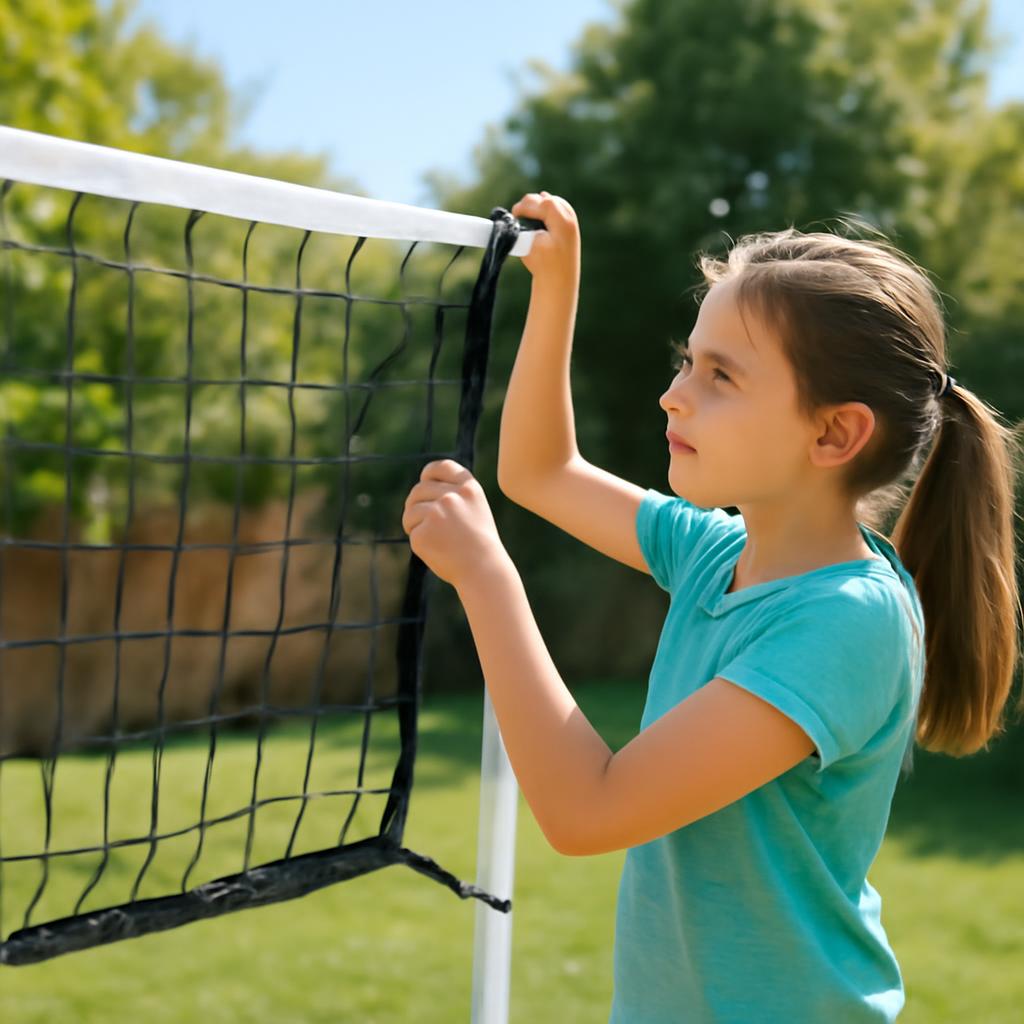
The bottom line is straightforward: if the net will stay in one yard for years, in-ground is the category most consistently aimed at that job.
If you are trying to figure out how to pick a durable volleyball net, start with the job the net actually has to do.
A backyard setup used a few weekends a month needs something different from a portable kit that gets hauled to parks or beaches all summer. Both are different again from a semi-permanent net used for regular youth training. The most useful public guidance on this topic comes mostly from seller buying guides, retailer FAQs, and product roundups rather than independent durability testing, so the safest approach is to use those sources to compare system type, materials, features, and fit for your family’s use case—not to treat any single “heavy-duty” label as proof of long-term performance (Seattle Volleyball buying guide, Sterling Volleyball buyer’s guide, Epic Sports volleyball net systems FAQ, Reviewed’s volleyball net roundup, VolleyballUSA buying guide).
That matters for family budgeting too. Epic Sports says basic home kits can start around $20, while an Amazon bestseller snapshot showed many popular portable systems around $49.99 to $59.99, with higher-priced entries reaching $115.99 to $289.99 on the same page (Epic Sports volleyball net systems FAQ, Amazon Best Sellers in Volleyball Net Systems). With that kind of spread, choosing the right class of system matters more than chasing the most impressive product name.
The sections below break down the decisions that matter most, while keeping the evidence in proportion: where guidance is based on seller pages or product reviews, it is presented that way.
Assess Your Playing Needs First
The first decision is where the system will live: indoors, outdoors, or moving between locations. Seattle Volleyball’s buying guide says to decide indoor vs. outdoor first, and that is still the most practical starting point for parents. Outdoor setups need materials and construction that account for weather exposure in a way indoor gym nets may not. Seller guidance from VolleyballUSA also emphasizes outdoor-specific concerns such as sun, moisture, and mildew resistance (Seattle Volleyball buying guide, VolleyballUSA outdoor net overview).
Next, decide whether you need only the net or a complete system. Seattle Volleyball notes that a replacement net may be enough if you are using a park or beach court with poles already installed. For most home buyers, though, a complete setup is the relevant purchase: poles, net, anchors or stakes, and often boundary lines (Seattle Volleyball buying guide). This is one of the easiest ways to avoid a frustrating purchase. A durable replacement net is still the wrong buy if your family actually needs the full system around it.
If your yard is going to be the long-term home court, Seattle Volleyball describes an in-ground system as a long-lasting addition to the yard (Seattle Volleyball buying guide). That description is seller guidance, not an independent durability test, but it captures the basic design difference well: in-ground systems are made to stay put, while portable ones are made to move.
Portable systems make more sense when flexibility is the priority. Seattle Volleyball frames portable systems as the option when you want to take the setup to different locations (Seattle Volleyball buying guide). For a family that rotates among the backyard, a friend’s house, the park, and the beach, that may be more important than having the most planted, stable setup possible.
Parents should also think about who is playing and what kind of play the net needs to support. Seattle Volleyball recommends matching the setup to skill level, from casual recreation to more competitive use, and it also notes that some families choose smaller nets or lower heights for small children instead of full regulation gear (Seattle Volleyball buying guide). That is not just a convenience choice.
If you are buying for a child moving from casual backyard play into more serious training, it can also help to watch for burnout signs before investing in a more permanent setup.
A sharper parent decision framework looks like this:
| Your likely use case | Best starting direction | Why |
|---|---|---|
| Backyard family play a few times a month | Complete outdoor system | Most homes need poles, net, and anchors together (Seattle Volleyball buying guide) |
| Same yard, same court, season after season | In-ground system | Seller guidance describes in-ground sets as long-lasting yard additions (Seattle Volleyball buying guide) |
| Park, beach, vacations, or shared family use | Portable system | Portability is the core benefit (Seattle Volleyball buying guide) |
| Existing poles already installed somewhere | Net only | A replacement net may be enough (Seattle Volleyball buying guide) |
| Younger children learning basics | Adjustable or lower-height option | Some systems are sold with lower heights for small children (Seattle Volleyball buying guide) |
A good durable choice starts with five plain questions:
- Indoor or outdoor?
- Existing poles or full system?
- Permanent yard setup or portable use?
- Recreational family play or more serious youth training?
- Full regulation height or a lower youth-friendly option?
If you answer those first, later decisions about materials and price become much clearer.
Portable vs In-Ground Systems: Durability Trade-Offs
For long-term family use in one yard, the available guidance generally points toward in-ground systems as the more stable option. Seattle Volleyball describes them as long-lasting yard additions, and Epic Sports’ retailer FAQ says permanent systems are generally more stable and durable than portable ones (Seattle Volleyball buying guide, Epic Sports volleyball net systems FAQ). Because both are commercial sources, the careful takeaway is not that permanent systems are always better. It is that they are designed around a different purpose: staying anchored in one place.
That design goal matters for parents choosing between convenience and stability. If your family wants a backyard fixture that stays up as part of the yard, in-ground is the category most consistently marketed for that role. If you want something you can move or store, portability becomes the better fit even if it comes with some compromises.
Portable systems are openly sold on those terms. Seattle Volleyball and Epic Sports both present them as the right choice when you want to move the net among locations (Seattle Volleyball buying guide, Epic Sports volleyball net systems FAQ). Epic Sports also notes that basic home sets often include poles, net, stakes, hardware, and a bag, while Reviewed’s roundup describes portable kits that include accessories such as guide ropes, stakes, boundary lines, balls, pumps, and storage bags (Epic Sports volleyball net systems FAQ, Reviewed’s volleyball net roundup).
Pole material is one of the clearest places where that trade-off shows up. Sterling Volleyball’s buyer guide recommends aluminum or carbon fiber poles when you want lightweight durability, while Epic Sports says home systems may use PVC, lightweight aluminum, or heavy-duty steel (Sterling Volleyball buyer’s guide, Epic Sports volleyball net systems FAQ). For parents, that turns into a simple comparison:
- Aluminum or carbon fiber: lighter to move and generally better suited to repeated setup and teardown (Sterling Volleyball buyer’s guide).
- Steel: often used in sturdier-feeling backyard kits, but heavier to carry and store (Epic Sports volleyball net systems FAQ, Reviewed’s volleyball net roundup).
- PVC: common in lighter recreational systems, especially lower-cost home kits (Epic Sports volleyball net systems FAQ).
Reviewed’s roundup gives a concrete example of the heavier end of the portable market by noting powder-coated steel poles and stakes in one sturdier backyard set (Reviewed’s volleyball net roundup). That does not prove powder-coated steel is the best answer for every family. It does show what a more durability-oriented portable kit may look like in consumer listings: tougher-feeling materials, plus more weight.
For parents, the real question is not “Which system is strongest in theory?” It is:
- Will this net stay in one place?
- Who will carry it and set it up?
- How often will it be moved?
- Will extra weight make the system more annoying than useful?
A system that is very sturdy on paper but so heavy that it rarely gets used is not the best family choice.
One more note matters for a narrower group of buyers. If you are using existing installed posts at a school, church gym, or shared facility, Anthem Sports says the inside diameter of existing floor sleeves is typically 3, 3-1/2, or 4 inches (Anthem Sports guide to choosing a volleyball net system). That is not a typical backyard-shopping issue, but it is important if your “family purchase” is actually a replacement or shared-use system tied to installed hardware.
The bottom line is straightforward: if the net will stay in one yard for years, in-ground is the category most consistently aimed at that job. If the net needs to travel, portable is the practical answer, and then your focus shifts to pole material, included anchoring gear, and how manageable the setup will be for the people actually using it.
Key Materials for Weather and Wear Resistance
When parents ask what materials hold up best outdoors, the most defensible answer from the available evidence is: look for nylon or polyethylene-based netting, then evaluate the rest of the construction around it.
In Reviewed’s roundup, one portable set with nylon mesh was praised for withstanding rain, wind, and sunlight, while a PE-based set was described as durable, and the overall set was described as rust- and water-resistant (Reviewed’s volleyball net roundup). Sterling Volleyball’s buyer guide similarly recommends polyethylene or nylon nets with a tight weave to help maintain proper tension during play (Sterling Volleyball buyer’s guide).
That is useful, but it is not proof that one material universally beats the other. The safer buying takeaway is:
- Nylon is commonly used in outdoor and all-weather consumer systems.
- Polyethylene (PE) is also commonly used and often marketed for durability and weather resistance.
- The whole build matters, not just the material name.
That last point is important because many public claims here come from seller pages and product descriptions. A nylon net with weak edges or cheap hardware can still disappoint. A PE-based net with better reinforcement may outlast it.
VolleyballUSA says its outdoor nets use UV- and mildew-resistant fabrics, strong knotted nylon, and, in heavier outdoor models, #42 gauge netting rather than lighter builds (VolleyballUSA outdoor net details). Because that is a manufacturer’s description, treat it as a common heavy-duty pattern in the market rather than a universal standard. Even so, it aligns with the broader message across the evidence: outdoor nets are expected to handle more sun and moisture than basic indoor ones.
Borders and tapes deserve more attention than many parents give them. Reviewed highlights products with waterproof vinyl tapes and 3-inch top and bottom tapes, while VolleyballUSA says outdoor nets often use 4-inch borders on all four sides and notes that thicker borders make the net more visible outdoors (Reviewed’s volleyball net roundup, VolleyballUSA buying guide). VolleyballUSA also notes a trade-off parents should know: the thicker the border, the heavier the net, which can matter if you want something easy to carry or easy to tighten on lighter poles (VolleyballUSA buying guide).
For poles, the evidence again points to a materials choice tied to use case rather than one winner. Sterling recommends aluminum or carbon fiber for lightweight durability, and Reviewed notes powder-coated steel in sturdier home sets (Sterling Volleyball buyer’s guide, Reviewed’s volleyball net roundup). If a parent will be setting up the system alone, lighter poles may be the more practical durable choice because they are easier to handle repeatedly. If the net will stay assembled more often, heavier steel may be acceptable.
A useful materials checklist for outdoor buying is:
- Net material: nylon or PE (Reviewed’s volleyball net roundup, Sterling Volleyball buyer’s guide)
- Weave or gauge: look for a clearly described tighter or heavier build where possible (Sterling Volleyball buyer’s guide, VolleyballUSA outdoor net details)
- Weather language: UV-resistant, mildew-resistant, all-weather (VolleyballUSA outdoor net details, Reviewed’s volleyball net roundup)
- Borders and tapes: reinforced vinyl tape, especially if the system will live outdoors (Reviewed’s volleyball net roundup, VolleyballUSA buying guide)
If a listing only says “heavy duty” but gives you none of that detail, you still do not know much.
Essential Features for Lasting Performance
Durability is not only about the net mesh. The buying guides in this category keep returning to the same construction details: reinforced stitching, stronger borders, secure side attachments, adjustable tensioning, and replaceable parts.
VolleyballUSA’s seller guidance emphasizes reinforced stitching, strong knotted nylon, and 4-inch borders on outdoor nets (VolleyballUSA outdoor net details, VolleyballUSA buying guide). Sterling’s materials guide, again from a seller, highlights a durable woven top band, reinforced top corners, lower cable tightening straps, and hook-and-loop side straps in describing a longevity-oriented design (Sterling dimensions and materials guide). You do not need to buy one specific branded design to use that lesson. You do need to inspect the parts of the net that carry tension and hold shape.
For parents shopping product pages or handling a display model in person, a simple inspection order works well:
- Top band or headline: Does it look substantial and well attached?
- Corners: Are they reinforced or lightly finished?
- Side attachments: Are there side straps, bindings, or ways to secure the net cleanly?
- Tension system: Is there a clear way to adjust and re-tighten the net?
- Hardware: Does the listing mention replaceable cables or service parts?
Sterling recommends a tight weave for maintaining tension, and its materials guide describes lower cable tightening straps and rigging plus side straps for adjustment (Sterling Volleyball buyer’s guide, Sterling dimensions and materials guide). Sports Imports also says programs should check net height with a chain and use proper setup accessories such as antennas (Sports Imports net guide). Most parents do not need formal chain checks for casual backyard rallies, but they do benefit from one simple principle: choose a system that can be adjusted cleanly after setup rather than one that relies on a single fixed pull and hope.
Replacement parts are another underrated feature. Sports Imports specifically highlights replacement cables and other parts as part of maintaining net systems over time (Sports Imports net guide). That matters for parents because a repairable system can be more practical than a sealed kit where one worn component means rebuying everything.
For outdoor exposure, prioritize listings that use clear weather language instead of vague promises. Reviewed describes one higher-end portable set as using all-weather nylon, while VolleyballUSA describes outdoor nets built with UV- and mildew-resistant materials (Reviewed’s volleyball net roundup, VolleyballUSA outdoor net details). “Outdoor” is a start. “UV-resistant,” “mildew-resistant,” or “all-weather nylon” tells you more.
Safety features belong in the same conversation. Sterling’s buyer guide says antennas should be easy to attach and pole pads matter for safety (Sterling Volleyball buyer’s guide). For casual family play, antennas may be optional. Pole padding is easier to justify whenever multiple kids are playing around upright posts.
A durable family system should help you manage three common problems:
- Sagging: via a workable tensioning system (Sterling dimensions and materials guide)
- Edge wear: via reinforced stitching, borders, and top-band construction (VolleyballUSA outdoor net details, Sterling dimensions and materials guide)
- Premature all-or-nothing replacement: via serviceable parts and cables (Sports Imports net guide)
Sizes and Heights for Youth and Regulation Play
For most parents, the most useful rule is this: check the product page, not the box label alone.
Retail listings commonly describe a standard volleyball net as 32 feet long and 39 inches tall (VolleyballUSA product page). That is the most familiar size buyers will see across consumer listings. At the same time, a manufacturing inspection article describes volleyball nets as approximately 31 feet 2 inches wide and 39 inches tall in one standards-oriented manufacturing context (InTouch Quality volleyball net inspection process). Because those figures are not presented consistently across the evidence, the responsible parent takeaway is not to memorize one disputed width. It is to verify the listed dimensions and intended post spacing for the exact product you are buying.
Height references are a little more consistent in the available sources. Reviewed and VolleyballUSA both list common regulation heights of 7 feet 11 5/8 inches for men and 7 feet 4 1/8 inches for women (Reviewed’s volleyball net roundup, VolleyballUSA product page). If your child is trying to prepare for school, club, or league play, those are the retail-reference numbers worth checking against the product specs.
Younger players often benefit from lower settings. Seattle Volleyball notes that some systems are sold with lower heights for small children, and Epic Sports gives retailer examples for kids under 10 of about 6 feet 6 inches for girls and 7 feet for boys (Seattle Volleyball buying guide, Epic Sports volleyball net systems FAQ). Those should be treated as youth-use examples from buying guides, not as a universal rulebook. They are still useful because they remind parents that a family net does not have to be permanently locked into adult or older-teen settings.
Post spacing also matters. VolleyballUSA’s buying guide says regulation nets are 32 feet long while many pole installations are around 36 feet apart, and Sports Imports notes that some XL nets can cover pole spreads of up to 42 feet (VolleyballUSA buying guide, Sports Imports net guide). That is why “regulation” by itself is not enough. Parents should check four details before buying:
- Net length and height
- Adjustable height range
- Intended pole spacing
- Whether the listing says it meets school, league, or official specs (Seattle Volleyball buying guide, Anthem Sports guide to choosing a volleyball net system)
For casual backyard rallies, exact compliance matters less. For practice meant to feel like team volleyball, the product listing needs a closer read.
Maintenance Routines to Maximize Lifespan
Even a well-chosen net can wear out early if it is stored wet, left dirty, or packed away with sand and salt still clinging to the mesh and tape.
Sports Imports recommends routine inspection, cleaning, and proper storage to extend volleyball equipment life, and it stresses that the system should be checked as a whole because it is only as strong as its weakest part (Sports Imports maintenance guide). For parents, that means inspecting not just the netting but also the tape, straps, stakes, poles, and connection points.
The cleaning routine Sports Imports describes is simple and realistic for families:
- Lay the net flat.
- Brush off debris with a soft-bristled brush.
- Scrub both sides with mild detergent and water.
- Rinse.
- Let the net dry completely before storage (Sports Imports maintenance guide).
That last step matters. Sports Imports specifically recommends storing nets in a cool, dry, well-ventilated space off the ground and says they should be fully dry before they are put away (Sports Imports maintenance guide). If you have a portable system, detaching the net after use is a reasonable way to reduce unnecessary exposure and store it properly.
Beach and backyard care are not the same. Sports Imports notes that sand, salt, sun, and moisture are especially hard on beach nets (Sports Imports maintenance guide). If your family plays at the beach, rinse and dry more carefully than you would after a grassy-yard session.
Sterling’s buyer guide adds a broader but still useful reminder: follow the manufacturer’s cleaning and storage guidance, and check warranty terms when you buy (Sterling Volleyball buyer’s guide). That is sensible because some nets or components may have material-specific care instructions.
Sports Imports also notes that mesh thickness or gauge influences durability and that badly frayed or broken sections may eventually require replacement under manufacturer guidance (Sports Imports maintenance guide). In practice, that means a heavier-duty net still benefits from ordinary care. Thickness helps, but storage habits still matter.
A low-effort family maintenance routine looks like this:
- quick inspection before and after play;
- brush off dirt or sand;
- wash occasionally with mild detergent;
- dry fully;
- store cool, dry, ventilated, and off the ground (Sports Imports maintenance guide).
That routine is modest, but it is one of the few parts of volleyball-net longevity that the evidence supports directly.
Balancing Budget with Proven Value
Most parents do not need the most expensive volleyball net available. They do need to avoid comparing unlike products as if they are the same thing.
Epic Sports says basic home volleyball kits can start around $20 (Epic Sports volleyball net systems FAQ). An Amazon best-sellers snapshot showed popular net systems around $49.99 to $59.99, with higher-priced entries including $115.99, $139.99, and $289.99 on the same page (Amazon Best Sellers in Volleyball Net Systems). Those are examples from retail pages, not stable market rates, but they are still useful for one reason: they show that “volleyball net” covers several very different product tiers.
Reviewed’s roundup helps explain some of that spread. Its product descriptions tie higher prices to sturdier features such as powder-coated steel poles, all-weather nylon, and fuller accessory packages in some systems (Reviewed’s volleyball net roundup). That does not prove that every expensive net is a good value. It does support a better comparison habit: compare within the same system class.
For example:
- A replacement outdoor net and a portable family kit are not direct substitutes.
- A $50 to $60 travel-style portable set and a $100-plus portable set may be worth comparing feature by feature.
- A permanent in-ground setup will naturally cost more than a trunk-friendly kit because it is solving a different problem (Epic Sports volleyball net systems FAQ, Amazon Best Sellers in Volleyball Net Systems).
Accessories can add real family value too. Reviewed lists complete kits that include items such as a storage bag, boundary line, guide ropes, stakes, ball, and pump, while Epic Sports notes that basic sets often include poles, net, stakes, hardware, and a bag (Reviewed’s volleyball net roundup, Epic Sports volleyball net systems FAQ). Those extras are not frivolous if they make the system easier to use and easier to store correctly.
If two systems seem close in price, the better tie-breakers are usually:
- Correct system type for your use
- Weather-appropriate net materials
- Pole material and anchoring
- Reinforced borders and workable tensioning
- Useful accessories such as stakes, boundary lines, and a storage bag
- Replacement parts or warranty support (Sterling Volleyball buyer’s guide, Sports Imports net guide)
That order is more reliable than buying by price alone because it keeps the decision tied to the way your family will actually use the net.
A careful parent conclusion, given the quality of the public evidence, is this: the safest route is to match the system type to the environment, look for clearly described materials such as nylon or PE plus reinforced construction, and choose a setup your household will actually maintain and store correctly (Reviewed’s volleyball net roundup, Sterling Volleyball buyer’s guide, Sports Imports maintenance guide). That will not guarantee a certain number of seasons, because the evidence available publicly does not support that kind of promise. But it is the clearest way to avoid buying the wrong category of net for backyard play, youth practice, or a shared family court.
What are the standard volleyball net dimensions for youth play?
Retail and school-style product listings commonly describe a standard volleyball net as 32 feet long by 39 inches tall (VolleyballUSA product page). A manufacturing-oriented source gives an approximate width of 31 feet 2 inches and the same 39-inch height, which is one reason it is better to verify the product listing than assume every “regulation” label means the same thing (InTouch Quality volleyball net inspection process).
Seattle Volleyball notes that some systems offer lower-height options for small children, and Epic Sports gives retailer examples under age 10 of about 6 feet 6 inches for girls and 7 feet for boys (Seattle Volleyball buying guide, Epic Sports volleyball net systems FAQ).
Nylon or PE: which material is better for outdoor durability?
The available evidence does not show a clear universal winner. In Reviewed’s roundup, nylon mesh was praised for holding up in rain, wind, and sunlight, while a PE-based set was described as durable, water-resistant, and rust-resistant at the system level (Reviewed’s volleyball net roundup). Sterling’s buyer guide recommends either polyethylene or nylon, especially with a tight weave to help maintain tension (Sterling Volleyball buyer’s guide).
For parents, the better question is usually not “nylon or PE?” but “what is the full outdoor build?” Look for weather language such as UV or mildew resistance, reinforced borders, and a clearly described tensioning system in addition to the base material name (VolleyballUSA outdoor net details, Sterling Volleyball buyer’s guide).
How do I clean and store a volleyball net properly?
Sports Imports recommends laying the net flat, brushing off debris with a soft-bristled brush, scrubbing it with mild detergent and water, rinsing it, and then letting it dry completely before storing it (Sports Imports maintenance guide).
For storage, keep it in a cool, dry, well-ventilated place off the ground (Sports Imports maintenance guide). Beach nets need extra care because sand, salt, sun, and moisture are especially hard on them (Sports Imports maintenance guide).
Portable or in-ground: which lasts longer in a backyard?
The seller and retailer guidance in the evidence set generally points to in-ground systems as the better fit for a fixed backyard court. Seattle Volleyball describes them as long-lasting yard additions, and Epic Sports says permanent systems are generally more stable and durable than portable ones (Seattle Volleyball buying guide, Epic Sports volleyball net systems FAQ).
Portable systems still make sense when your family needs flexibility. They are easier to move and often come with stakes, hardware, and bags, but they are sold with mobility as the main advantage rather than permanence (Seattle Volleyball buying guide, Epic Sports volleyball net systems FAQ). For one-yard, long-term use, in-ground is usually the more appropriate category.
What height adjustments suit kids versus teens?
Common retail references list 7 feet 11 5/8 inches for men’s regulation height and 7 feet 4 1/8 inches for women’s regulation height (Reviewed’s volleyball net roundup, VolleyballUSA product page). Those are the targets teens may want if they are preparing for school or club volleyball.
For younger kids, lower settings are often more practical. Seattle Volleyball notes that some systems are sold with lower heights for small children, and Epic Sports provides youth examples below regulation for kids under 10 (Seattle Volleyball buying guide, Epic Sports volleyball net systems FAQ).