
When Should a Driver Start Karting—and What Actually Determines Eligibility?
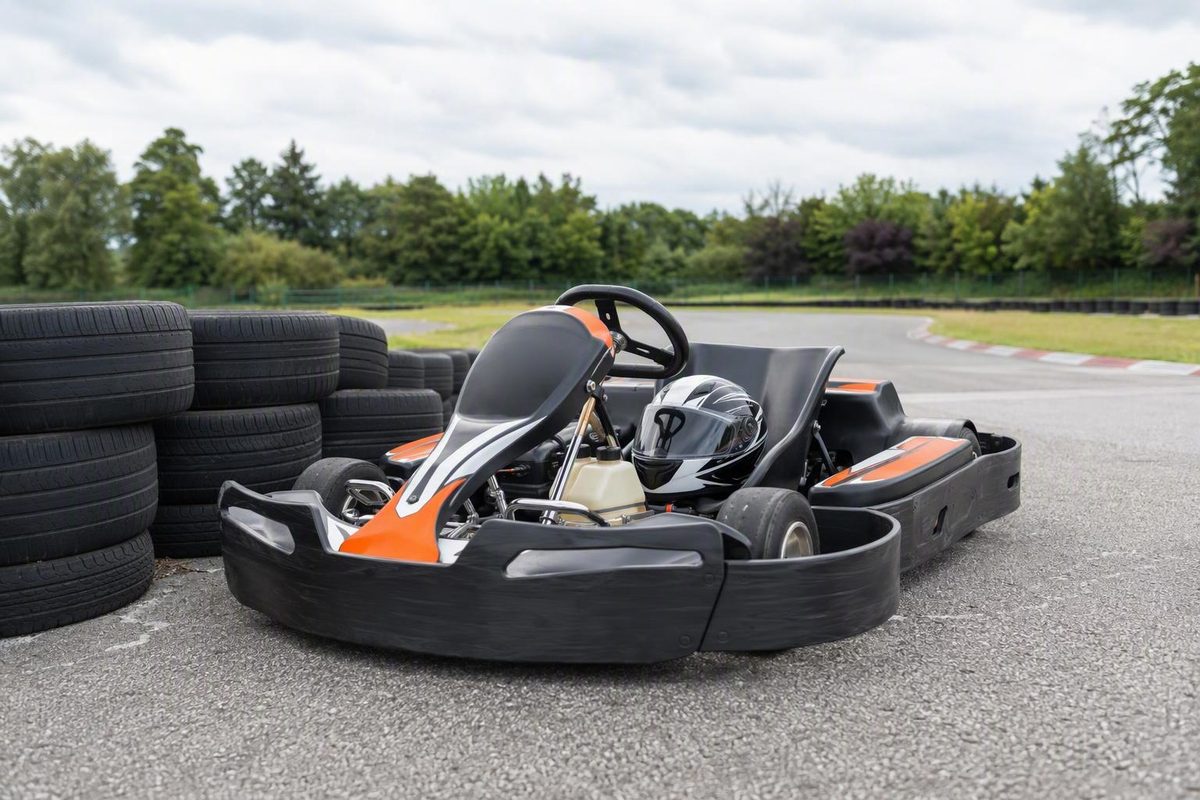
Ages 5-7 are common for elite ambitions, not a universal entry rule. Height, fit, assessment and local class rules can all alter eligibility.
The short answer: the best starting age depends on the racing goal
The evidence reviewed for this guide does not establish one scientifically proven or universally optimal age to start karting. The practical answer depends on the driver’s goal, individual readiness, physical fit, available local classes, and the current rules of the relevant organizer.
Specialist reporting describes five or six as typical starting ages among aspiring Formula 1 drivers because an early start provides years in which to practice and compete before moving toward cars. This describes current practice, not a legal threshold or a proven formula for success. Motor Sport Magazine’s discussion of young kart racers does not establish a definitive best age.
CRG’s 2020 introductory guide recommends starting before approximately age 10 as a career-development rule of thumb. It also places entry-level participation around ages 6–7 and competitive karting at age 8. Because CRG is a kart manufacturer and racing participant rather than a governing body, these figures should be treated as generalized industry guidance—not current worldwide eligibility rules or a guarantee of professional advancement. CRG’s introductory karting guide directs competitors to the applicable national federation for licensing and category requirements.
| Driver’s goal | Practical starting point | What matters most |
|---|---|---|
| Elite single-seater ambition | Approximately ages 5–7 is common among current aspirants; beginning before about 10 is one industry rule of thumb | Age-appropriate instruction, sustained practice, competitive opportunities, readiness, family resources, and current federation rules |
| Youth club competition | Some introductory programs begin around ages 5–7, while other systems place formal competition later | Local Kid Kart, Bambino, Cadet, Mini, or Sportsman availability; physical fit; assessment; and licensing rules |
| Teenage beginner | Begin with rental practice, coaching, or a beginner league, then identify an eligible Junior or Senior class | Efficient learning, consistent racecraft, and a realistic local championship |
| Adult amateur or recreational racing | Any age accepted by the relevant provider or class | Safe kart operation, physical fit, rental or endurance opportunities, and Senior or Masters eligibility |
The apparently different youth starting ages are not necessarily contradictory. One source may be describing low-powered introductory driving, while another is referring to a federation-recognized competition category. A child might be able to attend a supervised session before becoming eligible for a licensed championship.
Teenagers and adults also have viable entry routes. Depending on local rules, they may use rental leagues, endurance events, club racing, Senior classes, or age-targeted Masters formats. Starting later makes the conventional Formula 1 development timeline less typical, but it does not prevent demanding and meaningful competition.
The central distinction is this: the strategically advantageous age for an elite career is not the same as the minimum age for participation. A five-year-old may satisfy a program’s age rule but not be individually ready. A 20-year-old may be outside the usual junior single-seater timeline yet fully eligible for competitive karting.
This article therefore uses provider and club requirements only as representative examples. They explain why published answers differ; they do not replace a current federation, championship, club, or venue rulebook.
Three different questions hide inside “What age can you start?”
Published starting ages range from three or four to 13 because sources are often answering different questions:
- What is the earliest age at which a particular program permits participation?
- When is this individual driver physically and emotionally ready?
- When might starting be strategically advantageous for a highly selective professional pathway?
The earliest permitted age may refer only to a low-speed introductory drive. Youth Racers of America describes kid-kart or putt-putt participation from approximately ages three or four, but that does not automatically mean licensed, wheel-to-wheel competition or the formal beginning of a professional career.
Readiness is a separate and individual question. Children of the same age can differ in pedal reach, attention, response to flags, willingness to follow instruction, and ability to recover from mistakes. Passing a birthday cutoff does not answer whether a particular child can control a particular kart.
Career timing is narrower still. Beginning young creates more time for coaching, practice, and competition before the usual move into cars. It does not establish whether a driver will retain interest, produce the required results, obtain financial backing, or receive opportunities to advance.
Different levels of karting should therefore be kept distinct:
- low-speed recreational driving;
- supervised introductory sessions;
- structured kart-school instruction;
- assessment-based beginner programs;
- rental leagues;
- local club racing;
- licensed federation competition; and
- advanced schools using faster machinery.
France provides a useful—but explicitly country-specific—example. A third-party account reports low-speed electric mini-karts at some French venues from approximately age three, structured karting schools from age six, and Mini 60 as an official category from age eight. These are secondary-source descriptions rather than current official federation regulations, so they must be checked with the school and governing authority. The France-focused overview distinguishes recreation, instruction, rental competition, and formal categories rather than supplying one universal starting age.
At the opposite end of the range, a school can deliberately set a much higher minimum. Sonoma Raceway requires drivers using its racing karts to be at least 13 years old, 4 feet 10 inches tall, and 80 pounds. Its school supplies karts and safety equipment, but those minimums apply only to that program. Sonoma Raceway’s Karting Center requirements cannot be treated as worldwide karting rules.
An age of three, six, eight, or 13 may therefore be accurate for the particular activity being described. The difference may reflect kart type, speed, instructional structure, jurisdiction, physical requirements, or level of competition.
Parents should be especially cautious about calling a first recreational session the start of a professional career. It is better described as a test of interest, fit, and readiness. A development pathway emerges only if the driver continues into sustained instruction and competition—and even then, advancement remains uncertain.
A representative karting age pathway from Kid Kart to Senior classes
Karting has no single worldwide class ladder. A representative progression is:
- Introductory, Kid Kart, or Bambino
- Cadet, Mini, or Sportsman
- Junior
- Senior
- Masters or Legends, where organizers offer age-targeted adult divisions
Names, engines, age ranges, weights, and transition rules vary. Even neighboring tracks may offer different classes because they have different sanctioning relationships, equipment populations, and levels of local participation.
The Ohio Valley Karting Association provides one club-specific example. It lists Kid Kart for ages 5–8, Sportsman or Cadet for ages 7–12, Junior for ages 12–15, and Senior beginning at age 15. Within the younger divisions, Micro Swift is listed for ages 7–10 and Mini Swift for ages 8–12. Its adult-oriented structure generally includes Masters from age 30 and Legends from age 50. OVKA’s beginner and class guide also notes that each class has permitted engines and a minimum combined kart-and-driver weight.
A UK provider uses different bands. FAT Karting League describes traditional categories as Bambino for ages 5–8, Cadet for ages 8–13, and Junior for ages 12–17. Its own standard Bambino program is narrower: age six through the end of the calendar year in which the child turns eight. FKL’s UK beginner guide illustrates how a provider can describe broad traditional bands while applying a more specific rule to its own events.
CRG’s older, generalized guidance places entry-level karting around ages 6–7, competitive karting at age eight, Junior participation broadly across ages 8–15, and Senior categories afterward. These figures are useful for understanding common pathway vocabulary, but the guide dates from 2020 and cannot establish present eligibility for a particular championship.
Age ranges also overlap. That does not necessarily allow a driver to choose freely among every class shown. An organizer may offer different engines, chassis sizes, performance levels, physical requirements, or transition options for drivers of the same age. A 12-year-old might remain in a Cadet-type class or move into Junior depending on the rules, experience, size, and method used to calculate racing age.
A representative timeline is therefore an orientation tool, not a shopping guide. Do not buy a kart simply because a generic chart places a nine-year-old in “Mini” or a 15-year-old in “Senior.” Before purchasing, confirm:
- the exact class offered by the intended championship;
- the legal engine specification;
- chassis and bodywork requirements;
- minimum combined kart-and-driver weight;
- required tyres and fuel;
- permitted modifications;
- licence grade;
- the method used to calculate racing age; and
- whether the class attracts a viable local field.
A kart legal for one club may be unsuitable or ineligible at another. Rules and class availability can also change between seasons, potentially leaving a family with equipment that no longer fits its intended program.
Karting eligibility is not determined by age alone
Minimum age is only one possible condition. A program may also consider height, body weight, pedal reach, seating position, ability to operate the controls, training, assessment results, licence status, parental consent, and class-specific equipment rules.
K1 Speed offers a venue-specific recreational example. Its junior karts require a minimum height of 48 inches, while its teen and adult karts require 58 inches. Meeting the stated threshold does not guarantee entry: drivers are measured at the venue, must be able to operate all elements of the kart safely, and remain subject to local management approval. K1 also says that no driver’s licence or prior racing experience is required, while a parent or guardian must complete its minor waiver for drivers under 18. K1 Speed’s eligibility FAQ applies to its indoor facilities, not owner-kart championships.
FKL shows how age, height, weight, and competency can operate together. In addition to its Bambino age rule, the provider specifies a minimum height of 110 centimeters and a minimum body weight of 21 kilograms. It also uses assessment, training, and race clearance. A child who satisfies the birthday rule but not the physical or competency conditions does not automatically qualify. FKL’s published Bambino requirements are specific to that provider.
Physical measurements are not interchangeable with age. They can affect whether a driver reaches the pedals, sits correctly, steers throughout a session, and applies the brake with sufficient control. A driver who reaches a stated height may still be unable to operate a kart properly once seated.
Sonoma’s school illustrates another combination: at least age 13, at least 4 feet 10 inches tall, and at least 80 pounds. Again, those are school-specific conditions, not general minimums for karting.
Competitive owner-kart racing can add an administrative layer. CRG’s 2020 guide describes competitive karting as requiring a driver licence issued through the applicable national federation. The exact licence grade, application process, medical documentation, training, and renewal requirements must be checked with the current authority and championship.
Use this short diagnostic checklist before approaching a program:
- Age and cutoff: What are the minimum and maximum ages, and which date determines racing age?
- Physical fit: Are height or body-weight minimums imposed, and can the driver reach every control while properly seated?
- Competency: Is staff approval, training, or an on-track assessment required?
- Administration: Is a licence, medical document, or parental waiver required?
- Class rules: Which engine, chassis, combined weight, tyres, and safety equipment are legal?
The K1 Speed, FKL, Sonoma, CRG, and club examples are not worldwide regulations. They demonstrate how different programs combine age with size, fit, training, licensing, consent, and technical rules.
How parents can judge whether a young driver is ready
Readiness is an individual judgment rather than a validated universal test. The following observations can help a family decide whether to arrange a trial, but they do not replace an instructor’s assessment or the organizer’s authority to refuse participation.
Before moving toward racing, observe whether the child can:
- reach and operate the steering, throttle, and brake;
- remain seated and attentive for the expected session;
- listen to a complete briefing;
- recognize and respond to the signals being taught;
- follow instructions when excited or frustrated;
- hold a reasonably predictable line;
- communicate pain, fear, poor fit, or other discomfort;
- recover after a spin, mistake, or slower lap;
- accept correction without becoming overwhelmed;
- respect other drivers and track staff; and
- show genuine interest without repeated parental prompting.
This is a practical observation list, not a medical or developmental screening tool. If a family has concerns about a child’s health or ability to participate, the appropriate organizer and a qualified health professional should address those concerns.
Enthusiasm for watching racing is not the same as enthusiasm for driving. A child may love Formula 1, racing games, or model cars yet dislike the noise, vibration, waiting, instruction, physical effort, or competitive pressure of a karting day. An instructional or rental trial reveals more than a long discussion about hypothetical interest.
A provider may decline participation even when a child meets its published age or size threshold. That should not be treated as a failure or proof that the child will never be ready. It may simply mean that the kart does not fit, the controls cannot yet be operated consistently, or more instruction is needed.
Assessment-based programs can provide a bridge into competition. FKL reports that most beginners in its program require two or three training sessions before receiving race clearance. That is the provider’s experience, not a universal benchmark. Another organizer may use one orientation, several coached sessions, lap-consistency criteria, observed flag compliance, or no formal clearance process.
For very young participants, sensible first-session goals include:
- enjoying the experience;
- learning how the kart responds;
- following instructions;
- recognizing basic flags or signals;
- starting and stopping under control;
- building confidence without being rushed; and
- deciding whether they want to return.
Every session need not be treated as an audition for a professional career. Early results may reflect experience, physical development, equipment, track familiarity, and class structure. A trophy cannot promise later advancement, just as a cautious first session does not rule it out.
Youth Racers of America advises families to emphasize fun and learning and to avoid excessive pressure that could contribute to burnout. The supplied evidence does not establish a karting-specific burnout rate or an ideal specialization schedule, so broader predictions would be unwarranted. Its guidance for families new to youth racing should be understood as practical advice rather than a validated clinical standard.
Nonmedical reasons to pause and reassess include repeated reluctance before sessions, persistent distress, inability or unwillingness to follow safety instructions, continuing discomfort, or a clear mismatch between the child’s interest and the family’s ambition. One difficult session may simply be a difficult day; a repeated pattern deserves attention.
The useful question is not merely, “Is my child old enough?” It is: “Does my child currently want this, fit the available kart, respond to instruction, and handle the demands of this particular program?”
Is starting at 10, 15, 19, or adulthood too late?
It is not necessarily too late for participation or meaningful competition. It is, however, later than typical for the narrow development ladder aimed at Formula 1 or another elite single-seater destination.
The reported norm of beginning around age five or six gives aspiring elite drivers years to accumulate practice before moving toward cars. Those years can be used to develop braking, racing lines, starts, overtaking, defending, adaptation, and experience in competition. They do not prove that every early starter will advance or that a later starter cannot become highly capable.
A 10-year-old can still enter age-appropriate instruction and competition where eligible. The practical task is to identify a suitable local class, assess present skills, and determine whether the child enjoys structured competition—not to dwell on supposedly lost years.
A 15-year-old beginner can start with rental sessions, coaching, or a beginner league. The next step may be Junior or Senior competition, depending on the championship’s age calculation and transition rules. Because class boundaries differ, age 15 is not one universal category.
Adults may be able to enter:
- arrive-and-drive sessions;
- recurring rental leagues;
- rental sprint races;
- endurance events;
- team-supported competition;
- owner-kart Senior classes; or
- Masters divisions where offered.
OVKA’s club structure demonstrates that organized opportunities can extend beyond childhood: its Senior categories begin at age 15, Masters generally serve drivers aged 30 and older, and Legends begins at age 50. Those divisions are club-specific examples rather than guarantees of access elsewhere.
Takuma Sato is a notable exception in discussions of late starts. Red Lodge Karting reports that he began karting at 19, later competed in Formula 1, and won the Indianapolis 500 twice. The circuit’s account of Sato’s late start demonstrates possibility, not typical probability.
One exceptional career cannot establish the odds for another late starter. It also cannot justify promising that talent and determination will overcome every financial, logistical, competitive, and opportunity constraint. The evidence reviewed here does not quantify professional-career prospects for beginners at any age.
Later starters should define an attainable first objective, such as:
- completing a controlled introductory session;
- receiving race clearance;
- producing consistent laps;
- joining a rental league;
- finishing a first race;
- improving decisions in traffic;
- entering a viable club class; or
- completing an appropriate local championship.
These goals create useful feedback without treating Formula 1 as the only outcome that would make karting worthwhile.
The lowest-commitment route from first session to first race
A beginner does not need to buy a kart before discovering whether the sport is a good fit. A staged approach reduces both financial and logistical commitment.
1. Watch a local race
Attend an event at the club or track you are considering. Observe how the paddock operates, which classes have healthy fields, what families and teams do between sessions, and how long the day lasts.
OVKA recommends attending a race first, walking through the paddock, and asking participants about classes, costs, maintenance, equipment, and participation. Its beginner guide is especially useful on this point because the most visible class online may not be the class that regularly races near home.
Ask competitors and teams:
- Which beginner class draws enough entries?
- How often does it race?
- What routine maintenance is required?
- Which parts commonly need replacement?
- How far do competitors travel?
- Is trackside technical support available?
- Are suitable used karts available?
- Is the class or engine likely to remain supported next season?
2. Try an equipment-inclusive rental session
A rental session separates the decision to try karting from the decision to own machinery. The operator maintains the kart while the beginner experiences the controls, track procedures, and physical demands.
K1 Speed’s Arrive & Drive model is one commercial example: the operator supplies the kart, helmet, and headsock, and it does not require a driver’s licence. K1 Speed’s beginner-racing overview describes its own facilities, but equipment-inclusive rental formats are also offered by other operators.
A rental kart is not identical to a competition kart. It can still answer the immediate questions: Does the driver enjoy being on track? Can the driver follow instructions? Is the fit acceptable? Does the family want to explore a structured program?
3. Take instruction
Introductory instruction may cover:
- starting and stopping;
- steering and pedal control;
- flags and track signals;
- entering and leaving the circuit;
- racing lines;
- braking points;
- corner entry and exit;
- overtaking and defending;
- maintaining awareness in traffic; and
- expected conduct after a spin or incident.
Instruction provides a structured opportunity to learn and allows a coach to assess fit, attention, control, and readiness for sessions involving other drivers.
4. Complete the provider’s assessment
Some programs require race clearance, a training certificate, minimum lap consistency, or instructor approval. Complete that process before committing to a league or buying equipment.
If the driver is not cleared immediately, ask what needs improvement. The answer may concern pedal control, awareness, flag response, consistency, confidence, or physical fit.
5. Enter a beginner league or test with a team
A rental league introduces repeated competition without full ownership. A team test can expose a driver to competition machinery while providing setup and mechanical support.
CRG recommends completing a basic course and testing with a team or authorized reseller before buying a child’s first kart. It also notes that some teams rent ready-to-race equipment. These options can help distinguish interest in casual driving from interest in the routines of competition.
6. Evaluate ownership only after real experience
Ownership adds responsibilities that rental participation usually leaves with the operator. Depending on the class and equipment, these may include:
- transport;
- storage;
- cleaning and maintenance;
- tools and spares;
- fuel or charging arrangements;
- tyres;
- setup work;
- repairs;
- engine servicing; and
- technical compliance.
The main entry routes differ qualitatively:
| Route | Commitment | What the provider or team may handle | What the driver gains |
|---|---|---|---|
| Rental league | Lowest logistical commitment | Kart preparation, storage, and much of the equipment | Repeated competition without ownership |
| Team-supported arrive-and-drive | Moderate commitment | Race kart, setup, transport, and technical support, depending on the package | Structured competition in more specialized machinery |
| Owner-kart racing | Highest logistical commitment | The family or hired team handles most operational work | Greater control over equipment, setup, testing, and championship choice |
No universal season-price estimate is reliable from the supplied evidence. Costs depend on country, class, travel, tyre use, engine servicing, damage, team support, and whether equipment is rented, bought used, or bought new. Ask local providers for written quotes identifying exactly what is included.
The most appropriate next action depends on the driver:
- Young child: Arrange a low-pressure, age-appropriate instructional trial and allow staff to assess fit and control.
- Under-10 driver with serious competitive ambitions: Identify the applicable federation and local championship, compare active classes, take instruction, and test suitable equipment before buying.
- Teenage beginner: Start with coached rental practice or a beginner league, then ask whether Junior or Senior eligibility applies.
- Adult beginner: Try arrive-and-drive racing, then compare local rental sprint, endurance, Senior, and Masters opportunities.
What to verify before registration or equipment purchase
Because this guide relies on representative club, manufacturer, school, and commercial-program examples, eligibility must be confirmed from the most authoritative current source available. Use this order:
- National federation or sanctioning body
- Championship sporting and technical regulations
- Local club or track rules
- The specific school, league, team, or registration page
A national authority may establish licence categories and broad standards. A championship may narrow them. A club determines which classes it actually runs, while a school or commercial venue may add fit, assessment, or registration requirements.
Always check the current season. Age bands, class availability, tyres, minimum weights, engine specifications, licence procedures, and technical rules can change. CRG’s 2020 guidance, older social posts, cached pages, and used-kart advertisements should not be treated as present regulations.
Ask the organizer these exact questions:
- Which date determines racing age?
- Is the age band inclusive at both ends?
- Can a driver change classes after a birthday during the season?
- Are height and body-weight minimums separate from the age rule?
- Will staff assess pedal reach, seating position, and kart fit?
- Is a licence required, and which grade?
- Is a medical declaration, examination, or other documentation required?
- Must the driver complete training or hold a certificate?
- Is an observed race assessment required?
- Which parent or legal guardian must sign the waiver?
- Which engine and chassis specifications are legal?
- What minimum combined kart-and-driver weight applies?
- Which tyres and fuel are required?
- Which personal safety-equipment standards apply?
- Is the class offered at every event?
- How many drivers have entered recent events?
Field size matters. A driver may be technically eligible for a class that is rarely offered or attracts too few entries to provide dependable racing. Ask for recent entry lists or results rather than relying solely on a class name appearing in a rulebook.
Confirm eligibility in writing before buying a kart, engine, or personal safety equipment. Give the organizer the driver’s date of birth, height, weight, experience, and intended championship, then ask for the relevant rulebook section and exact equipment class.
Commercial operators can reliably describe their own programs, but they cannot establish worldwide requirements or professional-career outcomes. K1 Speed’s height thresholds answer who may use its karts. Sonoma’s minimums answer who may attend its school. OVKA’s age bands describe that club’s class structure. None answers every version of “What age can you start karting?”
Saveable registration checklist
- [ ] Current-season sporting and technical rules obtained
- [ ] Racing-age calculation confirmed
- [ ] Minimum and maximum age confirmed
- [ ] Height and body-weight rules confirmed
- [ ] Pedal reach, seating position, and kart fit checked
- [ ] Driver assessment or training completed
- [ ] Licence requirements confirmed
- [ ] Medical-document requirements checked
- [ ] Parental or guardian waiver completed if applicable
- [ ] Legal engine and chassis identified
- [ ] Minimum combined kart-and-driver weight confirmed
- [ ] Tyre, fuel, and technical rules checked
- [ ] Personal safety-equipment standards confirmed
- [ ] Local class availability and recent field size checked
- [ ] Rental, team, or ownership obligations quoted in writing
- [ ] Written eligibility confirmation received before purchase
The best practical starting point is not a single birthday. For an elite single-seater ambition, beginning around ages 5–7 is common, and starting before 10 is sometimes recommended as an industry rule of thumb. Early participation creates time to learn; it does not create a guaranteed career.
Youth club racers, teenage beginners, and adults can still find suitable classes and rental routes under varying local rules. The sensible next step is to match the driver’s goal and readiness with a current local program, confirm every age, size, licence, waiver, assessment, and class condition, and complete an instructional or rental trial before making a major equipment or season commitment.
Is age 5 or 6 the best age to start karting for Formula 1?
Five or six is a common starting age among aspiring Formula 1 drivers, but the evidence reviewed does not establish it as universally optimal. Starting then provides more time to practice and compete before moving toward cars; it does not guarantee advancement. Motor Sport Magazine’s reporting describes current practice rather than a proven rule.
For a serious elite ambition, an age-appropriate start around ages 5–7 is consistent with that practice. CRG’s suggestion to begin before approximately age 10 should be understood as a 2020 industry rule of thumb, not a deadline.
What is the youngest age at which a child can race a go-kart?
There is no universal minimum. Some reported kid-kart or low-speed experiences begin around ages three or four, while organized Bambino or Kid Kart programs may begin later and some systems place formal competition at age eight. Youth Racers of America and the France-focused third-party overview describe these different participation levels.
For a particular child, check whether the advertised minimum refers to recreation, instruction, club racing, or licensed competition. Then confirm physical fit, assessment, consent, and current organizer rules.
Can a 15-year-old or adult start competitive karting with no experience?
Yes, where a suitable program permits it. A 15-year-old may be eligible for Junior, Senior, or a provider-specific teenage league. Adults may enter rental racing, sprint or endurance events, Senior classes, or Masters formats.
A low-commitment route is coached rental practice followed by any required assessment or beginner league. A later start is less typical for the Formula 1 development ladder, but it does not prevent organized and challenging competition.
Do kart tracks use height and weight requirements as well as age limits?
Some programs do. Requirements may include height, body weight, pedal reach, staff approval, or minimum combined kart-and-driver weight. K1 Speed, for example, uses minimum heights of 48 inches for junior karts and 58 inches for teen and adult karts, subject to safe operation and local approval. K1 Speed’s FAQ applies only to its facilities.
FKL and Sonoma provide different examples combining age with height, weight, or assessment. Meeting one published measurement does not guarantee approval: the driver must fit and control the kart under the organizer’s rules.
Should a beginner buy a kart or start with arrive-and-drive racing?
Most beginners should start with a rental session, instruction, or a team-supported test. This allows the driver to assess interest, physical fit, and readiness while the provider or team handles the machinery.
Buy only after identifying a viable local class, reading its current technical regulations, speaking with participants, and testing appropriate equipment. Ownership provides more control but adds transport, maintenance, tools, spares, tyres, setup work, and technical compliance. Arrive-and-drive racing is generally the lower-commitment first experiment; ownership is a later decision supported by real experience.