
How the 3-2 Zone Defense Works in Youth Basketball: A Practical Breakdown for Parents and Coaches
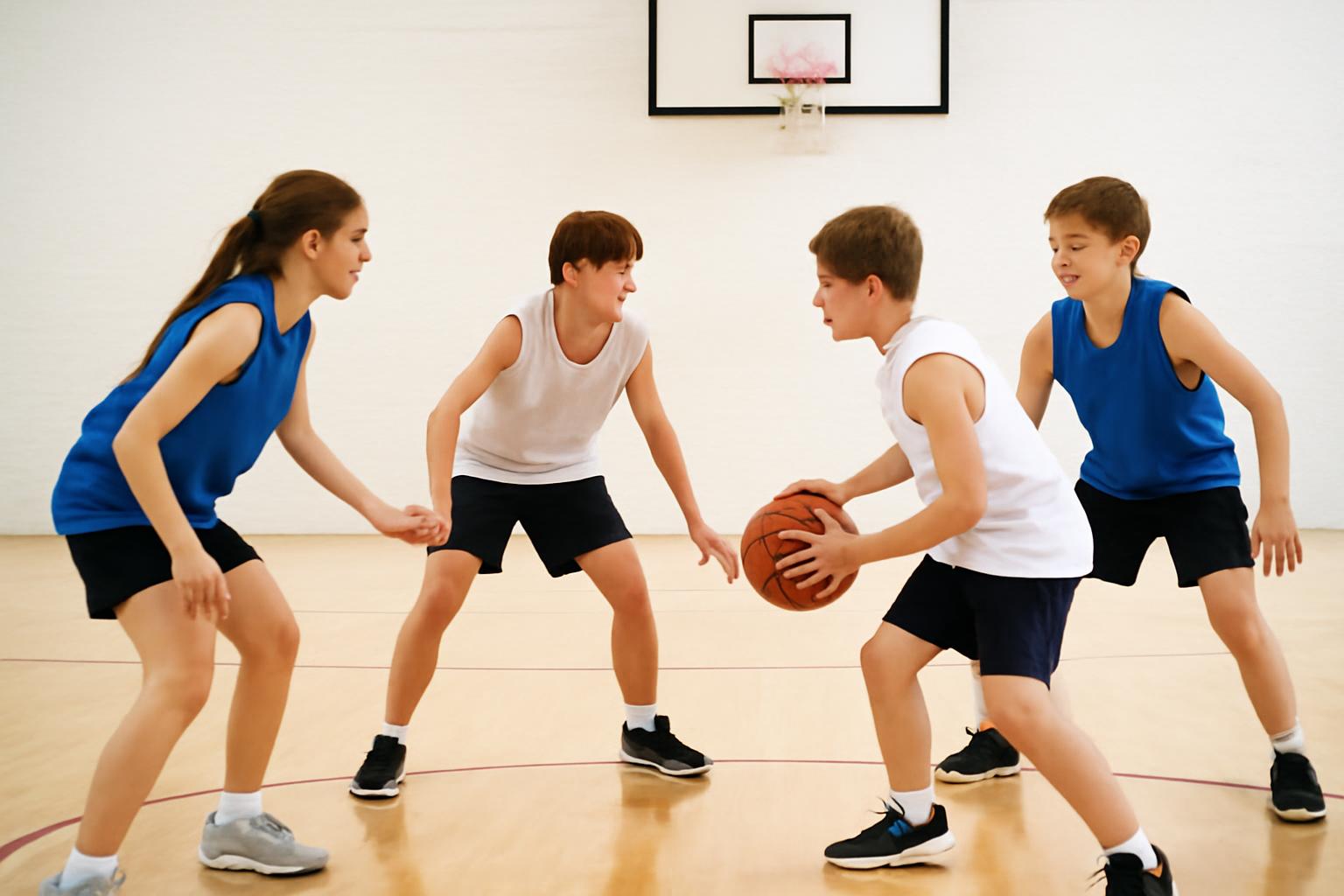
Three defenders start high and two low. Most youth breakdowns happen on the second rotation; wing, corner and skip-pass rules show who must recover.
If you hear a coach say they play a 3 2 zone basketball defense, the short version is this: three defenders stay high to bother wing passes and the high post, while two defenders stay low to protect the paint, blocks, and corners. In standard coaching descriptions, that shell is a half-court zone with three players stretched across the upper line and two players stationed near the basket to protect the key and baseline areas (Basketball For Coaches).
For parents, the key question is not whether the 3-2 zone is automatically “good” or “bad.” The better question is what problem a team is trying to solve. But every zone trades something away. The 3-2 gives extra attention to the wings and foul-line area, and in return it asks for longer recoveries to the corners, clean communication on drives, and disciplined weak-side rebounding.
That is why this defense can look brilliant on one possession and fragile on the next. Against static offense, it can choke off first options and force rushed decisions. Against patient guards, good skip-pass teams, or accurate shooters, it can start to stretch. The difference is rarely the chalkboard. It is whether the players know the next rotation before the ball gets there.
For youth families, that last point matters most. A poorly taught one becomes five kids standing in a shape and reacting late. So when you watch a team run it, do not just look for steals or turnovers. Look for whether players talk, shift together, protect the middle first, and rebound out of the zone once the shot goes up.
Related: High School 3 Point Line: Distance, NFHS Rules, and Court Comparisons.
What Is the 3-2 Zone Defense?
At its base, the 3-2 zone is a half-court alignment with three defenders high and two defenders low. Coaching guides typically place a middle defender near the free-throw-line area to deny the high post, two outside defenders higher and wider to bother wing catches, and two low defenders on or near the blocks to protect the paint and corners. Teach Hoops describes the structure as three players along the perimeter and two nearer the basket in a half-court setup designed to disrupt passing lanes and protect the key (Teach Hoops).
The purpose of that shape is straightforward: take away easy wing entries, make high-post catches uncomfortable, and push the offense toward less convenient options. A good 3-2 often forces one of four things:
- a skip pass instead of a simple wing pass;
- a catch farther from the lane than the offense wants;
- a slower reversal that gives the defense time to shift; or
- a late-clock decision after the first action stalls.
That is why the scheme is so often described as disruptive. It is not only about where defenders stand. It is about denying the offense the passes that usually begin its half-court actions.
For parents watching from the stands, one helpful way to think about the 3-2 is as a defense that tries to make the offense start farther from comfort. In youth games, many sets begin with a pass from the top to the wing, a flash to the foul line, or a high-low look near the lane. The 3-2 is built to bother those actions first. If the offense has to skip the ball to the corner or settle for mid-range initiation, the defense has already done part of its job.
The defense also is not one frozen diagram. Coaching material describes a common shell, but the exact spacing changes with personnel and philosophy. Some coaches extend the outside top defenders hard into the wing passing lanes. Others keep them a step tighter to prevent straight-line drives. Some want the rover aggressively denying the foul-line flash. Others keep that player slightly lower to help rebound and protect the middle. The shared idea is constant, but the details can be adjusted.
Compared with a 1-2-2, the 3-2 is usually more clearly committed to hard wing and high-post denial, with three defenders across the upper part of the zone and the middle defender focused on the foul-line area. That often means the point guard at the very top sees a bit more space than spectators expect. So the defense can look active and extended without actually applying constant full pressure at the top of the key.
In practical terms, then, the 3 2 zone basketball defense is best understood as a coordinated set of priorities:
- deny wings early;
- crowd the high post;
- protect the paint with two low defenders;
- trap selectively, especially near the corner; and
- rebound with the rover and bottom line forming the core of the coverage.
If a team does those things together, the defense makes sense. If it does only the first step and not the recovery behind it, the shape alone will not save it.
Advantages and Disadvantages for Youth Teams
The biggest selling point of the 3-2 for youth teams is disruption. Coaching guides consistently describe it as a half-court defense that can blow up familiar set entries by taking away wings and making the offense play through less comfortable spots. They also note strengths in guarding high-post and high-low actions, creating corner-trap chances, and setting up a natural rebounding triangle with the rover and two low defenders (Basketball For Coaches).
That profile fits a lot of youth games. Many teams do not have five reliable shooters or a polished middle attack. They want to reverse the ball to the wing, feed a cutter or post, and then play from there. When the wing catch is crowded and the foul-line flash is bothered, the offense often gets delayed.
There are several practical benefits for youth coaches and parents to notice:
- It can disrupt set plays early. If the first pass is denied, the whole possession can start late.
- It protects the lane better than many shaky man-to-man groups. A team that struggles to guard the ball one-on-one can still put bodies near the middle.
- It creates natural trapping spots. The corner is especially attractive because the baseline and sideline help shrink the ball handler’s options.
- It can support rebounding structure. The rover and bottom two defenders are often already near likely rebound areas when the shot goes up.
For the right roster, those strengths are real. A youth team with quick top defenders, one active rover, and two mobile rebounders can make an ordinary offense feel cramped.
The weaknesses are just as real. Coaching guidance on the scheme repeatedly warns about three trouble spots: lack of heavy top-of-key pressure, hard rotations after penetration, and vulnerability to outside shooting once the defense has to stretch and recover. Breakthrough Basketball’s notes also highlight patient point guards being able to survey, weak-side rebounding issues, and bottom defenders getting screened or overloaded when the offense moves well (Breakthrough Basketball).
For parents, that means the defense can fail in predictable ways:
- the point guard walks into rhythm and sees the floor;
- the ball gets driven and the bottom line has too much ground to cover;
- the weak-side corner opens on a drive-and-kick;
- a high-post catch collapses the zone and creates spray-out passes; or
- weak-side rebounders arrive late because the top line watched instead of helping.
That last issue is important because zone rebounding can fool spectators. A 3-2 may look like it puts three defenders in good rebounding spots, and often it does. But zone rebounding still requires players to hit, locate, and pursue. If the guards assume the two low players will clean everything up, the weak side gets exposed quickly.
There is also a youth-development conversation around the 3-2, but it should be framed carefully. Coaching sources aimed at youth players say the defense demands communication, anticipation, quick feet, help awareness, and rebounding discipline, while also noting that some critics believe heavy zone use can hinder individual development if it becomes a program’s whole identity (HoopsKing). That is best understood as a coaching debate, not settled research. The practical takeaway for parents is simpler: ask whether the zone is being taught as one tool inside a broader defensive program or used as a permanent hiding place.
So the 3-2 is not a magic fix. It is a tradeoff defense. It gives a youth team structure, help, and disruption, but it also demands connected movement. If a team communicates early and rotates twice on the same possession, the scheme can look sharp. If it reacts late after the first breakdown, the offense usually gets a clean look.
Ideal Player Roles and Personnel
Personnel determines whether the 3-2 zone becomes aggressive or passive. The most common teaching model uses two quick top defenders, one active rover, and two low defenders who can both rebound and move. Breakthrough Basketball’s personnel notes describe two guards on the top line, a mobile middle defender working near the high-post area, and two forwards or posts underneath, with coaches sometimes placing the stronger rebounding guard on the side where more shots are expected (Breakthrough Basketball).
The two outside top defenders
For most youth teams, the outside top spots go to guard types. These players need to be quick enough to bother wing entries and balanced enough to close out under control without flying by the ball. They also need to see the court well, because they are often the first line against skip passes and reversals.
What parents should look for here is not just speed. The right players for these spots usually show three habits:
- they angle their body to take away the next pass;
- they recover without standing upright; and
- they move on the pass, not after the catch.
A player can be fast and still be poor in this role if that player chases the ball and loses the passing lane.
The rover
The middle top defender, often called the rover, is the key piece. Coaching guides describe that player as an athletic wing or forward type whose main job is to deny the high post, intercept lobs, and still rebound around the lane. In one teaching description, this player is kept within about 15 feet of the basket so the middle stays covered and rebounding remains strong (Breakthrough Basketball).
This is the player parents should watch most closely. If the rover is active in the right space, the defense often works. If the rover wanders, the middle opens and the whole shape starts to bend.
A good rover usually does four things well:
- stays between the ball and the foul-line flash;
- changes sides with the ball without drifting too high;
- bothers catches without overcommitting; and
- rebounds when the shot goes up instead of admiring the contest.
On many youth teams, that player is not the smallest guard. It is often an athletic small forward or mobile forward with better instincts around the lane.
The two low defenders
The bottom two players are usually the tallest or strongest defenders, but height alone is not enough. These players must protect the blocks, challenge shots, survive baseline movement, and still get out to the corner or short corner when the coverage demands it. If they cannot move laterally, the defense has to change its corner rules.
That is why parents sometimes hear a coach say the team runs a 3-2, but on film it looks slightly different from a textbook diagram. Good coaches adapt. If the bigs are slow, a wing may sprint out to the corner while the post protects the block. If one low defender is a much better rebounder, that player may be placed on the side where more shots are expected.
Matching roles to real rosters
Teach Hoops also notes that the point guard is often the fastest and most aggressive defender and may be asked to cover a large share of the top-line ground, while wings need speed to close out and prevent penetration (Teach Hoops). That is a useful reminder that the names on the lineup card matter less than the functions.
For youth parents, the practical personnel checklist is this:
- Top line: quick feet, anticipation, disciplined closeouts.
- Rover: mobility, timing, willingness to live in the middle.
- Low line: rebounding, toughness, enough mobility to cover block-to-corner responsibilities.
If a team has those ingredients, the 3 2 zone basketball defense can be a smart fit. If it has only size and no mobility, or quick guards but no rover, the scheme usually becomes patchwork fast.
Basic Positioning and Top-of-Key Setup
When the ball is at the top, the defense is trying to shape the next pass before it happens. Standard teaching places the two outside top defenders with an outside-shoulder angle toward the wings, shading the passing lanes rather than standing flat, while the rover sits around the free-throw-line area between the ball and the high post. The two low defenders protect the blocks, with one sometimes fronting the low block and the other shading more toward the lane line depending on the offensive alignment (Teach Hoops).
For a parent in the stands, that means a good top-of-key possession may not look dramatic. The on-ball defender might not be chest-to-chest 25 feet from the basket. Instead, the defense is trying to take away the easy next action:
- deny the wing pass angle;
- crowd the foul-line flash;
- keep the low line ready to help inside; and
- stay balanced enough to shift on reversal.
The two outside top defenders usually have the first visible job. Many coaches teach them to line up on the outside shoulder of the offensive wing and influence the pass toward the sideline or away from the best entry angle. The point is not simply to stand high. It is to make the pass feel narrow.
The rover’s positioning is what makes the shell work. If that player rises too high, the high post opens behind. If that player sinks too low, the point guard can reverse the ball freely and the top defenders have to cover too much ground. The rover has to live in the in-between space: high enough to bother the flash, low enough to help inside, and active enough to shift as the ball changes sides.
The bottom line handles the less glamorous but essential part of the setup. One low defender may front the strong-side low block. The other may sit a bit more central, closer to the lane line, ready to help on a drive, stunt at the high post, or rebound. Coaches vary this based on the offensive front. The exact alignment moves, but the priorities do not.
A simple parent-friendly way to read the top-of-key setup is this:
- If the offense wants a wing catch, the top defenders try to make it hard.
- If the offense wants a high-post flash, the rover tries to sit on it.
- If the offense wants a straight drive, the low line wants to see it early and be in position.
If those three pieces are in place, the defense is set. If one is missing, the top-of-key spacing that looks organized from far away is often already in trouble.
Rotations for Wing, Corner, and Post Entries
This is where the 3-2 stops being a diagram and becomes a rotation system. Once the ball moves off the top, each defender’s responsibilities tighten.
On the wing catch
When the ball reaches the wing, coaching guides commonly teach the strong-side low defender to front the low post, the weak-side low defender to slide toward the middle, and the top line to shift toward the ball to shrink passing windows. That alignment is what helps the defense guard both the wing and the nearest interior threat without giving up the whole middle.
The goal of the wing rotation is to make the offense see crowding everywhere it wants to look first:
- ball pressure at the catch;
- a denied or fronted low post;
- a rover lurking near the foul line; and
- reduced room for a direct pass into the lane.
That is why a wing-oriented offense can feel stuck against a sharp 3-2 even if no one is stealing the ball. The offense catches, looks inside, and finds bodies.
On the corner catch
The corner is where coaching preference shows up most clearly. In a common teaching version, the strong-side low defender closes to the corner, the nearest top defender either gaps to discourage baseline and middle penetration or hard-denies the pass back out, the rover protects the middle area, and the weak-side defenders shift toward rebounding and likely outlets. Breakthrough Basketball describes both the standard version and an alternate version in which wings handle more of the corner closeout if the posts are not mobile enough (Breakthrough Basketball).
That flexibility is important. There is no universal rule that the post must always take the corner. Good youth coaching adapts the coverage to personnel.
A useful way to picture the corner coverage is:
- standard version: post closes to ball, nearby top defender gaps or denies reversal;
- adjusted version for slower bigs: wing sprints out, post protects block and rim space;
- common constant: the middle must stay protected so one closeout does not turn into a layup line.
On the low-post catch
Low-post defense varies more by coach and opponent than parents sometimes realize. Coaching guides describe several options: play one-on-one from behind, dig from the corner, hard-deny the entry before it arrives, or trap with help once the catch is made. The shared priority is to avoid giving up an easy, deep catch in the middle of the lane.
A compact decision frame looks like this:
Parents can learn a lot by watching whether the defense’s help is early and controlled or late and panicked. The 3-2 does not have to trap every post catch. It does have to arrive with a plan.
On the high-post catch
The high post is the pressure point of the whole defense. Coaching descriptions say the rover should be between the ball and the receiver before the pass, then harass the catch once it arrives, while the low defenders pinch or stunt inside and the guards fan back out toward likely shooters. That is the recovery chain that keeps one foul-line touch from collapsing the shell.
When the offense catches at the foul line, the defense must do three things almost at once:
- make the catch uncomfortable;
- protect the rim from the immediate dump-off or drive; and
- recover outward in case of the kick-out.
If any one of those pieces is late, the offense gets a clean decision: layup, short jumper, or open perimeter shot. That is why parents often hear coaches yelling about the high post even on possessions that do not end there. Preventing that catch is easier than repairing it.
Trapping, Skip Passes, and Penetration Defense
The most natural trap in a 3-2 comes in the corner. Basketball For Coaches describes the corner as the best trapping spot, commonly using the ball-side wing and post while the rover protects the middle and the remaining defenders cover likely outlets (Basketball For Coaches).
For youth teams, a good corner trap usually has four features:
- it arrives on the catch or first dribble, not late;
- both defenders come under control with high hands;
- the rover takes away the easy middle outlet; and
- the weak side shifts early to anticipated passes, not after the ball leaves.
Some coaches also use preplanned trap triggers in other spots, but the corner is the cleanest place to teach because the floor helps contain the ball.
Handling skip passes
Skip passes are one of the offense’s best answers because they force the defense to go from packed-in help to full-court closeout speed. A common teaching rule is simple: guards take wing skips, forwards or posts take corner skips. That division is specifically noted in coaching material because it matches the players’ usual coverage areas.
That rule sounds small, but it matters because hesitation is deadly on a skip. If two defenders both think the other is taking the pass, the offense gets a catch-and-shoot look. If both sprint to the same player, someone else is open.
A practical parent checklist on a skip pass:
- Did the nearest defender leave before the ball arrived?
- Did the closeout come to the correct spot, wing or corner?
- Did the rest of the zone switch sides behind the play?
The weak-side defender’s first step often tells the story. Teams that understand the coverage are moving while the ball is in the air. Teams that do not understand it react after the catch, which is usually too late.
Defending dribble penetration
Penetration is the hardest stress test for a youth 3-2 because there are only two true bottom-line defenders. Coaching descriptions emphasize preventing a split at the top, forcing drives toward help rather than through clean middle gaps, and rotating a wing or post back to the vacated corner once help commits.
The key ideas are:
- do not let the ball split the top line cleanly;
- make the drive go into bodies, not open lane space;
- once help steps up, someone must cover the abandoned area.
This is where a zone either looks coached or exposed. A team that only knows where to stand at the start of the possession may survive one pass. It usually falls apart on a hard drive. A team that understands help-and-recover can still give up a shot, but it will at least force the offense to make one more correct read.
For parents, the easiest sign to watch is whether the defense repairs itself after the first drive. If the ball gets into the lane and the defense still gets a contested kick-out or a late-clock shot, the players understand the chain. If one drive produces panic and a wide-open corner, the rotations are not really installed yet.
Rebounding and Common Offensive Counters
One reason coaches like the 3-2 is that it often places the rover and the two low defenders in strong rebounding positions as the shot goes up. Basketball For Coaches describes that trio as the core rebounding triangle in many versions of the defense, with the exact triangle shifting by shot location. On a top-of-key shot, the triangle often includes the rover plus both low defenders; on a corner shot, it tilts toward the ball side while weak-side help crashes down (Basketball For Coaches).
That framework gives parents something concrete to watch. Rebounding in a 3-2 is not random. It should look organized.
What the rebounding triangle means in practice
On most shots, three defenders should already be close to the lane and ready to pursue:
-
top shot: rover and both low defenders are the natural triangle;
-
corner shot: the coverage tilts hard toward the ball side and the weak side has to crash down.
But none of that works if players stop at “being near the rebound.” Zone rebounding still requires contact, tracking, and pursuit. A defender who is in the right zone spot but never hits an opponent is not actually solving the possession.
This is especially important for the weak side. Breakthrough Basketball notes that weak-side rebounding can be vulnerable in the 3-2, which is one reason the off-ball defenders cannot simply watch the shot. They have to read the flight and attack from the weak side too.
The main offensive counters
Offenses attack the 3-2 by going after exactly the spaces it gives up when it loads the top and middle. Basketball For Coaches’ offensive guide recommends attacking the corners, gaps, high post, overloads, baseline cuts, quick reversals, transition chances, and outside shots when facing the 3-2 (Basketball For Coaches).
In plain terms, the main counters are:
- high-post touches that collapse the shell;
- skip passes that force long closeouts;
- corner catches that test the bottom line;
- baseline drives that open drift passes and weak-side recovery problems;
- overloads and screens that stress the bottom defenders;
- quick reversals that make the defense shift twice; and
- transition pushes before the half-court zone gets set.
A smart offense does not usually beat the 3-2 with one pass. It beats it by making the zone move, then move again. The first action bends the shell. The second action asks whether the defense can recover to its next assignment. That is why a 3-2 may look airtight for eight seconds and then suddenly give up a clean shot. The first rotation worked. The second or third did not.
Parents evaluating a youth team should pay attention to which counters consistently bother it. If the trouble is only against a genuinely strong shooting team, that may be the natural tradeoff of the defense. If every ball reversal creates confusion, the issue is probably not personnel alone. It is understanding.
When to Use 3-2 Zone in Youth Programs
It makes obvious sense against teams that want to start offense from the wings, flash the foul line, or play high-low near the lane.
That does not mean it should be dismissed as a gimmick. If taught well, the defense can require many of the habits parents should want to see anyway: early talk, connected help, urgency on closeouts, recognition of the next pass, and committed rebounding. HoopsKing’s youth-focused discussion emphasizes communication, anticipation, quick feet, help principles, and rebounding as central to the scheme, while also noting the criticism that heavy zone use can come with developmental tradeoffs if it replaces broader defensive teaching rather than complementing it (HoopsKing).
For parents, the real evaluation is not “Do they run zone?” It is “How do they teach it?”
Here are useful things to ask or observe:
- Does the team practice rotations after the first breakdown, or only the starting alignment?
- On drives, do defenders rotate with urgency, or do they freeze and point?
- On skips, does everyone know who closes to the wing and who takes the corner?
- After shots, do all five players rebound, or do the guards leak out?
- Does the staff still teach broader defensive habits outside the zone context?
Those questions matter because a 3-2 can either reveal structure or hide sloppiness. In a strong youth program, the defense is a connected system. Players know why they are where they are. They understand the corner trap, the high-post danger, and the weak-side rebounding responsibility. In a weak program, the zone is just a static shape used to survive a few possessions.
So for parents deciding whether a program is a good fit, the best sign is not that the team runs a 3-2 zone. The best sign is that the players clearly understand the rotations, talk through them, and still show broader defensive habits within the system.
How does 3-2 zone differ from 1-2-2 or 2-3 zones?
The simplest way to think about the difference is where the extra defender lives.
In a 3-2, three defenders start high, so the defense naturally gives more attention to wing entries and the high-post area. A 1-2-2 also has two low defenders, but coaching descriptions of the 3-2 emphasize harder denial of the wings and high post with the middle defender acting as a rover between the ball and the foul-line area.
A 1-2-2 often has a clearer single point defender up top, whereas the 3-2 is built more around the three-player upper line and the rover’s work in the middle.
The tradeoff is also visible. Because the 3-2 starts higher, it can make the first wing pass more uncomfortable. But because it starts higher, it also asks for longer recoveries behind the play, especially to corners and on penetration.
What skills do youth players need for 3-2 zone success?
The essentials are communication, anticipation, quick closeouts, help awareness, and rebounding discipline. Coaching material on the scheme consistently emphasizes those traits because the defense depends on players arriving early to spots rather than reacting late to the ball.
The top line needs active feet and passing-lane instincts. The rover needs timing, awareness, and the discipline to live in the middle without drifting uselessly toward the ball. The low defenders need balance, strength, and enough mobility to protect the block and still handle corner or short-corner responsibilities when the coverage asks for it.
Just as important, players need to understand sequence. They must know the first rotation and the next one behind it. A team that understands only the opening alignment will look organized until the offense strings two actions together. A team that understands the sequence can survive being stressed.
For parents, the easiest sign of real learning is early movement. In a well-taught 3-2, players move on the pass, talk before the trap arrives, and rebound out of the rotation rather than admiring the possession.
Can offenses like high-post plays or skips easily beat the 3-2?
They can attack it, but “attackable” is not the same as “easy.”
The high post and the skip pass are two of the most common pressure points against the 3-2 because they force the defense to collapse and then expand again. Offensive teaching against the scheme specifically recommends using the high post, corners, gaps, reversals, skip passes, overloads, and transition opportunities because those actions test the exact areas the defense is trying to protect.
Whether those actions work depends on timing. A disciplined 3-2 can still survive a high-post catch if the rover bothers it immediately, the low defenders pinch without overcommitting, and the guards fan back out to likely shooters. It can still survive a skip pass if the weak side leaves early and the closeout arrives on balance.
Most youth 3-2 breakdowns happen when the offense makes the defense rotate twice. The first help may be correct. The second recovery is where the clean shot appears.
Is 3-2 zone suitable for young kids or better for older youth?
Coaching guidance on the 3-2 consistently describes it as demanding communication, anticipation, quick feet, help awareness, and discipline, which are not easy habits for inexperienced groups to manage possession after possession.
That does not mean younger teams can never use it. But parents should be cautious when a program leans on it heavily before players show they understand the rotations behind the shape.
The practical standard is not age alone. It is whether the team can execute the defense as a connected system. If the answer is yes, the 3-2 can be useful. If the answer is no, the scheme often turns into late closeouts, open corners, and confused rebounding.
For youth basketball parents, that is the bottom line: the 3-2 zone can be a smart paint-protecting option, but only when the teaching is deeper than the alignment.