
The High School Three-Point Line Explained: Exact Distance, Measurements, and Why It Matters for Young Players
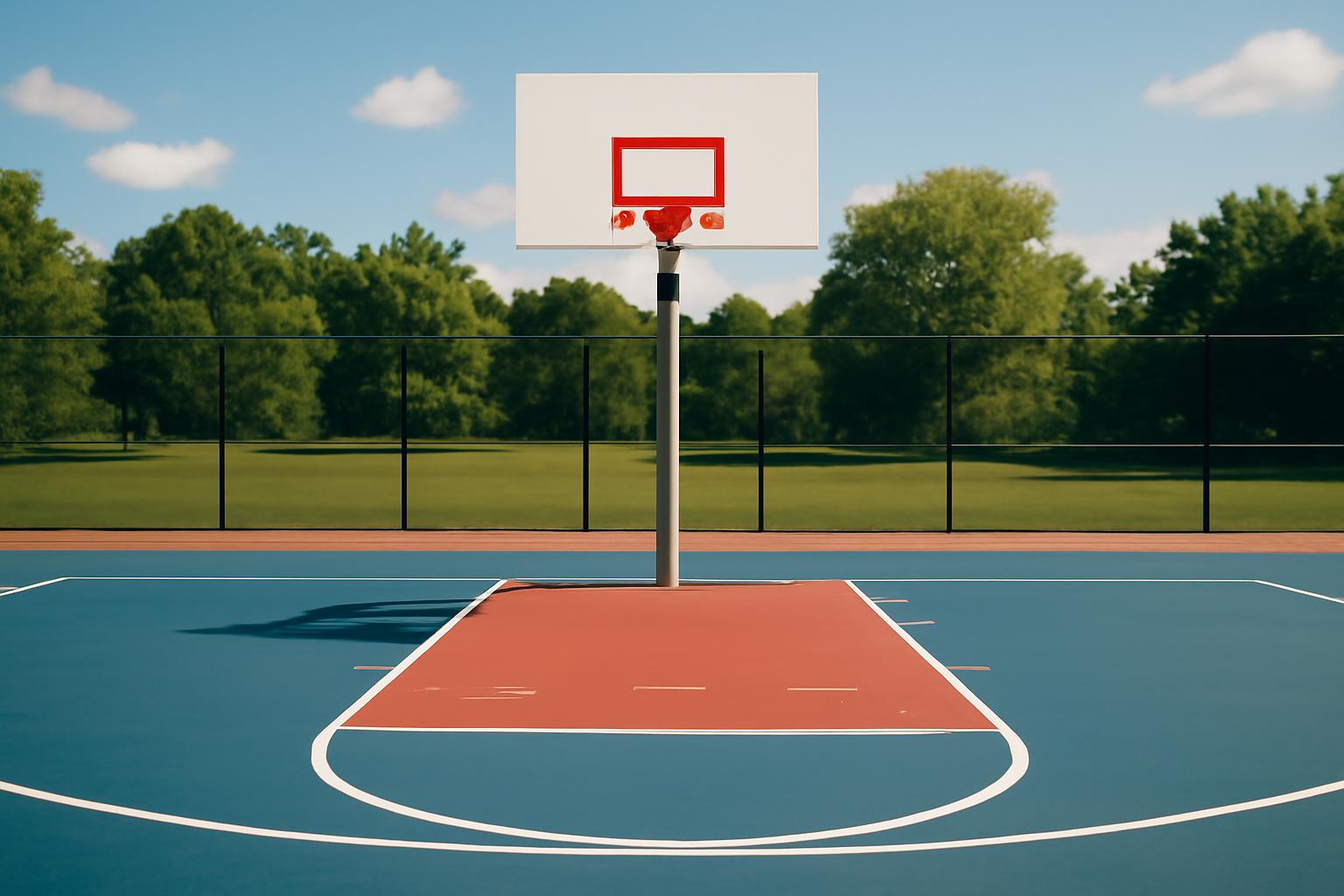
Use 19 feet 9 inches from the basket center. For exact corner striping, use the current NFHS diagram, not a generic internet graphic.
If you only need the short answer, here it is: the high school 3 point line is 19 feet 9 inches from the center of the basket on standard NFHS-style courts. That number is the clearest, best-supported measurement in the available sources, and it is the one parents, players, coaches, and athletic directors should know first.
The rest of the picture takes a little more care. Online court diagrams often mix high school, college, WNBA, and NBA specs. Some high-school-specific guides agree on the three-point distance but conflict on broader court details, especially total court length and some corner-area striping details. So the safest way to read this topic is:
- treat 19 feet 9 inches from the basket center as the settled high school three-point distance;
- treat some other court details as verify-before-you-assume items; and
- if you are checking a real gym, ask the school for the current NFHS court diagram or dimension reference used for that floor.
What Is the High School Three-Point Line?
The high school three-point line is the court marking that awards three points instead of two when a player makes a field goal from beyond it. High-school-specific court guides in this evidence set consistently define the measurement in relation to the center of the basket, not the backboard face or the front of the rim.
That matters because the line is not just a scoring decoration. It changes how offenses space the floor, where defenders have to help, and how a young shooter’s range compares with the next level.
A few basics define it:
- Shots from beyond the line are worth three points.
- Shots with a player touching the line or inside it are worth two.
- The line is measured from the basket center.
- NFHS rules govern most U.S. high school basketball, so this is the standard most families will encounter.
Where readers get tripped up is the corner area. Some high school dimension guides describe the line through a single 19-foot-9-inch basket-center measurement, while some broader diagrams on the internet show more technical corner or baseline geometry. The practical comparison to remember is that high school does not use the NBA’s separate, well-known 22-foot corner three number. But if you are inspecting striping or questioning whether a gym is laid out correctly, the governing reference should be the current NFHS court diagram, not a generic web graphic.
That distinction is important for parents evaluating programs. A player can be a strong high school shooter and still face a real jump later, because the high school line is shorter than NCAA, WNBA, and NBA distances.
Exact Distance of the High School 3-Point Line
The standard high school three-point line is 19 feet 9 inches from the center of the basket.
That figure is the strongest point of agreement across the source set. The most useful traceable reference is the NFHS basketball court diagram linked in CoverSports’ high school court guide, which lists the high school three-point arc at 19 feet 9 inches from the basket center and the line width at 2 inches. Multiple secondary court-dimension pages repeat the same distance.1234
The exact figure
| Item | High school specification |
|---|---|
| Three-point distance | 19 feet 9 inches |
| Reference point | Center of the basket / rim |
| Line width | 2 inches |
That is the number to remember.
Has it changed recently?
The evidence here does not show a recent change to the NFHS high school three-point distance.
That matters because many basketball fans remember the NCAA men’s line moving back to 20 feet 9 inches for the 2019-20 season. A broad dimensions page from Hoop Coach explicitly says the NCAA men’s line moved while the high school line stayed at 19 feet 9 inches.5 The current NFHS 2025-26 rules changes page also references the existing three-point line in game administration without announcing a new distance.6
So if someone asks, “Didn’t high school move the line back too?” the best evidence-backed answer is:
No change is shown in the materials here; high school remains at 19 feet 9 inches.
What “19 feet 9 inches” means in practice
In plain language, the high school three-point line is laid out from the basket center at a radius of 19 feet 9 inches. That is the core concept whether you are painting a new floor, checking an old one, or comparing gyms.
What should not be done is measuring casually from:
- the face of the backboard,
- the front of the rim,
- or whatever looks right by eye from the baseline.
If a school says it plays on a regulation high school floor, the first spec to confirm is simple:
Is the three-point line 19 feet 9 inches from the basket center?
How to Measure the High School 3-Point Line
The high school three-point line is measured horizontally from the center of the rim to the line on the playing surface.
That description appears consistently in the measurement explanations in this source set, especially in answers that explain how the line is laid out from the center of the rim rather than from the backboard or outer edge of the basket.4
The reference point: center of the rim
The basket is above the floor, so installers need a way to locate the correct center point on the court surface. In the sources here, the common practical method is to use a plumb bob to drop the rim center straight down to the floor.4
That projected floor point becomes the center for laying out the arc.
Because the strongest support for the plumb-bob detail comes from measurement explanations and user-generated discussion rather than a quoted NFHS installation manual, it is best described as common court-layout practice, not as a formal NFHS procedural quotation.
Basic layout method
A simple way to think about the process is:
- Identify the exact center of the rim.
- Project that point straight down to the floor, commonly with a plumb bob.
- Mark the floor point directly beneath the rim center.
- Measure 19 feet 9 inches from that floor point to lay out the three-point marking.
The purpose is straightforward: it keeps the line referenced to the basket, not to a nearby visual landmark that can distort the measurement.
Why measurement method matters
This matters to different people for different reasons:
- Court installers need a repeatable way to stripe the floor.
- Athletic directors and facility managers need a way to verify an existing gym.
- Coaches and parents need to know what “regulation” actually means.
It also helps clear up a common misunderstanding. Casual basketball talk often treats the line as if it were measured from the backboard or from somewhere near the lane. The consistent idea in the source set is that the controlling reference is the basket center.
A useful parent-level check
Most parents are not going to bring a plumb bob into a school gym. But you can still ask a smart question:
What diagram or standard did you use to stripe the court?
The best answer is some version of:
- the current NFHS court diagram, or
- an equivalent court-layout reference that identifies the line as 19 feet 9 inches from the basket center.
If a school cannot answer that basic question, or if the floor has obvious overlapping lines from multiple eras, that is worth noticing.
High School Court Dimensions Overview
The three-point line makes more sense when you place it inside the full court layout. But this is where the evidence becomes less tidy.
The high school three-point distance is strongly supported. Some broader court dimensions are not.
What appears well supported
The following measurements repeat across multiple high-school-specific guides in the source set:
| Court element | Best-supported high school figure | Notes |
|---|---|---|
| Court width | 50 feet | Consistent across sources |
| Three-point line | 19 feet 9 inches from basket center | Strongest point of agreement |
| Three-point line width | 2 inches | Listed in multiple guides |
| Key / paint width | 12 feet | Repeated across high school guides |
| Key / paint length | 19 feet | Repeated in several sources |
| Free-throw line distance from backboard | 15 feet | Consistent across sources |
| Rim height | 10 feet | Consistent across sources |
| Rim diameter | 18 inches | Consistent across sources |
| Backboard size | 6 feet wide by 3.5 feet tall | Repeated across sources |
What is disputed or needs direct verification
The biggest unresolved point in the source set is court length.
- Several high-school-specific sources list high school courts as 84 feet by 50 feet.123
- One broader basketball-dimensions page lists high school courts as 94 feet by 50 feet.5
Because of that conflict, it is not publication-safe to present court length with the same certainty as the three-point distance. The careful summary is:
- 50 feet wide is well supported.
- 84 feet long is the more common figure in the high-school-specific guides here.
- 94 feet does appear in at least one secondary source, so families should verify a specific school’s gym against the current NFHS diagram rather than assume every high school court is identical.
The lane and free-throw area
The lane, or key, is commonly listed as:
- 12 feet wide
- 19 feet long
- with the free-throw line 15 feet from the backboard
Those dimensions help explain how the scoring areas relate to one another:
- the paint supports interior play,
- the free-throw area anchors foul shots and mid-range actions,
- and the three-point line defines perimeter scoring.
Rim and backboard standards
The basket setup itself is familiar:
- Rim height: 10 feet
- Rim diameter: 18 inches
- Backboard: 6 feet by 3.5 feet
That is helpful context for parents. The developmental jump between high school and higher levels is usually not about a higher hoop. It is more about shooting distance, spacing, speed, and defensive pressure.
Restricted-area arc: do not treat this as settled from the source set alone
This is one area where the evidence conflicts.
- CoverSports’ NFHS-linked guide includes a 4-foot restricted area arc in its high school dimension list.1
- Two other high school court guides in the source set say high school has no restricted-area arc.23
Because those sources disagree, the safest publication-ready approach is not to state this as settled fact. If this marking matters for a specific gym, the current NFHS court diagram should control.
High School vs. Other Leagues: 3-Point Line Comparisons
For most families, the next question is simple: how far is the high school line compared with college or pro basketball?
The answer is that high school is shorter than all of them.
| Level | Three-point distance |
|---|---|
| High school (NFHS) | 19 feet 9 inches |
| NCAA men | 20 feet 9 inches |
| NCAA women | 20 feet 9 inches |
| WNBA | 22 feet 1.75 inches |
| NBA | 23 feet 9 inches at the arc; 22 feet in the corners |
The cleanest support in this evidence set for those comparison figures comes from the Hoop Coach dimensions page, which distinguishes the NCAA men’s 2019-20 change from the unchanged high school line and lists WNBA and NBA figures as well.5
How much shorter is high school?
Using those comparison numbers:
- high school is 1 foot shorter than NCAA men
- high school is 1 foot shorter than NCAA women
- high school is 2 feet 4.75 inches shorter than the WNBA line
- high school is 4 feet shorter than the NBA arc at the top
- and unlike the NBA, high school references in this source set do not hinge on a separate 22-foot corner number
That last point is useful, but it should be phrased carefully. Some secondary high school diagrams show technical corner details differently. The practical takeaway is still clear: high school is not built around the NBA’s shorter-corner structure.
Why the high school line is shorter
The source set includes a common explanation from secondary guides: the shorter line makes three-point shooting more accessible for developing high school players.1 That is a reasonable coaching rationale, but it should not be overstated as a formal NFHS purpose statement unless you have a direct NFHS citation saying so.
A careful way to put it is:
A shorter line is commonly described as more manageable for high school shooters and more appropriate for youth development than college or pro range.
That framing fits what parents actually see. Many teenagers can shoot competently from 19 feet 9 inches with sound mechanics. Fewer can do the same from WNBA or NBA distance without changing their form.
What the transition to college looks like
For an ambitious player, the move from high school to college is not just symbolic. That extra foot to NCAA range matters.
Common adjustments include:
- catching the ball a little farther out,
- getting set earlier,
- generating more lower-body power,
- and making quicker decisions before the closeout arrives.
So the high school line is best viewed as a development step, not an endpoint.
History of the High School Three-Point Line
The high school three-point line is relatively modern.
The strongest historical claim in this evidence set is that NFHS adopted the three-point shot for the 1987-88 season after a period of experimentation. The direct support here comes through an Officiating.com discussion in which posters cite historical NFHS News and NFHS Basketball Handbook references for that adoption date and for the 19-foot-9-inch distance.7
A short timeline
Based on those historical references:
- 1982-83: North Dakota is cited as an experimental state using the three-point goal.
- Five-year experimentation period: historical NFHS references quoted in the discussion describe testing before national adoption.
- 1987-88: NFHS adopted the three-point shot nationally for high school basketball.
- Distance: the line associated with that adoption was 19 feet 9 inches from the center of the hoop.
Why people remember the rollout differently
Even when a rule changes nationally, real facilities do not update overnight.
That helps explain why memories from the late 1980s can vary. People may remember:
- one gym getting restriped quickly,
- another keeping older markings longer,
- league-by-league timing differences,
- or middle school, church, and community games using different floor setups than varsity NFHS play.
So the careful historical summary is:
NFHS adoption points to 1987-88, but the visible rollout could still look uneven from one region or facility to another.
Why this history still matters now
Older gyms often keep traces of earlier layouts, repainting decisions, or mixed-use floor markings. If a parent walks into an older building and the floor looks odd, that does not automatically mean the school is doing something wrong. It may mean the building has been updated in stages over many years.
That is another reason to verify the line against the current standard instead of relying on memory or appearance.
Practical Implications for Youth and High School Basketball
Most parents are not asking about the high school 3 point line because they love court geometry. They want to know what the line means for their child, their school options, and their expectations.
1. The line is a real skill benchmark
A player who can shoot comfortably from 19 feet 9 inches is developing a meaningful perimeter skill. That does not guarantee success at the next level, but it is not a trivial distance either.
For parents, the useful question is not just, “Can my child hit an occasional three?” It is:
- Can they get to that distance with balance?
- Can they do it without a heave?
- Can they repeat it under game speed?
Those questions matter more than highlight clips.
2. It is a development step, not college range
The common coaching rationale in the source set is that the shorter line is more accessible for younger players. That is sensible, but it also means families should keep perspective.
A strong high school shooter may still need time to adjust to:
- NCAA range,
- faster closeouts,
- stronger defenders,
- and tighter shot windows.
So if your child has plans beyond high school, the goal should be:
- first, master the high school line;
- then extend range without wrecking mechanics.
3. “Regulation” should mean something specific
If a school says it plays on a regulation high school floor, there are two practical checks worth making:
- Is the three-point line 19 feet 9 inches from the basket center?
- What court diagram or standard was used for striping?
The strongest parent-level verification standard is to ask the athletic director or facility manager for the current NFHS basketball court diagram or the specific dimension sheet used for the gym. That is more useful than vague assurances that the court is “basically standard.”
4. Ask about the practice gym, not just the game gym
A varsity team might play games on a well-marked main court but practice much of the week in:
- an auxiliary gym,
- a shared community center,
- or an older building with overlapping lines.
That does not automatically make a program bad. It does mean the actual daily shooting environment may differ from the showcase gym families see on game night.
A parent does not need to inspect every inch of the floor. But it is reasonable to ask:
- Where does the team practice most?
- Is that court marked to the same high school standard?
- Are the baskets and spacing comparable?
5. The three-point line now appears in game administration too
The NFHS 2025-26 basketball rules changes include an update to throw-in procedures that uses the visible three-point line as a line of demarcation for designated throw-in spots in the frontcourt and backcourt.6
That does not change the line’s distance. It also does not prove anything broader about player development. What it does show is narrower and useful:
the three-point line is now used in current NFHS game administration as a visible existing court marking, not only as a scoring boundary.
A short parent checklist
If you are evaluating a high school basketball environment, ask:
- Is the main competition court striped to the current NFHS standard?
- What document or diagram did the school use for court layout?
- Where does the team actually practice most of the time?
- Are the main and practice courts marked the same way?
- If your child hopes to play beyond high school, how does the program help shooters extend range responsibly?
That keeps the conversation anchored in facts instead of hype.
Common High School Court Variations and Compliance
Not every gym used for “high school basketball” looks the same.
That is especially true in:
- older gyms,
- multi-use facilities,
- and buildings that have been restriped multiple times.
Older gyms can differ from current regulation layouts
VersaCourt’s high school court specifications page notes that older high school gymnasiums in many areas can have smaller overall size and different layouts than regulation, with some variation in backboard designs as well.8
That means a gym can host legitimate school basketball and still feel different from a newly built facility.
For parents, the practical lesson is simple:
do not assume that a long-established gym automatically matches current striping and dimension expectations.
Court length is the clearest example of why verification matters
The source set’s disagreement over 84 feet versus 94 feet is exactly the kind of thing that creates parent confusion.
If you are evaluating a specific program, do not argue from memory. Ask the school:
- what standard the court was built to,
- whether the floor has been updated recently,
- and whether the gym matches the current NFHS court diagram.
That is more useful than trusting a random dimensions graphic online.
Multi-use spaces create their own issues
Shared spaces can introduce complications such as:
- many overlapping painted lines,
- temporary equipment on or around the floor,
- or practice setups that feel different from game conditions.
Again, that is not automatically disqualifying. But it is relevant if you are comparing environments for a developing shooter.
Ceiling height: verify directly
One NFHS-linked facility guide in this source set lists a 24-foot minimum ceiling height for a high school basketball court.1 Because that point is not consistently repeated elsewhere in the evidence here, it is better treated as a verify-directly item, not as a fully settled fact in this article.
If ceiling clearance matters in a specific facility question, the school or the current NFHS reference should be your source of record.
NFHS governs most, not every possible high school setting
CoverSports’ guide states that NFHS governs the majority of high school basketball across the U.S.1 That is useful context, but “majority” is not the same as “every building in every context.”
Families may still encounter variation through:
- older facilities,
- independent or private-school venues,
- shared municipal gyms,
- or sub-varsity games played away from the main gym.
What “compliance” should mean to a parent
A parent does not need to perform a technical audit. A reasonable standard is:
- the school should know what court standard it uses,
- the three-point line should match the current high school specification,
- and staff should be able to point you to the diagram or reference used for the floor.
That is a much better signal than polished branding or social media clips.
FAQ
Is the high school 3-point line the same distance in the corners as the arc?
At the rule-of-thumb level, high school references in this source set define the line by the same 19-foot-9-inch basket-center measurement and do not use the NBA’s separate 22-foot corner number.1 But secondary diagrams and descriptions are not perfectly consistent about the exact corner/baseline layout, and some sources mention straight segments near the baseline.8
So the safest answer is:
Use 19 feet 9 inches from the basket center as the governing high school distance, but use the current NFHS court diagram—not a generic internet graphic—if you need to verify the exact corner striping.
Has the NFHS high school 3-point distance ever changed?
The evidence here supports two points:
- NFHS adoption is traced to the 1987-88 season through historical NFHS references quoted in an officiating discussion.7
- Current comparison pages and NFHS rule materials do not show a later high school distance change.56
So the careful answer is:
The available evidence points to adoption at 19 feet 9 inches in 1987-88, and this article’s source set does not show a later NFHS change to that distance.
What is the high school court length—84 or 94 feet?
This is the biggest unresolved dimension issue in the source set.
- Several high-school-specific guides list 84 feet by 50 feet.123
- One broader court-dimensions page lists 94 feet by 50 feet.5
So the best answer is:
50 feet wide is well supported; 84 feet is the more common high-school-specific figure in these sources; but if you care about a specific gym, confirm it against the current NFHS court diagram or the school’s own facility reference.
How does high school 3-point shooting prepare players for college?
It prepares players by giving them a real but shorter perimeter distance to master first.
A player who shoots well from 19 feet 9 inches can build:
- balanced mechanics,
- catch-and-shoot footwork,
- range awareness,
- and shot selection habits.
But college still asks for more. The NCAA line is 20 feet 9 inches, so players typically need more strength, earlier preparation, and faster decision-making.5
That is why the high school line is best viewed as a foundation. It is close enough to teach real perimeter basketball, but still shorter than the next step.
Parents comparing programs should focus less on how many deep shots a team takes and more on whether the program teaches shooting habits that will still hold up when the line moves back.
Parents assessing a high school basketball program do not need to memorize every court measurement. They do need to know the most important one: 19 feet 9 inches from the center of the basket. From there, the smart next step is simple—ask what standard the gym uses, ask for the current NFHS court diagram or equivalent reference, and make sure the daily practice environment matches the claims.
-
CoverSports: High School Basketball Court Dimensions & Markings, which links the NFHS basketball court diagram PDF. ↩↩↩↩↩↩↩↩
-
PROformance Hoops: Ultimate Guide to Basketball Court Dimensions. ↩↩↩↩
-
VersaCourt / Versacor High School Court Specifications. ↩↩↩↩
-
Quora discussion: From what point on the basket do you measure a high school three-point line?. ↩↩↩
-
Officiating.com forum discussion on when the three-point shot was introduced in high schools. ↩↩