
Plan the Rink Trip: Clock Time, Breaks, and Overtime
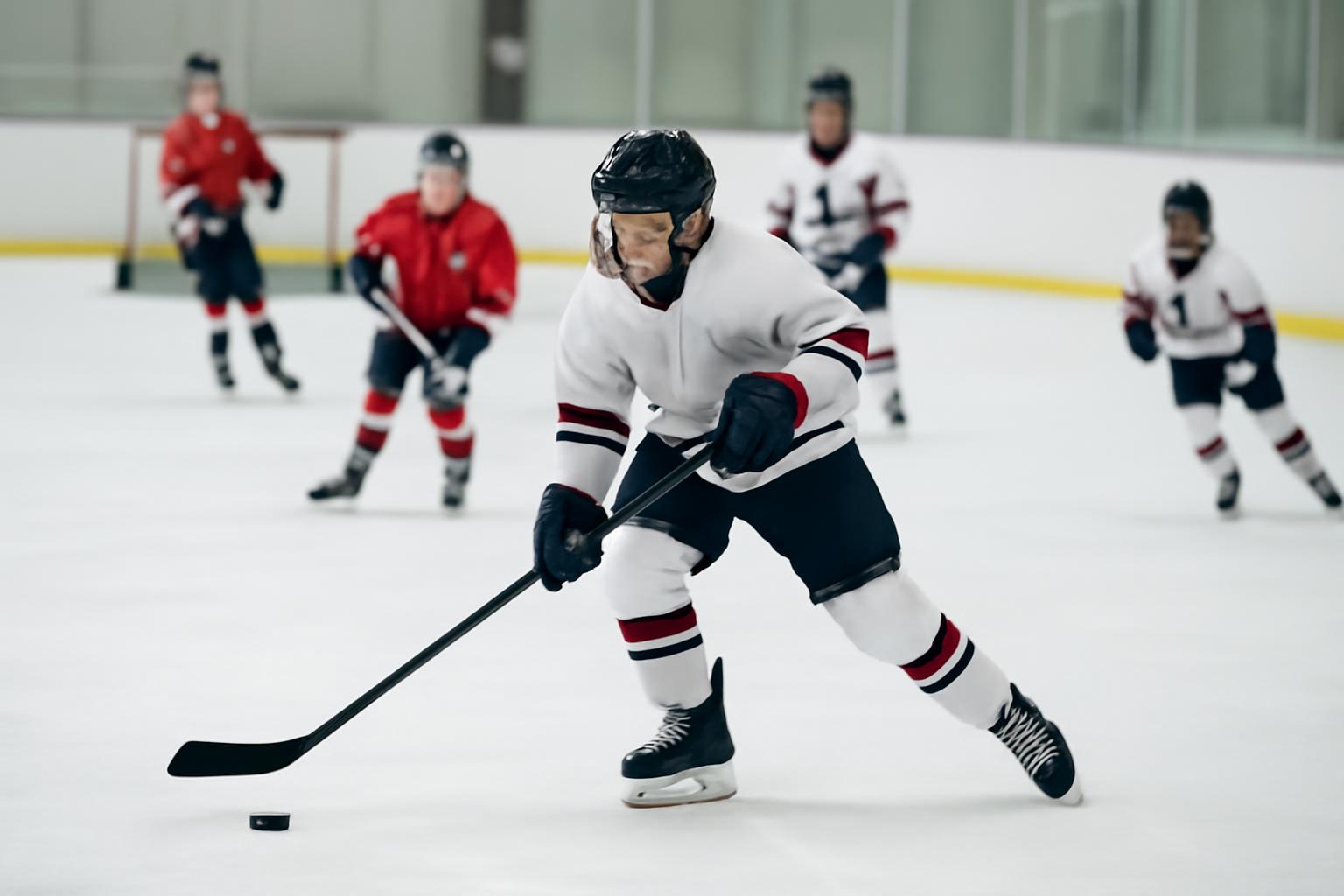
Expect approximately 90 to 120 minutes of elapsed time for a typical high school ice hockey game, rather than relying on the game clock alone.
The quick answer: allow about 1.5 to 2 hours
A typical high school ice hockey game takes approximately 90 to 120 minutes of elapsed time. Treat that as a practical scheduling estimate, not a nationwide rule, guaranteed time slot, or measured national average. A local sports organization’s general timing guide places high school games in the same 1.5-to-2-hour range while noting that stoppages and overtime can extend them (Cheltenham Sports’ hockey game-length guide).
The key distinction is between regulation clock time and real elapsed time:
- Three 15-minute periods provide 45 minutes of regulation play.
- Three 17-minute periods provide 51 minutes of regulation play.
- Whistles, intermissions, resurfacing, injuries, penalties, and possible overtime make the event longer than either clock total.
Some commercial planning guidance estimates a broader visit of approximately 2 to 2.25 hours at the rink when warm-up, intermissions, stoppages, and other delays are included. Because that estimate comes from a hockey retailer rather than an official high school rule or national duration study, it is best treated as a cautious scenario, not a standard allocation (Better Hockey’s parent time guide).
For an ordinary regular-season game, families should usually reserve roughly two hours from puck drop. Add separate time for parking, entering the facility, finding seats, and postgame pickup. A game scheduled for 7 p.m. is not guaranteed to finish by 9 p.m., especially if the rules permit overtime.
Players have a larger time commitment than spectators. Their visit includes the arrival, dressing, equipment checks, warm-up, team meeting, and postgame routine assigned by the coach. Families scheduling around a player should count from the team’s required arrival time rather than from puck drop.
This guide concerns high school ice hockey. Field hockey uses a different surface, game structure, clock system, and rules.
Regulation usually means three 15- or 17-minute periods
High school ice hockey normally consists of three regulation periods. The period length depends on the state association, league, competition level, season, and event.
The common calculations are:
- 3 × 15 minutes = 45 minutes of regulation playing time
- 3 × 17 minutes = 51 minutes of regulation playing time
| Example format | Period length | Number of periods | Total regulation playing time |
|---|---|---|---|
| Common 15-minute format | 15 minutes | 3 | 45 minutes |
| Common 17-minute format | 17 minutes | 3 | 51 minutes |
| Scholastic Hockey League junior varsity example | 15 minutes | 3 | 45 minutes |
| Scholastic Hockey League varsity and AHL example | 17 minutes | 3 | 51 minutes |
The league-specific figures in the final two rows come from the Scholastic Hockey League rules. These are game-clock totals, not estimates of how long families will spend at the rink.
Official examples show why there is no single period length for every high school game. New Jersey’s 2022–23 regular-season rules specified three 15-minute periods, producing 45 minutes of regulation play. That is a dated, jurisdiction-specific example and should not be treated as the rule for a future New Jersey game without checking the applicable season’s documents (NJSIAA’s 2022–23 regular-season rules).
Michigan’s 2022–23 adaptations provide another historical example. Regular-season leagues, conferences, or opposing schools could select 15- or 17-minute periods in advance, while Michigan state tournament games used 17-minute periods. The selected regular-season length was supposed to be communicated before teams reached the rink (MHSAA’s 2022–23 hockey rule adaptations).
Competition level can also matter. In the Scholastic Hockey League example, varsity and AHL games have three 17-minute stop-clock periods, while junior varsity games have three 15-minute stop-clock periods. One league therefore uses both 51- and 45-minute regulation formats.
These examples support 15 and 17 minutes as useful planning formats, but neither is a universal national standard. They also do not justify assuming that the 20-minute periods familiar from college and professional hockey are the high school default.
If a schedule says only “high school hockey,” ask:
- Is the game varsity, junior varsity, or another division?
- Does the applicable handbook specify 15- or 17-minute periods?
Why 45 to 51 minutes of hockey takes much longer in real time
High school hockey commonly uses stop-clock play. In plain language, the game clock pauses when play stops on a whistle and resumes when play restarts, subject to the applicable rules.
Stoppages may follow:
- a goal;
- a penalty;
- icing;
- offsides;
- an injury;
- a puck leaving play;
- a timeout or official discussion; or
- another whistle requiring a faceoff or restart.
That is why a 17-minute period normally occupies more than 17 minutes on a wall clock. If the scoreboard shows 12:00 remaining while play is stopped for 45 seconds, those 45 seconds still pass for everyone in the rink even though the game clock remains at 12:00.
It helps to distinguish two sources of added time.
Routine stoppages are unpredictable. One period might flow with relatively few whistles. Another might contain repeated icings, penalties, goals, equipment problems, or an injury delay. Families cannot reliably calculate those events in advance.
Scheduled breaks are more predictable. A league may prescribe a short first intermission and a longer second break for resurfacing. The exact schedule still varies, but families can often find it in the league rules, tournament procedures, or facility schedule.
Penalties also illustrate the difference between game-clock and elapsed time. Procedures need not be identical in every jurisdiction.
A useful planning formula is:
Regulation minutes + clock stoppages + two period breaks + any overtime or shootout = elapsed event time
The opposite effect is possible when a local running-clock provision applies. The game clock may continue through situations in which it would ordinarily stop, allowing the remaining regulation time to expire faster. Some jurisdictions also terminate a one-sided game before every scheduled minute has been played.
The practical lesson is that regulation time measures hockey time, not appointment length. Use 45 or 51 minutes to understand the playing format, but use a broader estimate for transportation, meals, sibling activities, and pickup.
Intermissions, resurfacing, and warm-up time
A three-period game has two regulation period breaks: one between the first and second periods and another between the second and third. Their duration—and whether the ice is resurfaced during one or both—depends on the league, event, and facility.
The Scholastic Hockey League illustrates how scheduled breaks add to rink time. Its varsity and AHL format lists a two-minute first intermission and a 12-minute second intermission for resurfacing, adding 14 scheduled minutes before ordinary stoppages. Its junior varsity format uses a 1-minute-30-second first intermission and a 12-minute resurfacing break, adding 13.5 scheduled minutes. If the goal differential is at least five after the second period, the league replaces that second-intermission ice cut with a two-minute break (Scholastic Hockey League rules).
Combined with the regulation clock, those standard break schedules produce:
- Varsity and AHL: 51 regulation minutes plus 14 scheduled intermission minutes
- Junior varsity: 45 regulation minutes plus 13.5 scheduled intermission minutes
Neither sum includes ordinary whistles, timeouts, unusual delays, overtime, or a shootout.
New Jersey’s 2025–26 modifications provide a separate, season-specific model. They prescribe an eight-minute pregame warm-up and cap period breaks at five minutes without resurfacing or 15 minutes with resurfacing. For regular-season games, the home team or facility determines when the ice cut occurs and communicates that timing to the visiting team and officials (NJSIAA’s 2025–26 ice hockey modifications).
That document should not be called current for a future season without verification. It also does not establish the length of each regulation period or provide a typical total elapsed duration; it covers selected warm-up, break, resurfacing, overtime, and termination procedures.
An illustrative event sequence looks like this:
| Sequence | What happens | Part of regulation playing time? |
|---|---|---|
| Pregame warm-up | Players take the ice before puck drop | No |
| Period 1 | Stop-clock hockey | Yes |
| First break | Teams rest and prepare | No |
| Period 2 | Stop-clock hockey | Yes |
| Resurfacing break | The ice is cut and teams wait | No |
| Period 3 | Stop-clock hockey | Yes |
| Optional overtime | Played only if the rules require or permit it | No; it is additional play |
| Optional shootout | Used only under certain tied-game procedures | No |
This is a planning illustration, not a universal schedule.
A spectator measuring puck drop to final horn should not automatically include the pregame warm-up. Someone calculating the whole outing should include parking, entry, seating, and any time spent watching warm-ups.
For players, the warm-up is only one part of the pregame commitment. Arrival, dressing, equipment checks, team instructions, and off-ice preparation may begin much earlier. There is no universal arrival requirement; the coach or team manager controls that schedule.
A short intermission without an ice cut and a full resurfacing break are not interchangeable. A posted ice slot can help with planning, but it is still an allocation rather than a guaranteed final-horn time. Delayed starts, overtime rules, and facility procedures can change the actual finish.
How overtime and shootouts change the end time
There is no universal high school overtime procedure. Depending on the competition, a tied game may:
- end in a tie after regulation;
- use one short sudden-death or sudden-victory overtime;
- proceed from overtime to a shootout;
- go directly to a shootout; or
- continue through additional periods until a winner is determined.
The distinction between the regular season and winner-required competition is critical. A league may allow a regular-season tie because neither team must advance. A playoff, elimination tournament, or final may need a winner, making its end time much less predictable.
In the Scholastic Hockey League’s varsity regular-season format, a tie is followed by a two-minute intermission and one five-minute sudden-death overtime. If the score remains tied, a one-minute break precedes a sudden-death shootout. Its junior varsity format differs: after a two-minute break, the game proceeds to a three-round shootout rather than using the same varsity sequence. These are league-specific procedures, not national rules (Scholastic Hockey League rules).
New Jersey’s 2025–26 modifications provide another contrast. A tied regular-season varsity game receives a two-minute break and one five-minute, 4-on-4 sudden-death overtime. If neither team scores, the game remains tied. Specified advancement tournaments may instead add a 15-minute resurfacing intermission, one 15-minute sudden-victory overtime, a five-minute rest, and then a shootout. Tournament bylaws can supersede that procedure (NJSIAA’s 2025–26 ice hockey modifications).
Specified New Jersey finals can be more open-ended. After an initial 15-minute overtime, a tied final can continue through 7.5-minute sudden-victory periods separated by rests, with additional resurfacing breaks at designated points. Such a format can extend well beyond the routine 90-to-120-minute planning range.
Overtime adds more than the displayed playing minutes. A five-minute overtime may require a preceding break, lineup adjustments, a change of ends, and time to organize the extra period. A shootout requires player selection, repeated attempts, rulings, and potentially additional rounds. “Five-minute overtime” therefore does not mean the event ends only five wall-clock minutes later.
For scheduling:
- A regular-season game that can end tied is relatively predictable.
- One short overtime creates a modest but uncertain extension.
- Overtime followed by a shootout needs a larger buffer.
- A winner-required game with repeated overtime has no dependable end time.
Avoid scheduling a tight dinner reservation, airport departure, work shift, or sibling pickup immediately after a playoff or winner-required tournament game. If the next commitment cannot move, arrange a backup driver rather than assuming regulation will settle the result.
When running clocks and goal-differential rules make games shorter
Overtime can extend a game, but a one-sided score can have the opposite effect. Some jurisdictions use a running clock, early termination, or a combination of the two after a specified goal differential.
The terms describe different procedures:
- A running clock allows the remaining game clock to continue through some situations in which stop-clock play would normally pause it.
- Early termination ends the game before all scheduled regulation time has been completed.
- A goal-differential rule establishes the score margin that triggers one or both procedures.
The Scholastic Hockey League uses a running clock when the third-period goal differential reaches at least five, subject to listed exceptions. Stop-clock operation resumes if the margin falls below five. The rule changes how quickly the remaining clock can expire; it does not immediately end the game (Scholastic Hockey League rules).
Michigan’s 2022–23 adaptations used a two-stage procedure. An eight-goal lead during the first or second period triggered running time. After two periods—or at any point in the third—the game ended when the specified eight-goal margin existed. Those were Michigan rules for that season, not a nationwide mercy standard (MHSAA’s 2022–23 hockey rule adaptations).
New Jersey’s 2025–26 modifications used another threshold: a game ended after two periods or during the third when one team led by at least 10 goals. That was an early-termination provision rather than merely a direction to run the remaining clock (NJSIAA 2025–26 ice hockey modifications).
The five-, eight-, and 10-goal examples should not be blended into a supposed national rule. They come from different organizations, procedures, and seasons. Another competition may use a different margin, activate the procedure only during a particular period, stop the clock for selected events, or create tournament exceptions.
Goal-differential rules affect planning in two ways. A running clock or early termination can produce an earlier finish, but the exact end remains difficult to predict because no one knows in advance whether the score will reach the required margin.
A large lead can also alter the break schedule. In the Scholastic Hockey League example, the second-intermission ice cut can be replaced by a short break when the stated differential exists after the second period. The event may then be shortened by both the break change and third-period running time.
The practical range therefore works in both directions:
- Overtime, shootouts, injuries, and unusual delays can push the event later.
- Running time, a canceled ice cut, or early termination can bring the final horn earlier.
Do not assume that a lopsided score automatically starts running time or ends the contest. Officials must apply the procedure authorized for that competition.
Build a realistic family schedule and verify the local format
The most useful approach is to plan in scenarios rather than search for one exact national duration.
Scenario 1: Routine spectator visit
Allow approximately 90 to 120 minutes from puck drop for an ordinary high school ice hockey game. This is a practical range for a three-period game with normal stoppages and breaks, not a promised finish time (Cheltenham Sports’ hockey game-length guide).
If the game begins at 6:30 p.m., that planning range points to an approximate finish between 8 and 8:30 p.m. Treat the calculation as a scheduling aid, not a guarantee, and avoid making an inflexible commitment based on the earliest possible finish.
Scenario 2: Broader rink visit
Allow roughly 2 to 2.25 hours when the outing includes warm-up, longer resurfacing breaks, and other rink delays. Add travel, parking, entry, and the walk back to the car separately. This is cautious commercial planning guidance rather than an official allocation.
The same retailer guidance suggests that many youth players arrive 45 to 60 minutes before puck drop, with older or more competitive teams potentially requesting additional time. The player should always follow the team’s assigned arrival time, which may be shorter or longer (Better Hockey’s parent time guide).
Scenario 3: Playoff or winner-required tournament
Keep the postgame schedule flexible. A game that must produce a winner can add resurfacing, overtime, rests, a shootout, or repeated sudden-victory periods. There may be no useful maximum end time.
Spectator and player schedules should be calculated separately:
| Person | Start counting from | Include |
|---|---|---|
| Spectator | Planned rink arrival or puck drop | Parking, entry, game, and desired postgame time |
| Player | Team-assigned arrival | Dressing, meetings, warm-up, game, and postgame routine |
| Pickup driver | Expected player release | Possible overtime, team meetings, and changing |
| Tournament family | First required arrival | Multiple games, schedule slippage, and advancement scenarios |
Before relying on an expected finish, verify:
- Competition level: Is it varsity, junior varsity, or another division?
- Event type: Is it a regular-season game, tournament, playoff, or final?
- Period length: Are the three periods 15 or 17 minutes?
- Clock operation: Is regulation stop-clock throughout, or can running time begin?
- Intermissions: How long is each scheduled break?
- Resurfacing: When is the ice cut, and how much time is reserved for it?
- Overtime: Can the game end tied?
- Shootout: Is one used, and does it follow overtime or begin immediately?
- Goal differential: Can a large lead trigger running time, cancel an ice cut, or terminate the game?
- Facility schedule: What ice slot has the host rink assigned?
Check the host school’s current schedule first. Then consult the applicable league handbook, tournament rules, and state athletic association documents. If the materials conflict, ask the host athletic department or tournament organizer which rules control that specific game.
Pay close attention to the season printed on every rulebook. A 2022–23 or 2025–26 document can show how a jurisdiction handled timing in that season, but it should not be treated as authority for a future game without confirmation. Rules may also differ between regular-season and tournament play within the same season.
The two numbers most families need are:
- 45 to 51 minutes of regulation clock time in common three-period formats
- Approximately 90 to 120 minutes of elapsed event time for routine planning
Reserve roughly two hours for an ordinary game, allow more flexibility for playoffs and tournaments, and confirm the period, resurfacing, overtime, and goal-differential rules for the relevant season. For an exact outing, the scheduled ice slot and current local rules are more useful than any generic national estimate—although neither guarantees the final-horn time.
How many periods are in a high school hockey game?
High school ice hockey normally has three regulation periods, with two breaks between them. Overtime, when permitted or required, occurs after those periods and is additional to regulation.
How long is each high school hockey period?
Common official formats use 15- or 17-minute periods. Three 15-minute periods total 45 regulation minutes, while three 17-minute periods total 51 minutes. The correct format depends on the state, league, competition level, season, and event (KwikRink’s high school timing comparison).
Does the clock stop when play stops in high school hockey?
Common high school formats use stop-clock periods, meaning the game clock pauses after whistles and resumes when play restarts. Goals, penalties, icing, offsides, injuries, and other stoppages can therefore make a period take substantially longer than its displayed length.
A local running-clock provision may change that procedure after a specified goal differential. Check the applicable handbook rather than assuming every jurisdiction handles every whistle identically.
Are high school playoff hockey games longer than regular-season games?
They can be. A regular-season game may end tied or use only one short overtime, while a playoff or tournament game may need to produce a winner. That can require an ice cut, a longer overtime, a shootout, or repeated sudden-victory periods.
The regulation periods are not necessarily longer. The uncertainty comes from what happens if the score remains tied, so playoff spectators should avoid scheduling a tight commitment immediately afterward.
Can a mercy rule make a high school hockey game end early?
Yes. Some jurisdictions use goal-differential provisions that start a running clock, eliminate a scheduled ice cut, terminate the game early, or combine those measures.
There is no single national mercy threshold. The trigger and procedure vary by jurisdiction, competition, and season, so confirm the rule for the upcoming game.