
How Much Time Should Your Family Set Aside for a Hockey Game?
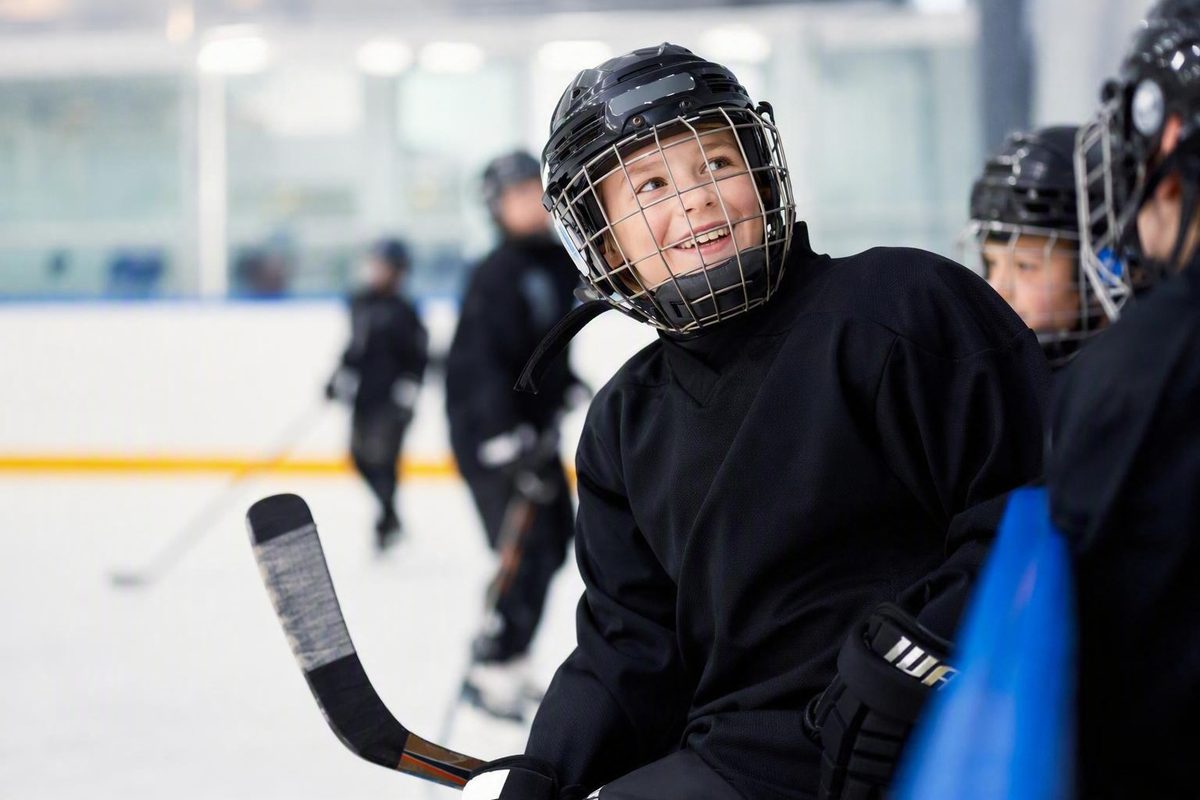
An NHL game usually takes 2 to 2.5 hours in real time despite 60 minutes of regulation; up to 3 hours is a safer allowance, not the typical length.
The short answer: game-clock time is not the full time commitment
This guide addresses ice hockey, especially NHL and youth games. Field hockey uses a different structure and requires separate timing guidance.
For an NHL game, think in three numbers:
- 60 minutes of regulation time on the game clock.
- About 2 to 2.5 hours of typical real-world elapsed time.
- Up to 3 hours as a prudent scheduling allowance—not a maximum or guaranteed finish.
NHL regulation is divided into three 20-minute periods. Intermissions, whistles, reviews, ice maintenance, broadcast breaks, and possible overtime make the event much longer than the regulation clock suggests. Third-party NHL timing guidance supports the distinction between 60 scheduled minutes and an elapsed event of roughly 2 to 2.5 hours. FloHockey explains the professional game structure and the factors that extend it.
Other levels are generally shorter, but no single timetable applies to every league:
- College and comparable higher-level games often occupy approximately 2 to 2.5 hours.
- High-school games are broadly estimated at 1.5 to 2 hours.
- Youth games often occupy approximately 1 to 1.5 hours.
- Introductory youth formats may fit into roughly 50 to 60 minutes.
These are planning estimates, not guaranteed averages, rules, or maximums. Period length, clock rules, overtime, tournament procedures, and the rink’s booked ice slot can all change the answer.
| Level or format | Common period format | Approximate elapsed time | Main variable or caveat |
|---|---|---|---|
| NHL regulation game | Three 20-minute stop-time periods | About 2 to 2.5 hours | Broadcast breaks, reviews, injuries, ceremonies, and overtime |
| College or comparable higher-level game | Often three 20-minute stop-time periods | About 2 to 2.5 hours | Conference, tournament, and overtime procedures vary |
| Minor-league or junior game | Commonly three periods; length depends on the competition | Roughly 1.5 to 2.5 hours | The labels cover many leagues and formats |
| High-school game | Often three periods, sometimes shorter than NHL periods | About 1.5 to 2 hours | State associations and local competitions set their own rules |
| Competitive youth game | Commonly three periods of varying length | About 1 to 1.5 hours, sometimes longer | Stop time, longer periods, and overtime can extend play |
| Introductory or recreational youth game | Short periods, often within a fixed ice slot | Roughly 50 to 75 minutes | Running clocks and slot limits may make the finish more predictable |
| Adult recreational game | Often shorter periods or a fixed slot | Commonly around 1 to 1.5 hours | Rink scheduling may control the finish |
The table combines broad third-party planning ranges rather than universal rules. Cheltenham Sports, for example, estimates NHL games at about 2.5 hours, college and junior games at about 2 to 2.5 hours, high-school games at 1.5 to 2 hours, and youth games at 1 to 1.5 hours. Its level-by-level comparison also stresses that formats vary.
If the finish matters for transportation, childcare, or another appointment, check the specific league or tournament schedule instead of relying on the table alone.
Why 60 minutes of hockey takes much longer than one hour
Three measures are easy to confuse:
- Game-clock time is the regulation playing time recorded on the scoreboard.
- Elapsed event time runs from puck drop until the game ends.
- A player’s total rink commitment includes arrival, dressing, preparation, warm-up, the game, and the post-game routine.
The NHL’s 60-minute figure refers only to the first measure. It does not include the two intermissions or the time consumed while the scoreboard clock is stopped.
In a stop-time game, the game clock pauses when play is interrupted. Common causes include:
- goals;
- icing and offside calls;
- penalties;
- the puck leaving play;
- injuries;
- video reviews;
- equipment or rink problems; and
- other referee whistles.
A 20-minute stop-time period may therefore consume roughly 30 to 40 minutes of real time. That is a planning estimate, not a promised period length. A period with relatively few whistles may finish faster, while reviews, injuries, penalties, or technical delays may make another period substantially longer. One NHL timing guide reports the same approximate 30-to-40-minute elapsed range per regulation period. SHOC’s guide also identifies the stoppages that create the difference.
Intermissions add another substantial block. Published descriptions vary, but professional intermissions are commonly placed near 17 to 18 minutes. Two breaks near that length add more than half an hour before ordinary in-period stoppages are counted. As one professional-team example, the Coachella Valley Firebirds describe games as three 20-minute periods separated by two 18-minute intermissions. The Firebirds’ Hockey 101 page outlines that structure.
Professional intermissions commonly include ice resurfacing. Televised events can also include scheduled media breaks during periods. These are additional sources of elapsed time, although the supplied evidence does not establish one universal difference between televised and non-televised games.
Penalties cause a separate misunderstanding. The associated whistle, announcement, player movement, faceoff setup, discussion, or review can nevertheless add real-world time.
The basic calculation is:
Periods + intermissions + stoppages + possible overtime = total elapsed event time
For a player, expand it to:
Arrival + dressing and preparation + elapsed event time + post-game routine = total rink commitment
A realistic NHL game timeline from puck drop to finish
A regulation NHL game can be pictured as six possible blocks:
- First period
- First intermission
- Second period
- Second intermission
- Third period
- Post-regulation play, if the score is tied
Each regulation period removes 20 minutes from the game clock but may occupy approximately 30 to 40 minutes of elapsed time. Intermissions create two substantial scheduled breaks, while whistles and media timeouts are distributed through the periods.
The following timeline is illustrative. It uses approximately 35 elapsed minutes per period and 18-minute intermissions, producing a regulation finish a little more than two hours after puck drop. Those inputs fall within the planning ranges reported in the NHL timing guidance. They should not be read as a fixed event schedule.
| Approximate time | What is happening |
|---|---|
| 7:00 p.m. | Puck drop |
| 7:00–7:35 p.m. | First 20-minute period, including stoppages |
| 7:35–7:53 p.m. | First intermission |
| 7:53–8:28 p.m. | Second period |
| 8:28–8:46 p.m. | Second intermission |
| 8:46–9:21 p.m. | Third period |
| After approximately 9:21 p.m. | Game ends, or overtime and possibly a shootout follow |
A real game will not follow those timestamps exactly. One period may move quickly and another may be prolonged by reviews, injuries, penalties, or equipment problems. Intermission timing can also differ among competitions.
Planning example: a 7:00 p.m. game
For a 7:00 p.m. puck drop, a regulation game may often finish around 9:15 to 9:30 p.m. Reserving time until 10:00 p.m. is safer when a tight departure would cause a problem. The additional buffer can absorb a slower game, regular-season overtime, a shootout, or the time needed to leave the seating area and arena.
That does not make 9:30 or 10:00 a promised departure time. The finish can shift because of:
- a lengthy video review;
- an injury or equipment delay;
- an unusual number of whistles;
- ceremonies;
- technical problems;
- overtime; or
- a shootout.
Use the scheduled puck-drop time as the starting point whenever it is listed. If a ticket, schedule, or venue page uses several time labels, confirm which one identifies puck drop rather than assuming that every listed time means the same thing.
The practical method is to add a range rather than calculate one exact departure:
- For an ordinary NHL game, add approximately 2 to 2.5 hours after puck drop.
- When a later commitment would be difficult to miss, hold approximately 3 hours after puck drop.
- For a playoff game, avoid a firm post-game commitment because overtime has no predetermined maximum under the described format.
Remember that the three-hour figure is a buffer, not an upper limit.
How overtime and shootouts change the finish time
Overtime is not one universal extra period. NHL regular-season and playoff formats differ, and amateur competitions may use entirely different procedures.
Because the supplied evidence consists mainly of third-party timing summaries rather than a current official NHL rulebook, confirm the applicable league rules before relying on the details for a specific game.
NHL regular-season overtime
The supplied NHL format summaries describe a tied regular-season game as proceeding to up to five minutes of 3-on-3 sudden-death overtime. The game ends immediately if a team scores. If it remains tied after overtime, it proceeds to a shootout.
That creates a comparatively limited extension. A goal in the opening seconds produces a short delay; a complete overtime followed by a shootout takes longer. Setup, reviews, and additional shootout rounds can also affect elapsed time.
For family planning, a regular-season tie does not ordinarily imply the open-ended delay possible in playoff hockey. It can still push a game beyond the ordinary finish range, especially if regulation was already running slowly.
NHL playoff overtime
The supplied format guidance describes NHL playoff overtime as a 20-minute, 5-on-5 sudden-death period. If neither team scores, another full sudden-death period follows. That process repeats until a goal decides the game, with no shootout. PolyGlide’s overview distinguishes this playoff format from regular-season overtime.
An NHL playoff game therefore has no predetermined maximum duration under this format.
A game settled during the first playoff overtime may occupy around three hours in total. A multiple-overtime game can exceed four hours. Those are cautious planning examples rather than thresholds: the deciding goal may come quickly, or play may continue through several overtime periods.
This makes playoff scheduling fundamentally different from ordinary regular-season planning. A three-hour reservation may be reasonable for a typical NHL outing, but it cannot protect a firm post-game commitment during the playoffs. If leaving early would cause a serious problem—or if transportation ends at a fixed time—prepare a contingency plan.
Outside the NHL, never assume that overtime means either five minutes followed by a shootout or repeated 20-minute periods. The procedure may depend on:
- the league;
- age division;
- tournament;
- conference;
- regular season or postseason;
- round-robin or elimination stage; and
- available ice time.
A competition may use a short sudden-death period, proceed directly to a shootout, allow a tie, or reserve longer overtime for elimination games. The event’s current rules are the final authority.
How long college, high-school, junior, and recreational games take
Many higher-level ice hockey competitions use three periods, often with 20-minute stop-time periods. That resemblance to the NHL does not mean every event has the same elapsed duration. Broadcast arrangements, arena operations, intermission schedules, and competition-specific overtime rules all affect the finish.
College hockey
College hockey is commonly described as having 60 minutes of regulation, divided into three 20-minute stop-time periods, and occupying approximately 2 to 2.5 hours after intermissions and stoppages are included. A supplied college timing guide reports those figures while noting that injuries, reviews, ice maintenance, and overtime can extend the event. KwikRink’s college overview provides the supporting planning range.
Overtime and shootout procedures may differ by conference, competition, and season stage. Families should not assume that every tied college game follows the NHL format.
High-school hockey
A reasonable broad planning estimate for high-school hockey is 1.5 to 2 hours. It is not a national rule.
If the schedule lists only a start time, confirm the competition rules and whether the rink reservation imposes a hard finish.
Minor-league and junior hockey
The labels minor league and junior hockey cover multiple competitions. Some games use a structure close to professional hockey and may occupy approximately 2 to 2.5 hours. Other competitions use shorter periods, different intermissions, or tournament scheduling rules.
An older, highly competitive junior team should not be grouped with an introductory youth program simply because both involve younger players. A game using 20-minute stop-time periods is likely to require a larger window than a younger recreational game played under a running clock.
Adult recreational hockey
Depending on local rules, they may use:
- periods shorter than 20 minutes;
- running time;
- stop time only near the end of a close game;
- brief intermissions;
- limited overtime;
- an immediate shootout; or
- a hard end to the booked ice slot.
These are illustrative possibilities, not universal adult-league rules. A game placed in a fixed rink reservation may need to finish within that slot regardless of how an NHL game would proceed.
| Level | Common example of regulation format | Practical time allowance | What to confirm |
|---|---|---|---|
| College | Three 20-minute stop-time periods | About 2 to 2.5 hours | Conference and postseason overtime |
| High school | Three periods, sometimes shorter than NHL periods | About 1.5 to 2 hours | State rules, mercy clock, and intermissions |
| Minor league | Often three 20-minute periods | Roughly 2 to 2.5 hours | League-specific broadcast and overtime rules |
| Junior | Three periods, with length varying by competition | Roughly 1.5 to 2.5 hours | Competitive level, clock type, and tournament rules |
| Adult recreational | Often shorter periods within a fixed slot | Roughly 1 to 1.5 hours | Running time, curfew, and overtime |
| Tournament game | Modified periods or a fixed slot | Schedule-specific | Round-robin versus elimination procedure |
Every format in the table is a common example rather than a universal rule. Before arranging transportation, childcare, or another fixed commitment, verify the governing-body rules, league schedule, tournament packet, or rink reservation.
Youth hockey length depends on age, clock rules, and the ice slot
A useful starting estimate is that a youth hockey game often occupies about 1 to 1.5 hours. Introductory formats may finish in approximately 50 to 60 minutes, while older competitive games may take longer.
Those ranges hide substantial variation. The supplied youth sources report examples spanning approximately 10 to 17 minutes per period: one describes youth periods commonly around 10 to 15 minutes, while another gives a typical youth range of 12 to 17 minutes. These are reported examples rather than a universal youth-hockey standard. The broader level comparison illustrates the shorter end of that range, while Better Hockey describes the longer youth-period range.
The two most important terms for parents are stop time and running time.
Stop time
With stop time, the game clock pauses at whistles. If the referee stops play for icing, offside, a penalty, an injury, a goal, or another interruption, game time does not resume until play restarts.
Stop time preserves the listed playing time, but it makes the real-world finish less predictable. Two games with identical period lengths can end at different times because one contains more stoppages.
Running time
With a running clock, game time continues through most stoppages. Local rules may still stop it for injuries, timeouts, or other designated circumstances, but ordinary whistles do not continually freeze the clock.
Running time helps a rink keep games within a booked ice slot and makes tournament scheduling more predictable. The tradeoff is that a delay can consume time that otherwise would have been available for live play.
Why tournaments may use different timing
Depending on the event, they may:
- shorten periods;
-
use running time throughout;
-
limit overtime;
- proceed directly to a shootout;
- allow round-robin games to end in ties; or
- impose a curfew tied to the ice reservation.
These are possible scheduling methods, not rules that apply to every tournament.
A younger recreational game might use short running-time periods and no overtime. An older competitive game might use longer stop-time periods and an elimination-game overtime procedure. Both qualify as youth hockey, but their family time commitments are not comparable.
Before registration—or at least before building a weekend schedule—check:
- The number and length of periods
- Whether the clock uses running or stop time
- The scheduled warm-up
- The length of intermissions
- The overtime or shootout policy
- Whether a mercy rule changes the clock
- The total ice-slot reservation
Local confirmation should control because rules vary by league, age division, rink, and tournament.
Budget the full rink commitment, not just the game
A spectator and a player should not reserve the same amount of time.
A spectator mainly needs to account for:
- travel;
- parking;
- arena entry;
- finding a seat;
- the game; and
- departure from the venue.
A player also needs time for:
- team check-in;
- dressing and equipment adjustments;
- off-ice or on-ice warm-up;
- coach instructions;
- the game;
- undressing;
- equipment organization; and
- a possible post-game meeting.
For a typical NHL outing, reserving approximately three hours after puck drop is a reasonable conservative approach when the rest of the evening matters. Add travel, parking, and entry time separately. That three-hour allowance remains a buffer rather than a maximum, and playoff overtime can exceed it.
For youth players, the family commitment can be much longer than the listed ice slot. Better Hockey recommends planning around arrival requests of 45 to 60 minutes before puck drop for many youth players, with some older or competitive teams asking for 60 to 75 minutes. The coach’s actual call time should always control. The parent-oriented guide gives these arrival ranges directly.
A game scheduled in a 75-minute slot can therefore require two hours or more at the rink after arrival and the post-game routine are included. Travel in both directions can turn a short game into a much larger part of the day.
Parent planning checklist
Build the outing from home departure to home return:
- Drive to the rink: Include likely traffic and weather.
- Parking and entry: Large arenas and tournament facilities may require extra walking or check-in time.
- Player call time: Follow the coach’s requested arrival, not the public game time.
- Dressing: Younger players may need hands-on help.
- Warm-up: Confirm whether it happens before or within the booked ice slot.
- Game or ice slot: Note the clock type and scheduled duration.
- Possible overtime: Check whether it applies at this competition stage.
- Undressing: Allow time for equipment removal and packing.
- Post-game meeting: Ask whether the coach usually speaks to the team afterward.
- Departure: Account for crowded parking areas or simultaneous games.
- Tournament delays: Leave a buffer because an earlier game can affect later starts.
A simple planning equation is:
Drive out + requested arrival lead time + game slot + post-game routine + drive home = full family commitment
For tournaments, avoid scheduling later activities from the printed final horn alone.
What to verify before relying on any game-length estimate
Before placing a hockey game on the family calendar, verify these seven items:
- Sport and format: Confirm that it is ice hockey and identify whether it is full-ice, cross-ice, recreational, competitive, or otherwise modified.
- Age division: Divisions within the same organization may use different timing rules.
- Number and length of periods: Do not assume every youth game has three 20-minute periods.
- Running or stop time: This is often one of the largest sources of variation.
- Intermission length: Determine whether breaks are full intermissions, brief bench breaks, or included within the ice slot.
- Overtime or shootout policy: Check whether ties are permitted and whether the procedure changes for elimination games.
- Total booked ice slot: A hard rink reservation may determine the finish more directly than nominal period lengths.
Secondary checks include:
- whether the game is televised;
- whether it is part of a tournament;
- whether it is a playoff or elimination game;
- whether ceremonies are scheduled;
- whether a mercy rule can change the clock; and
- when players have been asked to arrive.
The elapsed-time ranges in this guide are practical estimates assembled from supplied third-party descriptions of common formats. They are not guaranteed limits, and the supporting pages are not substitutes for governing-body rules.
Professional leagues, college conferences, state associations, youth organizations, tournaments, and recreational rinks may all use different procedures. Rules can also change. When a general estimate conflicts with a current league rulebook, tournament packet, team message, or rink schedule, use the local document.
That distinction matters when evaluating a program. A registration page that says “games on Saturdays” does not reveal whether each game occupies one hour or takes half the day after travel, arrival requirements, and post-game time are included.
This guide covers ice hockey. Families asking about field hockey should consult field-hockey-specific timing rules instead of applying NHL or youth ice hockey estimates.
The practical rule of thumb remains simple: think in three numbers—60 minutes of NHL regulation, about 2 to 2.5 hours of ordinary elapsed time, and up to 3 hours for safer scheduling. For a youth player, add the coach’s requested arrival time and the team’s post-game routine. Because amateur formats vary, the team schedule, tournament packet, and applicable rules should determine the final family plan.
Frequently asked questions
Does a hockey game last 60 minutes or 2.5 hours?
Both figures can be correct because they measure different things. NHL regulation has 60 minutes on the game clock, divided into three 20-minute periods. Once intermissions and stoppages are included, the event commonly occupies approximately 2 to 2.5 hours. Reserving up to three hours is a safer buffer when a tight departure would create a problem. FloHockey makes the same distinction between scheduled play and elapsed event time.
How long are the periods and intermissions in an NHL game?
The commonly described professional structure uses three 20-minute periods and two intermissions. Published descriptions place professional intermissions near 17 to 18 minutes, although timing may differ by competition. The Coachella Valley Firebirds, for example, specify two 18-minute intermissions in their game overview. Their Hockey 101 page provides the full period-and-intermission structure.
Whistles and other interruptions mean that a 20-minute stop-time period may take roughly 30 to 40 minutes to complete in real time.
How long does a youth hockey game usually take?
Youth games often occupy approximately 1 to 1.5 hours, while some introductory formats finish in roughly 50 to 60 minutes. Older competitive games may take longer. Period length, clock type, intermissions, overtime, and the booked ice slot are the main variables. XbotGo’s level-by-level guide likewise shows substantial variation among youth age groups.
Do not treat “youth hockey” as one ruleset. Confirm the age division and local schedule.
Can an NHL playoff game continue indefinitely?
The more precise answer is that the described playoff format has no predetermined maximum duration. A tied game proceeds through repeated 20-minute, 5-on-5 sudden-death overtime periods until a team scores, with no shootout.
A game decided in its first overtime may occupy around three hours, while a multiple-overtime game can exceed four hours. PolyGlide’s format overview describes the repeated playoff-overtime structure.
What is the difference between a running clock and stop time in hockey?
With stop time, the game clock pauses at whistles and resumes when play restarts. This preserves the listed amount of playing time but makes the real-world finish less predictable.
With a running clock, time continues through most stoppages. That can help youth, tournament, and recreational games remain within fixed ice slots. Local rules may still stop the clock for injuries, timeouts, or other specified situations, so families should confirm the exact procedure for their game.