
What Parents Should Actually Budget for a Child’s Braces
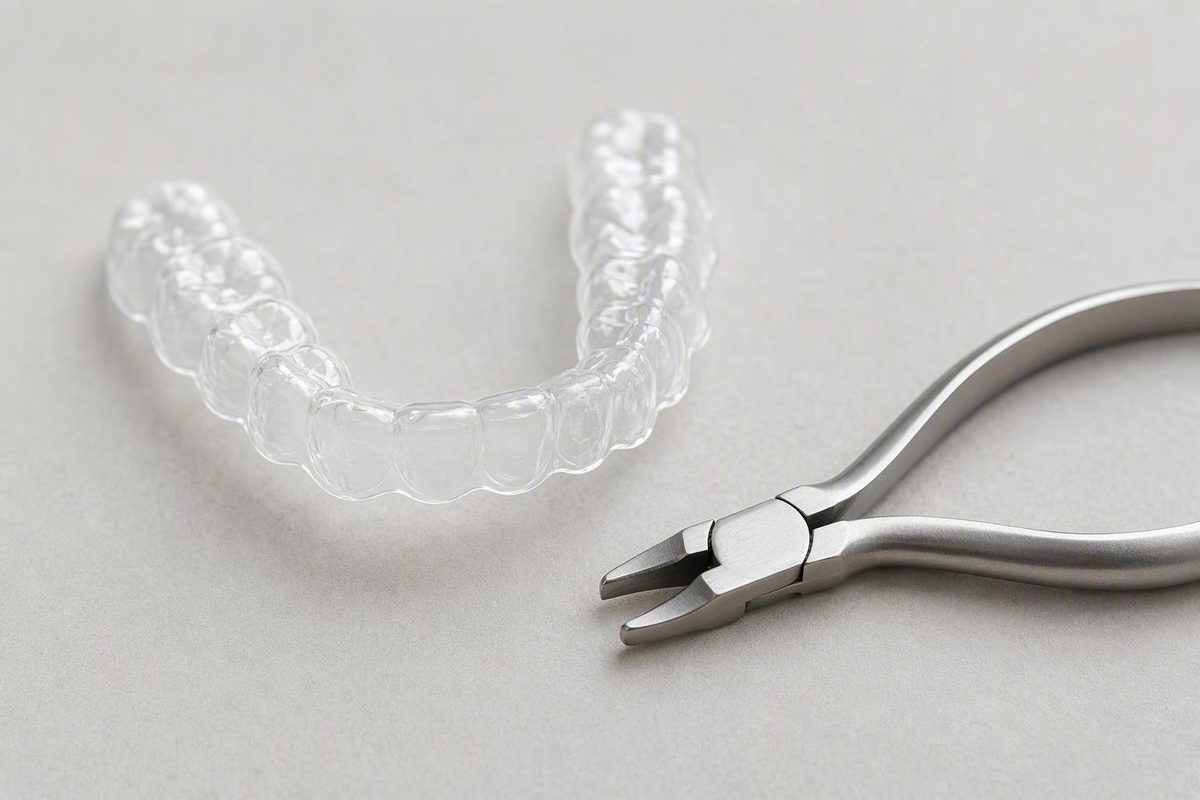
Plan on roughly $3,000–$7,500 before insurance. A stated 50% benefit may pay less when a fixed lifetime cap applies.
The short answer: plan for roughly $3,000–$7,500 before insurance
A practical starting budget for a child’s braces is about $3,000–$7,500 before insurance. This is a broad planning range assembled from overlapping provider-published estimates, not a verified national mean or median based on current pediatric claims data. For example, a provider guide published in March 2026 lists metal braces at $3,000–$7,000, ceramic braces at $4,000–$8,500 and teen clear aligners at $3,500–$7,500. See the provider’s published pediatric treatment ranges.
A recurring provider-published benchmark for comprehensive treatment is about $4,000–$6,000, but parents should not interpret that narrower band as a guaranteed average. The often-repeated figure of roughly $5,000–$6,000 is attributed to a 2018 American Dental Association survey of comprehensive orthodontic treatment. Because the underlying survey is several years old and the cited result was not limited to children, it does not establish the exact average cost of braces for kids in 2026. Healthline explains the age and origin of that benchmark.
Local estimates can have different endpoints. One Houston pediatric dental practice publishes a range of $4,000–$8,000, while a Tennessee practice lists $4,000–$6,000 for comprehensive treatment. These examples illustrate local variation; neither should be treated as a national pediatric average. Compare the Houston provider’s local estimate.
Only an examination and written treatment plan can establish the likely fee for a particular child. The orthodontist must identify the problem being treated, determine whether one or both jaws require care, evaluate appropriate appliances and estimate the complexity and duration of treatment.
Braces budget at a glance
Number What it means Published price range A broad market-planning estimate—commonly about $3,000–$7,500 before insurance—assembled from provider-published ranges Actual provider quote The orthodontist’s fee for the child’s diagnosis, appliance and expected treatment period Insurance contribution The amount the insurer says it expects to pay, subject to the policy’s restrictions and limits Final family cost The provider fee minus confirmed benefits and discounts, plus applicable deductibles, financing charges, excluded services and later fees
The most useful number is not the headline “average.” It is the written family balance calculated after the provider documents the treatment fee and the insurer confirms the applicable benefit.
The figures in this guide are drawn from commercial provider guides, a professional-association overview and general health or financing articles. Because the available sources use different populations, locations and methods—and often do not publish a methodology—the figures are presented as planning ranges rather than national statistical averages.
Cost by treatment type: metal, ceramic, aligners and lingual braces
Treatment type influences price, but the published ranges overlap. A metal-braces quote from one office could exceed an aligner quote from another because case complexity, local pricing and included services differ.
The following figures combine overlapping published estimates and are intended for preliminary budgeting:
| Treatment type | Broad pre-insurance planning range | Important distinction |
|---|---|---|
| Traditional metal braces | About $3,000–$7,500 | Fixed metal brackets and wires |
| Ceramic braces | About $4,000–$8,500 | Fixed clear or tooth-colored brackets and wires |
| Clear aligners | About $3,000–$7,500 | Removable trays rather than fixed braces |
| Lingual braces | About $5,000–$13,000 or more | Brackets attached behind the teeth |
These ranges are consistent with a medically reviewed general cost guide listing metal braces at $3,000–$7,500, ceramic braces up to $8,500, clear aligners at $3,000–$7,000 and lingual braces at $5,000–$13,000. They are not standardized pediatric prices, and they do not prove that every provider follows the same pricing hierarchy. Review the published treatment-type estimates.
Metal braces are commonly positioned as a lower-cost option. They are fixed to the teeth, so treatment does not depend on a child remembering to replace the appliance after meals. But metal braces are not always the least expensive quote: provider pricing, treatment length, case complexity and included services can change the comparison. The American Association of Orthodontists describes metal braces as typically more affordable and lingual braces as usually more expensive while emphasizing that treatment type, complexity and duration affect cost. Read the AAO’s cost overview.
Ceramic braces are fixed bracket-and-wire appliances made with clear or tooth-colored brackets. Their less visible material may carry a cosmetic premium. Parents should ask whether that premium applies to every bracket, only the most visible teeth or a particular ceramic system.
Clear aligners are removable trays, not fixed braces. Their published prices overlap substantially with those for conventional braces, so parents should not assume they will be cheaper—or more expensive—without comparing actual quotes. Suitability depends on the orthodontic problem and the child’s ability to follow the prescribed wear schedule.
One pediatric provider guide says successful aligner treatment generally requires wearing trays for approximately 20–22 hours per day. See the provider’s pediatric appliance comparison.
Lingual braces attach behind the teeth. They occupy the highest price band in the supplied estimates, reaching approximately $13,000 or more in some general-market ranges.
Price should narrow the choices only after the orthodontist identifies the clinically appropriate options. The least expensive appliance offers poor value if it cannot address the child’s needs, while the most discreet option may not justify its premium for every family.
Phase 1 versus comprehensive treatment: do not confuse the price pathways
Depending on the treatment plan, it may involve limited braces, an expander or another appliance intended to address a specific developing problem. It is not automatically the same product or fee as a later comprehensive course of braces.
Published provider estimates place Phase 1 or early interceptive care at approximately $1,000–$4,000. One provider lists early interceptive treatment at $1,000–$3,500; another lists Phase 1 at $2,000–$4,000. The ranges are not necessarily comparable because the appliances, visits and clinical objectives may differ.
Phase 2 generally refers to later treatment following Phase 1, while comprehensive treatment means a full course of orthodontic care rather than a limited early intervention. A Tennessee provider lists Phase 1 at $2,000–$4,000, Phase 2 at $3,000–$5,000 and comprehensive treatment at $4,000–$6,000. These are provider-specific estimates for different pathways, not figures that families should automatically add together. See the provider’s treatment-stage definitions and estimates.
The central budgeting point is that Phase 1 may be an additional expense and does not guarantee that later braces will be unnecessary. Early treatment may be recommended to address a particular issue at a particular developmental stage, not as a promise of lower lifetime costs. The available evidence does not support a general claim that Phase 1 always—or usually—saves families money.
If Phase 1 is recommended, ask:
- What specific problem is being treated now?
- What are the clinical implications of waiting?
- Is this a limited treatment with one objective or the first part of a planned two-stage pathway?
- How likely is Phase 2 or comprehensive treatment later?
- What is the estimated fee for every reasonably foreseeable stage?
- Is any Phase 1 payment credited toward later care?
- Would later records, imaging or appliances be billed separately?
- What is the estimated combined family cost if both stages are required?
- How would the dental plan treat two treatment stages?
- Could the stages share one lifetime orthodontic benefit?
The written estimate should name the stage being purchased. A line reading “early braces: $2,500” is incomplete if the family does not know whether substantial later treatment is likely or how it would be priced.
Why one child’s quote can be thousands of dollars higher than another’s
Orthodontic fees reflect more than the brackets or trays. Recurring cost drivers include:
- case complexity;
- expected treatment duration;
- appliance type;
- local prices and practice overhead;
- the provider’s fee structure;
- treatment of one jaw or both;
- expanders or other appliances; and
- services included in or excluded from the quoted fee.
A more complex case may require a longer treatment period, additional adjustments and more provider time. Two children can receive metal braces but have different plans because one needs limited alignment while the other requires treatment involving crowding, bite correction, both jaws or additional appliances.
Published estimates commonly place fixed-braces treatment around 12–24 months, while broader orthodontic estimates extend to 36 months. One commercial pediatric dental guide describes fixed treatment as typically lasting 12–24 months and aligner treatment as 12–36 months. These are general estimates rather than promises for an individual patient. See the guide’s treatment-duration and payment factors.
Whether those events increase the price depends on the contract. Some practices quote a fixed comprehensive fee; others may charge for repairs, replacements or extended treatment.
Location also matters, but local and state figures should illustrate variation rather than define a national average. One general-market comparison reports state-level metal-braces averages ranging from $4,767 to $8,350. Those figures are not child-specific and exclude insurance and accessory items. Review the state-level comparison and its limitations.
Parents should separate clinically required treatment from optional cosmetic upgrades. An expander may be part of the treatment plan, while ceramic brackets may be selected primarily because they are less visible. If the insurer applies the same benefit to metal and ceramic braces, the family may be responsible for the cosmetic premium.
When comparing quotes, ask each provider to price the same clinically appropriate option. A $4,800 metal-braces plan and a $6,000 ceramic plan are not equivalent offers if the price difference primarily purchases less visible brackets.
How insurance changes the out-of-pocket cost
Dental insurance may provide a percentage-based orthodontic benefit or a fixed contribution. In either arrangement, a lifetime orthodontic maximum may limit how much the policy will pay for that covered person.
Several provider guides cite dependent lifetime orthodontic benefits of approximately $1,000–$2,500, but an individual plan’s benefit may be lower, higher or nonexistent. Age limits, waiting periods, network rules and appliance restrictions may also affect eligibility. See one provider’s summary of common orthodontic benefit restrictions.
This is why “50% orthodontic coverage” does not necessarily mean the insurer pays half the full bill. A plan might apply its percentage only until it reaches a lifetime maximum. The timing of payments may also depend on the policy.
Consider these illustrative calculations:
-
Fixed benefit example $5,500 treatment fee − $1,500 confirmed benefit = $4,000 estimated family balance.
-
Percentage limited by a maximum A $6,500 fee with nominal 50% coverage would produce $3,250 before limits. If the lifetime maximum is $2,000: $6,500 − $2,000 = about $4,500 for the family.
-
Cosmetic upgrade example A provider quotes $4,800 for metal braces and $5,600 for ceramic braces. If the same insurance benefit applies to either appliance, the family pays the $800 upgrade difference in addition to its regular balance.
These examples are simplified illustrations, not insurance estimates. They exclude deductibles, policy-specific coinsurance calculations, waiting periods, excluded charges, fee schedules and financing costs.
Before relying on an estimated benefit, ask the insurer:
- Is the child eligible as a dependent?
- Does the policy include orthodontic coverage?
- Is there an age limit or waiting period?
- Does a deductible apply?
- Must the orthodontist be in network?
- Does the policy impose medical-necessity requirements?
- Are metal braces, ceramic braces and aligners treated differently?
- Is the benefit a fixed amount or percentage?
- What was the original lifetime orthodontic maximum?
- How much of that maximum remains?
- Are payments made upfront or during treatment?
- How does the policy handle treatment already in progress?
- What happens if coverage ends or the family changes plans?
- How would benefits be coordinated if the child has two dental plans?
Request the explanation directly from the insurer and compare it line by line with the orthodontist’s written estimate. Treat the practice’s insurance projection as an estimate until the insurer confirms the applicable benefit and limitations.
Monthly payments: calculate the balance instead of relying on an average
There is no reliable universal average monthly payment for children’s braces. The installment depends on the family balance, down payment, repayment period, interest rate and administrative fees.
Use this planning formula:
(Total treatment fee − confirmed insurance contribution − down payment) ÷ payment term, adjusted for interest and fees
For example, if the remaining family balance is $4,000 and the provider allows it to be paid over 20 interest-free months without additional fees:
$4,000 ÷ 20 = $200 per month
That is an illustrative calculation, not a typical or promised payment. A down payment would reduce the financed balance, while interest or fees would change both the installment and total repayment.
Extending the term usually reduces each installment, but it may increase the total cost when financing charges apply. A plan advertised at $140 per month could cost more overall than a $200-per-month plan if the lower payment lasts longer or carries interest.
Request these terms in writing:
- required down payment;
- financed balance;
- number and amount of installments;
- interest rate or annual percentage rate;
- administrative or origination fees;
- late-payment terms;
- prepayment rules;
- payment schedule if treatment finishes early;
- payment schedule if treatment lasts longer than expected;
- refund terms if treatment is discontinued;
- transfer terms if the family moves; and
- responsibility for any balance left when insurance pays less than projected.
Possible affordability tools include provider payment plans, pay-in-full discounts, third-party financing and HSA or FSA funds for eligible expenses. The American Association of Orthodontists identifies insurance, eligible tax-advantaged accounts, discounts and payment plans as possible cost-management options, but availability and terms vary. Review the AAO’s overview of payment options.
Compare total repayment, not only the advertised installment. A low monthly payment is not a discount if it results from a longer, interest-bearing obligation.
What an orthodontic quote should include
A low quote is useful only if parents know what it buys. Two prices cannot be compared fairly when one includes records, retainers and follow-up while the other bills those services separately.
Ask for an itemized estimate addressing:
- initial consultation;
- clinical examination;
- X-rays, photographs or digital scans;
- diagnostic records and treatment planning;
- braces, aligners and related materials;
- expanders or other appliances;
- routine adjustments and monitoring;
- scheduled office visits;
- emergency or unscheduled visits;
- broken brackets and wire repairs;
- replacement aligners;
- additional refinement trays;
- removal of braces or attachments;
- initial retainers;
- replacement retainers; and
- retention follow-up after active treatment.
Published provider guidance specifically identifies records, appliances, adjustments, emergency visits, retainers and retention follow-up as items families should check before accepting a quote.
Identify dental or surgical work outside the orthodontic fee as well.
Ask whether the orthodontic fee remains fixed if care takes longer than expected. If it does not, request the extended-treatment rate and the point at which it begins. Also ask how the office handles:
- repeated broken brackets;
- missed or late appointments;
- lost or damaged aligners;
- replacement retainers;
- additional refinement rounds;
- lost appliances;
- visits outside normal hours; and
- changing appliances during treatment.
Ask whether the original practice refunds any unearned fee, whether records are transferred without charge, how a receiving orthodontist determines a new fee and how the insurer would handle the transfer.
The safest comparison method is to obtain multiple written estimates for the same proposed treatment. Compare inclusions, exclusions, potential additional charges, provider experience, insurance handling and financing terms—not just the lowest headline figure.
A practical decision process for families
When an orthodontist says a child may need braces, work through the decision in this order:
- Obtain the diagnosis. Ask what problem has been identified, how significant it is and why treatment is being recommended.
- Review clinically appropriate options. Ask whether metal braces, ceramic braces, aligners, observation or another approach could address the problem.
- Clarify timing. Determine whether the proposed care is Phase 1, Phase 2 or comprehensive treatment and whether later treatment is likely.
- Request an itemized written estimate. It should state the appliance, expected duration, included services and possible additional charges.
- Verify insurance independently. Confirm eligibility, restrictions, payment timing and the remaining lifetime maximum directly with the insurer.
- Compare equivalent quotes. Do not compare limited early treatment with comprehensive braces or metal braces with a cosmetic ceramic package.
- Calculate the family balance. Subtract only confirmed benefits and discounts.
- Review financing terms. Compare the down payment, installments, interest, fees and total repayment.
- Choose based on clinical fit as well as price. Consider the proposed treatment, the child’s ability to follow instructions and the completeness of the quoted service.
An orthodontic evaluation around age seven is an assessment milestone, not a rule that braces should begin at seven. One provider guide reports the AAO recommendation for an evaluation by that age, while pediatric provider guidance says active treatment often begins later—commonly between ages 8 and 14—depending on development and clinical need. See the pediatric discussion of evaluation and treatment timing.
Ask which parts of the proposed plan are clinically necessary and which are optional cosmetic choices. The distinction may be between an appliance needed to carry out the plan and ceramic brackets selected primarily because they are less visible.
Families facing an unaffordable quote can ask whether public coverage for qualifying care, dental-school clinics or charitable programs are available locally. Eligibility, medical-necessity rules, waiting lists and covered services vary, so families should verify requirements with the relevant program rather than assume coverage. The AAO’s cost guide lists AAO Gifted Smiles, Smiles Change Lives and Smile for a Lifetime as programs that may provide low- or no-cost treatment to eligible children.
A one-page worksheet can keep consultations organized:
| Item | Provider 1 | Provider 2 | Provider 3 |
|---|---|---|---|
| Diagnosis | |||
| Clinically appropriate options | |||
| Phase 1, Phase 2 or comprehensive | |||
| Total quoted fee | |||
| Expected treatment length | |||
| Appliances included | |||
| Records and imaging included | |||
| Repairs and emergency visits included | |||
| Retainers and follow-up included | |||
| Estimated insurance payment | |||
| Estimated family balance | |||
| Down payment | |||
| Monthly payment and term | |||
| Interest and fees | |||
| Possible additional charges |
Frequently asked questions
How much do braces for kids cost without insurance?
For initial planning, use approximately $3,000–$7,500 before insurance. This is a synthesis of provider-published ranges, not a precise national pediatric average. The actual price depends on appliance type, complexity, treatment duration, location and included services. One 2026 provider guide publishes the same broad range while emphasizing the need for an individual quote. Review that provider’s pediatric cost guide.
Ask whether the practice offers a cash price or pay-in-full discount, but compare the final total with every financing option before deciding.
Are metal braces always cheaper than ceramic braces or clear aligners?
No. Metal braces are commonly positioned as a lower-cost option, but they are not universally the cheapest quote across every office and case.
Ceramic brackets may carry a cosmetic premium, while clear-aligner prices overlap with fixed-braces prices. Replacement or refinement trays may affect the aligner total if they are not included. Compare only the options the orthodontist considers appropriate for the child.
Does Phase 1 treatment include the cost of braces later?
Not necessarily. Phase 1 is commonly priced separately and may be followed by Phase 2 or comprehensive treatment. A practice may credit some of the early-treatment fee toward later care, but families should not assume that a credit applies.
Request a written estimate showing the Phase 1 fee, the likelihood and estimated price of later treatment, and any applicable credit. Provider-published Phase 1 estimates span approximately $1,000–$4,000, depending on the practice and what treatment includes.
Does dental insurance cover braces for children?
Some dental plans provide orthodontic benefits for eligible dependent children, but coverage varies. The plan may offer a percentage or fixed amount and may impose age restrictions, waiting periods, network rules, treatment requirements and a lifetime orthodontic maximum.
Confirm the remaining benefit directly with the insurer. A stated 50% benefit may produce a smaller payment if a fixed lifetime cap applies. One pediatric provider source describes local lifetime benefits commonly around $1,000–$2,000, illustrating why families must check their own policy rather than rely on a general percentage. See the provider’s explanation of orthodontic insurance limits.
How can I estimate the monthly payment for my child’s braces?
Subtract the confirmed insurance contribution and down payment from the treatment fee, then divide the remaining balance by the number of installments. Add any interest and administrative fees.
For example, a $4,000 balance over 20 interest-free months would equal $200 per month. This is only an arithmetic illustration. Compare total repayment under each option because the plan with the lowest monthly installment may cost more over time.
Bottom line: Use $3,000–$7,500 as a broad pre-insurance planning range, not a promise of what one child’s care will cost. Before committing:
- obtain an itemized treatment plan;
- verify insurance directly;
- compare clinically equivalent quotes;
- calculate total repayment rather than focusing only on the monthly installment; and
- ask specifically about Phase 1, retainers, repairs, refinements and extended-treatment charges.
This article is informational and cannot replace an orthodontic examination, confirmation from the family’s insurer or personalized financial advice.