
How to Choose Thumb Protection That Actually Fits a Young Catcher
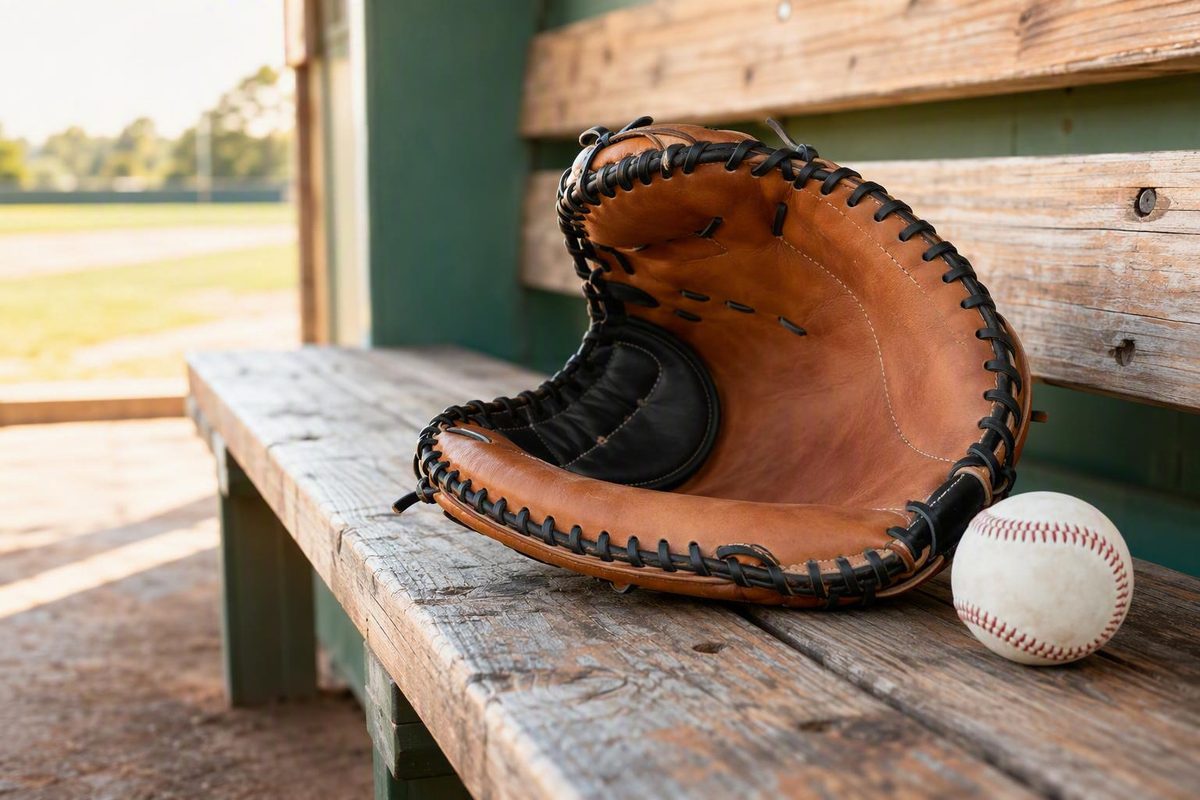
The right guard matches the catching hand and verified size, can be fitted as instructed, and lets the mitt close and function normally in controlled practice.
A baseball catcher thumb guard should not be chosen from a “youth” label, star rating, or protection slogan alone. It must match the player’s catching hand, fit the thumb as intended, and leave enough room for the catcher’s actual mitt to close and function normally.
The main differences are structural. Some guards form a rigid shell around the thumb, some arrive preformed, some remain inside the mitt, and others are integrated into an underglove. Those formats also differ in handedness, fitting reversibility, padding, care, and return risk.
The available evidence does not establish a medically safest or best overall product. The practical objective is narrower: find a correctly sized design that works with the player’s mitt, while treating injury-prevention language as marketing rather than proof.
What a catcher thumb guard is designed to do
A catcher thumb guard is equipment worn on the catching thumb, usually beneath or inside the catcher’s mitt.
When a pitch or foul ball strikes the thumb area of the mitt, the force can push the catcher’s thumb backward. Retailer explanations commonly call this mechanism “catcher’s thumb” or thumb hyperextension. That description should not be mistaken for a diagnosis or individualized medical guidance; the underlying source is a commercial retailer article, not primary medical research. A JustGloves overview describes the backward-bending mechanism.
Parents will encounter two related but distinct equipment goals:
- Limiting backward movement. A rigid or semi-rigid structure is intended to brace the thumb and restrict how far it can be forced backward.
- Reducing perceived impact or sting. Silicone, foam, leather, or other padding may make an impact feel less concentrated.
These goals are not interchangeable. A soft padded glove may address sting without imposing the same physical constraint as a rigid shell. Start with the desired equipment function rather than treating everything labeled “thumb protection” as equivalent.
Manufacturers commonly say their products brace the thumb, limit hyperextension, or disperse impact. EvoShield, for example, describes its formed shield as distributing impact across the guard. The reviewed sources contain no independent clinical trials, injury-rate studies, or standardized comparative impact measurements proving that any listed guard prevents injury. The official EvoShield product page establishes the product’s listed construction and intended use, not a medical outcome.
That distinction is especially important when a catcher already has thumb pain.
The five designs parents will encounter
The market is easier to understand when organized by physical format rather than brand ranking.
1. Rigid, trimmable guards
This category places a firm structure around the catching thumb to create a mechanical barrier against backward movement. Depending on the model, the buyer may need to trim or shape the material.
JustGloves describes Xan Barksdale’s Catcher’s Thumb as heat-moldable, trimmable, and capable of being reheated for another fitting. Those are retailer-reported features of that product, not characteristics that should be assumed for every rigid or molded guard.
It also makes fitting more dependent on the person doing the work. Any cutting should follow the current instructions for the exact model because material removed from a guard may not be replaceable.
2. Air-activated custom shields
EvoShield represents the air-activated format. Its material begins malleable and is listed as becoming a form-fitting shield in approximately 30 minutes after exposure to air. The formed guard is worn on the catching thumb inside the mitt.
The appeal is a shape formed around the individual player rather than a completely fixed shell. The tradeoff is fitting commitment: the package must remain sealed until the player, mitt, supplies, and instructions are ready.
“Custom molded” does not guarantee compatibility. A shield can conform to the hand and still occupy too much space in the mitt’s thumb slot.
3. Preformed, tape-secured shells
NexGuard uses a different system. Its guard arrives as a preformed overlapping shell rather than a material activated or heat-molded by the player. Athletic tape closes the overlap to establish a snug fit.
The manufacturer lists multiple sizes and models but does not provide dimensions, prices, detailed material specifications, or a model-by-model size chart in the reviewed information. Parents need those current details before choosing a version.
A preformed shell avoids a one-time air-activation session, but its fit is not universal. It still has to match both the thumb and the available space under the mitt.
4. Inserts that remain in the mitt
An in-mitt insert stays with the glove rather than being worn directly on the hand. Endoskel is one example identified by editorial comparison content.
This arrangement may appeal to a catcher who dislikes putting on a separate hand-worn guard. It also shifts the compatibility question: the insert must remain stable without disrupting thumb position, mitt closure, the pocket, or the transfer.
Editorial descriptions cannot establish fit with a particular youth mitt. Before buying, ask for dimensions, installation instructions, compatible-mitt information, and the applicable return policy.
5. Undergloves with an integrated shield
Team Defender 2.0 is a batting-glove-style underglove with a rigid polymer shield integrated into the glove. The player puts on the underglove and then inserts that hand into the catcher’s mitt.
The buyer must, however, match both ordinary glove size and catching-hand orientation. The underglove also adds material around more of the hand than a thumb-only shell.
A padded inner glove is another under-mitt option, but it is not automatically equivalent to an underglove with a rigid shield. Likewise, a catcher’s mitt with built-in thumb reinforcement is an alternative equipment strategy, not a removable thumb guard.
Comparison of representative catcher thumb-protection formats
The table standardizes available specifications across several unlike formats. It does not imply that a molded shield, strapped shell, integrated glove, and taped shell perform identically. Prices, stock, sizes, ratings, and sale terms are captured snapshots rather than current guarantees.
| Product | Format | Placement | Fitting method | Listed sizes | Handedness limitations | Care | Captured price | Unresolved fit questions |
|---|---|---|---|---|---|---|---|---|
| EvoShield WB50202 | Black, air-activated form-fitting shield | On the thumb inside the mitt | Exposure to air starts hardening; listed transformation time is approximately 30 minutes | Small and large; retailer-listed dimensions are 4.25 × 3.5 inches for small/youth and 4.5 × 4.5 inches for large/adult | Bilateral use is not established in the reviewed information | Hand wash; air dry | Approximately $24.95–$24.99 | Which size matches the player? Will the formed shield fit the mitt’s thumb slot? Manufacturer specifications and $24.95 price; retailer dimensions and $24.99 price |
| All-Star MVP-PRO | Rigid molded shell with interior silicone padding and two adjustable straps | On the catching thumb inside the mitt | Strap adjustment; no custom-molding method listed | One-size-fits-most positioning for intermediate and adult players | Bilateral use is not established | Not provided | $49.99 | Will it fit a small youth hand or youth mitt when the listing refers to an adult-sized mitt? All-Star specifications and captured price |
| Team Defender 2.0 | Underglove with an integrated rigid polymer thumb shield | Entire glove worn beneath the mitt | Select glove size and hand configuration | Adult medium, large, and extra large | Listed as a left-hand glove for a right-handed thrower | Not provided | Sale price of $39.99 | Are youth sizes or a right-hand version currently offered? Will the complete underglove fit inside the mitt? Team Defender sizes, orientation, and captured sale price |
| NexGuard | Preformed overlapping shell | On the catching thumb beneath the mitt | Athletic tape closes the overlapping shell | Multiple sizes and models; exact ranges not provided | Model-by-model handedness is not established | Not provided | Not available | What are the dimensions, materials, hand options, prices, and measurement ranges? NexGuard fitting description |
EvoShield’s dimensions are product-specific. They are not a universal definition of youth and adult sizing. The captured manufacturer page also marked the product “final sale” and “low stock.” Those conditions may have changed, but they show why return terms should be checked before opening or molding a guard.
All-Star’s fit language requires particular caution. The MVP-PRO is positioned for intermediate and adult catchers as one size fits most, while the listing also says it fits inside an adult-sized mitt. Neither statement establishes compatibility with a small youth hand or youth mitt.
Team Defender’s captured listing is more explicit about orientation: the available choices were left-hand gloves for right-handed throwers in adult medium through extra large. The page does not establish youth availability or a configuration for left-handed throwers.
Editorial rankings are excluded from the table. One comparison assigns scores to dedicated guards, a padded inner glove, an in-mitt insert, and an entire catcher’s mitt on the same scale. Because it does not disclose sample sizes, detailed test procedures, or measurement data, those scores should not be treated as a like-for-like performance test.
Youth sizing, catching hand, and mitt compatibility
A youth or adult label is only a starting point. The guard must fit two spaces at once:
- the player’s hand and thumb; and
- the usable space inside the mitt’s thumb slot.
A guard that feels secure on the hand may still push the thumb into an unfamiliar position, impede full mitt closure, or create a pressure point against the internal padding. A guard that fits easily inside the mitt may be too loose to remain where intended.
Confirm catching hand and throwing orientation
First identify which hand wears the mitt. A right-handed thrower normally catches with the left hand, while a left-handed thrower normally catches with the right.
Product terminology can be confusing because some sellers name the glove by the hand wearing it, while others emphasize throwing orientation. Team Defender provides a concrete example: “left-hand glove for right-hand thrower” means the protective underglove goes on the left catching hand.
Do not infer that the same product works for a left-handed thrower. Do not assume another guard can be reversed or worn on either hand unless the manufacturer’s current information expressly says so.
Obtain the actual size chart
Find the current manufacturer chart and take the exact measurements it requests. Depending on the product, those may include hand length, hand circumference, thumb length, or another product-specific dimension. The reviewed information does not provide hand-length or thumb-circumference ranges for most of the products discussed here.
EvoShield’s listed dimensions apply only to that model. They should not be transferred to All-Star, NexGuard, Team Defender, or another brand.
“One size fits most” is weak evidence for youth fit. It says nothing definite about a small hand, narrow thumb, shallow thumb slot, or youth-sized mitt. If a seller cannot provide relevant measurements, the buyer is accepting greater fit uncertainty.
Pre-purchase checklist
Record these details before ordering:
- Catching hand: left or right.
- Throwing orientation: right-handed or left-handed thrower.
- Required measurements: use the maker’s current measuring method.
- Exact mitt: brand, model, size, and youth or adult fit category.
- Thumb-slot room: note whether the current fit is already close without a guard.
- Fitting system: air activation, heat molding, trimming, straps, tape, fixed insert, or integrated glove.
- Permitted adjustments: determine whether that exact product may be remolded, reheated, trimmed, or strap-adjusted.
- Required supplies: tape, gauze, scissors, or other maker-specified items.
- Return restrictions: check whether opening, molding, trimming, taping, or wearing affects eligibility.
- Current options: verify inventory, sizes, hand configurations, and price immediately before purchase.
Molding and fitting without wasting the guard
There is no universal installation process. Separate the fitting systems and follow the current instructions for the exact model in hand.
Air-activated guards
Keep an air-activated guard sealed until the player, clean hand, actual mitt, required supplies, and instructions are ready. Exposure to air begins the hardening process.
EvoShield lists an approximately 30-minute transformation from malleable gel to a form-fitting shield. That is an overall product specification, not a substitute for positioning instructions. The captured Dick’s Sporting Goods listing says the activation process cannot be reversed, so the family should treat the initial fitting as a one-time commitment unless current official instructions say otherwise.
Do not improvise a detailed molding sequence from a summary, an old video, or instructions for another body guard. An incorrectly positioned shield may harden in a shape that conflicts with the mitt.
Before opening the package:
- Read the current official instructions completely.
- Confirm the selected size.
- Have the player’s game mitt available.
- Prepare only the tape, gauze, or other materials specified by the maker.
- Make sure the player’s hand is clean and dry.
- Set aside enough uninterrupted time for positioning and checks.
- Confirm the applicable return or final-sale terms.
Heat-moldable and trimmable guards
JustGloves describes Xan Barksdale’s Catcher’s Thumb as heat-moldable, trimmable, and reheatable for another fitting. That reported ability to remold distinguishes it from a one-time air-activated product, but it should not be generalized to other guards.
Before fitting, confirm which edges may be trimmed, what tools and temperatures are permitted, and what adjustments the maker allows. Make only product-specific changes described in the current instructions.
Preformed, tape-secured guards
NexGuard documents a simpler concept: athletic tape closes the overlapping preformed shell to establish a snug fit. Use the tape placement and amount specified in the current instructions.
Treat “snug” as an equipment-fit description, not permission to force the shell onto the hand. If it rotates, causes concentrated pressure, or needs unapproved modifications, recheck the size and installation method.
Integrated undergloves
An integrated underglove is selected rather than molded. The central questions are glove size, catching-hand configuration, throwing orientation, and whether the extra material fits comfortably inside the mitt.
Try the underglove on the clean, dry catching hand first. Then test it with the game mitt. A correct underglove size does not guarantee adequate room inside the mitt.
What not to improvise
Do not treat a homemade thermoplastic brace as an interchangeable catcher-specific guard. In one anecdotal youth-baseball forum discussion, a participant said a homemade rigid guard covered the thumb but caused unpredictable ball deflection. That report does not establish that commercial or homemade rigid guards normally affect deflection, but it illustrates the uncertainty of improvised equipment. The forum discussion contains individual experiences rather than controlled testing.
The mitt test: validate fit before game use
Fitting the hand is only half the process. The guard must also work with the player’s actual mitt.
Conduct the first checks without full-speed pitching. These are cautious practical fit observations, not validated medical or safety tests.
Structured fit-validation sequence
- Put on the guard as instructed. Check the straps, tape, overlap, molded position, or underglove placement.
- Insert the hand into the game mitt. Do not substitute a store display mitt or teammate’s glove.
- Seat the thumb normally. The player should not have to twist or force it into the slot.
- Close the mitt completely. Look for new gaps or resistance.
- Open and close it repeatedly. Watch for rotation, slipping, pinching, or delayed movement.
- Use ordinary receiving motions without a ball. Confirm that the mitt reaches its familiar positions.
- Receive controlled, easy throws. Start below game intensity.
- Check retention. Observe whether balls remain in the expected pocket.
- Perform controlled transfers. Confirm that the player can move the ball to the throwing hand without the guard catching or restricting the motion.
- Repeat after several minutes. Continued use may reveal fit problems that were not immediately apparent.
No reviewed source establishes a validated amount of thumb movement that should remain. Do not invent a target angle or assume that less movement is always better. The equipment needs to stay positioned while allowing the hand and mitt to function normally.
Signs of a poor practical fit
Stop the test and reassess if the player notices:
- concentrated pressure or equipment-caused discomfort;
- pinching;
- slipping or rotation;
- inability to seat the thumb normally;
- incomplete mitt closure;
- a markedly changed thumb position;
- restricted transfer;
- a shell, strap, or edge contacting an unintended area;
- balls escaping a previously reliable pocket; or
- unusual rebounds during controlled receiving.
Ball retention and rebound are practical compatibility observations, not claims that commercial guards commonly cause deflection.
Troubleshooting guide
| Problem | Cautious next step |
|---|---|
| Guard slips or rotates | Recheck the official position and attachment method; verify that the size is not too large |
| Concentrated pressure or pinching | Remove the guard and recheck size and placement; adjust only as the manufacturer permits |
| Thumb will not seat normally | Do not force it; verify orientation and consider a smaller or different-format guard |
| Mitt does not close fully | Recheck placement, then consider another size or a lower-bulk format |
| Transfer feels restricted | Repeat slow transfer checks; reject the setup if normal motion does not return |
| Tape loosens | Use the maker-specified tape and method rather than adding unapproved layers |
| Molded guard has the wrong shape | Check whether that exact model may be remolded; a one-time air-activated guard may need replacement |
| Retention or rebound changes | Return to low-speed receiving and discontinue that setup if normal mitt function cannot be restored |
| Integrated glove feels too tight | Verify underglove size and mitt interior space rather than altering the rigid shield |
| Hand fit is correct but mitt fit is poor | Choose another format or reconsider the hand-and-mitt combination |
Passing the mitt test is only an equipment result. It does not establish that a painful thumb has healed or that the catcher is medically safe to play.
Separate guards are not the only option
A removable guard is one approach. Families can also evaluate mitt fit, undergloves, receiving mechanics, and reinforced mitts.
Mitt fit and thumb-loop position
Catchers and parents commonly discuss consistent hand seating, a secure thumb position, and thumb-loop adjustment as related equipment considerations. That support is anecdotal rather than controlled evidence, so these should be treated as practical fit checks—not proof that changing the thumb loop prevents injury.
Inspect whether the hand seats consistently and whether the thumb loop operates as the mitt maker intended. Do not modify or overtighten internal components without appropriate instructions.
Receiving mechanics
Receiving mechanics are also discussed as a complementary way to reduce direct contact with the thumb area. A qualified coach can observe whether the catcher routinely presents or turns the mitt in a way that exposes that area.
Technique and equipment are not competing explanations. A fitted guard does not correct every receiving problem, and sound mechanics do not guarantee that the thumb will never take an impact.
Padded inner gloves
A padded inner glove may address perceived sting or distribute pressure around the hand. Some players may find it easier to wear than a separate shell.
Its structure remains different from that of a dedicated rigid guard intended to constrain backward movement. Compare padding products with other padding products rather than assuming they provide the same function as rigid shells.
Mitts with internal reinforcement
JustGloves describes the Wilson A2000 M2 as having an internal leather thumb cast and the Mizuno Samurai youth mitt as having an extra-padded thumb slot. These are retailer-reported construction details, not proof of injury prevention.
A replacement mitt involves:
- greater total cost;
- break-in time;
- overall hand and finger fit;
- pocket shape;
- mitt size and position-specific preferences; and
- the possibility that the catcher prefers the current mitt.
Do not assume that combining a reinforced mitt with a separate guard creates “double protection.” The reviewed evidence does not test that proposition, and added bulk may create a compatibility problem.
A practical framework for alternatives
Consider a separate removable guard when the current mitt accommodates it and the proper size and orientation are available.
Consider an integrated underglove when the player fits an offered glove size, the hand configuration is correct, and the mitt has room for the full underglove.
Consider a reinforced catcher’s mitt when the family already plans to replace the mitt and can evaluate the entire glove rather than only its thumb feature.
Consider a padded inner glove when the primary equipment goal is padding or sting reduction, recognizing that it is not necessarily equivalent to a rigid guard.
A general batting thumb guard or homemade brace should not be treated as an interchangeable catcher-specific solution.
How to make the purchase decision without overreading claims or reviews
Product specifications can establish what a seller or manufacturer lists: construction, available size, fitting method, care, handedness, or displayed price. They cannot independently establish medical effectiveness.
The same distinction applies to retailer recommendations and affiliate rankings. A seller may provide useful product facts while still having a commercial incentive. Sponsored marketplace placement and search-result counts show what was advertised or indexed at a particular moment; they do not establish quality, suitability, or youth fit.
Bat Digest, for example, weights protection at 35%, comfort and ease of use at 20% each, value at 15%, and availability at 10%. Its comparison does not disclose sample sizes, a detailed testing protocol, or underlying measurement data, and it mixes dedicated guards with padded gloves and a full catcher’s mitt. The published ranking is an editorial judgment, not an independent laboratory comparison.
Read the complete review context
The captured EvoShield review snapshot showed an overall rating of 3.7 out of 5 from 282 reviews. It included 59 one-star reviews, while 188 of 268 respondents—70%—were reported as recommending the product. These figures were time-sensitive at capture and may change. The manufacturer’s review snapshot provides the complete numerical context.
Reviews remain anecdotal. They combine different players, hand sizes, mitts, expectations, fitting quality, and use conditions. A selection of positive excerpts cannot represent the full experience when the same page includes substantial negative feedback.
The captured All-Star page reported no product-specific reviews. That prevents a consistent comparison of review volume across products. It does not establish poor quality; it means that page supplied no customer-review dataset to assess.
Use price only after fit
Use price as a tie-breaker only after resolving size, handedness, fitting method, and mitt compatibility. The cited comparison table shows the captured prices and sale terms; each may change.
A low price is not useful if the product becomes nonreturnable when opened and does not fit the mitt. A higher price does not establish greater protection.
Final decision tree
Work through the choices in this order:
- Eliminate incorrect handedness. Remove any configuration that does not match the catching hand and throwing orientation.
- Eliminate unsupported sizes. Do not rely on “youth,” “adult,” or “one-size-fits-most” without relevant measurements.
- Eliminate incompatible formats. Consider the space available for an underglove, shell, insert, or molded shield.
- Choose an acceptable fitting commitment. Decide whether the family accepts one-time air activation or prefers a reheatable, preformed, adjustable, or integrated system.
- Check current instructions and return terms. Do this before opening, trimming, molding, or taping.
- Conduct the controlled mitt test. Reject any setup that prevents normal thumb seating, closure, receiving, retention, or transfer.
- Compare current prices and terms. Compare cost only among options that survive the earlier filters.
The evidence does not justify naming a safest or best overall catcher thumb guard. Youth Listings states that it uses no gear affiliate links or coach sponsorships, so this guide does not direct readers through commission-bearing purchase links.
Frequently asked questions
Does a baseball catcher thumb guard prevent catcher’s thumb?
That has not been established by the available evidence. Manufacturers market guards as bracing the thumb, limiting backward movement, or dispersing impact, but the reviewed sources provide no independent clinical trial, injury-rate study, or standardized comparative impact test proving prevention.
Treat a guard as equipment designed for a particular mechanical purpose, not as a guarantee against injury. Reduced sting or discomfort also does not demonstrate that an existing thumb problem has healed.
What size catcher thumb guard should a youth player use?
Use the manufacturer’s current chart and the exact measurements it requests. Then test the selected guard inside the player’s actual mitt.
For EvoShield WB50202 specifically, the retailer-listed dimensions were 4.25 by 3.5 inches for small/youth and 4.5 by 4.5 inches for large/adult. Those dimensions are not a universal standard for other products.
A youth label alone is insufficient. Confirm the catching hand, requested hand or thumb measurements, exact mitt, available thumb-slot room, and return terms before ordering.
Can an EvoShield catcher thumb guard be remolded if the first fit is wrong?
The captured Dick’s Sporting Goods listing says exposure to air begins hardening and that the process cannot be reversed. Families should therefore treat the initial fitting as a one-time commitment unless current official instructions expressly provide another remedy.
Keep the foil package sealed until the player, mitt, fitting supplies, and instructions are ready. Do not confuse EvoShield’s air-activated system with a different heat-moldable product described as reheatable.
Can a catcher thumb guard be worn on either hand?
Do not assume so. Handedness depends on the product and configuration.
The captured Team Defender 2.0 listing offered a left-hand glove for a right-handed thrower. It did not establish a right-hand version for a left-handed thrower. NexGuard lists multiple sizes and models, but the reviewed information does not provide a complete handedness matrix.
Confirm both the catching hand and throwing orientation on the current product page or directly with the manufacturer.
How should a catcher thumb guard be cleaned?
Follow the instructions for the exact product. EvoShield lists hand washing followed by air drying for model WB50202.
The reviewed information does not establish care instructions for All-Star MVP-PRO, Team Defender 2.0, or NexGuard. Obtain current manufacturer guidance before soaking, machine-drying, or applying cleaners that could affect a shell, padding, adhesive, straps, or tape.
The practical bottom line
Choose the option that survives three filters: it matches the player’s catching hand and verified size, it can be fitted according to current manufacturer instructions, and it allows the actual mitt to close and function normally during controlled practice.
If more than one design passes, compare fitting reversibility, current price, and return terms. A successful equipment fit is valuable, but it does not prove injury prevention or determine whether an already painful thumb is safe for play.