
Why a Batter Can Be Called Out Without Meaning to Block the Catcher
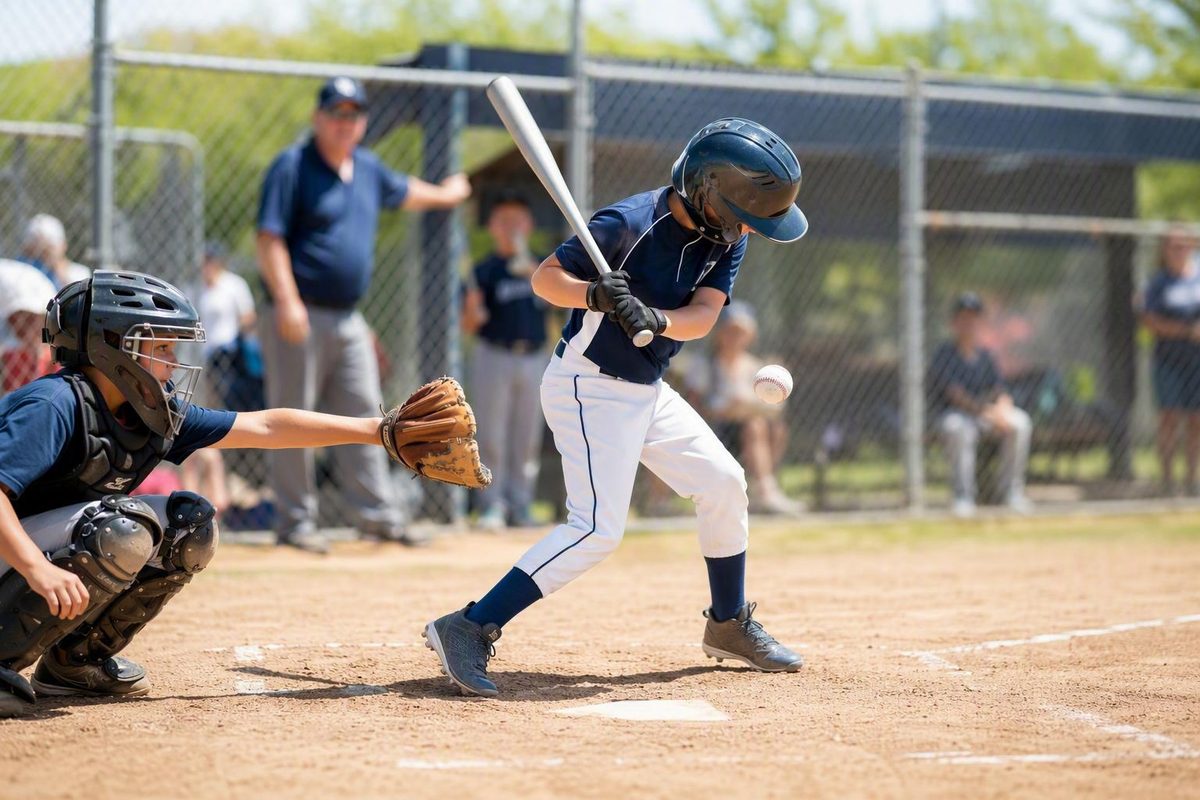
Who is out, ball status and runner placement can depend on the rule code, type of play, outs, batter status and result of the defense's initial attempt.
Reviewed August 14, 2026. The rule examples below rely partly on older third-party explanations, local educational pages, and informal discussions—not a complete set of current official rulebooks.
A batter can sometimes be called for interference even when the action was accidental, there was no collision, and the batter remained in the box. The central question is usually not simply, “Did the batter mean to interfere?” It is whether the batter’s conduct actually hindered the catcher or another fielder attempting a play.
That question determines whether interference occurred, but it does not by itself determine the penalty. Who is out, whether the ball is dead, where runners return, and whether a completed defensive play stands can depend on the governing code, the type of play, the number of outs, the batter’s status, and the result of the defense’s initial attempt.
This guide explains the principles described in the available Official Baseball Rules (OBR), Little League, and NFHS-related materials. Those materials are not equally authoritative or current. For a particular game, the current league rulebook, tournament regulations, official interpretations, and local modifications control.
Batter interference in one minute
Batter interference is offensive conduct by a batter that hinders the catcher or another fielder attempting a play. The familiar example occurs when the catcher receives a pitch and tries to throw out a runner stealing second or third while the batter steps, leans, turns, swings, or otherwise moves in a way that impairs the catcher’s fielding or throwing action.
Three principles prevent many misunderstandings:
- Intent is not required for every form of interference. An accidental movement may qualify if it actually hinders the play. Other provisions expressly require intentional or deliberate conduct, so intent cannot be dismissed in every interference case.
- Contact is not always required. A batter may affect the catcher’s release, footwork, fielding path, or throwing motion without touching the catcher.
- The batter’s box is not an automatic safe zone. Location is relevant, but it does not necessarily excuse a movement that materially impairs the defensive play.
Under the cited OBR-focused explanation, a batter who hinders a catcher’s attempt to retire a stealing runner is ordinarily called out, the ball becomes dead, and runners return as prescribed. That treatment has exceptions and should not be transferred automatically to another code. The same explanation separates interference with a catcher’s throw, interference with a play at home, and backswing or follow-through contact because those plays can carry different consequences under its OBR-focused treatment.
The most useful shorthand is:
Actual hindrance first; penalty second.
First determine what the batter did and whether it affected a real defensive opportunity. Then identify the applicable rule and penalty.
The batter’s box is not an automatic safe zone
Parents often see both of a batter’s feet inside the chalk lines and assume an interference call must be wrong. That conclusion is too broad. The box supplies important context, but the umpire still has to evaluate the batter’s action and its effect on the catcher.
Compare four situations:
- The batter remains still after the pitch. The catcher has an awkward angle but can step and make a normal throw. Awkwardness alone does not necessarily establish interference.
- The batter pivots or leans into the catcher’s release. The movement forces the catcher to alter the throw or stop the motion. That may support an interference call even if the batter remains partly or entirely in the box.
- The batter steps across home plate after swinging. If the step impairs a throw to a base, both the location and the movement support the call.
- The batter tries to avoid the catcher but moves the wrong way. A good-faith reaction does not necessarily prevent a call if the resulting movement causes the hindrance.
The cited OBR explanation includes making a hindering movement other than stepping out of the box. By contrast, a local Little League instructional page says that a batter keeping both feet in the box generally cannot be called for interfering with a catcher’s throw. The word “generally” matters: the statement is an educational summary, not an absolute rule or a current official Little League provision. That page also says offensive interference does not require physical contact in its local instructional discussion.
The practical distinction is between occupying space and materially impairing a play. A batter is entitled to participate in the pitch and finish a legitimate swing. A catcher is not necessarily entitled to a perfectly empty throwing lane merely because a runner is stealing. But an additional step, turn, lean, or other action that disrupts the catcher can change the analysis.
Remaining stationary may reduce the likelihood that a movement will be judged to have caused the problem, but it is not a universal guarantee. Conversely, leaving the box does not automatically constitute interference. The applicable standard still requires the umpire to connect the batter’s conduct to the defensive play.
How an umpire evaluates movement, timing, and actual hindrance
Movement alone does not complete the analysis. An umpire must decide whether the movement hindered a fielder under the governing rule.
A practical evaluation includes these questions:
- What did the batter do? Did the batter step, lean, turn, crouch, back away, swing late, or cross the plate?
- Where was the batter? Was the batter inside the box, partly outside it, over home plate, or near a loose ball?
- How much time was available? Was the catcher throwing immediately after receiving the pitch, or did a passed ball create a developing play?
- What happened to the catcher? Was the catcher contacted, forced to alter the release, prevented from setting the feet, or blocked from fielding the ball?
- What defensive opportunity existed? Which runner was the catcher or another fielder attempting to retire?
- How many outs were there? The number of outs may affect who is declared out, particularly on a play at home.
- What was the batter’s status? A batter still at bat and a player already retired on strike three may be treated differently.
- What was the result? Did the catcher’s initial throw directly retire the targeted runner?
Timing is especially important. During an immediate throw after a received pitch, the batter may have very little opportunity to recognize and avoid the catcher’s action. A passed ball or another loose-ball play may provide more time to recognize that the area around home plate has become congested.
An undated local Little League reproduction describes a batter leaving the box, making another hindering movement, or failing to make a reasonable effort to leave a congested area before a throw home when time permits. The final qualification is important: the reproduced language does not establish a fixed reaction-time threshold, but it distinguishes an immediate throw from a developing play in which the batter can reasonably recognize and clear the area under the reproduced Little League provisions.
Ducking, crouching, turning away, or covering the face cannot be classified in advance as always lawful or always interference. A protective reflex may have no effect on a throw. In a different position, the same reaction may move the batter’s head, shoulder, or bat into the catcher’s path.
An informal umpire discussion illustrates the disagreement. Participants differed over whether protective movement during a throw to third should be tolerated, and one participant described a batter being called for interference after ducking. The discussion is anecdotal and does not establish a rule, but it shows why labels such as “ducking” are less important than the timing, position, and observable effect of the movement in that forum scenario.
Intent must likewise be matched to the particular provision. Routine interference with a catcher’s throw may be unintentional. By contrast, provisions addressing intentional deflection of a foul ball or willful interference intended to break up a double play expressly make intent part of the rule.
The accurate statement is therefore:
Interference does not always require intent, but intent can be essential under a provision that expressly requires deliberate conduct.
Interference with a catcher’s throw on an attempted steal
Under the cited OBR interpretation, the ordinary catcher-throw sequence is:
- A runner attempts to steal.
- The catcher receives or retrieves the pitch and attempts a throw.
- The batter makes a movement that hinders that attempt.
- The umpire calls interference.
- The batter is ordinarily out and the ball is dead.
- Other runners return as prescribed by the applicable provision.
Runner placement requires careful attribution. The cited MLB-oriented interpretation says runners return to the last base legally touched at the time of interference, as judged by the umpire. A separate OBR-focused explanation describes returns to time-of-pitch bases. Those descriptions should not be merged into a universal rule. They may concern different provisions, interpretations, or factual situations.
The MLB-oriented material also describes a significant exception: if the catcher’s initial throw directly retires the targeted runner, that runner’s out stands, the batter is not additionally declared out, and the play proceeds as though no actual interference occurred. It separately says that if the batter interferes after already becoming out on strike three, the runner involved in the catcher’s play may be declared out instead under the reproduced MLB umpire-manual interpretation.
Do not automatically transfer the initial-throw exception to Little League, NFHS, or a local recreational code. Confirm both that the governing rule recognizes the exception and that the out resulted directly from the catcher’s initial throw—not a later relay, rundown, or unrelated play.
Scenario: stepping across the plate
A right-handed batter swings and steps across home plate as the catcher begins a throw to second. The catcher pulls the throw down to avoid the batter. If the umpire judges that the step hindered the throw, the ordinary cited OBR treatment would make the batter out and the ball dead.
Scenario: leaning into a throw to third
The batter remains partly in the box but turns and leans backward into the catcher’s throwing arm. Box location does not settle the call. The umpire must decide whether the lean actually affected the catcher’s attempt.
Scenario: stationary batter in an awkward lane
The batter completes the pitch and remains still. The catcher must adjust but makes a normal throw. The facts may support no interference if the batter made no hindering movement and merely occupied a lawful position. The governing code and the umpire’s judgment still control.
Scenario: the catcher completes the initial throw
The batter appears to hinder the catcher, but the catcher’s first throw reaches third and the runner is tagged out. Under the cited OBR interpretation, the runner’s out stands and the batter is not also called out. This is a specific reported exception—not a general rule that defensive success always erases interference.
Plays at home: why the runner may be out instead
A catcher throwing to second or third is not the same as a fielder trying to retire a runner at home. The applicable provisions may assign the interference out to different players.
Under the reproduced OBR language, when there are fewer than two outs, a runner is on third, and the batter hinders a fielder making a play at home, the runner is out. The same reproduced rules include separate provisions for a player who interferes after already being retired, which is why the batter’s status must be established before stating the penalty in the reproduced OBR interference provisions.
A local Little League reproduction similarly says that with fewer than two outs and a runner on third, the runner is out when the batter hinders a fielder making a play at home. Its quoted exception says the batter is not also out when the runner trying to score is called out for that interference under the local reproduction.
Fewer than two outs: A runner breaks from third on a loose pitch. The batter remains near the plate despite having time to recognize the developing play, and the batter’s position or movement hinders the catcher’s attempted throw or tag. Under the cited OBR and locally reproduced Little League provisions, the runner attempting to score may be declared out rather than the batter. The cited OBR-focused explanation also says no run scores.
Two outs: The same visible hindrance may be enforced differently. One dated OBR-oriented explanation describes the batter as the player called out when there are two outs. That statement should be checked against the current governing code rather than treated as a universal youth-baseball rule.
Before announcing a penalty on any play at home, establish:
- whether there were fewer than two outs or already two outs;
- whether the defense was actually making a play at home;
- whether the batter was still active or already retired;
- which runner the defense was attempting to retire; and
- whether the defense completed the play.
The available materials do not provide enough current official NFHS authority to resolve every two-out variation. That evidence gap is especially important because reported NFHS interpretations concerning successful defensive plays are disputed.
Backswing, follow-through, and strike-three interference are different plays
Not every instance of a bat touching a catcher should be analyzed like a batter stepping into a throw.
Backswing or follow-through interference generally describes contact after the swing in which the bat strikes the catcher or the catcher’s glove. Terminology can vary. The essential facts are when the contact occurred, whether the batter had already completed the swing, and what the catcher was attempting to do.
The cited OBR-focused explainer treats this contact differently from ordinary interference with a catcher’s throw. Under that third-party description, the umpire calls time, moving runners return to their time-of-pitch bases, and no one is called out. The same page reports a different NFHS treatment when follow-through contact interferes with the catcher’s attempt to retire a runner. Because that comparison was last updated in 2020 and is not an official current NFHS publication, it must be verified before use in a game under the dated third-party explanation.
Strike-three interference is a separate problem. If the batter is already out on strike three and then interferes with the catcher’s play on another runner, calling the batter out again would provide no additional penalty. The cited OBR-oriented interpretation instead assigns the out to the runner involved in the catcher’s play.
Use this fact check before selecting a rule:
| Observable fact | Why it matters |
|---|---|
| The bat contacted the catcher during or after the swing | May point toward backswing or follow-through treatment |
| The batter made an additional movement after the swing | May support ordinary hindrance analysis |
| The batter was already out on strike three | Can shift the interference out to a runner |
| The catcher was attempting to retire another runner | Connects the conduct to a separate defensive play |
| The catcher was merely receiving the pitch | May produce a different ruling from interference with an active throw |
| OBR, Little League, NFHS, or local rules govern | Determines the label, ball status, penalty, and runner placement |
Do not begin with, “The bat hit the catcher, so the batter must be out.” Begin with: When did the contact occur? Was the batter already out? What play was the catcher attempting? Which code governs?
OBR, Little League, and NFHS cannot be treated as one rulebook
The comparison below is deliberately limited. It summarizes only what the available evidence describes and does not establish the current rules for a 2026 game.
| Governing code | Conduct described in the available evidence | Reported treatment | Reported exception or variation | Evidence limitation |
|---|---|---|---|---|
| OBR | Batter hinders a catcher’s fielding or throw; batter hinders a play at home; already-out batter interferes after strike three | Depending on the provision, the batter or a runner may be out; dead-ball and runner-return consequences vary | Catcher’s initial throw directly retires the targeted runner; separate treatment is reported for plays at home and backswing contact | Available sources are third-party explanations or reproductions and may not reflect the latest official edition |
| Little League | Local reproduction describes leaving the box, another hindering movement, or failure to make a reasonable effort to leave a congested area before a throw home when time permits | The batter may be out; on the reproduced fewer-than-two-outs play-at-home provision, the runner may be out instead | The reproduced exception says the batter is not out if the advancing runner is retired or the runner trying to score is called out for the interference | The principal batter-interference evidence is an undated local reproduction, not the current official rulebook |
| NFHS | Third-party materials discuss movement that hinders a catcher and report possible differences involving follow-through contact and completed defensive plays | No definitive current penalty summary can be supported from the available evidence | A reported two-out successful-play situation remains disputed | Available evidence is dated, unofficial, and partly contradictory |
The NFHS limitation is substantial. In one forum discussion, contributors disagreed about a two-out play in which the catcher completed a throw and the runner was tagged out at third after interference had been called. The quoted case-play discussion appeared to address fewer than two outs, leaving its application to the reported two-out play unresolved. The thread should be treated only as evidence of uncertainty—not as authoritative NFHS guidance in the disputed high-school-baseball discussion.
Runner-return language also illustrates why rules must remain separately attributed. One OBR-oriented explanation uses time-of-pitch bases. Another MLB-oriented interpretation uses the last base legally touched at the moment of interference. The local Little League reproduction uses last-base-legally-touched language as a general interference treatment unless another provision applies. None supports the universal statement that runners always return to where they started.
Before relying on any penalty summary, confirm:
- the league’s full name;
- the player’s division or age level;
- the current rulebook edition;
- whether tournament rules apply;
- whether the league has adopted local modifications; and
- whether an official current interpretation or case play addresses the situation.
This article does not extend the comparison to college baseball or softball because the supplied evidence does not support a reliable current treatment of those codes.
Do not confuse batter interference with catcher’s interference
The names sound similar, but the violations point in opposite directions:
- Batter interference: The offense hinders the defense.
- Catcher’s interference: The defense interferes with the batter’s attempt to hit.
A common catcher’s-interference example occurs when the catcher reaches forward and the batter’s bat strikes the catcher’s glove during the swing. Under Little League’s educational explanation of Rule 6.08(c), the batter is generally awarded first base, and runners advance when forced. If the ball is put in play, the umpire allows the action to finish before enforcing the award or accepting the result of the play under Little League’s catcher’s-interference guidance.
Under that same Little League explanation, if the batter and every runner advance at least one base, play proceeds without further enforcement of catcher’s interference. If someone does not advance at least one base, the offensive manager may be allowed to choose between the play’s result and the interference remedy.
| Question | Batter interference | Catcher’s interference |
|---|---|---|
| Who committed the violation? | Batter or another offensive participant | Catcher or another defensive fielder |
| Who was hindered? | Catcher or another fielder attempting a play | Batter attempting to hit |
| Typical ball treatment | Often dead under the described offensive-interference provisions, but exceptions and other treatments exist | May be delayed dead when the ball is put in play |
| Usual remedy | An offensive out and runner placement under the applicable provision | First-base award, forced-runner advances, or acceptance of the play |
| Main question | Did the batter actually hinder the defensive play? | Did the fielder interfere with the batter’s attempt to hit? |
Some codes also contain special provisions for defensive interference during a squeeze play or attempted steal of home. Those are special situations. They do not alter the basic distinction: batter interference is an offensive violation, while catcher’s interference is defensive.
A practical game-day checklist for parents and players
After an interference call, reconstruct the play before debating the outcome.
Ask these five questions first:
- Which rule code applies? Do not assume a recreational league uses professional rules.
- What did the batter actually do? Identify the step, lean, turn, crouch, swing, or failure to clear—not merely the umpire’s conclusion.
- What play was the catcher attempting? Was it a throw to second, a throw to third, a tag at home, or fielding an uncaught third strike?
- How many outs were there? This can affect which player is declared out.
- Did the catcher’s initial defensive attempt retire the targeted runner? Some rules or interpretations give that result specific consequences.
Then add two checks:
- Was the batter already out? Interference after strike three may be penalized differently.
- Where did the umpire place every other runner? Determine whether the ruling used time-of-pitch bases, last legally touched bases, or another standard.
A useful question for an umpire or league administrator is:
“Which interference provision was applied, and how does it determine who is out and where the runners return?”
That is more productive than arguing only that the batter did not intend to interfere or kept both feet in the box. Neither fact necessarily resolves the applicable rule.
For players, remaining still during an immediate throw may reduce the risk that an additional movement will be judged to have caused hindrance. When a passed ball or other loose ball creates enough time to recognize a developing play, moving safely away from the congested area may reduce the same risk. These are practical risk-reduction ideas, not universal commands, and the cited materials establish no fixed reaction-time threshold.
Do not coach a child to always freeze, always duck, or always leave the box. A rigid response may be unsafe or inappropriate depending on the ball, catcher, bat, and direction of the play. Teach awareness instead: finish the legitimate batting action, recognize the developing defensive play, and avoid adding movement that impairs it when reasonably and safely possible.
If clarification is still needed, check the current rulebook after the game or ask the umpire-in-chief or league administrator to identify the governing provision and any local modification.
The decision path is:
Identify the actor → identify the defensive play → establish the outs and batter’s status → determine whether the defense completed the play → consult the applicable code for the penalty and exceptions.
Batter interference is ultimately a judgment about actual hindrance. It cannot be decided from intent, contact, or box location alone. Reconstruct the play first, identify the governing code, and only then determine the out, ball status, runner placement, and any applicable exception.
Frequently asked questions
Does batter interference have to be intentional?
No. The available youth-baseball explanation says offensive interference may be accidental, although individual provisions can expressly require intentional or deliberate conduct in its broad discussion of interference.
The precise statement is that intent is not required for every form of interference—not that intent is irrelevant to every interference rule.
Can a batter be called for interference while still in the batter’s box?
Yes, depending on the governing rule and what the batter did. Box location is relevant evidence, but it is not necessarily an absolute safe harbor. A step, lean, turn, or other movement can support a call if it actually hinders the catcher.
A local Little League instructional page says that keeping both feet in the box generally prevents such a call, but that qualified educational summary is not a controlling current rule and should not be treated as an absolute under the local page’s explanation.
What happens if the catcher throws the stealing runner out anyway?
Under the cited OBR-oriented interpretation, if the catcher’s initial throw directly retires the targeted runner, the runner’s out stands and the batter is not additionally declared out. Other action may stand because the play is treated as though no actual interference occurred under the reproduced MLB umpire-manual interpretation.
Do not assume the same exception applies under NFHS, Little League, or a local code. Also distinguish the initial throw from an out produced by a later relay or rundown.
Who is out if the batter interferes after strike three?
Under the cited OBR materials, an already-retired batter who interferes with the catcher’s play may cause the runner involved in that play to be declared out. Other runners return as the applicable provision requires under the reproduced OBR interference rules.
That differs from the ordinary catcher-throw situation in which an active batter is personally called out.
What is the difference between batter interference and catcher’s interference?
Batter interference is committed by the offense against a catcher or another fielder attempting a play. Catcher’s interference is committed by the defense against the batter’s attempt to hit.
Under the cited Little League guidance, catcher’s interference commonly results in the batter being awarded first base, subject to the outcome of any continuing play and the advancement of the batter and runners under Little League’s educational explanation.