
What Every Parent Should Know Before Signing Up for Youth Bench Gymnastics Classes
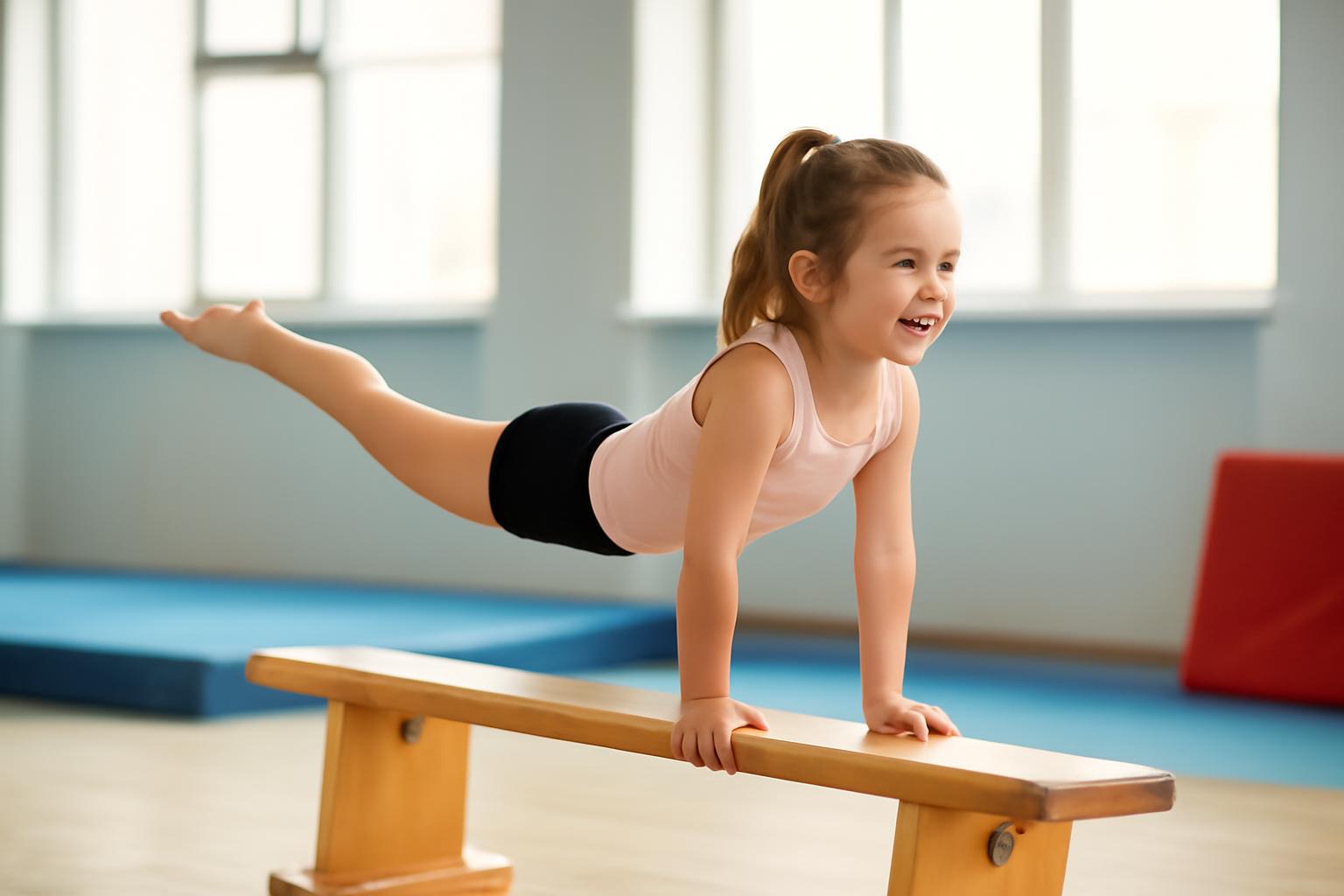
Beginner gymnastics can often start around age 3, but that does not establish readiness for bench-focused work. Class design and coaching shape the decision.
If you are researching bench gymnastics for your child, the first useful thing to know is that the phrase is often looser than it sounds.
That matters because parents can easily overread the term.
It also helps to separate two kinds of information. Bench-specific facts are mostly easy to verify from equipment catalogs: lengths, slat widths, accessory types, and common uses. Age fit, readiness, and coaching quality are less directly documented in the evidence pack, so those parts of this guide are framed more cautiously as parent-oriented evaluation advice, with general preschool gymnastics evidence called out where that is what supports the point.
For most families, the real decision is not “Which bench should I buy?” It is “Is this class well run, age-appropriate, and worth the weekly commitment?” That is the question this guide is designed to help you answer.
Related: Fencing for Kids: What Age Should They Start?.
What Is Bench Gymnastics?
Equipment listings in this category show common bench lengths of 300 cm and 360 cm, plus balancing-slat variants in 7 cm and 10 cm widths (Janssen-Fritsen).
Other catalog listings for the same equipment category extend to 450 cm benches, which reinforces that these are standard facility apparatus used in schools, clubs, and gyms rather than improvised home equipment (Kübler Sport).
The practical takeaway for parents is simple: bench gymnastics is usually about fundamentals.
It also helps explain why the term can feel confusing online. Sometimes people mean drills done on a gymnastic bench. Sometimes they mean a beginner gymnastics class that happens to include bench stations. In parent decision-making, that distinction usually matters less than the basics: how much bench work is actually in the class, what the coach is trying to teach with it, and whether the setup matches your child’s age and experience.
So if a program uses the phrase bench gymnastics, do not assume you are looking at a rare specialty. More often, you are looking at a beginner-friendly apparatus choice inside a broader gymnastics lesson.
Key Features of Gymnastic Benches
To a parent walking into a gym, the bench may look almost too basic to matter. But that simplicity is part of why it shows up so often in youth settings. It is an adaptable piece of equipment that can fit school PE, recreational gymnastics, and beginner club classes without requiring a complicated setup.
Catalog descriptions for gymnastic benches commonly use terms such as stable, durable, mobile, and stackable. Those are manufacturer descriptions, not independent testing results, so they should be read as category language rather than proof that every bench in every facility performs the same way.
What matters more for families is how those features translate into program use. A bench that is easy to move, store, and reuse works well in multi-purpose rooms and station-based classes. That is especially relevant in youth programs where apparatus has to be brought out, used by several age groups, and put away again without turning every transition into chaos.
The category also includes several variants. Listings include traditional benches, colorful models, stackable or puzzle-style sets, and outdoor versions. Accessories listed around the category include transport trolleys, wheels, protective clamps, mats, and replacement parts such as inner cheeks or replacement beam components (Kübler Sport).
Parents do not need to become equipment experts, but it helps to translate those product facts into a few practical questions:
- Is the bench setup clearly intentional, or does it look like equipment was dropped into the room wherever it fit?
- Is the class using one plain bench for a simple beginner goal, or trying to make a basic station look more advanced than it is?
- Does the bench type seem to match the group: broad preschool movement work, recreational beginner balance work, or more formal beam preparation?
The key point is that “better” is context-specific. A preschool class does not need the longest or narrowest bench in the building. A beginner recreational class does not need equipment complexity for its own sake. And a family evaluating a program usually learns more from watching how the coach uses the bench than from learning the brand name.
Exercises and Skills Developed in Bench Gymnastics
Bench gymnastics makes the most sense when you think in terms of skill categories, not flashy tricks. The bench is a foundation tool. It is used for the kinds of drills that help children organize their body, shift weight under control, and get comfortable moving on a narrower surface.
Equipment catalogs describe common uses that include balance training, beam exercises, and bar-exercise preparation such as squats and abdominal twists. That is direct evidence for how the apparatus is marketed and commonly positioned in youth and school settings, even if it does not tell us exactly how every coach teaches it.
In practice, that means a beginner bench station may involve tasks like:
- walking forward along a narrow surface;
- stepping up and down with control;
- holding a balanced position with arms placed deliberately;
- sitting astride and twisting with posture;
- squatting while staying organized through the trunk;
- crawling or traveling along the bench;
- jumping down to a mat in a controlled way.
None of that sounds dramatic, and that is the point. Bench work is usually there to support basics rather than spectacle. Parents looking for instant “real gymnastics” often underestimate how much early progress lives in these quiet, repetitive patterns.
The available bench-specific evidence becomes thinner when you move from apparatus descriptions to preschool lesson content. For very young children, the clearest source in the evidence pack is a promotional preschool-gymnastics article, not a bench-specific coaching standard. That source describes age-3 gymnastics classes as basics-focused and lists activities such as climbing, jumps, bridges, bear walks, forward rolls, bar hangs and swings, and cartwheel patterns. Those examples support the broader point that beginner gymnastics for young children emphasizes foundational movement patterns, but they do not prove that every bench-based class teaches those exact drills.
That distinction matters. A bench class for preschoolers may borrow from general preschool gymnastics more than from any formal “bench-only” curriculum. In other words, the bench often helps organize the activity, but it is not necessarily the whole lesson.
From a parent perspective, the most useful question is not whether a class teaches the hardest skills early. It is whether bench work is being used to build the right base. In a solid beginner program, that usually means four overlapping outcomes:
-
Balance The child learns to travel on a narrow path without rushing or panicking.
-
Coordination Arms, legs, and trunk start working together more cleanly.
-
Strength and control Not maximal strength, but enough body control to hold simple positions and move with intention.
-
Confidence The child gets repeated exposure to manageable challenge instead of feeling constantly overmatched.
That last point is especially easy to miss. Bench work suits that stage well because it can stay simple while still feeling meaningful.
Parents should also expect some repetition. In beginner classes, repetition is not automatically a sign that the program is stagnant. It may just mean the coach is working on the same underlying pattern from several angles. The better question is whether the station has a clear teaching purpose and whether the coach adjusts it over time.
Best Starting Ages for Youth Bench Gymnastics
The strongest age-related evidence in the pack is about general preschool gymnastics, not bench-specific instruction. A promotional article aimed at families describes age 3 as a common entry point for classes built around basics such as coordination, balance, strength, flexibility, confidence, and structured participation (HI-NRG Gymnastix).
So the careful version for parents is this: a child can often start beginner gymnastics around age 3, but that does not mean bench gymnastics has one universal safe starting age, and the source material here does not establish that every 3-year-old is ready for bench-focused work.
A better framing is to ask what kind of class the program is actually offering at that age.
The same preschool source also supports a broader developmental reason some families start early: beginner gymnastics can combine physical work with social structure. It describes benefits such as coordination, balance, confidence, and basic social habits that come from participating in a scheduled class.
That still does not mean age alone decides readiness. Parents often get better answers by asking practical questions such as:
- Can my child handle a short structured activity?
- Can they follow one-step directions most of the time?
- Are they comfortable being guided by another adult?
- Do they enjoy climbing, balancing, jumping, or tumbling in general?
- Does the class format seem built for young beginners, or like a scaled-down version of an older child’s training session?
Those are not formal screening criteria. They are simply better filters than treating “age 3” as either automatically appropriate or automatically too early.
For others, waiting a bit can be the better choice. If a trial class seems to demand more precision, patience, or independence than your child can comfortably give, that may be a timing issue rather than a sign that gymnastics is wrong for them.
How to Evaluate a Youth Gymnastics Program with Benches
This is where parents usually make the best decision. Bench gymnastics itself is not the hard part. Program fit is.
If you want a broader checklist for comparing class pages, schedules, and registration language, see our guide on how to read a youth sports program before you register. For bench gymnastics specifically, the goal is to combine that practical lens with a closer look at age fit, coaching, and how the bench is actually being used.
1. Check whether the age range is realistic
A narrow age band often makes more sense for beginners than a very broad one. A class built for ages 3 to 4 is trying to solve a different problem from one that groups ages 3 through 7 together.
Ask:
- Is this class for preschoolers, early elementary beginners, or a mixed group?
- Are first-timers grouped with first-timers?
- How much bench work is actually included?
- Is the bench being used for low-level foundational tasks, or as a shortcut into more technical-looking work?
Parents do not need a perfect answer to every question. They do need enough clarity to understand what their child will actually be doing.
2. Look for coaches who understand young children, not just gymnastics
The preschool-gymnastics source in the evidence pack tells parents to look for age-appropriate classes and qualified, child-trained coaches. That is general beginner-gymnastics guidance, but it is directly relevant here because bench work is usually used with novices, not experts.
A useful youth coach does more than demonstrate skills. They can keep a room moving, explain a task briefly, notice hesitation, and adjust the drill without turning the station into a standoff.
Useful questions include:
- Do these coaches regularly work with this age group?
- How do they handle nervous beginners?
- Do they teach progressions or just final outcomes?
- What happens when a child refuses a station?
For very young beginners, child-management skill may matter as much as technical gymnastics knowledge.
3. Inspect the facility like a parent, not like a fan
The same preschool source tells parents to pay attention to facility cleanliness, equipment fit, parent viewing, and hydration access. Again, that is not bench-specific evidence, but it is relevant to choosing a beginner program.
When you visit, notice:
- whether the facility feels clean and organized;
- whether the room layout is understandable;
- whether there is clear supervision around active stations;
- whether the program can explain how children rotate, wait, and transition;
- whether there is an obvious way for children to get water and use the bathroom.
You are not trying to be dazzled. You are checking whether the environment makes sense for a beginner child.
4. Watch how the bench is used
This is the most topic-specific test, and many parents skip it.
A bench can be a purposeful teaching tool or a time-filling station. You do not need technical expertise to tell the difference. Watch whether the coach can answer basic questions such as:
- What is this station trying to teach?
- Why is the child using a bench instead of the floor or beam?
- How does the task get easier or harder?
- What tells you that a child is ready to progress?
If the answer is vague, that matters. Bench work is most useful when it clearly serves a skill goal like balance, posture, control, or early apparatus preparation.
5. Ask about parent viewing and communication
The preschool source specifically mentions parent viewing as something families should check. That can matter a lot with younger children, especially during the first few weeks.
Ask:
- Can parents observe?
- If not, how does the program communicate what happened in class?
- Will coaches share progress feedback?
- How does the gym talk to families when a child is struggling with fit, confidence, or transitions?
No single policy is automatically best. What matters is that the program can explain its policy clearly and consistently.
6. Confirm the practical details early
A surprising number of “good” beginner programs become frustrating because the logistics were never clear.
Before registering, ask about:
- start and end times;
- drop-off or stay-with-parent expectations;
- water breaks;
- bathroom access;
- trial classes;
- missed-class policies;
- session breaks and holiday closures;
- whether enrollment renews automatically.
These are not small details once your week is full. They are part of the real cost of participation, even when the listed class length looks modest.
7. Compare recreational and club-style pathways honestly
Some beginner programs are there to build general movement literacy and confidence. Others sit at the front end of a club pipeline with more evaluation and progression pressure over time.
Neither model is automatically wrong. The mismatch happens when families think they are signing up for one and later realize they bought the other.
Practical questions include:
- Is the class mainly recreational?
- Is there early skill tracking?
- How quickly are children expected to move up?
- Does the program talk more about foundations or advancement?
If your child is very young or brand new, it is reasonable to prefer a slower, recreational start.
8. Read the fees and schedule like a contract, not a flyer
This site’s broader parent-decision coverage emphasizes reading beyond the cheerful top line: season schedule, hidden fees, and practical commitment all matter. That applies here too.
Confirm:
- registration or membership fees;
- dress-code or uniform requirements;
- showcase or assessment expectations;
- monthly versus seasonal tuition;
- auto-renewal policies;
- any additional costs tied to advancement.
A beginner class can still be the wrong class if the structure quietly asks for more time, money, or administrative hassle than your family wants.
9. Match the program to your child’s temperament
Finally, remember that fit is personal. One child loves stations, repetition, and structure. Another needs more free exploration before a class like this feels good.
Bench-based beginner gymnastics can be a nice entry point because the apparatus is simple and the work can stay close to fundamentals. But no apparatus can fix a poor match between your child and the room’s pace, noise level, or coaching style.
If you can watch a class first, do it. If you cannot, ask the program to describe a typical session in plain detail. Programs that can explain the flow clearly are usually easier for parents to evaluate honestly.
Indoor vs Outdoor Bench Use in Youth Programs
Bench gymnastics is primarily an indoor activity in the evidence pack. The apparatus is presented as equipment for schools, sports halls, clubs, and gyms, which fits how most parents will encounter it.
That indoor default makes sense.
There are, however, outdoor variants in the equipment category, and some listings also emphasize transportable or stackable setups. That means a program could use bench-style work in a hybrid or outdoor format, especially in school, camp, or multi-use settings.
If that comes up, do not assume it is wrong. Just ask more questions than you would for a standard indoor gym. For example:
- Is the equipment designed for outdoor use, or merely carried outside?
- What is the actual surface under and around the station?
- How does the program change the lesson if weather shifts?
- Does the class still sound structured, or does “outdoor” mostly mean improvised?
Those are not anti-outdoor questions. They are simply practical ones. For most families, indoor bench use is the default assumption, and outdoor use deserves clearer explanation from the program.
Common Program Risks and Signs to Watch
Most children do not need a perfect class. They need a class that is clear enough, well-matched enough, and enjoyable enough that they keep showing up.
One useful distinction is between a normal adjustment period and a more durable mismatch. More broadly, our guide to what youth sports burnout actually looks like may help if you are trying to separate a rough week from a real pattern.
For bench gymnastics or any beginner class, practical reasons to reassess fit may include patterns like:
- growing dread before class rather than normal first-week nerves;
- repeated complaints that class is boring, confusing, or scary;
- a child who spends most of the session disengaged or overwhelmed;
- a schedule that becomes more demanding than the family expected;
- a program that talks constantly about advancement but rarely about foundations.
Those are not clinical signs, and they do not automatically mean a child is “burned out.” Sometimes they just mean the class is too old, too long, too crowded, too repetitive for that child, or pointed toward a pathway the family never actually wanted.
Early specialization is another place to stay alert. This site’s broader parent-advice framing specifically includes the question of when specializing early helps and when it quietly backfires. In bench gymnastics, that translates into a simple caution: a beginner class does not have to feel intense to be worthwhile. For many families, a fun, basics-first start is the better use of the activity.
Time commitment matters too. Even a short weekly class is rarely just the minutes on the schedule once you add travel, changing, waiting, and any sibling logistics. That does not make the class unreasonable. It just means you should evaluate the real weekly footprint, not the brochure version.
A few good questions surface risk early:
- How are children moved up?
- What changes if a child progresses?
- Are showcases, evaluations, or extra sessions expected later?
- How much of the program is optional in theory but socially expected in practice?
The clearer the answers now, the less likely you are to feel trapped later by momentum or sunk cost.
Home Practice Tips to Support Class Progress
Home support for bench gymnastics should stay simple.
The preschool-gymnastics source in the evidence pack encourages home practice under supervision and lists basics such as bear walks, bridges, jumps, forward rolls, climbing-style movement, and cartwheel work. That supports the general idea that young children can reinforce beginner gymnastics patterns outside class, as long as the work stays basic and supervised.
For most families, the easiest useful options are floor-based or low-complexity activities such as:
- bear walks;
- bridges your child already knows from class;
- simple jumps with controlled landings;
- forward-roll patterns already introduced in class;
- balance games on a taped line on the floor;
- marching, stepping, and one-foot balance holds;
- cartwheel patterns only if the class has already started teaching them.
The main goal is consistency, not imitation of the gym.
That is why a simple approach usually works best:
Keep it supervised
Young children do best when an adult is present and the activity stays clearly within what the child already knows.
Keep it basic
Home is a good place for movement habits, not for inventing new progressions.
Keep it short
A few good minutes is usually more useful than a long session that turns into frustration.
Keep it positive
Home practice should build confidence, not create a second coaching environment full of correction.
Keep it aligned with class
If you are unsure whether a skill belongs at home, ask the coach. The safest default is to reinforce basics, not to race ahead.
For enthusiastic beginners, this matters a lot. A child who loves gymnastics may want to turn furniture, playground structures, or random household surfaces into pretend apparatus.
What lengths and slat sizes do gymnastic benches come in?
Catalog listings show multiple sizes rather than one universal standard. One catalog lists 300 cm and 360 cm benches with 7 cm and 10 cm balancing slats, and another lists benches up to 450 cm (Janssen-Fritsen catalog; Kübler Sport catalog).
For parents, that usually matters less than it first appears. You are rarely choosing equipment yourself. You are checking whether the class uses appropriately sized, clearly intended apparatus for the age group in front of it.
Is bench gymnastics safe for 3-year-olds?
The evidence pack supports a careful answer, not a blanket one. The available age-specific source says general preschool gymnastics can start around age 3 and focuses on basics such as coordination, balance, confidence, and age-appropriate instruction (HI-NRG Gymnastix). It does not specifically establish that every 3-year-old is ready for bench-focused gymnastics.
So the better parent question is: Is this particular class genuinely built for 3-year-olds? If the answer involves simple tasks, close supervision, and a basics-first structure, the class may be a reasonable fit. If it looks like an older beginner class with a younger age label, caution is fair.
How do I spot a good youth gymnastics facility for bench work?
The most directly supported beginner-gymnastics checklist in the evidence pack is general rather than bench-specific: look for age-appropriate classes and equipment, qualified child-trained coaches, a clean facility, parent viewing options, and easy access to hydration. After that, add a bench-specific question of your own: can the program explain what the bench station is meant to teach?
In practice, good facilities usually make beginner learning feel understandable. They can describe class flow clearly, explain how children progress, and answer ordinary parent questions without hiding behind vague promises about quick advancement.
What accessories pair with benches in programs?
Equipment listings in this category include transport trolleys, transport wheels, protective clamps, mats, and replacement parts such as inner cheeks or replacement beam components (Kübler Sport catalog; Janssen-Fritsen catalog).
That matters mostly as a program-use clue. It shows that gymnastic benches are part of a broader facility setup and maintenance system, not something parents usually need to shop for on their own.
For parents, the smartest move is usually not to obsess over the bench itself. It is to choose a transparent program with a clear age fit, understandable structure, realistic schedule, and a teaching style that matches the child you actually have right now.