
What Makes a Fencing Mask Safe for Your Child's Beginner Practice Sessions
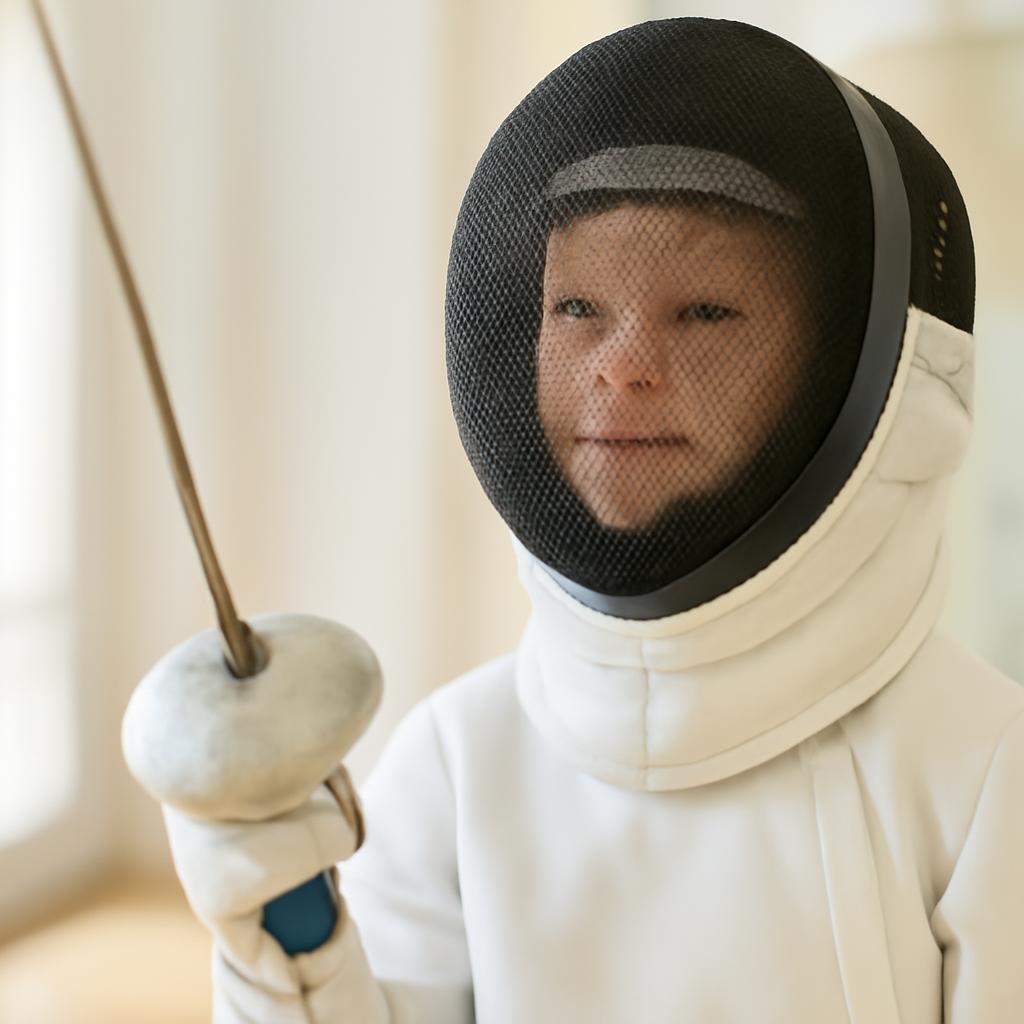
For most youth beginners, 350N is the practical starting point. Use club loaners first when available, then buy once fit and weapon choice are clearer.
If you are searching for the best fencing mask for beginner practice, the most useful answer is usually not a brand name. For a child starting in a youth club, the better starting point is almost always a mask that matches three things: the common beginner baseline of 350N, a stable fit with no rocking or slipping, and the club’s actual practice format before you spend more on advanced competition gear (Morehouse, Bucks County Academy of Fencing, Prieur USA youth guide).
That matters because parents are rarely deciding on a mask in isolation. You are also deciding whether a program lends equipment, whether coaches help fit it, whether beginners fence with electric scoring, and whether your child is likely to continue after the intro block. One club FAQ, for example, says beginners are encouraged to use club gear and are given what they need for at least the first 8 classes, with some students staying on club gear much longer while learning basics (Fencing Club Asheville).
So the real beginner question is less “What is the fanciest mask?” and more:
What standard, fit, and buying timeline make sense for this club, this child, and this stage?
Quick decision guide
- Intro classes or trial block: use club loaners if the program offers them; that lets coaches help with fit before you buy (Fencing Club Asheville).
- Ordinary beginner practice: look first for a properly fitted 350N mask; several U.S.-focused guides describe that as the usual beginner baseline (Morehouse, Bucks County Academy of Fencing, Prieur USA youth guide).
- Electric foil or sabre/open fencing: ask exactly when a weapon-specific electric mask becomes necessary (Imex Sport, Fencing Club Asheville).
- Higher-level competition: confirm event rules before upgrading, because the sources here connect higher-rated or FIE-level gear with advanced events but do not present one single rulebook summary (Prieur USA youth guide, Bucks County Academy of Fencing, Morehouse).
Why Fencing Mask Safety Defines Youth Program Quality
A fencing mask is the piece of beginner gear with the least room for compromise. Bucks County Academy of Fencing describes it as the most important safety item because it protects the face, head, and neck, while Morehouse emphasizes that mask mistakes are different from sizing mistakes in looser items like jackets or other starter gear (Bucks County Academy of Fencing, Morehouse).
That safety importance makes mask advice a useful window into program quality. A beginner-friendly club should be able to explain, clearly and without hand-waving:
- what kind of masks beginners use,
- how staff check fit,
- whether loaners are available,
- when electric masks become necessary,
- and what standard the club expects for ordinary practice.
Fit affects participation as well as protection. Morehouse warns that a loose mask can shift during fencing, while a too-small mask can be uncomfortable enough that a child resists wearing it (Morehouse). For beginners, that matters more than parents sometimes expect.
Loaner policy is another useful clue. One club example, Fencing Club Asheville, says new fencers are encouraged to use club gear and are provided what they need for at least the first 8 classes (Fencing Club Asheville).
The larger point is simple: do not separate gear from coaching. A program that checks fit, explains standards, and tells families when not to buy yet is often giving you a better signal.
350N Certification: The Baseline for Beginner Club Practice
For most youth beginners, 350N is the practical starting point in the evidence here. Prieur explains that the N stands for Newtons, used to describe puncture resistance in fencing gear (Prieur USA youth guide). Morehouse, Bucks County Academy of Fencing, and Prieur all describe 350N as the normal beginner or club-practice tier in U.S.-focused guidance (Morehouse, Bucks County Academy of Fencing, Prieur USA youth guide).
For parents, the takeaway is reassuring: if your child is starting normal weekly lessons, the evidence pack does not support rushing immediately to the highest competition tier of mask. The same sources consistently place 350N at the beginner end of the ladder and connect higher-rated or FIE-level gear to more advanced competition contexts (Morehouse, Bucks County Academy of Fencing, Prieur USA youth guide).
There is, however, one important nuance: the sources do not all summarize higher standards in exactly the same way. Prieur discusses 1600N masks as the FIE-level option, Bucks mentions 1600N or 1800N bibs for FIE competition, and Morehouse refers to 800N FIE-rated masks in its own guide (Prieur USA youth guide, Bucks County Academy of Fencing, Morehouse). For a parent, that means one practical thing: treat 350N as the common beginner baseline described by these guides, but verify the exact requirement for your child’s club or event before buying an upgrade.
There are also real reasons not to overspend too soon. Prieur’s youth guide says 350N masks are often lighter and more comfortable for smaller fencers than higher-rated alternatives (Prieur USA youth guide). For a young beginner, lighter and more comfortable can matter a lot.
That does not make higher-rated masks pointless. An experienced fencer answering on Quora, James Jefferies, argues that FIE masks are tested to more rigorous standards and often use stainless-steel mesh, which may resist rust better and last longer than many non-FIE masks (James Jefferies on Quora). That is useful as durability guidance, but it is still an individual expert opinion, not a federation rulebook. It supports a tradeoff, not a blanket rule:
- Lower upfront cost and lighter feel now, or
- higher upfront cost for possible durability gains later.
For most families, a sensible progression looks like this:
- Start with a correctly fitted 350N mask that meets the club’s beginner practice needs (Morehouse, Bucks County Academy of Fencing).
- Upgrade later if your child begins fencing in settings that call for higher-rated or FIE-level gear, or if frequent training makes durability a bigger factor (Prieur USA youth guide, James Jefferies on Quora).
- Confirm the club’s and event’s current rules before treating any seller guide as universal (Prieur USA youth guide).
So, is 350N enough for youth beginner practice? In ordinary club training, the evidence here points to yes. But “350N” is only the starting filter. After that, fit, bib quality, and whether the mask matches the club’s actual format matter just as much.
Sizing and Fit Essentials: No Rocking, Firm Chin/Brow Contact
A safe beginner mask has to fit your child’s actual head and face shape, not an approximate age band and not a hoped-for future size.
Bucks County Academy of Fencing recommends measuring around the face from under the chin, over the ears, and across the forehead (Bucks County Academy of Fencing). That gets you to the correct chart, but it does not finish the job, because sizing is not standardized across brands. Imex Sport notes that one company’s Small may fit more like another company’s Medium, so the maker’s own size chart matters more than the letter on the label (Imex Sport).
After measurement, the real test is what happens once the mask is on. Across the sources, the core fit checks are consistent:
- the mask should rest firmly at the chin and brow,
- it should show no rocking when the child turns the head,
- the bib should be long enough to tuck into the jacket,
- and the straps should be secure enough that the fencer can use them reliably (Morehouse, Bucks County Academy of Fencing, James Jefferies on Quora).
A simple try-on checklist helps:
1. Chin and brow contact The mask should sit securely against those points, not hover loosely.
2. Head-turn test Ask your child to turn left and right. If the mask shifts independently instead of moving with the head, the fit is too loose.
3. Pressure check A secure mask should not create painful pressure at the cheeks or crown.
4. Bib length The throat-protection bib should tuck into the jacket cleanly.
5. Strap check Fastenings should be secure and manageable, especially for a child who will eventually gear up more independently.
The right feel is snug and stable, not oversized and not painfully tight.
Do not buy a size up so your child can “grow into it.” Morehouse warns directly against that approach because a loose mask is a safety problem, not a harmless money-saving tactic (Morehouse). This is one place where common youth-sports shopping habits do not transfer well. You might buy roomier practice clothes. You should not buy a larger fencing mask on purpose.
Asheville’s FAQ says beginners start with club gear, and James Jefferies recommends trying masks at a shop, event, or club because models fit differently (Fencing Club Asheville, James Jefferies on Quora). Imex also notes brand-to-brand differences in sizing and shape (Imex Sport). For kids who land between sizes or have a rounder or longer face shape, that trial step can save both money and frustration.
One more caution: Morehouse says plastic masks are suitable only for casual PE-style use, not proper club fencing practice (Morehouse). For real beginner lessons and bouting, stick with certified sport-fencing masks.
Weapon Types: Foil, Epee, Sabre Differences for Practice Masks
Beginners do not always need a weapon-specific mask on the first day, but parents should understand the differences before buying.
In Olympic fencing, the mask changes with the weapon because scoring areas change:
- Foil masks have a conductive bib so hits to that area can register electrically (Bucks County Academy of Fencing, Imex Sport, Prieur USA youth guide).
- Épée masks are non-conductive because the full body is target area and the mask does not need conductive fabric (Bucks County Academy of Fencing, Imex Sport).
- Sabre masks have a conductive surface, including the bib and exterior scoring area, because the mask is part of the target in electric sabre (Bucks County Academy of Fencing, Imex Sport, Prieur USA youth guide).
For non-electric beginner practice, the evidence is more flexible. Imex says an epee or practice mask can be suitable even for foil and sabre fencers if the club is not using scoring machines and the child is not competing yet (Imex Sport). That makes sense for a true intro class focused on stance, movement, distance, safety commands, and simple drills.
The buying mistake happens when parents assume that early flexibility lasts forever. Some clubs move quickly into electric fencing. Fencing Club Asheville, for example, recommends moving to an electric foil mask with electric bib or an epee mask after about 8 weeks if the student is joining open fencing (Fencing Club Asheville).
So do beginners need weapon-specific masks right away? Usually not for the first lesson or two. But they may need one sooner than parents expect if the club transitions early to electric fencing, especially in foil or sabre.
The most useful question to ask a coach is:
“At what point in this program does my child need a weapon-specific electric mask?”
That answer will tell you whether a basic practice mask is a smart bridge purchase or just an unnecessary extra step.
Club Loaners vs Personal Purchase: Timing for Youth Beginners
For many families, the best first move is to wait—at least until you know the child likes the sport and the club has helped with fit.
The clearest example in the evidence set comes from Fencing Club Asheville. Its FAQ says the club provides everything needed for the first 8 classes at minimum, encourages beginners to fence with club gear early on, and says some fencers stay on club gear for a year or more while working on the basics (Fencing Club Asheville). That does not establish a universal industry norm. It does show that delaying a purchase can be a thoughtful, safety-conscious choice rather than procrastination.
There are three good reasons to hold off if the club allows it.
First, commitment is uncertain. Asheville says not to buy for at least the first 8 weeks, because fencing may not turn out to be the right fit (Fencing Club Asheville).
Second, weapon choice may change. A child may start in a mixed beginner class and only later settle on foil or epee. Buying too soon can leave you with a mask that no longer matches the training format.
Third, fit gets easier after real use. Imex notes that size charts vary by brand and even brand-small to brand-small comparisons can differ (Imex Sport). Trying club loaners first gives coaches and parents a better read on what shape and size actually work.
That said, there is a stage when a personal mask makes more sense. Asheville recommends considering a purchase once the fencer is moving into open fencing or preparing for tournaments, ideally after talking with a coach (Fencing Club Asheville). A personal mask can also mean a more consistent fit setup and simpler cleaning routine for one child rather than shared loaner use (Fencing Club Asheville, Prieur mask guide).
What about starter kits? Seller guides often present them as savings. Leon Paul says its starter kits can save more than 15% compared with buying the same items separately (Leon Paul buyer’s guide). That may be true for a matching bundle, but a beginner kit is only a bargain if it includes the items your child actually needs now. A discounted bundle is not helpful if the mask type is wrong for the club, or if the program still expects beginners to stay on loaners for a while.
If you are buying piece by piece, the safest order usually prioritizes protective gear before weapons. Leon Paul’s guide places the mask among the first beginner purchases after the glove, and Asheville advises talking with a coach before ordering larger sets (Leon Paul buyer’s guide, Fencing Club Asheville).
For most parents, the practical answer is straightforward:
- if the club offers loaner masks, use them first;
- buy after fit and weapon path are clearer;
- and make the mask one of the earliest personal purchases once regular open fencing or competition becomes real.
Bib Quality and What to Avoid in Beginner Masks
Parents often focus on the metal mesh first, but several sources make clear that the bib deserves just as much attention.
Morehouse says the bib—the throat-protection flap—is often the first part of a mask to fail (Morehouse). For beginner masks, one of the most useful construction details to check is double-stitched bib edges, which Morehouse recommends because cheaper bibs can delaminate over time (Morehouse).
If your child is using club loaners or trying a used mask, inspect the bib before class:
- look for fraying at the edges,
- check for separation between layers,
- make sure there are no visibly worn-through spots,
- and confirm the bib is long enough to tuck into the jacket properly (Morehouse, Bucks County Academy of Fencing).
Coverage matters as much as construction. Bucks and Morehouse both describe the bib as the throat-protection area, and both expect it to tuck inside the jacket (Bucks County Academy of Fencing, Morehouse). If it rides up, leaves the throat exposed, or repeatedly sits outside the collar, that is not a minor annoyance. It is a fit problem.
Used masks deserve extra caution. Morehouse advises against buying used masks unless you can inspect the mesh yourself, because repeated hits can leave fatigue that is not obvious at a glance (Morehouse). Bucks adds that masks should pass a 12 kg punch test (Bucks County Academy of Fencing).
You should also be skeptical of generic online listings that provide little real safety information. Bucks specifically recommends buying from official fencing vendors and avoiding Amazon or eBay generics with unclear standards (Bucks County Academy of Fencing).
Other clear red flags in beginner masks include:
- intentional oversizing for growth,
- plastic masks for real bouting,
- and strap setups that do not secure the mask reliably (Morehouse).
For foil and sabre masks, there is one more wear issue: the conductive surface itself. Imex notes that conductive materials deteriorate over time (Imex Sport). So if your child borrows or buys an electric mask, it is worth checking not just safety and fit, but whether the conductive parts are still functioning well for scoring.
Maintenance Basics to Extend Mask Life in Youth Programs
A beginner fencing mask does not need elaborate care, but it does need regular care.
Prieur’s maintenance guidance is straightforward: air dry after use, wipe the exterior with a damp cloth, and do an occasional handwash of the lining when appropriate (Prieur mask guide). That matters even for once- or twice-a-week practice, because sweat sits inside masks, and damp gear wears out and smells worse faster.
Imex adds that basic masks can be perfectly adequate for young fencers training only a few hours a week and attending occasional events, if they are maintained properly (Imex Sport).
A practical weekly checklist looks like this:
- let the mask dry fully after practice,
- inspect the bib for fraying or layer separation,
- check the mesh for dents or visible damage,
- inspect the back strap and closures,
- and, for foil or sabre masks, watch for conductive wear on the bib or exterior surface (Prieur mask guide, Imex Sport).
Rust is another issue to watch. James Jefferies notes that many FIE masks use stainless-steel mesh, while some non-FIE masks may use steel or iron that can rust over time (James Jefferies on Quora). That does not mean a beginner should skip a non-FIE or 350N mask. It does mean parents should inspect it regularly rather than assume all metal mesh ages the same way.
Growth changes maintenance too. Imex notes that manufacturers use different size charts and that young fencers’ sizing can change over time (Imex Sport). So “it fit in September” is not the end of the conversation. Recheck fit periodically through the season, especially after growth spurts.
If your child is using loaner gear, this is also why ongoing fit and condition checks matter. Youth equipment should not be treated as a one-time setup. Kids grow, bibs wear, straps loosen, and conductive areas degrade.
Assessing Fencing Programs Through Gear Requirements
Mask advice is useful beyond shopping because it gives parents a practical way to evaluate fencing programs before registration.
That approach fits the broader Youth Listings focus on practical youth-sports decisions—questions about fencing start age, class format, safety, equipment fit, and how to compare programs before committing (Youth Listings home, About Youth Listings). In fencing, mask policy is one of the easiest places to apply that mindset.
When you talk to a club, ask questions like these:
How long can beginners use loaner gear? A specific answer is better than a vague one. Asheville’s FAQ, for instance, says beginners get everything needed for at least the first 8 classes (Fencing Club Asheville).
What mask standard do you expect for beginner practice? The beginner guides in this evidence set consistently describe 350N as the common club-practice and beginner baseline in U.S.-focused settings (Morehouse, Bucks County Academy of Fencing, Prieur USA youth guide).
Who checks the fit? You want more than “pick a medium.” A good answer includes chin and brow contact, no rocking, bib tuck, and secure straps.
When do beginners need electric masks? If the club moves quickly into electric foil or sabre, a non-electric starter mask may be a short-lived purchase. If it stays non-electric for the intro period, waiting makes more sense (Imex Sport, Fencing Club Asheville).
Do you recommend buying now or after the intro block? Asheville explicitly recommends waiting through the early beginner period and then upgrading gradually as the fencer becomes more serious (Fencing Club Asheville).
The bigger point is this: early high-end gear is not the same thing as a high-quality program.
Selecting a safe beginner fencing mask starts with understanding 350N baselines, fit checks, and loaner policies. Test gear on-site if you can, ask coaches to help with sizing, and match your purchase timing to your child’s actual commitment level. That is usually the lowest-risk path to safe beginner practice.
What is the minimum safety rating for a youth beginner fencing mask?
For ordinary beginner club practice, the sources here consistently describe 350N as the common baseline. Morehouse, Bucks County Academy of Fencing, and Prieur all place 350N at the beginner or club-practice level, while connecting higher-rated or FIE-level gear with more advanced competition settings (Morehouse, Bucks County Academy of Fencing, Prieur USA youth guide). Because those summaries are not a substitute for a live rulebook, confirm your club’s and event’s current requirements before buying.
How do foil, epee, and sabre masks differ for practice?
A foil mask has a conductive bib, an epee mask is non-conductive, and a sabre mask uses a conductive surface for electric scoring (Bucks County Academy of Fencing, Imex Sport). In non-electric beginner settings, Imex says a basic epee or practice mask can sometimes be used temporarily even by foil or sabre beginners. But if the club will soon use scoring machines—especially in foil or sabre—it usually makes more sense to move into the correct electric version.
Can clubs provide masks for beginner tryouts?
Yes, some clubs do. The clearest example in the evidence set is Fencing Club Asheville, which says beginners are provided the gear they need for at least the first 8 classes, including masks (Fencing Club Asheville). That makes intro classes a good time to test fit and comfort before committing to a purchase.
Should I buy a larger mask for my growing child?
No. The beginner guidance here warns against intentional oversizing. A proper mask should sit firmly on the chin and brow, show no rocking when the head turns, and let the bib tuck into the jacket (Morehouse, Bucks County Academy of Fencing, James Jefferies on Quora). A loose mask is a safety issue, not a money-saving strategy.
When to upgrade from 350N to FIE masks?
Upgrade when your child’s competition level, club format, or durability needs justify it—not just because higher-tier gear exists. Prieur and Bucks connect higher-rated or FIE-level masks with advanced events, while Morehouse says ordinary beginners generally do not need to start there (Prieur USA youth guide, Bucks County Academy of Fencing, Morehouse). A second reason to upgrade may be durability: James Jefferies argues that FIE masks may last longer and resist rust better because of their stainless-steel mesh (James Jefferies on Quora). Before buying up, confirm the exact standard your club or event expects.