
Footwear Essentials for Youth Fencing: Traction and Agility on the Piste
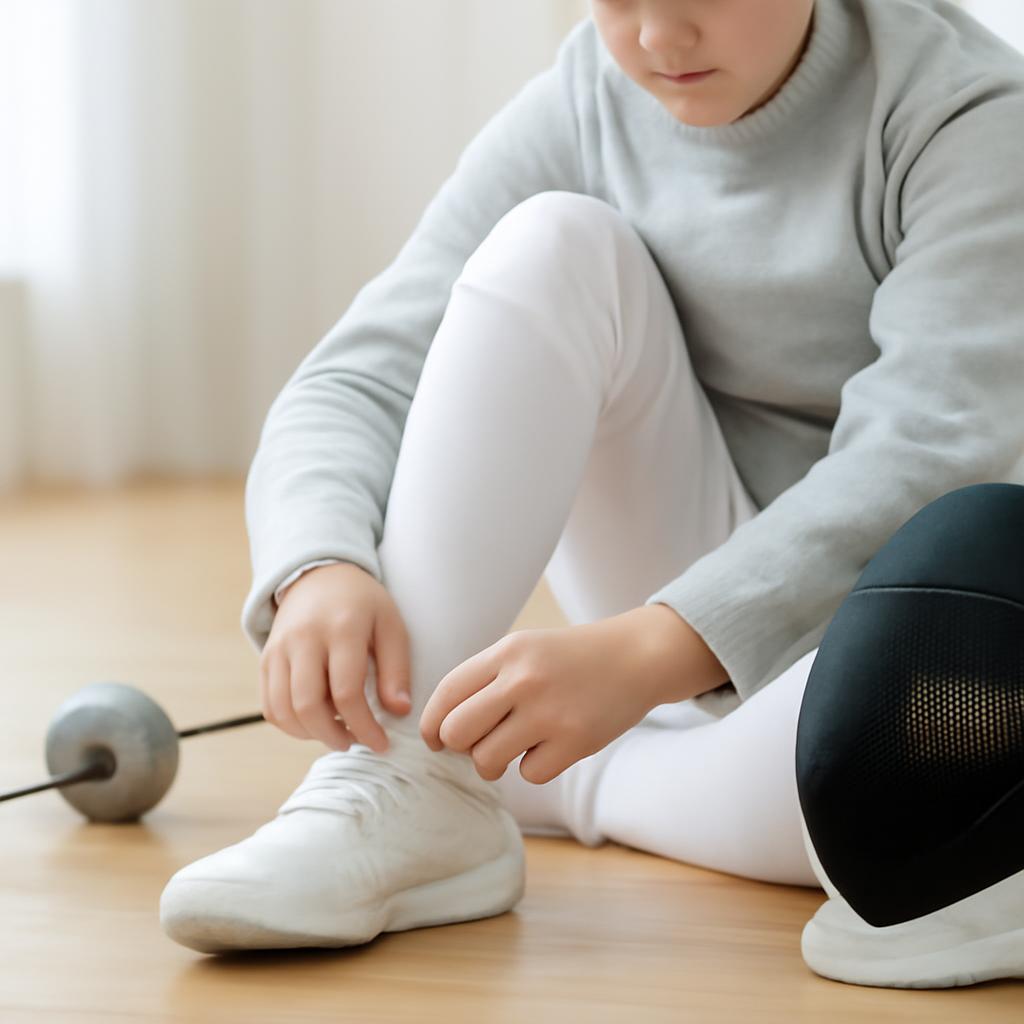
The realistic beginner choice is between a dedicated fencing model and a low-profile indoor court shoe with lateral stability and hard-rubber grip.
Parents searching for the best fencing shoes for grip and movement are usually not looking for a universal winner. They are trying to solve a simpler problem: what helps a young fencer move confidently on the strip without slipping, wobbling, or feeling clumsy underfoot? Across coaching-style guides, seller guides, and fit explainers, the same fundamentals keep appearing: a grippy rubber outsole, lateral and heel support, a low and level platform, and a secure midfoot fit rather than a generic “sports shoe” label (Prieur USA’s 2025 fencing shoe guide, Modern Duelists’ fencing shoe guide).
The evidence base for hard performance claims is thin. The strongest neutral source in this set is a small 2024 crossover study of 13 female collegiate fencers. In that study, average lunge attack time was 0.92 seconds in fencing shoes and 0.93 seconds in fencing shoes with a heel cup, versus 0.96 seconds in court shoes. The fencing-shoe setups were faster in that test, but some lower-limb loading measures were also higher than in court shoes, while the heel-cup setup reduced some of those loads relative to fencing shoes alone (2024 peer-reviewed study on fencing lunge performance via PMC). That is useful evidence, but it is not enough to justify a definitive best-shoe ranking for every child.
So the most publication-safe way to answer the question is also the most useful for parents: treat this as a fit-and-features decision, not a brand contest. For youth fencers, the practical decision rules are straightforward. Reject running-style shoes that are tall, soft, or weak in lateral support. Prefer hard-rubber traction, a stable heel, and a snug midfoot. Consider low-profile indoor court shoes as a valid alternative when dedicated fencing shoes are not the right first purchase. And because kids outgrow pairs quickly, buy for current fit and current program needs rather than imagined long-term durability (Prieur USA’s 2025 fencing shoe guide, Fencing Parents on choosing a fencing shoe, Modern Duelists’ fencing shoe guide).
Related: 4th Grade Reading List: 50+ Recommended Books by Genre from Schools and Libraries.
Why Grip and Movement Define Fencing Footwear Needs
Fencing asks more of footwear than casual gym use or straight-line conditioning. The sport combines repeated advances and retreats with abrupt braking, lunges, recoveries, and constant balance corrections. That means the shoe has to grip the floor well enough to support explosive movement without feeling sticky or unstable. Both Prieur and Modern Duelists warn that ordinary running shoes are a poor match because they are built mainly for forward motion and often do not provide the lateral stability fencing needs for fast directional changes (Prieur USA’s 2025 fencing shoe guide, Modern Duelists’ fencing shoe guide).
Impact matters too, especially at the heel. Prieur highlights heel padding as a standard fencing-shoe feature intended to reduce lunge impact, and Modern Duelists similarly emphasizes heel cushioning as long as it does not raise the heel higher than the toes (Prieur USA’s 2025 fencing shoe guide, Modern Duelists’ fencing shoe guide). Some commercial materials go further and quote very large impact numbers for the front foot in a lunge, but in this evidence set those precise figures come from promotional content rather than peer-reviewed biomechanics research, so the safer conclusion is simply that fencing creates meaningful repeated landing forces and that heel stability and cushioning are legitimate design priorities, not that one exact force multiplier has been established (Octav’s article on why proper fencing footwear matters, 2024 peer-reviewed study on fencing lunge performance via PMC).
For a young fencer, the wrong shoe can affect movement before the child has the language to explain what feels off. Modern Duelists’ fit advice is practical here: snug through the midfoot, room at the toes, and flat or level underfoot so the foot does not roll or slide during lunges (Modern Duelists’ fencing shoe guide). Prieur’s general guide points to the same core needs from another angle: heel, ankle, and side support, plus dependable grip on common fencing surfaces (Prieur USA’s 2025 fencing shoe guide).
The youth-specific complication is growth. Fencing Parents says that until about age 14, many young fencers will outgrow shoes before they fully wear them out (Fencing Parents on choosing a fencing shoe). That changes the parent calculation. For most families, it makes more sense to prioritize secure current fit, safe movement, and the program’s expectations rather than paying mainly for long-term durability. When evaluating a club, Youth Listings’ own fencing-start article teaser advises parents to ask about equipment fit, which is a natural place to ask what kind of shoes beginners actually wear and what counts as acceptable for that program (Youth Listings on fencing program questions).
Core Features for Superior Grip and Movement
If you strip away branding, the best shoes for fencing movement tend to follow the same design logic. The current evidence supports four parent-friendly checks.
1. Start with the outsole. The outsole is the clearest grip variable in the evidence pack. Seller and coaching guides consistently describe useful fencing traction as a hard-rubber, non-marking sole that grips well in forward and backward motion while still releasing cleanly enough for lateral corrections. Azza describes this as directional tread that grips forward and back but releases on lateral slides; Prieur emphasizes durable rubber patterns that improve friction on common fencing surfaces; and Modern Duelists reduces the point to a practical rule for slick floors: hard rubber generally grips better than soft foam (Azza Sports buyer’s guide, Prieur USA’s 2025 fencing shoe guide, Modern Duelists’ fencing shoe guide).
2. Demand stability where fencing actually stresses the foot. Fencing does not just need “support” in the abstract. The recurring pressure points in the sources are lateral stability, heel security, and midfoot structure. Prieur highlights heel, ankle, and side support as core fencing-shoe traits. Azza’s guide, which is brand-owned and should therefore be read as design description rather than independent proof, emphasizes reinforced midfoot structure and a stable platform for fast direction changes. Modern Duelists adds the fit rule that matters most to parents shopping in person: the shoe should be snug enough through the midfoot that the foot does not roll or slide inside the shoe during lunges (Prieur USA’s 2025 fencing shoe guide, Azza Sports buyer’s guide, Modern Duelists’ fencing shoe guide).
3. Prefer a low, light, level platform over a tall, mushy one. Several sources converge on the same feel preference: fencers usually do better in shoes that feel close to the ground and stable rather than heavily cushioned and elevated. Prieur’s model guide lists a level sole as part of the sport’s basic footwear needs, while Modern Duelists warns against a raised heel and recommends soles that stay roughly level underfoot (Prieur USA’s Ballestra vs. Excalibur guide, Modern Duelists’ fencing shoe guide). Weight figures are not standardized across the evidence pack, but one detailed review is still useful as a reference point: The Fencing Coach listed the Octav at 13.3 ounces per shoe, versus 14.1 ounces for the Nike Ballestra 2 and 14.6 ounces for the Azza 15/14 in that reviewer’s comparison table (The Fencing Coach’s Octav review). Those differences are small, so parents should read them as feel clues rather than proof that a lighter pair will transform performance.
4. Cushioning should be targeted, not excessive. The evidence does not support the idea that the softest shoe is automatically the safest or best-moving shoe. Modern Duelists recommends enough heel cushioning to absorb lunge impact without elevating the heel higher than the toes, and Azza describes the goal as targeted cushioning rather than a uniformly soft sole (Modern Duelists’ fencing shoe guide, Azza Sports buyer’s guide). The 2024 lunge study adds a useful nuance: fencing shoes with a heel cup kept attack time close to standard fencing shoes while reducing some impact-related loading measures relative to fencing shoes alone (2024 peer-reviewed study on fencing lunge performance via PMC). For families, that suggests a simple principle: look for shock absorption that preserves ground feel and stability, not cushioning that turns the shoe into a soft platform.
Put together, those features create a practical shopping filter. If a shoe has a hard-rubber outsole, stable lateral structure, a low and level base, and a secure midfoot fit, it is already much closer to what a young fencer needs than a random athletic sneaker with a thick foam heel.
Fencing-Specific Shoes vs Court Shoe Alternatives
Parents often assume the choice is binary: buy a dedicated fencing shoe or buy the wrong thing. The evidence here does not support that all-or-nothing view.
Dedicated fencing shoes do appear to offer a small movement advantage in at least one controlled setting. In the 2024 peer-reviewed crossover study, fencers attacked faster in fencing shoes (0.92 seconds) and fencing shoes plus a heel cup (0.93 seconds) than in court shoes (0.96 seconds) during a lunge task (2024 peer-reviewed study on fencing lunge performance via PMC). But the study also found tradeoffs. Some knee and ankle loading measures were higher in fencing shoes than in court shoes, while the heel-cup setup reduced some of those measures compared with fencing shoes alone (2024 peer-reviewed study on fencing lunge performance via PMC). And because the study involved only 13 female collegiate fencers and tested lunges rather than full-bout movement, it points to a likely trend rather than a final answer for every youth athlete.
That nuance matters, because good indoor court shoes remain a legitimate alternative in the sources, especially for beginners and growing kids. Prieur says many fencers move from running shoes to indoor court shoes for volleyball, basketball, racquetball, or general court use because those shoes are designed for quick directional changes and often grip well on fencing-like surfaces (Prieur USA’s 2025 fencing shoe guide). Modern Duelists goes further and says it often prefers indoor court shoes over branded fencing shoes, largely because they can offer strong lateral support, hard-rubber grip, and better comfort for some feet (Modern Duelists’ fencing shoe guide). Fencing Parents similarly says volleyball or badminton shoes can work as acceptable alternatives because they provide the lateral support fencing demands (Fencing Parents on choosing a fencing shoe).
So the real comparison is not “fencing shoe versus anything else.” It is “fencing shoe versus the right kind of court shoe.” The wrong option is usually the generic running shoe with a soft, elevated platform and weaker lateral control. The more realistic beginner choice is between a dedicated fencing model and a low-profile, laterally stable indoor court shoe with hard-rubber grip.
Where fencing-specific shoes still tend to make the strongest case is reinforcement and sport-specific geometry. Prieur describes fencing shoes as adding heel padding, reinforced heel and side zones, and grip designed for common fencing surfaces (Prieur USA’s 2025 fencing shoe guide). Its model guide frames the Nike Ballestra and Excalibur line in similar terms: fencing-specific grip, ankle and heel support, and reinforcement in high-wear areas (Prieur USA’s Ballestra vs. Excalibur guide).
For most families, that leads to a reasonable progression. If the child is new, still growing fast, and fencing modest training volume, a good indoor court shoe can be a sensible first step.
Model Spotlights: Traction and Movement Strengths
Because the available model-level evidence is mostly commercial copy, seller comparison pages, and one detailed independent-style review, the safest way to read this section is as a set of reported fit and feature profiles, not as a definitive ranking. These examples can help parents narrow choices by fit, budget, and movement style, but they should not be treated as proof that one shoe is universally best.
Octav has the most specific traction praise in the current evidence, but that praise comes mainly from a single reviewer. In a detailed review based on roughly 2 months of use at 3 to 4 sessions per week, The Fencing Coach described the Octav’s geometric Duron Tech rubber tread as the best fencing-shoe tread the reviewer had personally felt, especially under braking, re-acceleration, and lateral corrections. The same review listed the shoe at 13.3 ounces per shoe, praised its low profile for en garde posture, and said it fit fast foil and sabre movement particularly well, while also noting that the firmer midsole felt less ideal for bouncing epee footwork (The Fencing Coach’s Octav review). That is useful, but it remains one reviewer’s experience rather than independent comparative testing.
Nike Ballestra 2 is the clearest premium benchmark in seller guides. Prieur’s comparison guide describes it as narrow-fitting, highly reinforced, suitable for all fencing surfaces, and strong in ankle and heel support, with a listed price of $195 on that site (Prieur USA’s Ballestra vs. Excalibur guide). Absolute Fencing Gear product listings show Ballestra 2 variants priced from $159 to $200, depending on edition and sale status (Absolute Fencing Gear fencing shoe listings). Leon Paul’s comparison article lists the Ballestra at 290 grams per US 7.5 shoe, lighter than the London Razor at 330 grams in that comparison (Leon Paul’s Ballestra vs. London Razor comparison). The recurring caution is fit: multiple sources describe the Ballestra as snug or narrow, which can be a benefit for some feet and a deal-breaker for others.
Azza 15/14 is best understood from the current evidence as a brand-stated traction-first design. Azza describes its outsole as non-marking rubber with directional tread that grips forward and back while releasing laterally, paired with a low, stable profile and structured midfoot for fast changes of direction (Azza Sports buyer’s guide). Because that description comes from the brand itself, it is best read as a design claim, not proof of superiority. Still, it lines up closely with the general feature set parents should be shopping for in a grip-oriented shoe. Azza lists the 15/14 variants at 166€ and its youth Rookie model at 79€ (Azza Sports buyer’s guide).
Excalibur 1 and Excalibur 2 come through mainly as fit-and-value options in Prieur’s seller comparison. Prieur describes the Excalibur 1 as a medium-wide fit with nonslip traction for different surfaces and lists it at $119; the Excalibur 2 is presented similarly, with added reinforcement and a listed price of $125 (Prieur USA’s Ballestra vs. Excalibur guide). Those are seller descriptions, not independent test results, but they are still useful for parents trying to solve a common problem: what to try if a child finds a Nike-style fit too narrow.
Adidas EnGarde has the clearest budget-beginner mention in a parent-oriented source. Fencing Parents calls it the best value for young beginners and lists the price at $84 to $99 (Fencing Parents on choosing a fencing shoe). That recommendation is opinion-based rather than lab-tested, but it reflects a real youth-buying problem: many beginners need a safe, lower-cost starting point more than a premium adult model built for heavy training volume.
A parent-friendly way to use these spotlights is not to ask which model is “best.” Ask which profile sounds most like your child: narrow or wider foot, firmer or softer feel, beginner or high-volume training, faster foil/sabre movement or more bounce-heavy epee footwork, starter budget or premium budget. That is the decision the evidence actually supports.
Youth Considerations: Fit, Growth, and Program Fit
For kids, the first rule is simple: buy the shoe that fits now, not the shoe you hope they will grow into by next season. Fencing Parents says many young fencers outgrow shoes before they wear them out, especially through about age 14 (Fencing Parents on choosing a fencing shoe). Oversizing sounds economical, but it works directly against the fit requirement that appears across the evidence: the foot should stay secure through the midfoot and stable at the heel.
Azza’s youth guidance is unusually explicit on this point. Its kids’ Rookie range covers EU sizes 33 to 38 and recommends buying a true fit rather than an oversized one; the brand also highlights easy lacing and a grippy sole for younger users (Azza Sports buyer’s guide). Even if you do not buy that model, the underlying sizing principle fits the broader evidence: a little toe room is fine, but heel lift and midfoot slop are not.
Program fit matters almost as much as shoe fit. A fencing shoe question is usually part of a bigger readiness conversation: what does this club expect, what surfaces do they fence on, and how serious is the starter commitment? That is more useful than assuming every child needs a premium pair immediately.
In the evidence provided here, youth-entry options start around 79€ for the Azza Rookie and $84 to $99 for the Adidas EnGarde, while premium models such as the Nike Ballestra are commonly listed in the $159 to $200 range and adult-focused Azza models at 166€ to 175€ (Azza Sports buyer’s guide, Fencing Parents on choosing a fencing shoe, Absolute Fencing Gear fencing shoe listings). Shipping can meaningfully change the decision too: in The Fencing Coach’s Octav review, U.S. shipping added $47 to a $176 shoe (The Fencing Coach’s Octav review).
There is also no single best youth fit. Some models skew narrow, some broader, some firmer, some more cushioned. A child’s weapon and footwork style can matter, but only after the basics are handled. The right first question is not, “What do elite fencers wear?” It is, “What shoe lets this child move securely in this program, on this surface, at this stage of growth?”
Fit, Durability, and Surface Performance Factors
Good grip is wasted if the shoe does not fit. The most consistent fit advice in the evidence pack is that the shoe should feel secure around the midfoot while leaving some room in the toes. Modern Duelists frames that as the best way to prevent the foot from rolling or sliding inside the shoe during a lunge (Modern Duelists’ fencing shoe guide). Prieur’s model comparison makes the fit differences more concrete by describing the Nike Ballestra 2 as narrow and the Excalibur 1 and 2 as medium-wide (Prieur USA’s Ballestra vs. Excalibur guide). Leon Paul’s comparison adds that the Ballestra runs small and snug, while the London Razor feels wider and shorter (Leon Paul’s Ballestra vs. London Razor comparison).
Break-in is part of the fit story. The Octav review reported some initial stiffness around the throat and eyestay before the shoe settled in, which is a useful reminder that “secure” and “comfortable on minute one” are not always the same thing (The Fencing Coach’s Octav review). For parents, that means a child’s first reaction matters, but it should be interpreted carefully.
Durability mostly comes down to reinforcement in high-wear areas. Prieur highlights heel and side reinforcement as standard fencing-shoe features and warns against overly fragile mesh constructions in demanding use (Prieur USA’s 2025 fencing shoe guide, Prieur USA’s Ballestra vs. Excalibur guide). Not every durability issue means a pair is unusable, though. The Octav reviewer reported lunge-protection separation after about 1 month, but also said it was fixable with glue (The Fencing Coach’s Octav review).
Surface performance is its own variable. Prieur says fencing shoes need grip across courts and metal strips, while Modern Duelists recommends hard rubber over soft foam on slippery floors (Prieur USA’s Ballestra vs. Excalibur guide, Modern Duelists’ fencing shoe guide). Dedicated fencing models usually add wear protection on the inner side and heel, but surface behavior still has to be tested in the real venue where the child fences.
In practice, the fit-and-durability check is simple. If the foot slides inside the shoe, the pair is wrong. If the heel lifts noticeably, the pair is wrong. If the outsole feels slick on the club floor, the pair is wrong. And if the child fences often enough to start shredding ordinary court shoes in the same spot, that is usually the moment when fencing-specific reinforcement becomes worth paying for.
Weapon and Style Influences on Shoe Choice
A useful way to think about fencing shoes is not “Which brand is best?” but “Which movement pattern am I buying for?”
For foil and sabre, where quick starts, sharp retreats, and rapid directional corrections are especially prominent, firmer and lower-profile shoes often sound more attractive in the current evidence. The Octav review explicitly says the shoe shines for right-of-way fencing and fast acceleration, braking, and lateral adjustment, while also describing its feel as firmer underfoot (The Fencing Coach’s Octav review). Azza’s guide likewise emphasizes outsole tread and midfoot structure for saber and fast styles, with low stable geometry and directional traction as the priority (Azza Sports buyer’s guide). Those are not independent rankings, but they do fit the broader evidence favoring stable, low-profile setups for sharp footwork.
For epee, the picture can shift. The same Octav review says its firmer build is less ideal for bouncing epee footwork, where some athletes may prefer more cushioning on repeated landings and small rhythm changes (The Fencing Coach’s Octav review). A UK academy overview groups brands such as Kempa and PBT as more supportive and extra-cushioned choices, while describing Azza and Leon Paul as lighter, mobility-oriented options (Premier Sabre Academy’s overview of fencing shoe brands). That source is not hard science, but it is a helpful way to sort options when a child’s movement pattern is clearly more bounce-heavy than burst-heavy.
Style and body mechanics matter at least as much as weapon. A narrow-footed sabreur may love a snug Ballestra where a broader-footed foilist dislikes it immediately. Even the most detailed review-based examples come with fit caveats, which is why trying shoes on, testing them on the club surface, or buying from a seller with a realistic return process is still the safest family approach (The Fencing Coach’s Octav review, Prieur USA’s Ballestra vs. Excalibur guide).
For most parents, the practical takeaway is uncomplicated. Prioritize grip tread, lateral stability, heel protection, and secure fit first. Then use foot shape, training volume, budget, and movement style to break ties.
Can court shoes like volleyball models replace fencing shoes for grip?
Sometimes, yes. Multiple sources describe indoor court shoes such as volleyball, badminton, basketball, or general court models as a credible alternative because they are designed for lateral support and quick direction changes, making them a clear step up from running shoes (Prieur USA’s 2025 fencing shoe guide, Fencing Parents on choosing a fencing shoe, Modern Duelists’ fencing shoe guide). The main caution is that dedicated fencing shoes may still offer a small speed edge in lunge testing and usually add fencing-specific reinforcement for wear areas (2024 peer-reviewed study on fencing lunge performance via PMC).
What is the lightest fencing shoe for quick movements?
A separate Leon Paul comparison lists the Ballestra at 290 grams per US 7.5 shoe, reinforcing its reputation as a light option (Leon Paul’s Ballestra vs. London Razor comparison). Because these numbers come from reviews and brand-affiliated comparisons rather than a standardized test database, they are best treated as reference points, not a final ranking.
Are fencing shoes required in youth bouts or programs?
The evidence provided here does not include an official youth rulebook or published national policy establishing one universal requirement for every club or event. What it does show is that parent-oriented sources treat volleyball or badminton shoes as workable beginner alternatives in some cases, and Youth Listings advises parents to ask programs directly about equipment fit when evaluating a class (Fencing Parents on choosing a fencing shoe, Youth Listings on fencing program questions). The safest parent answer, then, is not to assume. Ask the specific club or event what footwear it expects, whether non-marking indoor court shoes are acceptable for beginners, and whether the venue surface changes that recommendation.
How do I size fencing shoes for growing kids?
Aim for a secure current fit, not a pair to grow into. Prieur says fencing shoes often run slightly smaller for a snug feel, while its model guide emphasizes that a good fit prevents excess foot movement inside the shoe (Prieur USA’s 2025 fencing shoe guide, Prieur USA’s Ballestra vs. Excalibur guide). Azza’s youth guide is explicit that kids should buy a true fit, not an oversized fit, with the foot held securely through the midfoot; its kids’ range covers EU 33 to 38 (Azza Sports buyer’s guide). In practice, look for snugness through the middle of the foot, a stable heel, and a little room in front of the toes.
Do heel pads improve lunge movement without slowing speed?
Possibly, at least in limited evidence. In the 2024 peer-reviewed crossover study, average lunge attack time was 0.92 seconds in fencing shoes and 0.93 seconds in fencing shoes with a heel cup, compared with 0.96 seconds in court shoes (2024 peer-reviewed study on fencing lunge performance via PMC). The heel-cup setup also reduced some loading measures relative to fencing shoes alone, suggesting a possible impact-protection benefit without a meaningful loss of speed in that sample (2024 peer-reviewed study on fencing lunge performance via PMC). The important limitation is that the study involved only 13 female collegiate fencers and tested lunges rather than full bouts, so it supports a promising idea, not a universal rule.