
Wrestling Match Times From Youth Tournaments to College
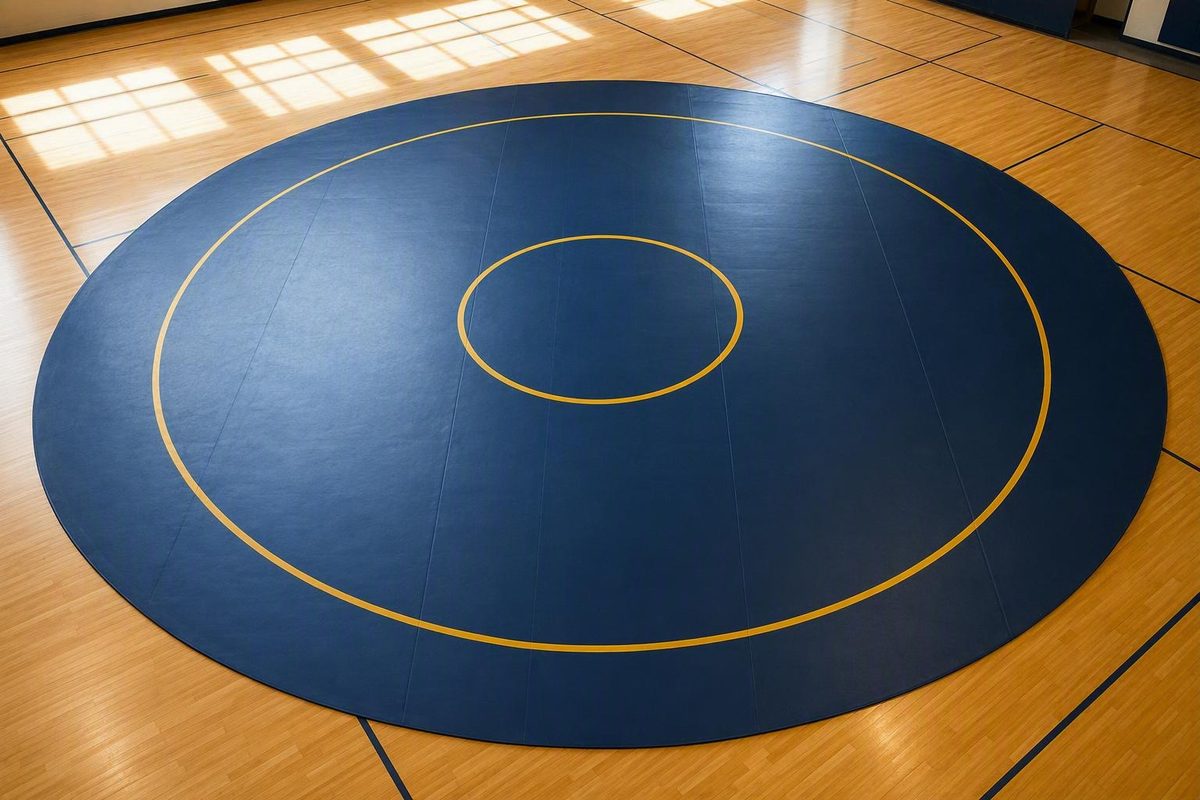
An amateur bout scheduled for six minutes can occupy less than one minute or more than six elapsed minutes. Regulation time is not wall-clock time.
The answer depends on the style, age or competition division, governing body, event rules, and sometimes whether the bout is in the championship or consolation bracket.
This guide covers competitive amateur wrestling—primarily folkstyle, freestyle, and Greco-Roman—not professional wrestling entertainment.
Updated August 20, 2026. Current USA Wrestling age-division information is prioritized for youth and international-style formats. High-school and college sections describe the commonly cited folkstyle formats; families and competitors should still verify the current rules used by their school association, collegiate organization, or event.
Four timing terms are useful:
- Regulation wrestling time: Minutes allocated to the regulation periods.
- Scheduled span: Regulation time plus a scheduled period break.
- Elapsed bout time: Time from the opening whistle to the result, including interruptions or overtime.
- Tournament commitment: The full time required for check-in, weigh-ins, warmups, waiting, and multiple bouts.
Wrestling match lengths at a glance
The common benchmarks are six regulation minutes for high-school folkstyle and seven for college folkstyle. In the listed 2026 USA Wrestling divisions, youth and Junior folkstyle formats range from three to six regulation minutes. The listed freestyle and Greco-Roman divisions use either four or six minutes.
The USA and UWW rows below come from the 2026 USA Wrestling age-division chart. The high-school format is supported by a high-school rules and scoring description, while the college format appears in FloWrestling’s comparison of common match lengths.
| Style or division | Period format | Regulation wrestling time | Scheduled break | Important qualification |
|---|---|---|---|---|
| USA Wrestling 8U–10U folkstyle | 1-1-1 | 3 minutes | None listed | Same limit for championship and consolation bouts |
| USA Wrestling 12U–14U folkstyle championship | 1-1:30-1:30 | 4 minutes | None listed | Consolation bouts use 1-1-1, totaling 3 minutes |
| USA Wrestling 16U and USA Junior folkstyle championship | 2-2-2 | 6 minutes | None listed | Consolation bouts use 1-2-2, totaling 5 minutes |
| High-school folkstyle | 2-2-2 | 6 minutes | No rest between regulation periods | Current school-association and event rules control |
| College folkstyle | 3-2-2 | 7 minutes | Not included in the regulation total | Applies when the bout reaches the end of regulation |
| USA Wrestling 8U–16U freestyle or Greco-Roman | 2 × 2 minutes | 4 minutes | 30 seconds | Applies to the listed 2026 USA divisions |
| USA Junior freestyle or Greco-Roman | 2 × 3 minutes | 6 minutes | 30 seconds | Applies to the listed 2026 USA Junior division |
| UWW U15 and U17 freestyle or Greco-Roman | 2 × 2 minutes | 4 minutes | 30 seconds | Younger international divisions do not all wrestle 6 minutes |
| UWW U20, U23, and Senior freestyle or Greco-Roman | 2 × 3 minutes | 6 minutes | 30 seconds | The scheduled span is at least 6:30 once the break is included |
These are clock allocations, not promises about actual duration. A pin can end a bout almost immediately. A tied folkstyle bout can continue into overtime. Scheduled breaks, officiating interruptions, and overtime can make the wall-clock span longer than the regulation total.
One bout’s length also says little about the time a family will spend at a dual meet or tournament. A wrestler may have several short matches separated by long waits, with check-in or weigh-in required before wrestling begins.
How long are youth wrestling matches?
Youth match length depends on more than a child’s age. “Youth wrestling” can describe a USA Wrestling event, local club dual, independent tournament, school-affiliated competition, or another organization’s program. Those events do not necessarily use the same divisions or period lengths.
For a current national framework, the 2026 USA Wrestling chart lists the following folkstyle limits:
| USA Wrestling division | Championship format | Championship total | Consolation format | Consolation total |
|---|---|---|---|---|
| 8U | 1-1-1 | 3 minutes | 1-1-1 | 3 minutes |
| 10U | 1-1-1 | 3 minutes | 1-1-1 | 3 minutes |
| 12U | 1-1:30-1:30 | 4 minutes | 1-1-1 | 3 minutes |
| 14U | 1-1:30-1:30 | 4 minutes | 1-1-1 | 3 minutes |
| 16U | 2-2-2 | 6 minutes | 1-2-2 | 5 minutes |
| USA Junior | 2-2-2 | 6 minutes | 1-2-2 | 5 minutes |
The table creates a three-to-six-minute range across the listed championship and consolation formats. It also shows why age alone does not answer the question. A 12U or 14U championship bout has four regulation minutes, while a consolation bout in the same division has three.
The 2026 USA Wrestling freestyle and Greco-Roman structure is different:
- 8U through 16U: Two two-minute periods, totaling four regulation minutes.
- USA Junior: Two three-minute periods, totaling six regulation minutes.
- Scheduled rest: Thirty seconds between the two periods.
Those limits govern the divisions shown in the cited national chart. They do not establish the timing for every local event that uses similar age labels.
Why local youth times can differ
Local organizations demonstrate why parents should check the actual tournament information. For example, one program describes youth dual-meet bouts as three one-minute periods while saying tournament periods may vary up to one minute 30 seconds. That local timing guidance illustrates event-level variation; it does not control other tournaments.
Local leagues and independent events may publish their own divisions and period structures. Their age-group names may not align exactly with USA Wrestling’s divisions.
There is therefore no reliable universal “middle-school wrestling match length.” A middle-school competition might follow a state school association, local league, club, or tournament-specific rules. Identify the governing organization instead of converting “middle school” into one assumed number.
What parents should verify
Check these four details on the current flyer, registration page, or event rules:
- Style: Folkstyle, freestyle, or Greco-Roman.
- Division: Such as 8U, 12U, 16U, USA Junior, or a locally defined group.
- Governing organization: USA Wrestling, a school association, a league, or an independent organizer.
- Bout type: Championship, consolation, pool, or another event-specific category.
If the period lengths are not published, ask the coach or tournament organizer. A familiar age label helps, but it does not independently establish the time limit.
High-school and college folkstyle match times
A commonly cited high-school folkstyle bout has three two-minute periods, written as 2-2-2. That produces six minutes of regulation wrestling if the bout reaches the end of the third period. The cited high-school description also says there is no rest between regulation periods.
College folkstyle adds one minute to the first period. FloWrestling describes the standard college progression as a three-minute opening period followed by two two-minute periods, for seven regulation minutes.
| Level | First period | Second period | Third period | Regulation total |
|---|---|---|---|---|
| High school | 2 minutes | 2 minutes | 2 minutes | 6 minutes |
| College | 3 minutes | 2 minutes | 2 minutes | 7 minutes |
The practical memory aid is:
- High school: 2-2-2 = 6
- College: 3-2-2 = 7
These are regulation totals, not minimum bout lengths or exact wall-clock durations. If a wrestler records a fall 45 seconds into the first period, the match ends then. The remaining scheduled regulation time is not wrestled.
Likewise, a “seven-minute college match” means seven minutes are allocated across the regulation periods. A fall can make the bout shorter, while interruptions or a regulation tie can make its elapsed duration longer.
What happens when folkstyle regulation ends tied?
Folkstyle allows additional wrestling to determine a winner when regulation ends tied. A high-school match can therefore exceed its six-minute regulation total, and a college match can exceed seven minutes.
Do not assume that an undated overtime sequence is the current procedure for every school or collegiate competition. Overtime structures may be organization- and season-specific. When exact timing matters, consult the current state school-association, collegiate, or tournament rules.
The dependable general rule is that a folkstyle tie may add wrestling beyond regulation. The controlling rules determine the exact sequence.
Freestyle and Greco-Roman match times
Freestyle and Greco-Roman generally use two regulation periods, unlike folkstyle’s usual three-period format. The period length depends on the age or competition division.
The cited 2026 structure is:
| Division | Freestyle or Greco-Roman format | Regulation total | Scheduled break |
|---|---|---|---|
| USA Wrestling 8U–16U | 2 × 2 minutes | 4 minutes | 30 seconds |
| USA Junior | 2 × 3 minutes | 6 minutes | 30 seconds |
| UWW U15 and U17 | 2 × 2 minutes | 4 minutes | 30 seconds |
| UWW U20, U23, and Senior | 2 × 3 minutes | 6 minutes | 30 seconds |
These age-based differences are consistent with FloWrestling’s folkstyle, freestyle, and Greco-Roman comparison, which lists four regulation minutes for U17 international-style bouts and six for Senior bouts.
A Senior freestyle or Greco-Roman bout that reaches the end of regulation therefore includes:
- three minutes of wrestling;
- a 30-second scheduled rest; and
- another three minutes of wrestling.
That equals six minutes of regulation wrestling but at least six minutes 30 seconds of scheduled span, before any other interruptions.
It is incorrect to say that every international-style wrestling match lasts six minutes. The U15 and U17 formats listed above total four regulation minutes, and a decisive result can end a bout before its scheduled limit.
How ties differ from folkstyle
Freestyle and Greco-Roman generally use scoring criteria to determine the winner when the regulation score is tied. They do not automatically add folkstyle-style overtime periods.
The applicable rules determine how those criteria are applied. Wrestlers and families should use the current competition rules rather than assuming that an explanation from another organization or season controls the bout.
Why a wrestling match may end early
A listed match time is the maximum regulation allocation for a bout that continues through all scheduled periods. It does not guarantee that every regulation second will be used.
The clearest example is a fall, commonly called a pin. A fall ends the bout immediately. If a wrestler secures a pin after 45 seconds, the match ends after 45 seconds of wrestling—even if the scheduled regulation limit was four, six, or seven minutes.
Depending on the applicable style and ruleset, other early-ending outcomes can include:
- Technical fall or technical superiority: One wrestler reaches the required scoring margin.
- Disqualification: A wrestler is removed under the governing rules.
- Injury default: A wrestler cannot continue.
- Another ruleset-specific result: The governing rules may define additional ways for a bout to become final.
Technical-fall and technical-superiority thresholds should not be generalized across every style, organization, age group, and season. The scheduling point is simpler: a decisive outcome may end the bout before the regulation clock reaches zero.
Early finishes affect tournament flow
Tournament mats often work through queues of bouts rather than treating each match as a fixed appointment. Several quick finishes can move a mat ahead faster than families expect.
Suppose four six-minute bouts appear ahead of a wrestler. Multiplying four by six suggests 24 minutes of wrestling, but that is not a dependable wait-time estimate. If several bouts end early, the queue can advance much faster.
Wrestlers should monitor the bout board, stay near the assigned mat, and follow the event’s reporting procedure. Regulation time is useful for understanding the format, but it is a poor countdown to an exact call-to-mat time.
Overtime, breaks, and real elapsed time
Regulation wrestling time is the time allocated to the active regulation periods. It is not necessarily the wall-clock duration from the opening whistle to the final result.
A scheduled six-minute bout can occupy less than one minute or more than six elapsed minutes:
- Short scenario: A wrestler earns a fall after 45 seconds, ending the bout in under a minute.
- Long scenario: A high-school folkstyle bout uses all six regulation minutes, includes interruptions, ends regulation tied, and continues into overtime.
Folkstyle overtime
A tied high-school or college folkstyle bout may continue through an overtime procedure. That additional wrestling pushes the bout beyond the standard six-minute high-school or seven-minute college regulation total.
Because exact overtime sequences can change or differ among organizations, there is no sound universal overtime duration for planning purposes. Use the current rules of the state association, collegiate organization, or tournament.
Freestyle and Greco-Roman period breaks
The listed freestyle and Greco-Roman formats include a 30-second rest between periods. The break is not part of the four- or six-minute regulation wrestling total.
Therefore:
- A two-by-two-minute bout has four minutes of wrestling and a scheduled span of at least 4:30.
- A two-by-three-minute bout has six minutes of wrestling and a scheduled span of at least 6:30.
Freestyle and Greco-Roman generally settle regulation ties through scoring criteria rather than adding folkstyle overtime. Their scheduled period break can still make the elapsed span longer than the regulation wrestling time.
Interruptions during a bout
Officiating interruptions can add wall-clock time. The available evidence does not establish a dependable average elapsed duration after interruptions, so there is no reliable conversion such as “six regulation minutes always takes eight real minutes.”
One bout may move almost continuously, while another may include several pauses. Families that need a scheduling buffer should consult the event timetable and organizer rather than treating regulation minutes as an appointment length.
How long should families plan to spend at a tournament?
A wrestling tournament is much longer than one bout. Even if an individual match has only a few regulation minutes, the day can include:
- arrival and check-in;
- weigh-ins or weigh-in verification;
- warmups;
- bracket posting;
- waiting for an assigned mat;
- multiple matches;
- time between rounds;
- mat or bracket delays; and
- awards or checkout.
As a local example, the Maize Wrestling Club tournament guide advises families to plan on four to five hours in the gym. That is an example from one club, not a national average.
The same guide describes split formats in which some age groups wrestle in the morning and others in the afternoon. It recommends arriving approximately one hour before the scheduled wrestling time and tells wrestlers to report four to five matches early because bouts can finish quickly.
Why split sessions matter
A tournament may divide divisions into separate sessions to organize mat use and attendance. Younger groups might wrestle in the morning while older groups compete later, although the arrangement varies by event.
A posted tournament start time therefore does not necessarily apply to every wrestler. Families need the session assigned to the wrestler’s exact division, plus the relevant check-in and weigh-in instructions.
Arriving solely from a rough match-time calculation can make a wrestler late. The tournament’s current communications are more useful than a generic estimate.
Tournament-day checklist
Before the event, confirm:
- Tournament flyer: Read the latest version and any updates.
- Session time: Find the session for the wrestler’s exact division.
- Weigh-in: Confirm the date, location, deadline, and whether it occurs before tournament day.
- Style: Verify folkstyle, freestyle, or Greco-Roman.
- Division: Confirm the age and weight grouping.
- Bout guarantee: Ask how many matches are guaranteed.
- Bracket type: Identify elimination, double elimination, pool, round robin, or another format.
- Reporting procedure: Learn how many bouts early the wrestler should report.
- Schedule flexibility: Allow for the mat to run early or late.
The flyer and organizer’s messages are the best scheduling sources. A general match-length guide cannot account for an event’s entries, mat assignments, or delays.
Find the correct time limit for a specific match
Use this four-step process to identify the scheduled limit for a particular bout.
1. Identify the style
Determine whether the event uses:
- Folkstyle, which usually has three regulation periods;
- Freestyle, which generally has two; or
- Greco-Roman, which also generally has two.
Do not infer the style from age alone. The same wrestler might enter folkstyle at one event and freestyle at another, producing a different period structure.
2. Identify the division
Find the event’s exact division label, such as:
- 8U;
- 12U;
- 16U;
- high school;
- USA Junior;
- U17;
- U20;
- college; or
- a locally defined elementary or middle-school group.
Similar ages do not necessarily mean identical limits. Labels such as USA Junior and U20 belong to particular competition frameworks rather than serving as interchangeable terms for all older youth wrestlers.
3. Identify the governing body
Determine which organization’s rules control the event. The 2026 USA Wrestling and UWW chart is a strong starting point for the divisions it lists, but it does not govern every school, league, or local tournament.
School wrestling may follow a state association’s rules. Independent tournaments may publish modifications. Local youth leagues can use their own division names and period lengths.
Rules can also be updated. USA Wrestling says its rules are revised as national and international rules change, so formal questions should be checked against the current USA Wrestling rulebook and event guidance.
4. Identify the bout type
Check whether the event changes its timing by bracket stage or bout category. Several USA Wrestling folkstyle divisions use different limits for championship and consolation bouts.
For example, the cited 12U rows show that:
- a USA Wrestling folkstyle championship bout uses a one-minute opening period followed by two 1:30 periods, totaling four regulation minutes;
- a folkstyle consolation bout uses three one-minute periods, totaling three regulation minutes; and
- a freestyle bout uses two two-minute periods, totaling four regulation minutes, with a 30-second rest.
The division remains 12U, but the style and bout type change the answer.
The most dependable final check
Use the current rulebook to interpret formal competition rules, then check the tournament flyer and organizer’s updates for local scheduling or modifications. If the documents appear to conflict, ask the event director which rule controls.
Youth Listings provides general informational guidance rather than a guarantee that one format applies to a particular event.
Frequently asked questions
How long is a high-school wrestling match?
A commonly cited high-school folkstyle format has three two-minute periods, totaling six minutes of regulation wrestling, with no rest between those regulation periods.
A pin or another match-ending result can stop the bout earlier. A tie can extend it through overtime. The current state association or event rules should be checked when the precise procedure matters.
How many periods are in a wrestling match?
It depends on the style. Folkstyle normally uses three regulation periods, while freestyle and Greco-Roman normally use two.
Period length varies by division. In the cited 2026 formats, youth folkstyle periods range from one to two minutes, while the listed freestyle and Greco-Roman divisions use two- or three-minute periods.
Can a wrestling match end before regulation time?
Yes. A fall or pin ends the bout immediately, regardless of how much regulation time remains. Under the applicable rules, technical fall or technical superiority, disqualification, and injury default can also produce an early result.
A pin at 45 seconds therefore ends the bout at that point; the wrestlers do not continue simply because more regulation time was scheduled.
Do wrestling matches go into overtime?
Tied folkstyle matches can continue into overtime, so high-school and college bouts may exceed their regulation totals.
Freestyle and Greco-Roman generally resolve regulation ties through scoring criteria instead of adding folkstyle-style overtime. Exact procedures should be confirmed in the current rules for the competition.
How long does a youth wrestling tournament last?
There is no universal tournament length. One local club guide recommends planning for four to five hours in the gym, but that should not be treated as a national standard.
The total commitment depends on weigh-ins, session assignments, bracket size, guaranteed bouts, waiting between rounds, early finishes, delays, and how far the wrestler advances. Use the tournament flyer and organizer’s communications rather than multiplying one bout’s regulation time by an assumed number of matches.
Bottom line: The useful answer is not one number. Match the wrestler’s style, division, governing body, and bout type to the applicable rules. Common benchmarks are three to six regulation minutes across the cited youth folkstyle formats, six minutes for the commonly cited high-school format, seven for college folkstyle, and four or six minutes for the listed freestyle and Greco-Roman divisions.
Always confirm the current flyer or rulebook. A pin can shorten the bout, folkstyle overtime can lengthen it, and the full tournament commitment will ordinarily be much longer than one match.