
One Nation Slowpitch Basics: What Parents Need to Know About Rules, Teams, and Events
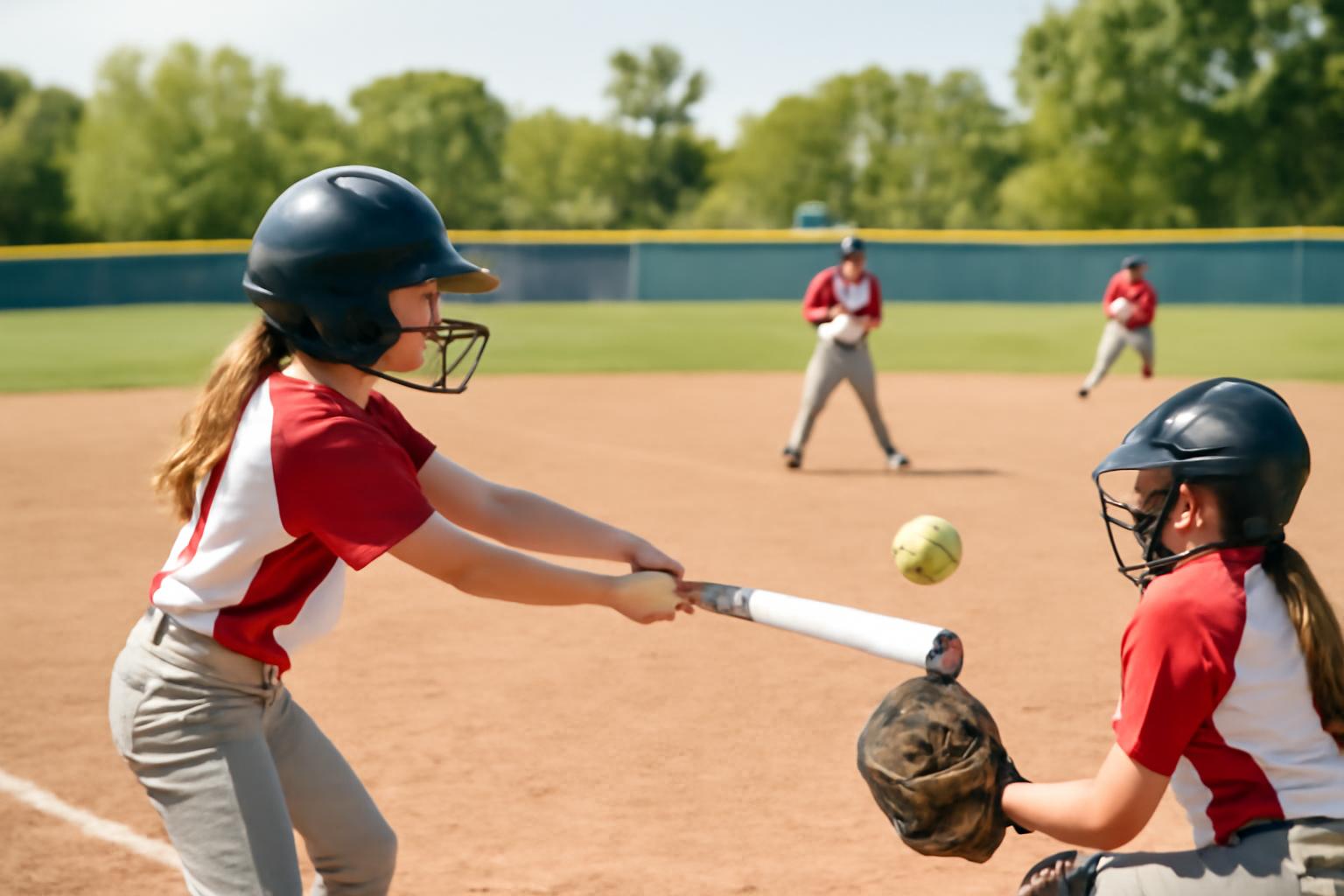
Under the 2021 rulebook, adult teams are for players 18 and older, with a limited exception allowing players 16 and older with a release.
If you searched for “one nation softball,” the clearest match in the available evidence is One Nation Slowpitch: an Ohio-based slowpitch softball organization documented most clearly in a 2021 rulebook, with adult divisions for men, women, and co-ed play, plus a small number of public 2026 event listings. That dated-but-specific rulebook is the strongest source here, so parents should read everything in this guide as “based on the 2021 rules unless confirmed otherwise” rather than as a guarantee of current policy.
That time stamp matters. The evidence does not support describing One Nation as a typical youth fastpitch program, and it does not support assuming that every rule, address, or event page shown online is still current. The clearest rules source presents an adult-first slowpitch structure, with only limited participation for players 16 and older with a release (One Nation Slowpitch Rule Book & By-Laws, VER 03.22.2021).
For families, that changes the evaluation. The right question is not simply “Is this softball?” It is: Is an adult slowpitch environment, under the rules we can actually verify, a good fit for my 16- or 17-year-old? That is a different decision from choosing a local rec league, a school team, or a travel fastpitch club.
This guide sticks to what is documented, flags where the evidence is thin or conflicting, and focuses on the practical issues parents usually want answered before they commit money, travel, or a weekend schedule.
What Is One Nation Slowpitch Softball?
The strongest direct source is the 2021 One Nation Slowpitch Rule Book & By-Laws. It identifies the organization as One Nation Slowpitch Softball, lists 7289 State Route 43, Kent, Ohio 44240, gives the version as VER 03.22.2021, and states a vision of being a customer-centric athletic association that places athletes, sponsors, and business partners first while promoting competition, sportsmanship, and proper classification (One Nation Slowpitch Rule Book & By-Laws, VER 03.22.2021).
That same document makes the basic structure clear: this is a slowpitch softball organization, not a youth fastpitch development brand. It lays out playing rules, by-laws, classifications, eligibility standards, roster rules, suspensions, and appeals, and it organizes competition across men’s, women’s, and co-ed divisions (One Nation Slowpitch Rule Book & By-Laws, VER 03.22.2021). In other words, the evidence points to a governed competition model with formal event and team administration, not a casual “drop in and play” setup.
A separate public profile on Sportsfeed points in the same general direction but is weaker evidence. It labels the sport “Softball - Slow,” lists the organization in Medina, Ohio, and shows a public snapshot of 16,746 fans, 19 posts, and July 2026 activity including a mention of a 2027 event tease (Sportsfeed organization profile snapshot). That supports the idea that One Nation had visible public-facing activity, but it does not outweigh the 2021 rulebook on questions such as official address or governing details.
So the safest description is this: One Nation appears to be an Ohio-based slowpitch softball organization with a documented 2021 rules structure and some visible later event activity, but parents should verify current operations directly.
That distinction is important because One Nation is not presented as a broad youth ladder where kids move from 10U to 12U to 14U developmentally. The evidence instead suggests a sanctioning or tournament-style framework that cares about classification, roster control, eligibility, and event play. For some older teens, that may be useful. For younger players, it is probably the wrong category entirely.
Divisions and Eligibility Basics
For most families, the first filter is simple: what divisions exist, and who is actually allowed to play?
Per the 2021 rulebook, One Nation organizes competition into Men’s A, B, C, D, E, and REC; Women’s A, B, C, D, and E; and Co-Ed Open, D, E, and REC (One Nation Slowpitch Rule Book & By-Laws, VER 03.22.2021). That is a real classification system, not a single all-comers league. It suggests that team strength and player background matter, and that organizers expect teams to enter skill-appropriate buckets rather than mix everyone together.
For parents, that classification structure has two practical consequences.
First, competitive fit matters. A teen joining an adult slowpitch team is not just signing up for “softball.” They are joining a roster that may care a lot about which division it belongs in, how it is classified, and whether each player helps the team stay competitive at that level.
Second, experience can vary sharply by division. A mature 17-year-old playing occasionally with adults in a lower-pressure setting is a very different scenario from a teen joining a stronger team that treats events like serious weekend competition.
Eligibility is even more important. The same rulebook states that adult teams are for players 18 and older, with a limited exception allowing players 16 and older with a release (One Nation Slowpitch Rule Book & By-Laws, VER 03.22.2021). That means One Nation is adult-first by design, not a standard youth league with age-banded teams.
That age rule should be read carefully by families. It does not mean every 16- or 17-year-old will automatically fit every roster, event, or local director’s interpretation. It means the documented rules leave open a narrow path for older teens, provided the release requirement is satisfied. Parents should therefore treat eligibility as a two-step question:
- Is the player eligible under the published 2021 rulebook?
- Is the player eligible for the specific team and event being considered right now?
For co-ed participation, the structure gets more specific. The rulebook requires at least five men and five women on the field in co-ed play (One Nation Slowpitch Rule Book & By-Laws, VER 03.22.2021). That matters because a family evaluating a co-ed opportunity should ask more than “Can my teen play?” They should ask whether the team can actually field a compliant lineup consistently. A player can be eligible on paper and still end up caught in a roster that is chronically short on one side of the gender requirement.
This section answers the biggest fit question quickly: One Nation is not a normal destination for younger youth softball players. If your athlete is 12, 13, 14, or 15, the evidence here does not point to One Nation as a standard option. If your athlete is 16 or 17, then the real conversation becomes one of release requirements, team needs, maturity, and whether adult slowpitch supports or distracts from the athlete’s broader goals.
If your family is really comparing standard youth fastpitch benchmarks instead of adult slowpitch, basics like 12U softball pitching distance are often more useful than adult roster-classification rules.
Roster and Membership Rules
The administrative side of One Nation looks more formal than many casual softball setups, and that can be either reassuring or limiting depending on what your family wants.
As of the 2021 rulebook, team rosters are capped at 20 players, must be completed online, and may not add players from other rosters. The same document lists annual non-refundable membership fees of $10 per team and $20 per player, and says directors commit to one-year agreements that may be terminated for failures to perform (One Nation Slowpitch Rule Book & By-Laws, VER 03.22.2021).
For parents, the benefit of rules like these is not just paperwork. A formal roster system usually means:
- somebody is expected to know who is actually eligible,
- teams cannot freely shuffle players week to week,
- event directors are operating inside a stated structure,
- and disputes have a clearer rules basis when they happen.
That can be especially valuable if your family has dealt with loosely run leagues where lineups change by rumor, eligibility gets ignored until a protest, or fee expectations are muddy.
But the same structure also reduces flexibility.
A 20-player cap can create a real playing-time issue. On one hand, it prevents rosters from ballooning indefinitely. On the other hand, if a team carries close to the full cap, a teen may end up as insurance rather than as a core contributor. Parents should ask a direct question before paying anything: How many players are already committed, and what role do you expect my athlete to have?
The no-adds-from-other-rosters rule also matters more than it may sound. In many informal softball settings, missing players get replaced casually by friends or players borrowed from somewhere else. One Nation’s documented approach is more restrictive (One Nation Slowpitch Rule Book & By-Laws, VER 03.22.2021).
The non-refundable membership language deserves attention too. Even though $10 per team and $20 per player are modest compared with many travel-sports costs, “non-refundable” means the fees are described as money you should not expect back if the team fit is poor, the schedule changes, or the family decides the environment is wrong (One Nation Slowpitch Rule Book & By-Laws, VER 03.22.2021).
For parents of older teens, the practical checklist here is straightforward:
- Ask whether the roster is already near the 20-player limit.
- Ask whether your athlete is being recruited as a starter, depth player, or occasional fill-in.
- Ask what happens if the team is short on game day and cannot borrow across rosters.
- Ask who controls registration and whether all membership fees are due up front.
- Ask whether local directors or specific events impose any additional paperwork beyond the 2021 rules.
Those questions are not nitpicking. In an adult-first program, they often determine whether the experience feels organized and worthwhile or whether your teen spends weekends waiting for playing time on a crowded roster.
Core Game Rules and Structure
The 2021 rulebook gives One Nation a recognizable slowpitch framework, but families should not assume that means it will feel like school softball or youth fastpitch.
Per the rulebook, games are set for seven innings, and the document describes regulation status after four innings under listed score conditions. It also lays out division-specific run rules, including 25-20-15 for Men’s A/B, and includes rules sections covering players, batting, baserunning, pitching, the playing field, equipment, umpires, dead-ball and live-ball situations, and definitions (One Nation Slowpitch Rule Book & By-Laws, VER 03.22.2021).
That matters because it shows One Nation is not operating on a thin “house rules” sheet. It has a full competition rule set. If your teen joins, they are entering an environment where classification, lineup construction, substitutions, and rule knowledge can all affect the day.
Co-ed play adds several specific features. As documented in the 2021 rulebook, co-ed uses an alternating batting order, requires at least 5 men and 5 women on the field, uses an 11-inch ball for female batters and a 12-inch ball for male batters, and indicates that a male batter who is walked is awarded second base (One Nation Slowpitch Rule Book & By-Laws, VER 03.22.2021).
Those are not trivial details. They shape how the game actually unfolds.
For example, an alternating batting order means coaches and players cannot treat the lineup as interchangeable the way they might in another format. The field-balance requirement means a co-ed team’s day can depend on attendance in a more rigid way than a single-gender roster. And the rule awarding a walked male batter second base changes base-state strategy in ways that families new to co-ed slowpitch may not expect.
Parents of fastpitch players should especially notice the format shift. Slowpitch changes the feel of the game in several ways:
- the pitch presentation is different,
- offensive timing and approach change,
- certain hitters may be valued differently,
- and fielding decisions do not map cleanly from youth fastpitch.
That does not make slowpitch a bad developmental choice. It does mean it is a different choice. A teen can enjoy slowpitch, build confidence, get reps, and still recognize that it is not identical to training for school or travel fastpitch goals.
Parents should also separate game length on paper from time commitment in real life. So when a coach says “just one tournament,” parents should still ask:
- What is the earliest check-in time?
- Is there a guarantee of multiple games?
- How late could bracket play run?
- What happens if weather changes the format?
- Is the team expected to stay on site between games?
The answer to those questions often matters more to a family than the printed inning count.
Known One Nation Tournaments and Events
The event picture is much less settled than the rules picture. There is evidence of 2026 activity, but it is not strong enough to present a fully verified current calendar.
One public example is the 2026 One Nation - Ice Breaker listing on Playeasy. That page describes an All Ages Softball Tournament scheduled for Fri, Mar 6 to Sun, Mar 8, 2026 at Deaconess Sports Park, 4300 Heckel Rd, Evansville, IN 47725, and shows 49 participants, 486 spectators, Co-Ed, Amateur, and All Ages tags (Playeasy event listing snapshot). But the same page also labels the event “Past” despite the future dates shown, so it is best treated as evidence that a One Nation-branded event page existed, not as proof of final status, final turnout, or completed play.
A second listing, One Nation / One Pitch, is even more important to read cautiously. It shows dates of Aug. 1-2, 2026 at Skyview Sports Complex, with Mens and CoEd divisions, a $370 entry fee, a 3 Game Guarantee, and 0 of 12 teams registered in each division at the captured moment (SoCoSport listing snapshot). The uncertainty should be foregrounded here: the page does not explicitly say softball, even though the surrounding context makes that likely, and the zero-registration snapshot does not prove the event was canceled, failed, or stayed empty. It proves only what the page showed at that time.
There is also a weaker public-activity signal from the Sportsfeed profile snapshot, which showed 16,746 fans, 19 posts, and July 2026 posts including a teaser mentioning “2027 Storming the beach…” (Sportsfeed organization profile snapshot). That is useful mostly as a sign that One Nation had some visible promotional activity online. It is not strong enough to settle operational questions for parents.
So what should a family do with this information? Use the event listings as examples, not as a booking basis.
Before paying a team fee, reserving a hotel, or committing a child to a weekend, confirm all of the following directly:
- whether the event is still active,
- whether it is in fact a slowpitch softball event,
- which divisions are actually being offered now,
- whether a 16- or 17-year-old may enter with the needed release,
- whether the roster is already viable,
- and whether game guarantees, start times, and refund policies have changed.
A useful parent workflow is:
- Check the team first. Is there a real roster with enough committed players?
- Check the event second. Is the page current, and is registration actually open?
- Check eligibility third. Does the event honor the same youth-release pathway as the 2021 rulebook?
- Check logistics last. Only after the first three answers are clear should you price travel, food, and lodging.
That order helps families avoid the common trap of solving the travel plan before confirming that the team or event is truly ready.
Costs and Fees for Participation
There are at least two separate cost layers to think about with One Nation: organization-level fees and actual team/event expenses.
At the organization level, the 2021 rulebook lists annual non-refundable membership fees of $10 per team and $20 per player (One Nation Slowpitch Rule Book & By-Laws, VER 03.22.2021). Those numbers are relatively modest by organized-sports standards, but they should be understood as the floor, not the total.
At the event level, the One Nation / One Pitch listing shows a visible example of a $370 team entry fee for a 3 Game Guarantee format (SoCoSport listing snapshot). Even if a family’s share of that fee is not huge when spread across a roster, the tournament line item is only one piece of the real bill.
The broader youth-softball cost context can still help families frame the decision, even though it is not One Nation-specific pricing. In a general guide to rec versus travel softball, The Hitting Vault says local rec softball can run around $100 for a season, while elite travel softball can reach roughly $2,500 to $6,000 per year before extras such as camps, with higher-level teams also bringing significant travel and weekend commitments (general youth-softball budgeting context from The Hitting Vault). Those numbers should be read only as a comparison point, not as a statement about One Nation fees or outcomes.
For parents, the real budgeting question is not “What does One Nation charge?” It is more like:
- What are the required membership fees?
- What is our share of the tournament fee?
- Are uniforms or team shirts required?
- Does my athlete need additional equipment?
- How far is the event?
- Is a hotel likely?
- How many meals are we buying on the road?
- Are we paying for one weekend or a recurring schedule?
That is where families can get surprised. A program may sound cheaper than elite travel on the surface but still become expensive when a couple of tournament weekends, gas, and overnight stays are added.
One more practical note: because the documented membership fees are non-refundable, parents should ask for the all-in estimate before paying the first dollar (One Nation Slowpitch Rule Book & By-Laws, VER 03.22.2021). A clear answer might sound like this: “Your player fee is X, your expected tournament share is Y, and if the team travels you should expect Z for hotels and meals.” If a team cannot give even a rough version of that answer, families should slow down.
Youth Family Considerations and Program Fit
This is the section most parents actually care about, because the rules do not matter if the environment is wrong.
The first fit question is age. Under the 2021 rulebook, One Nation is built around adult teams for players 18 and older, with only a limited path for players 16 and older with a release (One Nation Slowpitch Rule Book & By-Laws, VER 03.22.2021). That alone tells families that this is not a normal youth progression model.
The second fit question is format. A teen who currently plays fastpitch may enjoy slowpitch for extra reps, social play, or a different competitive experience, but it is still a different game. The pitching style, timing, co-ed rules, roster dynamics, and tactical choices all shift. If the athlete’s main goal is simple enjoyment or staying active, that may be perfectly fine. If the athlete’s main goal is highly specific fastpitch development, parents should ask whether adult slowpitch supports that plan or merely takes time away from it.
The third fit question is commitment. General youth-softball guidance distinguishes rec ball from travel ball in exactly the ways families worry about most: local versus travel-heavy schedules, lower versus higher cost, and easier versus more intense time demands (general context from The Hitting Vault). One Nation, based on the evidence available, looks much closer to the organized competition end of the spectrum than to the “two short local games a week” model.
That does not mean One Nation is automatically too much for an older teen. It means parents should evaluate the whole environment, not just the registration form. A mature 16- or 17-year-old might thrive in adult slowpitch if the team culture is appropriate, expectations are clear, and the role is meaningful. Another teen might dislike the social environment, the travel pattern, the long tournament days, or the mismatch with school-season goals.
There is also a broader developmental question that parents should not skip: What is this season for? Youth sports decisions often go wrong when families stack commitments without deciding what the athlete is trying to get out of them. Youth Listings’ broader coverage on the homepage emphasizes practical decisions such as schedules, costs, and burnout, and the site’s About page explicitly frames comparison points like club versus rec and the ways early specialization can quietly backfire for some families. That lens is useful here. If a teen already has school ball, lessons, strength work, or travel obligations, adding adult slowpitch may be a fun complement—or it may simply crowd the calendar.
A smart family evaluation usually includes these questions:
- Eligibility: What exact release is needed for a 16- or 17-year-old?
- Environment: Who else is on the team, and what is the team culture like?
- Role: Is the teen expected to start, rotate, or mostly serve as depth?
- Safety and supervision: Who is the responsible adult point person for communication and logistics?
- Schedule: How many weekends, how much driving, and how late might tournament days run?
- Goal alignment: Is this primarily for fun, reps, competition, or something else?
- Opportunity cost: What would the athlete be giving up to do it?
Parents should also be careful with the phrase “all ages” when they see it on an event page. In the evidence here, “All Ages” appears on the Ice Breaker listing, but it does not override the adult-first eligibility framework in the rulebook, and it does not tell you how a specific event treats minors (Playeasy event listing snapshot; One Nation Slowpitch Rule Book & By-Laws, VER 03.22.2021).
In practical terms, One Nation may be a reasonable option for an older teen who wants adult slowpitch competition and has the right release, the right team, and the right expectations. It is much less persuasive as a general solution for families looking for a standard youth softball home.
Contact and Next Steps for Families
If you want to pursue One Nation further, the clearest contact details in the evidence come from the 2021 rulebook: www.onenationslowpitch.com, 1-844-4Nation, and 7289 State Route 43, Kent, OH 44240 (One Nation Slowpitch Rule Book & By-Laws, VER 03.22.2021).
Because that source is dated, the best next step is not immediate registration. It is verification.
Before committing, parents should confirm at least these five things directly:
- Whether there is a newer rulebook than the 2021 version.
- Whether the Kent address and phone contact are still current.
- Whether the specific tournament page you found is active, not stale or archived.
- Whether a 16- or 17-year-old is allowed in that specific event with the required release.
- What the real all-in cost will be after memberships, tournament share, travel, meals, and lodging.
It also helps to ask a few practical follow-up questions that event pages often do not answer well:
- What time is check-in?
- Is there a coach or manager meeting?
- Are weather changes communicated by text, app, or social post?
- Is there a refund or credit policy if the format changes?
- Are there local field rules or event waivers beyond the general rulebook?
That extra confirmation step matters more than usual here because the evidence is mixed in predictable ways. The rules source is specific but from 2021. A public profile snapshot points to Medina while the rulebook lists Kent. One event page shows future dates but also a “Past” label. Another shows zero registered teams at the captured moment. None of that proves One Nation is illegitimate. It does mean families should verify the current facts instead of assuming the first search result is final.
For many parents, that is the most useful bottom line: One Nation Slowpitch offers a documented adult slowpitch rules structure with limited older-teen access and examples of 2026 event listings, but current fit depends on updated rules, confirmed event status, real team needs, and the total commitment your family is actually willing to make.
What is the age requirement for One Nation Slowpitch?
The documented standard in the 2021 rulebook is 18 and older for adult teams, with a limited exception allowing players 16 and older with a release (One Nation Slowpitch Rule Book & By-Laws, VER 03.22.2021). Parents should still confirm the policy with the specific team or event, because the evidence does not prove that every later listing or local director applies youth participation the same way.
How much does it cost to register a team or player?
The 2021 rulebook lists annual non-refundable membership fees of $10 per team and $20 per player (One Nation Slowpitch Rule Book & By-Laws, VER 03.22.2021). On top of that, at least one public event example—One Nation / One Pitch—showed a $370 team entry fee for a 3 Game Guarantee format at the time captured (SoCoSport listing snapshot). The real family cost can be higher once travel, food, and possible hotel nights are included.
What divisions are available in One Nation Softball?
Per the 2021 rulebook, the documented divisions are Men’s A, B, C, D, E, REC; Women’s A, B, C, D, E; and Co-Ed Open, D, E, REC (One Nation Slowpitch Rule Book & By-Laws, VER 03.22.2021). Co-ed play also includes specific structural rules, including an alternating batting order and a requirement to field at least five men and five women (One Nation Slowpitch Rule Book & By-Laws, VER 03.22.2021).
Are there upcoming One Nation tournaments in 2026?
The available evidence shows at least two 2026 listings: 2026 One Nation - Ice Breaker, scheduled for March 6-8, 2026 in Evansville, Indiana, and One Nation / One Pitch, scheduled for August 1-2, 2026 at Skyview Sports Complex (Playeasy event listing snapshot; SoCoSport listing snapshot). Parents should still confirm status directly, because one page carried a conflicting “Past” label and the other showed 0 registered teams at the captured moment.
Where is One Nation Slowpitch headquartered?
The most authoritative source available—the 2021 rulebook—lists 7289 State Route 43, Kent, Ohio 44240 as the organization address (One Nation Slowpitch Rule Book & By-Laws, VER 03.22.2021). A weaker public profile snapshot lists Medina, Ohio, so the safest current wording is that One Nation appears to be Ohio-based, with the clearest documented address in the 2021 rules pointing to Kent.