
Plan on Two Hours—Unless the League Uses a Clock
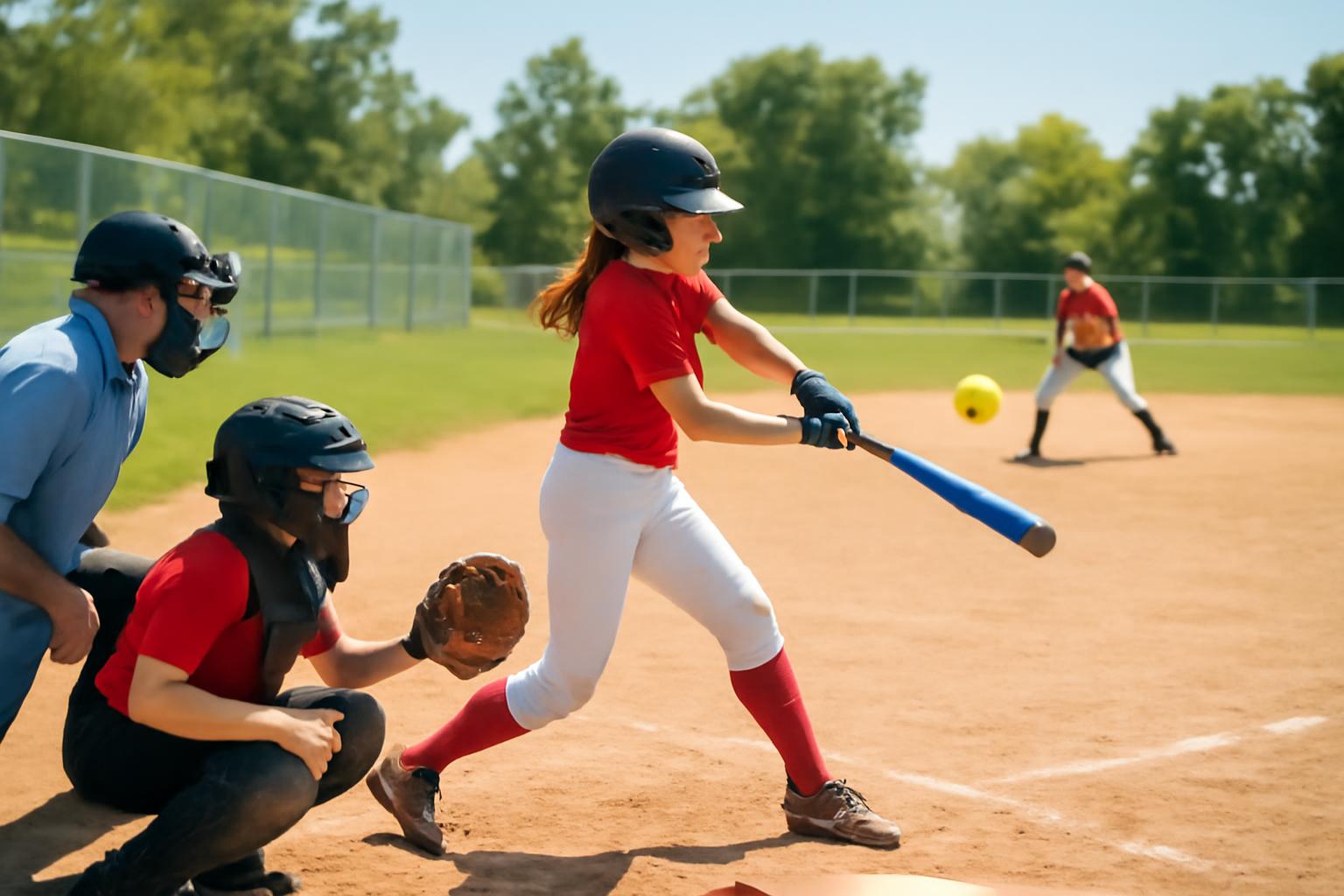
Allow 90-120 minutes for standard fastpitch. Under a no-new-inning rule, an inning begun before the cutoff may continue after it under local rules.
Last reviewed July 30, 2026. Because local rules can change by season, confirm the current division or tournament rule sheet before relying on any example below.
The short answer: most softball games take 1–2 hours
A typical seven-inning fastpitch softball game takes approximately 90–120 minutes. Treat that as a broad planning estimate rather than an official duration or measured universal average. Extra innings, interruptions, and local ending procedures can all change the finish time. Baseball 360 gives the same 90–120-minute estimate for a seven-inning game without major delays or extra innings.
Youth and recreational games are often shorter because they may use six-inning schedules, a game clock, or both. Tournament organizers may also use different clocks for different rounds. Age alone does not reveal the format: two teams in the same age group can play under substantially different timing rules in different leagues or events.
For an ordinary standard fastpitch game, a useful family rule is to reserve about two hours for game play. Then account separately for:
- the coach’s required arrival time;
- pregame warmups and team meetings;
- a previous game running late;
- field preparation;
- weather or injury interruptions;
- extra innings;
- postgame talks and cleanup; and
- travel between fields during tournaments.
The central distinction is between regulation structure and elapsed time. Seven innings describe how a game is organized. They do not convert into a fixed number of minutes. A low-scoring game with quick outs may finish well inside the expected window, while long innings, delays, or a tie can push another game beyond it.
If a schedule lists a time limit, do not assume play stops at that exact moment. “No new inning after the cutoff” produces a different finish from “hard stop at the cutoff.” The division rule sheet—not the generic schedule—is what determines the actual time commitment.
Softball game length at a glance
These are planning ranges, not guaranteed finish times. The central estimates come from secondary summaries rather than a comprehensive game-duration dataset, so they should not be treated as measured averages.
| Format | Usual structure | Typical or scheduled duration | Main caveat |
|---|---|---|---|
| Standard fastpitch | Commonly seven innings | Approximately 90–120 minutes as a broad published estimate | There is ordinarily no fixed elapsed time implied by the inning count. Delays and extra innings can extend play; other rules can end it early. |
| Youth recreational softball | Often six innings, a local time limit, or both | Roughly 60–90 minutes is a useful but non-universal planning range for many youth formats | Division rules may use a shorter or longer clock, and the expiration procedure matters as much as the stated limit. |
| Youth tournament softball | Frequently time-limited, often with an inning maximum | Event-specific field slot | Limits may differ by age, event, pool or bracket stage, weather adjustment, and championship status. |
| High-school fastpitch | Commonly follows the standard fastpitch structure | Use the broad standard estimate cautiously | Verify the current state and competition rules; the supplied evidence does not establish a measured universal average. |
| College fastpitch | Commonly follows the standard fastpitch structure | Use the broad standard estimate cautiously | Pace, extra innings, interruptions, and event procedures can change the finish time. |
| Professional fastpitch | Commonly follows the standard fastpitch structure | Use the broad standard estimate cautiously | League and broadcast procedures vary, and no universal measured average is established here. |
| Adult recreational slowpitch | Often seven innings with a league clock | Frequently about 55–90 minutes depending on the league format | Some leagues use a hard stop; others prevent another inning from starting while allowing play already underway to continue. |
| Tournament championship game | Inning maximum, modified clock, or a format without the earlier-round clock | Event-specific | Championship procedures may differ from pool play and may require the event to produce a winner. |
The current league or tournament rules override every estimate in this table. Confirm the exact division and competition stage, not merely the sport or age label.
Two games can both be listed as seven innings while operating very differently. One may continue until seven innings are complete unless another rule intervenes. Another may end when it reaches either seven innings or a specified time procedure, whichever comes first.
Likewise, a six-inning youth game is not necessarily shorter than every seven-inning adult game. A relatively late no-new-inning cutoff could allow the youth contest to run longer than a recreational game with a strict clock. Read the inning maximum and timing procedure together.
Why seven innings do not produce a fixed game time
An inning has two halves:
- In the top half, the visiting team bats and the home team fields.
- In the bottom half, the home team bats and the visiting team fields.
Each half-inning normally continues until the fielding team records three outs. An inning is therefore an event-based unit rather than a timed period. General descriptions of softball likewise explain that the teams alternate batting and fielding and that the sport includes fastpitch and slowpitch forms, with rules varying by competition and league. This basic structure is summarized in the general softball overview.
Many fastpitch formats commonly schedule seven innings, while some youth divisions schedule six. The scheduled count establishes the intended regulation structure or maximum. It does not say how quickly the required outs will occur.
A half-inning with three quick outs can end rapidly. Another may include many plate appearances, walks, hits, runs, substitutions, pitching changes, defensive conferences, and equipment issues. Both still count as one half-inning. The evidence does not support assigning a fixed or reliable number of minutes to each inning.
Elapsed time can also change because of:
- the number and length of plate appearances;
- the scoring pace;
- pitching or defensive changes;
- conferences between coaches and players;
- injuries and treatment;
- field maintenance;
- weather, darkness, or visibility;
- equipment problems;
- disputed calls or administrative interruptions; and
- extra innings following a tie.
There is also a difference between a game being scheduled for seven innings and actually completing seven innings. A clock, run-ahead rule, forfeit, weather decision, darkness provision, or local official-game rule can end the contest earlier. A tie or suspension can extend the overall commitment.
That is another reason an inning listing cannot be converted mechanically into a finish time.
For planning purposes, look for four kinds of information:
- the scheduled inning maximum;
- any game clock or cutoff;
- the procedure when time expires; and
- the rules governing early endings and ties.
Knowing only “seven innings” explains the game’s structure. It does not tell you exactly when your family will leave the field.
How long youth softball games usually last
For youth softball, approximately 60–90 minutes is a useful broad expectation, as shown in the comparison table. It is not a universal youth rule. Some divisions have shorter field slots, while others allow an inning to begin much later and then permit that inning to be completed.
Younger divisions may schedule six innings without playing all six. If the time restriction prevents another inning from beginning, the inning maximum functions as a ceiling rather than a promise.
Local rules demonstrate how widely youth formats can differ.
Bondurant Little League: The listed 8U, 10U, and 12U softball divisions use a 70-minute no-new-inning limit. Official time begins after the pregame conference, the umpire keeps that time, and an inning already underway may continue under the league’s conditions. Regular-season and tournament tie procedures also differ. These are local rules, not a national standard. Bondurant publishes the applicable timing and ending provisions.
Pembroke Junior Division: Games are scheduled for six innings, and no inning may begin more than 1 hour 45 minutes after the first pitch. The clock stops for weather delays and extended injury delays, while extra innings may be played if daylight permits. That format can produce a substantially longer youth game than a short recreational field slot. Pembroke’s rules set out its timing, completion, and interruption procedures.
Bend North Little League: Its Minors softball format provides for six innings if time allows. That final phrase matters: six innings are scheduled, but a time restriction can determine the last inning before all six are reached. Bend North’s division rules make the condition explicit.
These examples show why labels such as 8U, 10U, or 12U do not supply enough scheduling information by themselves. One recreational division may use a relatively short cutoff, another may permit a much longer game, and a weekend tournament may apply a third procedure.
Parents should also distinguish game duration from total program-session duration. Softball Canada’s U9 example combines 30 minutes of pregame skill development with a 60-minute scrimmage. The complete session lasts 90 minutes, but only the latter portion is allocated to the scrimmage. Softball Canada describes that U9 structure in its development guidance.
A registration listing may therefore describe a combined lesson-and-scrimmage session rather than a formal game of the same length. Conversely, a short game slot may still require an earlier arrival for check-in, warmups, or instruction.
Before registering or committing the rest of the day, find the rule sheet for the exact division and season. Determine whether the team plays:
- recreational league games;
- travel or club games;
- tournament pool games;
- bracket or elimination games; or
- championship games.
The same team may encounter different clocks and tie procedures across those settings.
What a softball time limit actually means
A posted softball time limit can represent several different procedures. Families should distinguish a hard stop, a no-new-inning cutoff, and a finish-the-current-inning rule.
Hard stop: Play ends when the designated time expires, subject to the local procedure for determining the score. The batter, half-inning, or complete inning may not necessarily be finished.
No-new-inning cutoff: Once the cutoff is reached, another inning cannot begin. An inning that started before the cutoff may continue.
Finish the current inning: Play continues through the remainder of the inning underway. Whether that means completing a half-inning or both halves depends on the local rules and game situation.
These terms are not interchangeable. A schedule that merely says “timed games” is incomplete unless the rules explain what happens when time expires.
Consider the Bondurant example. Under its 70-minute no-new-inning rule, an inning that begins before the cutoff may continue beyond minute 70 under the league’s ending conditions. The posted limit controls whether another inning may start; it does not necessarily identify the exact moment play ends. The league also assigns official timekeeping to the umpire.
Adult recreational rules can be equally specific. FXA/NOVA schedules certain games for 60 or 75 minutes, or seven innings, whichever comes first. Its no-new-inning points occur earlier: after 50 minutes in the shorter format and 65 minutes in the longer one. The current inning is finished when possible, but if it remains incomplete when game time expires, the result reflects the last completed inning. FXA/NOVA’s published rules set out these separate cutoff and endpoint procedures.
That example illustrates why “time limit” may refer to more than one moment. A league can have an earlier cutoff for beginning another inning and a later final endpoint.
Some formats also revert the score when play stops with an inning incomplete. Instead of counting every run scored during the unfinished inning, the official result returns to the score at the end of the last completed inning. Both the FXA/NOVA and Pembroke examples use this approach under their respective interruption or expiration procedures.
Before the first game, determine:
- Who keeps official time—the umpire, scorer, field marshal, or tournament director?
- Does the clock begin at the scheduled start, first pitch, or pregame conference?
- Does a late start reduce the available playing window?
- Does the clock pause for weather, injuries, or field problems?
- Is there an earlier no-new-inning cutoff?
- Is the current half-inning or full inning completed?
- If play stops mid-inning, does the score revert?
- Can a tied game continue?
- Do playoff or championship procedures differ?
Without those details, a posted time is only a partial answer.
What can make a softball game shorter or longer
Game length changes in both directions. Some rules end play before the scheduled maximum; other circumstances push the finish beyond the expected window.
Factors that can shorten a game
A run-ahead or mercy rule can end a game when one team has the required lead at the specified stage of play. The margin and inning requirement are organization-specific. A threshold used by one recreational league, school association, tournament, or governing body should not be assumed to apply elsewhere.
A time limit can prevent all scheduled innings from being played. This is especially relevant in recreational leagues and tournaments that must manage consecutive field assignments.
Weather or darkness can also stop a game before the inning maximum. Depending on the local rules and how much play has occurred, the game may be declared complete, suspended for later continuation, or handled under another procedure.
A forfeit ends the contest without ordinary completion. The grounds and scoring procedures vary, but local rules may address situations such as an insufficient number of eligible players or an inability to continue.
Some formats also establish a minimum-inning or official-game provision. Once that threshold has been reached, an interrupted game may count as complete. If it has not, the game may need to resume or be handled under another league policy. There is no universal minimum established by the evidence used here.
Factors that can extend a game
A tie after the scheduled innings can lead to extra innings. Some competitions continue until a winner is determined, while some local regular-season formats permit a tie to stand when time expires.
Completing an inning after a no-new-inning cutoff can also carry play beyond the advertised limit. Whether the current half-inning or complete inning is played depends on the applicable rules.
Weather and injury interruptions can increase the total elapsed time at the field even when the game clock pauses. If the clock continues running, the same delay may instead reduce the amount of softball played.
A game may also be suspended and completed later. The first visit then ends early, but the overall commitment grows because the teams must return.
Some formats place a runner on second base at the beginning of an extra half-inning to encourage scoring. That can create an earlier scoring opportunity, but it does not guarantee a quick finish, and the procedure varies by league and event. Secondary softball summaries describe the practice as competition-specific rather than universal.
Treat every run-ahead threshold, tiebreaker, automatic-runner procedure, and official-game minimum as rulebook-specific. Do not carry a rule from a school game into a travel tournament—or from one recreational league into another—without checking the current governing rules.
How to read a schedule before committing your day
A schedule may tell you when the game is supposed to begin without showing when your family can realistically leave. Before placing another appointment, meal, work shift, or sibling activity immediately afterward, check the following.
- Scheduled first pitch: Is this the actual start or merely the beginning of the field reservation?
- Required arrival: When does the coach expect players to check in?
- Warmup time: Is warmup included in the listed slot or scheduled beforehand?
- Inning maximum: Is the game scheduled for six innings, seven innings, or another structure?
- Game clock: Is there an overall time limit?
- No-new-inning cutoff: Does it occur before the listed endpoint?
- Current-inning procedure: Does play stop immediately, finish the half-inning, or finish the full inning?
- Run-ahead rule: Can a qualifying lead end the game early?
- Tie procedure: Does the tie stand, or must the game continue?
- Weather policy: Does the clock stop, continue, or lead to suspension?
- Official-time responsibility: Who controls the clock and resolves a timing dispute?
- Postgame expectations: Is there a team talk, cleanup duty, or required checkout?
For an ordinary seven-inning fastpitch game, reserve about two hours for play and add a sensible buffer when punctual departure matters. The appropriate buffer depends on travel time, the reliability of the field schedule, the importance of the next commitment, and whether the game must produce a winner.
For a clock-limited youth or recreational game, the scheduled field slot may be a better starting point than the inning count—but only after you understand the expiration procedure. A no-new-inning format can continue beyond its cutoff, while a hard-stop format may finish near the posted endpoint even if fewer innings are played.
Tournament schedules require additional scrutiny. Ask whether different rules apply to:
- pool play;
- bracket games;
- elimination rounds;
- semifinals;
- championship games; and
- games modified because of weather or field delays.
Pool, bracket, and championship procedures may differ, but families should not infer the exact differences without seeing the event rules. A posted series of back-to-back field slots can suggest that organizers are managing games within scheduled windows. It does not reveal whether the event uses a hard stop, an earlier no-new-inning cutoff, built-in turnover time, or another procedure.
Also distinguish the scheduled game window from the total time the player must be present. Arrival requirements, warmups, team meetings, travel, and gaps between tournament rounds can turn several compact games into an all-day commitment.
Current rules should be available from the league, coach, tournament director, or registration materials. When comparing programs, consider game windows together with practices, travel, tournament frequency, arrival expectations, and other practical program-selection priorities. That provides a clearer picture than a description such as “six-inning softball.”
The practical answer: Expect approximately 90–120 minutes for a standard seven-inning fastpitch game as a broad planning estimate, not a guaranteed average. Published summaries consistently place ordinary seven-inning play in that range. For many clock-limited youth or recreational formats, roughly 60–90 minutes is a useful starting expectation, although reported tournament limits and procedures vary substantially.
Frequently asked questions
How many innings are in a softball game?
Many standard softball formats commonly schedule seven innings, while some youth divisions schedule six or combine an inning maximum with a time limit. Seven innings describes the usual structure, not a guaranteed elapsed duration.
The scheduled maximum is not necessarily the number completed. A clock, run-ahead rule, weather decision, forfeit, or other local provision may end the game earlier. A tie may extend it beyond regulation.
How long is a youth softball game?
Use the broad youth range in the comparison table as a starting point, then check the division rule sheet. Youth softball has no single universal duration: a league may schedule six innings, use a no-new-inning cutoff, impose a hard stop, or combine a clock with an inning maximum.
Also determine whether the listed period covers only the game or a complete session that includes instruction, warmups, or skill development. The exact division rules and required arrival time are more useful than the player’s age alone.
Can a softball game last longer than its posted time limit?
Yes. Under a no-new-inning rule, an inning that starts before the cutoff may continue after it if the local rules permit or require completion.
That differs from a hard stop. Some leagues also use an earlier no-new-inning point and a later final endpoint. Check when official time begins, who keeps it, whether it pauses, and what happens to an incomplete inning.
What happens when a softball game is tied after regulation?
The applicable competition rules control. A league may record a regular-season tie, play ordinary extra innings, or use a tiebreaker. Pool, playoff, and championship procedures may also differ within the same event.
Some formats use an automatic runner in extra innings, while others do not. Never assume that a procedure used in one league applies to another.
Can a mercy rule end a softball game early?
Yes. A run-ahead or mercy rule can end a game before its scheduled inning maximum or time procedure when one team has the required lead at the required stage of play.
The margin and timing threshold vary by organization, division, and event. Check the applicable rulebook rather than applying a rule remembered from another competition.