
Build a Training Week That Develops the Whole Player Without Sacrificing Recovery
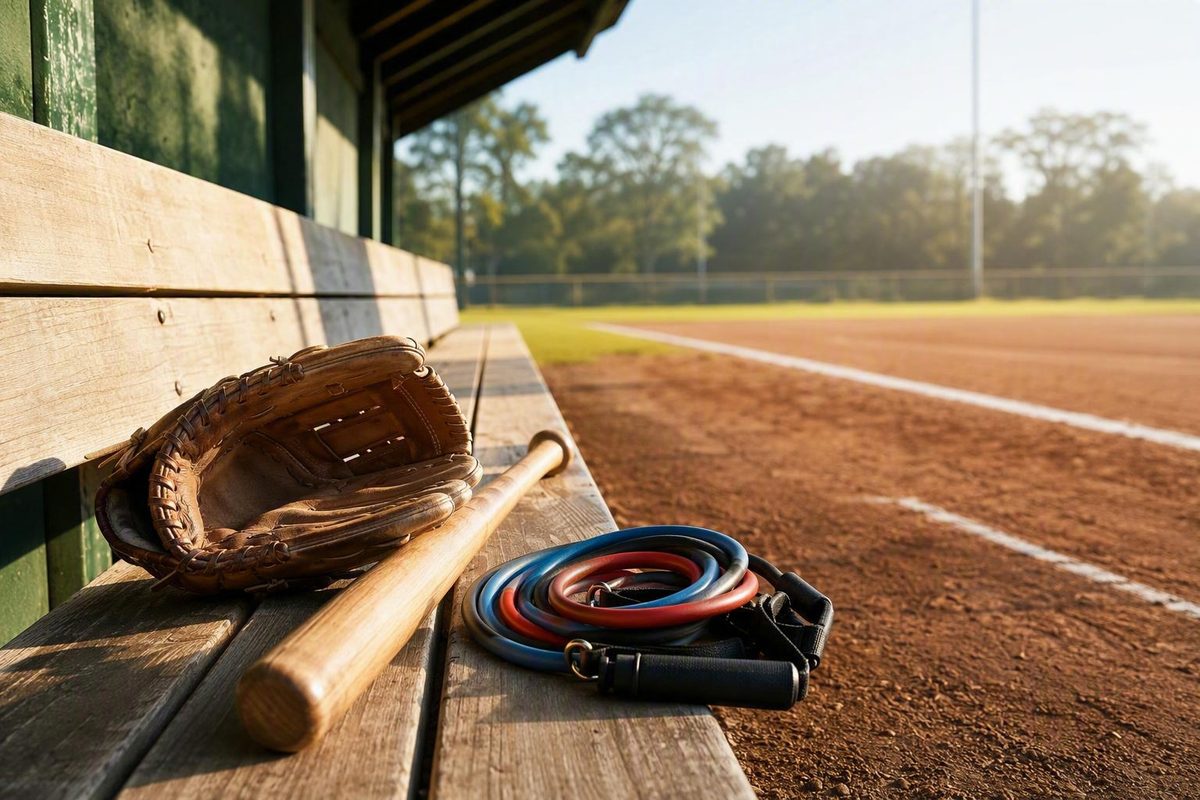
For many youth and novice players, a workable starting point is two total-body strength sessions, one short speed or skill session, and ample recovery.
A useful baseball workout plan is not automatically a five-day lifting routine. It is a schedule built around the player’s practices, games, throwing, school demands, physical maturity, training experience, and recovery.
For many youth and novice players, a workable starting point is two total-body strength sessions, one short speed or skill session, and ample recovery. More experienced high-school athletes may be ready for additional resistance or complexity, but only when movement quality, supervision, and recent workload support it.
This framework is illustrative. It is not medical care, rehabilitation, a return-to-throw protocol, or a universally validated program. Youth Listings publishes informational material under its content-use terms, and families remain responsible for deciding how to apply it. Parents should adjust the plan with the player’s coaches and, when appropriate, a pediatrician, sports-medicine professional, physical therapist, or qualified strength coach.
Start With the Player’s Calendar, Not an Exercise List
Age matters, but age alone does not determine which exercises, loads, or weekly schedule a player can manage. Two 16-year-olds can differ substantially in physical maturity, coordination, motivation, injury history, and weight-room experience.
A more useful distinction is:
- Youth or novice athlete: Has limited continuous resistance-training experience, is still learning fundamental movement patterns, or needs frequent coaching to maintain posture and control.
- Intermediate high-school athlete: Has a consistent training history, demonstrates reliable technique, understands instructions, and can regulate effort without turning every set into a competition.
- Advanced athlete: Has extensive supervised experience and stable movement quality. This label should be earned through training history—not assigned solely because the player is older, larger, or talented at baseball.
One high-school coaching framework classifies novices partly by having less than one continuous year of weight-room experience. It also recommends considering maturity, movement quality, motivation, and the ability to follow instructions when grouping athletes. These are coaching guidelines rather than validated diagnostic categories, but they offer a better starting point than age alone in the ABCA’s offseason training framework.
Before adding workouts, write down everything the player already does:
- Games and scrimmages
- Team practices
- Pitching appearances
- Bullpens
- Catching assignments
- Warm-up and position throwing
- Private pitching or hitting lessons
- Batting practice
- Showcases
- Sprinting and base running
- Jumping or plyometrics
- School physical education
- Strength training
- Other sports
Do not dismiss a practice as “just baseball.” A session containing repeated throws, sprints, swings, and defensive movements creates workload even if nobody calls it conditioning. Likewise, a long catching assignment or a high-volume throwing practice may change what makes sense in the weight room the next day.
Position matters, but the actual calendar matters more than the label. A pitcher who is not currently throwing may tolerate a different plan from one beginning bullpens. A position player attending several showcases may accumulate more throws than a pitcher during a quiet offseason week.
Health history belongs on the same page. Previous shoulder, elbow, back, hip, knee, or ankle problems may affect exercise selection and progression. Current pain should not be treated as a fitness obstacle to push through. When a child has a health limitation, previous injury, current pain, or uncertain exercise technique, obtain individualized guidance before beginning or advancing the routine. A youth baseball facility similarly advises families to seek pediatric and qualified coaching input before a child starts strength training in its youth training guidance.
Pre-plan checklist
Answer these questions before choosing the week:
- Available days: Which days are genuinely open after practices, games, schoolwork, and other commitments?
- Session length: Is there time for a short session, a standard session, or an extended supervised session?
- Location: Will training happen at home, in a school weight room, or in a supervised gym?
- Equipment: Are there bands, dumbbells, cables, medicine balls, boxes, or only bodyweight options?
- Throwing days: Which days include pitching, bullpens, catching, lessons, or substantial team throwing?
- Recent symptoms: Has the player reported pain, weakness, stiffness, numbness, tingling, or reduced tolerance for throwing?
- Recovery: Is the player sleeping normally and arriving energetic rather than persistently sore?
- Movement readiness: Can the player squat, hinge, lunge, push, pull, brace, and land from a small jump with control?
- Supervision: Who will teach unfamiliar exercises and monitor technique?
If the calendar looks full before a workout is added, do not squeeze hard training into every remaining gap. Start with the smallest plan that covers the major qualities without competing with baseball or recovery.
What a Balanced Baseball Workout Plan Needs to Cover
Baseball training should not be organized only around the throwing shoulder, forearm, or chest. Throwing and hitting are whole-body actions involving the legs, hips or pelvis, trunk, and upper body. Children’s Hospital of Philadelphia identifies the legs, pelvis, and trunk as important contributors to throwing.
A practical strength plan can be organized around movement patterns:
- Squat: Bodyweight squat or goblet squat
- Hinge: Glute bridge, Romanian deadlift, or another deadlift variation
- Push: Push-up or dumbbell bench press
- Pull: Band, cable, dumbbell, or backpack row
- Carry: Suitcase or farmer carry
- Single-leg: Reverse lunge, step-up, split squat, or single-leg Romanian deadlift
- Trunk control: Bird dog, side plank, or Pallof hold
- Scapular control: Wall slide, band pull-apart, or controlled face pull
- Acceleration: Wall drive, falling start, or short sprint
- Lateral movement: Shuffle, reaction step, or controlled change of direction
- Power: Broad jump, lateral bound, low box jump, or supervised medicine-ball drill
This structure is generally more useful for a developing player than a bodybuilding split that assigns separate days to small muscle groups. It allows each major session to train the whole athlete while leaving room for baseball and recovery.
A balanced week should account for:
- Total-body strength
- Acceleration and lateral movement
- Low-volume power work
- Mobility
- Shoulder and scapular control
- Baseball skill practice
- Recovery
- Full rest
These components serve different purposes. Single-leg exercises challenge the player to maintain balance and alignment on one leg. Posterior-chain exercises train the hips and back-of-leg musculature used in running, hinging, and athletic positions. Anti-rotation and trunk-stability work asks the athlete to control unwanted motion. Scapular exercises develop awareness and control around the shoulder blade.
None of those descriptions means one exercise directly increases pitching velocity, guarantees better hitting, or prevents injury. Exercise selection is only one part of the plan. Technique, dosage, progression, skill instruction, throwing workload, and recovery still matter.
Baseball practice also remains essential. Strength work cannot replace:
- Throwing instruction
- Hitting practice
- Fielding repetitions
- Catching and receiving work
- Base-running decisions
- Game awareness
- Position-specific coaching
Conditioning supports the player’s ability to practice and compete. It does not teach the player how to recognize a pitch, make a relay decision, receive a throw, or execute a delivery.
Youth and novice athletes should begin with bodyweight, bands, or light resistance they can control. A goblet squat is not automatically better than a bodyweight squat. A loaded split squat is not a progression if the player loses balance, shortens the range of motion, or allows the knee and foot to collapse.
Use the Same Preparation and Safety Check Before Every Session
A repeatable warm-up reduces guesswork and gives the parent or coach an early look at the athlete’s readiness. The goal is to move from easy, general activity toward the speeds and positions required that day.
Use this sequence:
- Easy movement: Brisk walking, light jogging, or easy jump rope
- Rhythm and coordination: A-skips, high knees, or butt kicks
- Lower-body mobility: Walking lunges, ankle movement, and controlled hip mobility
- Trunk movement: Gentle rotations without forcing the range
- Upper-body preparation: Arm circles and controlled shoulder movement
- Scapular control: Wall slides, light band pull-aparts, or another coached drill
- Day-specific rehearsal: Bodyweight versions of the first lift, low jumps before power work, or progressively faster runs before sprinting
For this template, approximately 10 to 15 minutes is an editorial starting range rather than a universal requirement. One high-school coaching source recommends at least 15 minutes of mobility and movement preparation before training in its high-school offseason framework.
A separate equipment-light youth workout uses six drills lasting one to two minutes each, producing a shorter preparation of approximately 6 to 12 minutes in its at-home warm-up example. The appropriate duration depends on the player and the demands of the session.
Beginners should use regressions that preserve control:
- Bodyweight squat before goblet squat
- Glute bridge before a loaded hinge
- Bodyweight reverse lunge before a loaded lunge
- Elevated push-up before a floor push-up
- Two-leg hinge before a single-leg Romanian deadlift
- Low step-up before a higher step
- Small jump-and-stick before repeated jumps
This plan does not require one-repetition-maximum testing. As a conservative editorial load-selection rule, choose resistance that leaves approximately two or three technically clean repetitions available at the end of the set. The athlete should not need to grind, strain, or reach failure.
Reaching the written repetition target does not automatically justify more weight. Before progressing, check:
- Did posture remain stable?
- Was the intended range of motion maintained?
- Was the movement controlled?
- Did both sides look reasonably similar?
- Was the exercise pain-free?
- Did recovery remain normal later that day and the next day?
End the set when technique deteriorates. Stop power work when takeoff speed drops markedly or landings become noisy, stiff, off-balance, or uncontrolled. End sprint repetitions when the player can no longer produce a sharp effort with good mechanics. These are conservative coaching boundaries, not diagnostic tests.
Pain is a stop signal. If pain persists or the player reports weakness, reduced motion, numbness, tingling, or declining tolerance for throwing, stop the workout and obtain qualified medical guidance. Do not use this article to diagnose the cause or construct a return-to-play progression.
Finally, inspect the training space:
- Boxes and benches must not slide or tip.
- Chairs used for support must be stable.
- Stairs must be dry, clear, and suitable for the drill.
- Backpacks and household objects must be securely closed.
- Resistance bands must be undamaged and safely anchored.
- Medicine balls must not rebound toward people or break property.
- Bats need clear space away from walls, ceilings, pets, and bystanders.
- Sprint and shuffle areas must be clear, well lit, and nonslip.
Home training is convenient, but improvised equipment still requires adult judgment and supervision.
A Parent-Friendly Weekly Baseball Workout Schedule
The following schedule is an offseason template, not a requirement to complete five hard workouts. Only two days contain substantial strength work. Skill, mobility, and speed sessions should remain short enough to fit the player’s throwing and team calendar.
| Day | Primary focus | Example content | Intended demand |
|---|---|---|---|
| Monday | Total-body Strength A and acceleration | Warm-up, strength circuit, several short starts | Moderate to high |
| Tuesday | Baseball skills and light mobility | Hitting, fielding, glove work, easy mobility | Low to moderate |
| Wednesday | Recovery or rest | Walk, easy mobility, or complete rest | Low |
| Thursday | Total-body Strength B and power | Warm-up, brief jumps, strength circuit | Moderate to high |
| Friday | Speed and lateral movement | Sprint mechanics, accelerations, shuffles, optional skills | Moderate |
| Saturday | Team activity or easy recovery | Practice, game, easy movement, or rest | Schedule-dependent |
| Sunday | Full rest | No formal training | Low |
This is a five-day framework only in the sense that five days contain possible activities. It is not five days of maximal lifting, sprinting, or conditioning. Tuesday and Friday can be shortened or removed when team baseball already covers those needs.
Commercial five-day programs vary widely. Some use body-part lifting splits; others alternate strength, agility, mobility, skills, and conditioning. One branded example assigns approximately one hour to strength sessions and about 30 minutes to non-strength sessions, but it does not individualize that schedule by age, position, or throwing workload in its published offseason plan. Copy the scheduling logic only after deciding whether the volume fits the child.
Three-day version for busy or novice players
| Day | Session |
|---|---|
| Monday | Total-body Strength A and short acceleration |
| Wednesday | Mobility or scapular control plus baseball skills |
| Friday | Total-body Strength B and low-volume power |
This version is often easier to maintain. Team practice can replace Wednesday’s skills, leaving only the mobility or scapular-control portion if it remains useful.
How to shorten a session
For this plan, a 30-minute session is an editorial scheduling option rather than an evidence-based minimum. Keep:
- The warm-up
- The day’s highest-priority movement
- Two or three additional major patterns
- A short trunk or scapular-control exercise
For example, Strength A might become goblet squat, push-up, row, and bird dog. Do not skip the warm-up merely to preserve optional arm or abdominal work.
A longer session may add one single-leg exercise, a carry, or a short skill block. Additions are appropriate only when technique and recovery remain stable. More available time does not create an obligation to fill every minute.
Protect at least one full rest day within this template. After a tournament, heavy throwing week, or several demanding practices, convert optional speed, jumping, or skill sessions into recovery. The weekly plan should respond to baseball rather than compete with it.
Blank weekly workload worksheet
| Workload category | Mon | Tue | Wed | Thu | Fri | Sat | Sun |
|---|---|---|---|---|---|---|---|
| Games or tournaments | |||||||
| Team practices | |||||||
| Pitching or bullpens | |||||||
| Catching or general throwing | |||||||
| Strength work | |||||||
| Sprinting or jumping | |||||||
| Hitting, fielding, or other skills | |||||||
| Recovery or full rest | |||||||
| Pain or stiffness notes | |||||||
| Sleep, energy, or fatigue notes |
Review the completed sheet before planning the next week. A player who appears to have completed “only two workouts” may still have accumulated substantial activity through baseball.
Two Foundational Strength Workouts With Home and Gym Options
These workouts are editorial starting templates, not proven universal dosages. For this conservative example, novices begin with two sets of each exercise and move to three sets only when repetitions remain controlled and recovery is normal. The repetition ranges and two-or-three-repetitions-in-reserve rule below are programming examples, not validated thresholds for every player.
Rest long enough that the next set is not limited by breathlessness or rushed technique.
Strength A
| Pattern | Gym option | Home option | Editorial starting range |
|---|---|---|---|
| Squat | Goblet squat | Bodyweight squat to a controlled depth | 2 sets of 6–10 |
| Horizontal push | Dumbbell bench press | Elevated or floor push-up | 2 sets of 6–12 |
| Row | Cable or dumbbell row | Band or secured-backpack row | 2 sets of 8–12 |
| Single-leg | Reverse lunge or step-up | Bodyweight reverse lunge or low step-up | 2 sets of 6–10 per side |
| Hip extension or hinge | Dumbbell Romanian deadlift | Glute bridge or unloaded hinge | 2 sets of 8–12 |
| Trunk control | Pallof hold or press | Bird dog | 2 sets |
| Optional carry | Suitcase carry | Carry a safely secured object | 2 trips per side |
Key cues
- Squat: Keep the whole foot supported and move only through a range the player can control.
- Reverse lunge: Maintain a stable trunk and control the relationship between the knee and foot.
- Hinge: Move the hips back without losing trunk position or forcing extra range.
- Bird dog: Move deliberately, avoid twisting, and finish each repetition before beginning the next.
- Carry: Stand tall without leaning away from the object.
For bird dogs, eight to 10 controlled repetitions per side can be a useful target. If the athlete cannot complete that range without shifting or rotating, use fewer repetitions. The emphasis on controlled rather than high-volume repetitions is also reflected in a youth exercise guide from Relentless Baseball.
Strength B
| Pattern | Gym option | Home option | Editorial starting range |
|---|---|---|---|
| Hinge | Trap-bar, kettlebell, or dumbbell deadlift | Glute bridge or backpack Romanian deadlift | 2 sets of 6–10 |
| Push | Push-up or dumbbell press | Wall, bench, or floor push-up | 2 sets of 6–12 |
| Pull | Cable, chest-supported, or dumbbell row | Band or backpack row | 2 sets of 8–12 |
| Single-leg | Split squat or single-leg Romanian deadlift | Bodyweight split squat or assisted single-leg hinge | 2 sets of 6–10 per side |
| Scapular control | Cable face pull or coached stability drill | Wall slide or light band pull-apart | 2 sets of 8–12 |
| Trunk control | Side plank | Side plank from knees or feet | 2 holds per side |
| Optional carry | Farmer or suitcase carry | Secured household-object carry | 2 trips |
A single-leg Romanian deadlift is not appropriate merely because it appears baseball-specific. If balance prevents the player from hinging well, use a kickstand stance, hold a stable support, or return to a two-leg hinge.
Use very light resistance for overhead stability work, if it is included at all. The purpose is controlled positioning, not demonstrating how much weight the player can hold overhead.
Home resistance can come from bands, a securely closed backpack, or another object that is easy to grip and unlikely to leak or shift. An at-home baseball guide lists bodyweight squats, lunges, step-ups, glute bridges, push-ups, planks, and similar minimal-equipment options in its sample home program. Its fixed volumes do not need to be copied; scale each movement to the athlete.
Progression rule
The following is a conservative house rule for this template, not a validated universal standard: increase resistance only after the player completes the target range in at least two sessions with:
- Stable posture
- Consistent range of motion
- Controlled repetitions
- No pain
- Two or three technically clean repetitions still available
- Normal recovery before the next planned session
Make any increase small. If the next available weight causes technique to deteriorate, keep the previous resistance and make the movement more consistent. If the player is unusually sore, fatigued, or uncoordinated, repeat or regress the exercise.
Do not import percentage-based loading or repeated failure sets from adult-oriented commercial programs into a youth routine without individualized supervision.
Add Speed, Power, Conditioning, and Baseball Skills Without Turning Every Day Into a Hard Day
Baseball involves many brief, decisive efforts. Training should preserve the quality of accelerations, reactions, jumps, and direction changes rather than use fatigue as the main measure of success.
Acceleration and sprint mechanics
Useful drills include:
- High knees
- Wall drives
- Falling starts
- Get-up-and-go starts
- Short acceleration runs
- Ball-drop reactions
Allow enough recovery for each repetition to remain fast. Acceleration work is intended to develop the first few steps, not become a long conditioning circuit.
Lateral movement and change of direction
Options include:
- Lateral quick steps
- Controlled shuffles
- Shuffle reactions
- Short shuttle runs
- Partner-point reactions
- Fielding-position starts
Teach the player to decelerate under control before demanding faster or more complex direction changes. Shuttles can also create repeated-effort conditioning, but that is a different purpose from pure speed work.
Low-volume power
Options include:
- Broad jump with a controlled landing
- Lateral bound and stick
- Low box jump
- Jump rope
- Supervised medicine-ball slam or throw
For this template, three to five high-quality repetitions per set is an illustrative range for jumps and throws. Stop when takeoff speed or landing control declines. One experienced high-school coaching source recommends keeping medicine-ball sets below five repetitions to preserve explosiveness in its later-offseason power guidance.
Boxes should provide a clear landing target, not a challenge to pull the knees dramatically toward the chest. Start low. A player who cannot land a small broad jump quietly and under control should continue practicing that skill before moving to a higher box.
Conditioning by purpose
Different conditioning methods solve different problems:
- Short accelerations: First-step speed and sprint mechanics
- Shuttles: Repeated changes of direction
- Tempo efforts: Controlled submaximal running with planned recovery
- Easy aerobic work: General capacity or low-intensity recovery
- Hard distance running: A separate endurance demand that may create fatigue without addressing acceleration or skill
The available coaching sources disagree about timed miles and distance running. Some home plans include jogging or a mile, while baseball-performance coaches tend to emphasize short explosive work. Decide what problem the session is meant to solve, then make sure it does not displace speed, skill work, or recovery.
A younger athlete may need only a short speed, agility, or power session. End the session when the planned high-quality work is complete rather than extending it to meet an arbitrary duration.
Minimal-space baseball skills
When the area and equipment are safe, home options include:
- Dry swings
- One-handed bat drills
- Controlled tee work
- Glove transfers
- Fielding footwork without a ball
- Tennis-ball wall work
- Reaction catches
Do not prescribe unsupervised pitching motions or generic throwing volume as conditioning. Coordinate any throwing with the team plan, league requirements, and the player’s current tolerance.
Skill work can follow a low-demand mobility session or be performed separately. It does not have to follow every lift. If swing or fielding quality deteriorates because the player is tired, end the session instead of accumulating poor repetitions.
Coordinate the Plan With Throwing, Games, and Player Position
Throwing is part of the training load. Count pitching appearances, bullpens, warm-up throws, catching, defensive work, private lessons, showcases, and casual throwing when planning the week.
There is no single universally correct arrangement. Others need a different arrangement because of school schedules, coaching access, symptoms, or the type of session. The essential step is deliberate placement rather than accidentally stacking hard work across several consecutive days.
As bullpens and games increase:
- Pitchers may need less upper-body lifting volume.
- Optional medicine-ball work may need to be reduced.
- Scapular or cuff work should not be added automatically in ever-growing amounts.
- Lower-body strength can remain, but its volume may need adjustment around starts and recovery.
- Position players should still be evaluated by their actual throwing and game schedule.
- Catchers may need extra adjustment after long or repeated assignments.
After a pitching start, tournament, long catching assignment, or unusually heavy throwing day, reduce or remove optional lifting, sprinting, jumping, and additional arm work according to the athlete’s response and professional guidance. The workload worksheet should make these decisions visible before the player begins another hard session.
Later in the offseason, a pitcher’s throwing progression becomes more important. Gym work should support that priority rather than preserve early-offseason volume at all costs. That may mean fewer sets, fewer accessory exercises, less upper-body loading, or one shorter strength session during a demanding week.
In season, short maintenance sessions are often more realistic than full offseason workouts. As one practitioner model—not a controlled research finding—Eric Cressey describes sessions that rarely exceed 35 to 40 minutes and generally contain approximately 10 to 14 work sets in his in-season baseball approach. Those figures illustrate one experienced coach’s reduced-volume approach; they are not a prescription for every player.
More “arm care” is not automatically better. Throwing already stresses the arm. Additional band exercises, presses, pulls, stability drills, and medicine-ball throws all create work, even when labeled preventive. Choose a manageable amount that fits the overall program rather than adding a separate arm circuit after every baseball activity.
Families should also distinguish general training guidance from league rules. Pitch-count limits and mandatory rest can differ by age, league, season, and whether the pitches occurred in games, practices, lessons, or showcases. Some published youth tables explicitly apply to game pitches, illustrating why parents must verify the current rules governing their athlete rather than apply a generic online chart.
Children’s Hospital of Philadelphia reports that experts recommend at least two to three continuous months without throwing for youth baseball players in its adolescent offseason guidance. That is general pediatric sports-medicine guidance, not an individualized prescription or return-to-throw plan. Medical history, league calendar, position, and clinician advice may require a more specific decision.
Progress the Plan Across the Year—and Reduce It When Recovery Falls Behind
Progression does not require a complicated week-by-week transformation. Organize the year into three broad phases and adjust according to readiness.
Foundation phase
Priorities are:
- Consistent attendance
- Controlled squat, hinge, push, pull, and single-leg patterns
- Manageable resistance
- Basic trunk and scapular control
- Mobility
- Sprint positions
- Jump and landing mechanics
- Recovery habits
Keep exercise selection stable long enough for the player to learn it. Constant novelty makes it difficult to tell whether technique or strength is improving.
Development phase
Retain the foundational patterns, then gradually:
- Add a small amount of resistance
- Add a set to selected movements
- Use more challenging but still controlled variations
- Increase sprint speed while preserving recovery
- Progress from landing drills to low-volume repeated power work
Change one major variable at a time. Adding weight, sets, sprint volume, jump difficulty, and throwing volume during the same week makes it difficult to identify what caused excessive fatigue or discomfort.
Preseason or in-season transition
As throwing and baseball-specific preparation rise:
- Reduce total gym volume
- Shift some emphasis from heavier, slower strength work toward lighter, faster power
- Keep power repetitions crisp and low-volume
- Shorten sessions
- Adjust around games, bullpens, and starts
- Retain enough foundational strength work to maintain familiar patterns
In-season maintenance may require fewer work sets rather than entirely new exercises. A player can retain a squat or hinge pattern while performing less total work than in the early offseason.
Illustrative deload
As an editorial programming option, reduce the number of work sets by approximately one-third to one-half after several demanding weeks. This is not a validated universal reduction. Keep the main movement patterns, but avoid maximal lifting, sprinting, or jumping efforts during the reduced week.
A deload is not punishment and does not require complete inactivity. It is a planned reduction intended to prevent the schedule from becoming harder simply because another week has passed.
Weekly readiness decision
Use three options:
Progress the week when:
- Technique is stable
- Pain is absent
- Recovery is normal
- Motivation and energy are typical
- Throwing tolerance is unchanged or better
Repeat the week when:
- Performance is steady
- Technique is acceptable
- The player is not yet ready for more resistance or volume
- The current schedule remains productive
Reduce the week when:
- Soreness accumulates
- Fatigue persists
- Movement quality worsens
- Motivation drops unusually
- Throwing tolerance declines
- Pain or stiffness appears
- Games or practices create more workload than expected
Growth spurts deserve particular attention. Children’s Hospital of Philadelphia notes that changes in body size during a growth spurt can affect strength, flexibility, and biomechanics. Slow progression and increase supervision when a previously coordinated movement suddenly looks unfamiliar.
Success should not be defined by a promised increase in velocity, exit velocity, or durability. A better parent-facing standard is whether the player:
- Attends consistently
- Moves with improving control
- Recovers between sessions
- Continues participating without persistent pain
- Balances training with school and baseball
- Remains engaged and enjoys playing
Choose the smallest schedule that consistently covers foundational strength, speed or power, mobility, baseball skills, recovery, and rest without competing with throwing and games. Record the entire week, begin conservatively, and advance only when technique and recovery remain stable. Pause for qualified evaluation when pain or declining throwing tolerance appears.
How many days per week should a youth baseball player work out?
For many youth or novice players, two total-body strength days plus one short mobility, speed, or skill day is a reasonable editorial starting schedule. A five-day calendar can also work when only two days are substantial workouts and the remaining days contain low-demand skills, mobility, or recovery.
Count team practices and games before choosing the number. A player with several baseball activities does not automatically need multiple additional workouts. Preserve a full rest day within the template and reduce optional sessions when throwing or competition increases.
Can a baseball workout plan be completed at home without gym equipment?
Yes. A home plan can use bodyweight squats, reverse lunges, glute bridges, push-up variations, bird dogs, side planks, short accelerations, and fielding footwork. Bands or a securely closed backpack can provide pulling resistance, while a stable household object may be used for a carry.
Check the room, flooring, furniture, anchor points, and overhead clearance first. Home training is not risk-free. Do not use unstable chairs, unsecured objects, crowded bat-swing areas, damaged bands, or slippery sprint spaces.
How should a pitcher modify the plan when bullpens and games begin?
Treat every bullpen and pitching appearance as workload. As throwing rises, reduce optional upper-body volume, medicine-ball work, jumps, or sprinting as needed. Keep essential strength patterns when appropriate, but shorten sessions and avoid preserving offseason volume simply because it is written on the plan.
After a start or unusually demanding throwing day, use the player’s recovery and professional guidance to decide whether the next session should be reduced, moved, or removed. Do not add arm-care volume automatically when the arm is already receiving more throwing stress.
Should youth baseball players take time off from throwing?
General pediatric sports-medicine guidance supports a continuous throwing break. Children’s Hospital of Philadelphia reports that experts recommend at least two to three continuous months without throwing for youth players in its offseason guidance.
That recommendation is not a personalized medical order or return-to-throw schedule. Families should coordinate the offseason with the player’s clinician and coaches, particularly when there is a previous injury, year-round participation, or uncertainty about how lessons, showcases, and informal throwing count.
What pain or fatigue signs mean a player should stop training?
Stop the current set when pain occurs or technique deteriorates. End the workout and seek qualified medical guidance when pain persists or the player develops weakness, reduced range of motion, numbness, tingling, or declining tolerance for throwing. These are conservative referral boundaries, not a diagnosis.
Also reduce training when soreness accumulates, sleep or energy worsens, normal loads suddenly look uncoordinated, sprint quality falls markedly, or jump landings become uncontrolled. Do not ask a young player to train through symptoms merely to complete the written schedule.