
A Fit-First Guide to Buying Your Child’s Goalkeeper Gloves
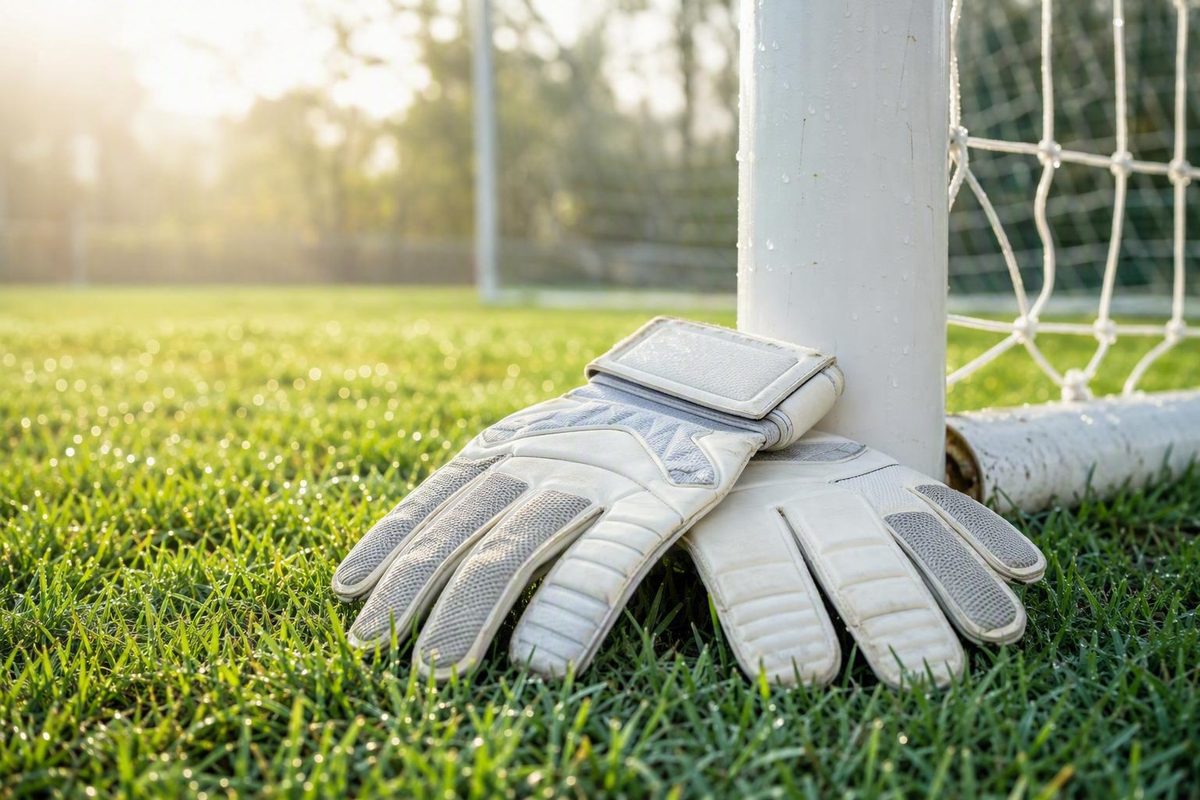
Goalkeeper-glove sizing is not standardized. Compare fit by hand shape and cut, then account for playing surface and finger protection.
The short answer: choose a glove for the child, not the ranking
The best youth goalie gloves are the pair that fit the child’s hands, match how and where they play, provide the protection feel they prefer, and suit the family’s budget. None of the available sources provides independent, standardized testing sufficient to identify one objectively best model.
Use the shortlist below as a set of price examples—not as a ranking of tested winners.
Price-status note: The supplied seller snapshot does not include a documented capture date and has not been independently reverified on a stated date. Prices, model names, sizes, stock, ratings, promotions, and policies may have changed. Confirm every detail on the exact product page before ordering.
In that undated snapshot, T1TAN displayed the Arox 1.0 from $29.99 in sizes 3–8, several protected junior variants at $49.99, and Junior Pro variants at approximately $89.99–$99.99 (T1TAN junior collection).
Keeperstop displayed the Reusch Attrakt Resist Junior at $34, Reusch Attrakt Freegel Advance Junior at $59, Elite Sport Squid at $60, and West Coast Raptor Typhoon at $89 (Keeperstop youth collection).
The One Glove displayed junior options from $59.99 to $99.99, including two negative-cut fingersave models at $99.99 (The One Glove US junior collection).
| Shopping need | Candidates or category to compare first | Undated seller price example | Why it belongs on the shortlist |
|---|---|---|---|
| Beginner value | T1TAN Arox 1.0; Reusch Attrakt Resist Junior | From $29.99; $34 | Lower initial cost for a child trying the position or needing one general-use pair |
| Frequent training | Training-oriented models with documented durable or textured palms | Varies | Exact palm construction matters more than a model’s price or reputation; the supplied collection pages do not establish which named glove is most durable |
| Finger-protection option under $50 | T1TAN Rebel, Fluo Beast, Red Beast, and Classic protected junior variants | $49.99 | Allows a protected-versus-standard comparison without immediately entering the premium price tier |
| Midrange purchase | Reusch Attrakt Freegel Advance Junior; Elite Sport Squid | $59; $60 | Price examples for a player who has begun to establish a preferred size and fit |
| Premium comparison | West Coast Raptor Typhoon; T1TAN Junior Pro variants; selected One Glove junior models | About $89–$100 | Relevant to comparison shopping for committed players, although price does not prove better fit, grip, safety, durability, or value |
A reliable decision order is:
- Measure both hands.
- Use the current chart for the exact brand and model.
- Choose a cut that suits the child’s hand shape and preferred fit.
- Decide whether the gloves are mainly for training, matches, or both.
- Account for the playing surface and frequency of use.
- Compare protected and unprotected designs if finger support is being considered.
- Set the budget after those requirements are clear.
- Confirm stock, shipping, return restrictions, and final checkout price.
This order helps prevent an expensive mistake: buying a heavily promoted glove that is uncomfortable, too loose, too restrictive, or poorly matched to routine use. An affordable glove that fits securely may be a better first purchase than a premium glove selected before the child knows what cut or palm feel they prefer.
Youth Listings says it uses no gear affiliate links or coach sponsorships. The products named here are therefore seller-listed comparison candidates, not commission-driven selections or gloves Youth Listings claims to have tested.
Youth glove candidates by budget and use case
The available evidence supports a limited comparison of displayed prices, selected sizes, stated cuts, and finger-protection labels. It does not support strong model-level conclusions about grip, comfort, abrasion resistance, wet-weather behavior, artificial-turf durability, or useful lifespan.
Most of the product evidence comes from retailer or manufacturer collection pages rather than exact product pages. Missing specifications must remain missing; they should not be inferred from a model name, price, brand reputation, or neighboring products in the same collection.
Comparison shortlist
| Model or group | Undated listed price | Displayed youth sizes | Finger protection | Stated cut | Defensible shopping role | Evidence type | Verify on the exact product page |
|---|---|---|---|---|---|---|---|
| T1TAN Arox 1.0 | From $29.99 | 3–8 | Not supplied | Not supplied | Lower-cost price comparison | Manufacturer-retailer collection | Current price, exact model, palm, cut, closure, stock, and regional return terms |
| Reusch Attrakt Resist Junior | $34 | Not supplied for the exact model | Not supplied | Not supplied | Lower-cost price comparison | Multi-brand retailer collection | Size availability, palm construction, intended use, protection status, and fit |
| T1TAN Rebel 2.0 Sky Blue Junior | $39.99 standard; $49.99 protected | 4–6 | Separate protected version listed | Not supplied | Standard-versus-protected price comparison | Manufacturer-retailer collection | Spine type, palm, cut, closure, and whether both versions remain available |
| T1TAN Fluo Beast Junior 3.0 | $39.99 standard; $49.99 protected | 4–6 | Separate protected version listed | Not supplied | Sub-$50 protected comparison | Manufacturer-retailer collection | Spine construction, fit difference, palm, cut, and return terms |
| T1TAN Red Beast Junior 3.0 | $39.99 standard; $49.99 protected | 4–6 | Separate protected version listed | Not supplied | Sub-$50 protected comparison | Manufacturer-retailer collection | Current stock, cut, palm, and whether the spines are removable |
| T1TAN Classic 1.0 White-Out Junior | $39.99 standard; $49.99 protected | 3–6 | Separate protected version listed | Not supplied | Smaller-size standard-versus-protected comparison | Manufacturer-retailer collection | Sizing method, spine construction, cut, palm, and closure |
| Reusch Attrakt Freegel Advance Junior | $59 | Not supplied for the exact model | Not supplied | Not supplied | Midrange price comparison | Multi-brand retailer collection | Palm, cut, intended use, protection, sizes, and return policy |
| Elite Sport Squid | $60 | Not supplied for the exact model | Not supplied | Not supplied | Midrange price comparison | Multi-brand retailer collection | Youth sizing, cut, palm, protection, closure, and intended surface |
| West Coast Raptor Typhoon | $89 | Not supplied for the exact model | Not supplied | Not supplied | Premium price comparison | Multi-brand retailer collection | Whether the required youth size is offered and all model-specific specifications |
| T1TAN Junior Pro variants | $89.99 standard; $99.99 protected | Generally 6–8 among displayed models | Standard and protected versions listed | Not supplied | Premium standard-versus-protected comparison | Manufacturer-retailer collection | Exact model, size, cut, palm, spine design, closure, and stock |
| One Glove Junior LTX Advance Siege | $59.99 | Not supplied | Not supplied | Not supplied | Lower end of the displayed One Glove range | Brand-retailer collection | Size availability, cut, palm, protection, and US return terms |
| One Glove Junior NXT Pro Vision NGT FS | $99.99 | Not supplied | Fingersave | Negative | Premium snug-fit protected comparison | Brand-retailer collection | Size, spine design, palm, closure, stock, and US return restrictions |
| One Glove Junior NXT Pro Void NGT FS | $99.99 | Not supplied | Fingersave | Negative | Premium snug-fit protected comparison | Brand-retailer collection | Fit, palm, spine design, stock, and US return restrictions |
The “shopping role” column deliberately avoids declaring any named glove the best training, match, turf, or wet-weather option. The collection pages do not provide enough consistent model-level information to support those conclusions.
The listings also do not establish comparable results for:
- measured dry or wet grip;
- abrasion resistance;
- durability on artificial turf;
- comfort across different hand shapes;
- performance in rain, mud, or cold;
- changes after repeated cleaning;
- useful lifespan; or
- value over an entire season.
Retailer ratings can identify issues worth investigating, but they cannot prove that one model performs better. Ratings may involve small and unequal samples, different reviewer expectations, and no controlled comparison. They are also time-sensitive.
Before retaining any model on a final shopping list, open its exact product page and verify:
- the model name and version;
- current price and available sizes;
- palm material and thickness, if stated;
- glove cut;
- fixed, removable, or absent finger spines;
- wrist entry and closure;
- stated intended use;
- personalization restrictions;
- shipping cost; and
- the return or size-exchange policy for the relevant country.
If those details cannot be verified, treat the product only as an example of a seller’s price tier.
Measure first: how to find the right youth glove size
Goalkeeper-glove sizing is not standardized. Even the same labeled size can fit differently across manufacturers and models.
A practical measurement process
- Measure both hands. If the measurements differ, begin with the larger hand.
- Measure hand length from the tip of the middle finger to the base of the palm.
- Measure the palm using the brand’s specified method. That may mean measuring around the widest part below the knuckles, excluding the thumb, or measuring straight across the palm.
- Record the numbers and units.
- Open the current size chart for the exact brand and model.
- Check whether the instructions say to round up, add an allowance, or map the measurement directly.
- If the child falls between sizes, follow that brand’s instructions or compare both sizes before removing tags.
- Repeat the measurement as the child grows.
Keeperstop’s approximate guidance associates junior sizes 4–5 with ages 7–9 and sizes 6–7 with ages 10–12, while warning that fit varies by manufacturer, style, intended use, body type, and preference (Keeperstop sizing information). These age ranges are only starting points.
How the glove should feel
After the child puts on the gloves and secures the wrist closure, ask them to:
- spread their fingers;
- make a relaxed fist;
- open and close the hand several times;
- move the wrist through a comfortable range;
- mimic catching and throwing;
- hold the hands palm-up and palm-down; and
- remove and put on the gloves again if independent use matters.
The glove should feel secure without painful pressure. The fingers and wrist should move naturally, and the hand should not slide once the closure is fastened.
A child who cannot close the hand comfortably may be wearing a glove that is too small, too stiff, or too heavily protected. A glove that shifts during a catching motion may be too large or poorly proportioned for that child, even if the size number appears correct.
Fingertip-clearance advice is not uniform. Academy suggests approximately one-quarter inch (Academy buying guide). ZPro suggests at least one-half inch Wear the correct fitting goalkeeper gloves – ZPro Futbol® goalkeeping. Adidas allows roughly one-half to one inch in its guidance (Adidas sizing guide).
Those figures should not be averaged into a universal rule. Follow the exact model’s instructions and prioritize functional fit: no painful fingertip pressure, no excessive empty space, and no sliding inside the glove.
Youth and adult gloves with the same number may also have different proportions. Adidas says its youth gloves are shaped for smaller hands and shorter fingers. That does not prove a youth-specific glove will always fit better, but it does mean a downsized adult model should not automatically be treated as equivalent.
Establish the fit before adding a name or number. The One Glove’s UK/international sizing page says personalized gloves cannot be returned or exchanged and describes its chart as a rough starting point because hands, cuts, and models differ (The One Glove sizing guide). Because the shopping collection cited earlier is the US storefront, US buyers should verify the current US policy rather than assuming another regional store’s terms apply.
Glove cuts explained: snug, roomy, and hybrid fits
A glove’s cut is the way its palm, finger panels, seams, and gussets are constructed. The cut changes how closely the glove wraps the hand, how much room the fingers have, and how the material sits around them. It does not replace correct sizing.
Negative cut
A negative-cut glove generally has a close, contoured fit. It is a sensible style to try when a child has a narrower hand, dislikes loose material, or prefers the fingers to feel closely wrapped.
That close fit can become restrictive if the glove is undersized, the child has broad fingers, or internal finger spines occupy additional room. A negative cut should not be assumed to improve catching or ball control without comparative testing; it is primarily a fit profile.
Flat cut
A flat-cut glove is generally roomier through the hand and fingers. It may be a useful starting point for a child with broader hands, a preference for extra finger space, or discomfort in close-fitting designs.
“Roomier” does not mean the child should automatically size up. The wrist should still secure the hand, and excess material should not fold or permit internal sliding.
Roll-finger construction
Roll-finger gloves wrap latex farther around the fingers. They generally offer more material around the fingers and a roomier alternative to a close negative cut.
The feel still depends on the specific pattern and brand. Some children may experience the construction as substantial or cushioned, while others may find it bulky.
Hybrid cut
A hybrid combines elements of two or more cuts. Different fingers or areas of the glove may use negative, roll, or flat-style construction.
“Hybrid” is not one standardized fit. One hybrid may feel close and another comparatively roomy. Academy likewise describes flat gloves as looser, negative cuts as close-fitting, roll-finger construction as placing more latex around the finger area, and hybrids as combinations of styles.
Fit-preference matrix
| Child’s hand or preference | Cut to try first | Also consider | Try-on warning |
|---|---|---|---|
| Narrow hand or preference for a snug feel | Negative | Close-fitting hybrid | Check for pressure at the fingertips and side seams |
| Broad hand or desire for extra finger room | Flat | Roomier roll-finger design | Do not accept internal sliding merely to gain width |
| Wants more material around the fingers | Roll finger | Roll/negative hybrid | Confirm the child can close the hand comfortably |
| Unsure between snug and roomy | Hybrid | Compare flat and negative models | Hybrid patterns vary substantially among brands |
| Considering finger protection | Protected model in the preferred cut | Standard version of the same glove | Spines may alter both internal space and flexibility |
Hand shape, finger length, seam placement, lining, wrist entry, protection system, and brand pattern can all affect the result. Treat the cut label as a way to narrow the fitting choices—not as a performance ranking.
Grip versus durability: match gloves, training gloves, and playing surface
Goalkeeper-glove palms involve a recurring trade-off. Commercial buying guides generally describe softer, smoother latex as favoring tackiness or grip while wearing faster. Synthetic, textured, dimpled, or training-oriented palms are generally positioned for repeated use, potentially with less tackiness.
These are broad material tendencies, not proof that every match glove outperforms every training glove for grip or that every training glove lasts longer.
Training gloves
Training gloves are intended for repeated practices. They are often the practical starting point for:
- a beginner trying goalkeeper for the first time;
- a child rotating between goalkeeper and field positions;
- a recreational player with a limited equipment budget;
- a keeper who practices frequently; or
- a family that wants one versatile pair instead of a delicate game-only pair.
A “training” label is not a standardized durability certification. Check the exact palm material, reinforcement, intended use, construction, and warranty or return terms. The supplied collection pages do not establish that the Reusch Attrakt Resist Junior—or any other named candidate—is independently proven to be the most durable training option.
Match-oriented gloves
That may suit an established goalkeeper who values a particular palm feel and is prepared to reserve the pair for games.
The trade-off is possible faster wear. A soft palm used for every drill, warm-up, and practice may deteriorate sooner than a more robust practice palm.
Why playing surface matters
Artificial turf can be abrasive when a goalkeeper lands, slides, or places the palms against the ground. Frequent turf use may therefore increase wear and make palm durability more important for routine practices.
Before buying, ask:
- How many sessions does the child play each week?
- Are most sessions practices or games?
- Is the main surface grass, artificial turf, indoor flooring, or a mixture?
- Does the child regularly rotate out of goal?
- Will this be the only pair?
- Is the family comfortable replacing a softer palm if it wears quickly?
Palm thickness is another preference. Thinner palms may provide more direct ball feel, while thicker palms emphasize cushioning. The supplied product collections do not provide sufficiently consistent model-level thickness information to compare the named gloves fairly on that basis.
No available evidence identifies which shortlisted model performs best in rain, cold, mud, or standardized wet-grip testing. Seller phrases such as “all-weather,” “exceptional grip,” or “superior” should be treated as marketing unless supported by a disclosed comparative method.
Finger protection: support without overstating safety
Finger-protection gloves contain spines or inserts intended to limit excessive backward bending and create a more supported feel. Depending on the brand, they may be called fingersave, finger-support, or finger-spine gloves.
A beginner who prefers additional support, or a player who regularly faces harder shots, may want to try them. That is a reason to compare—not a rule for every young goalkeeper.
The main trade-offs
Protected gloves may feel:
- stiffer when making a fist;
- heavier than a comparable standard glove;
- tighter around the fingers;
- less natural during catching and throwing; or
Unprotected gloves generally allow a lighter and more flexible feel, but they do not provide the same spine-supported sensation. The child’s preference may depend on hand strength, previous discomfort, experience, and the particular glove.
Removable spines allow the player to change the configuration or remove support from selected fingers. Fixed spines provide a consistent setup but cannot be customized in the same way and may feel less flexible. These are design distinctions, not established injury outcomes.
When a standard and protected version of the same glove exists, compare them directly. Check whether the child can:
- close the hand around an imaginary ball;
- spread the fingers without pain;
- secure the wrist;
- mimic catching and throwing comfortably;
- remove and put on the gloves independently; and
- tolerate the fit for the likely length of a practice.
In the undated T1TAN snapshot, protected Rebel, Fluo Beast, Red Beast, and Classic junior variants were listed at $49.99—generally $10 above corresponding standard versions. Junior Pro protected variants likewise carried an approximately $10 premium over standard versions.
Sizing can also change with protection. The One Glove recommends going up half a size for its fingersave models because the internal spines can make them feel tighter. That is brand-specific guidance, not a universal rule for every protected glove.
Most importantly, the supplied commercial guides do not present clinical evidence showing that finger spines prevent injuries or reduce injury rates by a known amount. Academy describes spines as limiting hyperextension while noting that non-spine gloves may feel lighter and more natural, but it provides no controlled injury data. Treat finger protection as a fit and support preference—not a guarantee against sprains, fractures, or other hand injuries.
How much should parents spend—and is a two-pair setup worthwhile?
The undated seller snapshot suggests three practical comparison bands:
- Lower-cost examples: approximately $30–$40
- Midrange examples: approximately $59–$60
- Premium examples: approximately $89–$100
These are not universal market boundaries or verified current prices. They describe only the seller listings supplied for this guide.
Beginner or occasional goalkeeper
Start with one affordable, durable pair that fits well. A child who is still deciding whether they enjoy the position does not need a premium match glove simply because it uses softer latex or carries a prominent brand name.
Priorities should be:
- secure and comfortable fit;
- easy hand closure;
- suitability for routine use;
- a wrist closure that holds the hand in place;
- workable return or exchange terms; and
- a price the family can accept if the child outgrows the glove.
The T1TAN Arox 1.0 and Reusch Attrakt Resist Junior are lower-cost price comparisons, but the evidence does not establish either as the best beginner glove.
Frequent practice
A child practicing several times per week may receive more practical value from a durable practice pair than from using a soft match-oriented palm at every session. That consideration becomes more important when practices occur frequently on artificial turf.
Do not assign a named glove to this role without checking its exact palm construction and intended use. Price and model names alone do not prove durability.
If the child already knows the preferred size and cut, a second pair may provide a backup while the first pair is wet, being cleaned, or damaged.
Committed club or competitive goalkeeper
A two-pair arrangement can make sense:
- Training pair: selected for repeated use and durability
- Match pair: selected for preferred fit, palm feel, and game use
Reserving the match pair may reduce its exposure to abrasive practice sessions and provides a backup. The available sources do not quantify whether this approach always reduces total seasonal cost. A growing child may outgrow both pairs, and durability depends on surface, care, technique, weather, and frequency of use.
Three sample purchasing frameworks
| Player situation | Suggested framework | Budget logic |
|---|---|---|
| Beginner, recreational player, or occasional goalkeeper | One versatile affordable pair | Avoid paying for specialized preferences the child has not developed |
| Beginner interested in finger support | Compare one affordable protected option with a standard model | Spend the premium only if the child prefers the protected fit and movement |
| Frequent club or competitive player | Durable training pair plus a match-oriented pair | Reduce routine wear on the preferred match pair and maintain a backup |
Do not spend more until the child’s size, cut, protection preference, and playing frequency are reasonably clear. Premium pricing does not prove better fit, safety, grip, durability, or value for a growing child.
Care, storage, and replacement signs
Latex wear is normal, but careful cleaning and storage can avoid unnecessary damage. Follow the exact manufacturer’s instructions when available because palm formulations, adhesives, removable spines, and construction methods can differ.
A simple cleaning routine
- Rinse or hand-wash gently. Use lukewarm rather than hot water.
- Use mild soap only when appropriate. Avoid harsh cleaners unless the manufacturer approves them.
- Rinse thoroughly. Remove soap and loosened dirt without aggressive scrubbing.
- Remove excess water gently. Press or pat the gloves; do not wring or twist them.
- Air-dry naturally. Keep them away from direct heat and prolonged sunlight.
- Wait until they are completely dry before storage.
- Store them in a cool, ventilated place. Do not leave wet latex palms pressed together.
Keeperstop’s care guidance recommends lukewarm hand washing, mild soap, thorough rinsing, gentle water removal without wringing, natural air-drying, and ventilated storage. It also warns against machine drying, direct heat, and storing wet gloves with the palms together (Keeperstop parent guide).
Do not use a clothes dryer, hairdryer, radiator, heater, or another concentrated heat source unless the manufacturer explicitly instructs otherwise.
When to replace youth goalkeeper gloves
Replace or retire a pair when one or more of these issues affect use:
- substantial loss of useful grip;
- tears or holes;
-
badly worn, crumbling, or exposed palm material;
-
restricted hand movement;
-
internal sliding that cannot be corrected;
-
an outgrown fit.
Keeperstop gives six to twelve months as a general replacement estimate, but it also says actual timing depends on use, surface, care, and wear. That range is retailer guidance—not a promised lifespan.
Use visible condition and functional fit rather than a calendar alone. Cosmetic palm wear does not always make a glove unusable for practice, while an intact-looking glove may still need replacement if the child’s fingertips are compressed or the wrist no longer feels secure.
Pre-purchase checklist
Before placing the order, confirm:
- [ ] Both hands have been measured.
- [ ] The larger measurement was used where appropriate.
- [ ] You consulted the current chart for the exact brand and model.
- [ ] The chosen cut suits the child’s hand shape and preferred fit.
- [ ] The glove has enough room without internal sliding.
- [ ] Finger protection has been evaluated for stiffness, space, and hand closure.
- [ ] The glove suits training, matches, or the intended combination.
- [ ] The usual playing surface has been considered.
- [ ] The displayed price has been checked again.
- [ ] The required size is currently in stock.
- [ ] Palm, cut, spine type, and closure have been verified on the exact product page.
- [ ] Shipping and final checkout costs are acceptable.
- [ ] The regional return or exchange policy permits a fit correction.
- [ ] Personalization will wait until the fit is certain.
Frequently asked questions
What size goalie gloves does a 9- or 10-year-old usually wear?
Age estimates are only rough starting points. Advantage Goalkeeping gives typical ranges of sizes 5–6 for age nine and 6–7 for age ten, while warning that sizing varies by brand and individual hand size (Advantage Goalkeeping’s youth sizing guidance).
Measure both hands and use the exact manufacturer’s current chart. Do not order solely from age, shoe size, or a previous glove size in another brand.
Are fingersave gloves better for young goalkeepers?
Not universally. Fingersave gloves provide a more supported feel through inserts intended to limit excessive backward bending, but they may also feel stiffer, heavier, tighter, or less natural.
They may be worth trying for a child who prefers that support. Compare the protected model with an unprotected version and pay attention to hand closure, comfort, wrist security, and whether the child can put the gloves on independently.
The supplied evidence does not clinically demonstrate that fingersave gloves prevent injuries or reduce injury rates by a known amount. They should not be treated as a safety guarantee.
How much should I spend on youth goalie gloves?
Use the price bands in this guide only as an undated seller snapshot. A beginner usually benefits more from correct fit, comfort, and suitability for repeated use than from premium pricing.
Spend more only after the child has established a preferred cut, size, protection style, and playing schedule. Recheck the exact product price, shipping cost, stock, and return terms before ordering.
Does a young goalkeeper need separate training and match gloves?
No. One well-fitting and reasonably durable pair may be enough for a beginner, recreational player, or occasional goalkeeper.
Separate pairs become more useful when a child practices frequently and wants to reserve a softer match-oriented palm for games. A training pair can absorb routine wear while the match pair remains available for competition. This may preserve the match pair and provides a backup, but it does not guarantee a lower total seasonal cost.
How long should youth goalkeeper gloves last?
There is no dependable universal lifespan. Keeperstop offers six to twelve months as a loose estimate, but actual replacement timing may be much shorter or longer depending on frequency of play, artificial turf, weather, technique, palm material, cleaning, storage, and hand growth.
Replace gloves based on functional signs such as major grip loss, tears, heavily worn palms, uncomfortable seams, an insecure wrist, restricted movement, damaged spines, or an outgrown fit—not simply because a fixed number of months has passed.
The fit-first recommendation
Start by measuring both hands and opening the current size chart for the exact glove under consideration. Choose a cut that suits the child’s hand, decide whether repeated-use durability or a match-oriented palm matters more, and compare protected with unprotected designs if possible.
Only then compare prices. Before buying, verify the exact model’s size availability, palm, cut, protection system, regional return restrictions, shipping cost, and final checkout price.
The named gloves are budget-specific shopping candidates, not universal winners. The available evidence supports a fit-first buying process and an undated price comparison; it does not support an objective ranking of the best youth goalie gloves.