
What Your Young Goalkeeper Needs—and What to Check Before You Buy
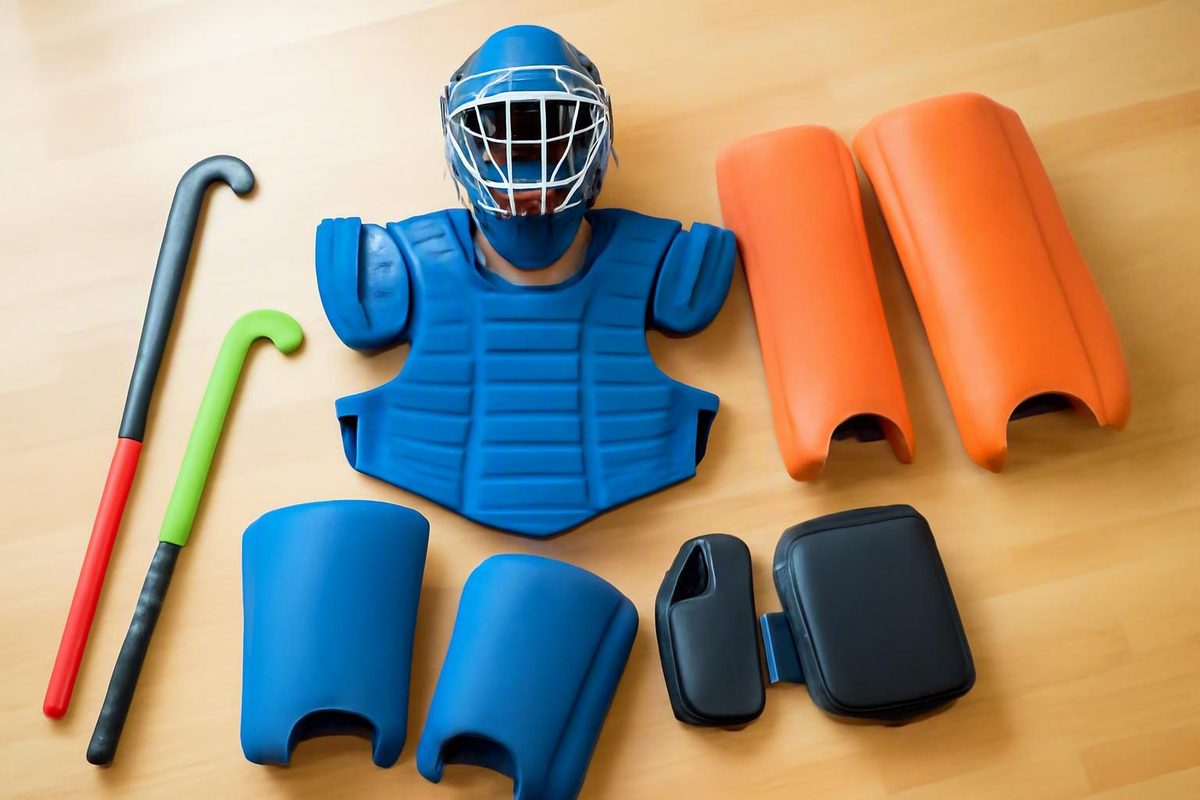
Build an itemized head-to-toe kit, check for obvious coverage or movement problems, and compare final costs only after accounting for missing pieces.
Buying field hockey goalie equipment is not as simple as choosing a “beginner” package in the right color. A goalkeeper needs protection across several connected areas, and a package name does not establish what is included, whether every component fits, or whether the equipment satisfies the rules for a particular competition.
This guide is a preliminary parent checklist and retail-price snapshot—not a certification, compatibility assessment, or technical fitting manual. Start by obtaining the current rules from your child’s program. Then build an itemized head-to-toe kit, check the assembled equipment for obvious coverage or movement problems, and compare final costs only after accounting for missing pieces.
Field hockey goalie equipment checklist at a glance
This is a general goalkeeper checklist, not a universal rule list. Ask the program to confirm the current rules before buying equipment or accepting a club-supplied kit.
Head, face, mouth, and neck
- Helmet with a cage or mask that fully covers the face
- Mouthguard
- Throat protector
Upper body
- Chest and shoulder protection
- Arm protection
- Elbow protection
Some upper-body products connect these areas in one assembly. Whether the pieces are combined or separate, all intended areas should remain covered when the goalkeeper moves.
Hands
- Correctly sized right-hand protector
- Correctly sized left-hand protector
Confirm that a package includes both sides and that each protector is appropriately sized for the player.
Pelvis, hips, and upper legs
- Padded goalkeeper pants or a goalkeeper girdle
- Pelvic protector
Treat them as distinct checklist entries unless the manufacturer’s documentation clearly identifies the product’s construction and intended coverage.
Lower legs and feet
- Goalkeeper leg guards covering the lower legs
- Foam kickers
- Suitable playing footwear worn under the kickers
Fit the kickers over the footwear the goalkeeper will use in practices and games.
Playing equipment
- Goalkeeper stick
The stick is part of the playing setup, but it does not replace any protective component.
Convenience items and accessories
These products may be useful, but their presence in a goalkeeper catalog does not make them protective requirements:
- Goalkeeper jersey
- Equipment bag
- Spare straps or accessories
- Water bottle
- Cleaning or drying supplies
Nemours KidsHealth identifies goalkeeper protection for the head, mouth, throat, torso, arms, elbows, hands, pelvis, lower legs, and feet. It says the helmet should have a cage or mask fully covering the face and that correctly sized equipment should stay in place, provide adequate coverage, and permit movement. It describes mouthguards and throat protectors as usually required, rather than universally required in every competition. Review the medically reviewed KidsHealth field hockey safety guidance.
Priority rule: Never let color, a discount, or a retailer-defined performance tier take precedence over required protection, correct coverage, and fit.
What each piece protects—and why the complete system matters
Each component addresses a particular area, but parents also need to consider where adjoining pieces meet.
This does not mean every component must come from the same brand. It means the actual assembled combination needs to be assessed rather than presumed compatible from brand names or size labels.
The following checks can reveal reasons to stop and seek help. They do not prove that equipment is safe, compliant, correctly fitted, or compatible.
Helmet and full-face protection
The helmet addresses the head, while its cage or mask provides full-face coverage. Do not assume that shell material, price, brand, or model name proves a particular level of impact performance. The supplied evidence does not establish model-by-model protection or certification.
For a limited visual and movement check, look for:
- Stable helmet positioning
- Full facial coverage from the cage or mask
- Unobstructed vision
- Attachments that can be fastened as directed
- No obvious interference with separate throat protection
Do not invent a clearance measurement or pass-fail tolerance. Follow the instructions for the exact product. If the helmet shifts, blocks vision, has uncertain attachments, has been modified, or raises condition concerns, stop and consult the manufacturer, program equipment manager, or another qualified equipment professional.
Mouthguard and throat protector
A full-face cage does not make the mouthguard irrelevant, and torso protection should not automatically be treated as throat protection. Keep the mouthguard and throat protector as separate checklist entries unless the applicable rules and product documentation establish otherwise.
The exact requirements must come from the current competition rules. General safety guidance can identify commonly used protection, but it cannot determine what a particular league mandates.
Chest, shoulders, arms, and elbows
Chest and shoulder protection, arm guards, and elbow protection form the upper-body system. These areas may be covered by a connected assembly or by separate products.
Have the player assume a normal ready stance and move the arms. Observe whether the intended areas remain covered as the player reaches, rotates, raises the arms, and holds the stick. Watch for one component pulling another out of position.
This is only a check for obvious problems.
Right- and left-hand protectors
Both hands need appropriately sized goalkeeper protectors. The right- and left-hand pieces serve different hands and should not be treated as interchangeable gloves.
Check the protectors with the goalkeeper stick. Confirm that the player can:
- Hold the stick in the intended position
- Move each hand without obvious slipping
- Keep the intended protective surfaces positioned around the hands
- Move without clear interference from arm or elbow protection
Do not infer shot performance from a protector’s shape or from labels such as “elite,” “high rebound,” or “high control.” Those terms do not establish tested performance in the supplied evidence.
Padded pants or girdle and pelvic protection
Padded goalkeeper pants or a girdle address parts of the hips and upper legs.
When the player wears these components with upper-body protection, inspect the waist area while upright, crouched, and reaching. Look for an obvious uncovered space or a piece that pulls adjoining equipment away from its intended position.
A package listing “goalkeeper pants” should not be presumed to include separate pelvic protection. Ask the seller to identify exactly what is included.
Leg guards and foam kickers
Leg guards cover the lower legs, while foam kickers fit over the playing footwear and address the feet.
Check the components together over the actual shoes or cleats the player will wear. Ask the player to take a ready stance, step, shuffle, and recover. Look for obvious slipping, separation, instability, or movement restriction.
Pay particular attention to the junction between the leg guards and kickers.
Goalkeeper stick
Its inclusion in a package does not compensate for a missing hand protector, throat protector, pelvic protector, or other protective item.
Test the stick with both hand protectors in place. The player should be able to hold and move it without the hand, arm, or elbow equipment creating an obvious obstruction.
Inspecting the system’s junctions
Focus on three important junctions:
- Helmet to throat protection: Look for interference, displacement, blocked vision, or an obvious uncovered area.
- Torso protection to pants or girdle: Observe coverage while the player is upright, crouched, reaching, and rotating.
- Leg guards to kickers: Fit both over the playing footwear and look for shifting, separation, or restricted movement.
These observations identify concerns; they do not validate a mixed-brand combination. Refer unresolved compatibility, attachment, modification, or condition questions to the manufacturer, program authority, or a qualified equipment professional.
Required, usually required, or simply sold: how to read the checklist
Three different ideas can become blurred when families shop for goalkeeper equipment:
- An item may be mandatory under the applicable rules.
- An item may be generally recommended as part of a protective setup.
- An item may simply be sold in a goalkeeper catalog.
Those categories are not interchangeable.
KidsHealth says helmets are required for all goalkeepers and should include a cage or mask fully covering the face. It describes mouthguards and throat protectors as usually required. It also supports the general fit principle that appropriately sized equipment should stay positioned, provide adequate coverage, and permit movement. Those statements are a starting point, not the rulebook for a particular competition. See the KidsHealth goalkeeper equipment and safety guidance.
A retailer’s decision to carry a product does not establish that the item is mandatory, compliant with a particular rule set, independently tested, or appropriate for your child. Retail catalogs also contain sticks, jerseys, bags, replacement parts, and accessories. Availability is commercial information, not a competition rule.
Where to obtain the applicable requirements
Ask for the current rules used by the child’s:
- League
- School or school athletic association
- Club
- Tournament
- National governing body, where applicable
Do not rely only on what another family purchased last season. Ask the program to identify any required approval, certification, or equipment marking and to explain who verifies it. No particular certification can be prescribed from the supplied evidence.
Also distinguish rules for a fully equipped goalkeeper from rules for ordinary field players or defenders. Do not import field-player mask, glove, shin-guard, or footwear guidance into the goalkeeper checklist without confirming the relevant goalkeeper rule.
Questions to ask the program
- Which goalkeeper items are mandatory under your current rules?
- Does the school or club supply a complete kit, selected components, or nothing?
- Must the player provide a personal helmet or mouthguard?
- Are particular models, approvals, certifications, or markings required?
- Are any models or designs prohibited?
- Who confirms compliance before practice or competition?
- Can the player try the supplied equipment before the family buys anything?
- What happens if the supplied equipment does not fit?
Terms such as youth, junior, mini, entry level, beginner, performance, advanced, and elite are catalog classifications.
Fit comes before age labels and performance tiers
The supported general principle is straightforward: correctly sized goalkeeper equipment should stay in place, provide adequate coverage, and permit movement. The checks below are intended to identify obvious reasons to stop. They are not technical fitting instructions or proof of safety.
Labels such as “Youth,” “junior,” “mini,” “XS,” and “age 14+” do not have a demonstrated universal meaning across manufacturers. Use the current sizing information for the exact manufacturer and model, then assess the individual player in the assembled equipment.
The evidence does not support a universal sizing formula based only on age, height, chest circumference, or another single measurement. If a seller or coach provides a measurement rule, compare it with the current documentation for that specific product.
Helmet fit checks
With the helmet fastened according to its instructions, look for:
- Stable positioning
- Full facial coverage from the cage or mask
- Unobstructed vision
- No obvious shifting during ordinary goalkeeper movement
- No obvious interference with the throat protector
Do not create an unsupported clearance measurement or tolerance. Refer uncertainty about adjustment, attachments, condition, modification, or sizing to the manufacturer or an appropriate equipment professional.
Upper-body fit checks
Have the player wear the complete upper-body assembly and adopt a normal goalkeeper ready stance. Ask the player to move the arms through ordinary reaching and stick-holding positions.
Look for:
- Chest and shoulder areas remaining covered
- Arm and elbow pieces staying positioned
- The assembly riding up and creating an obvious gap
- Inability to hold or move the stick
- Connected sections pulling other pieces out of place
These observations do not replace the instructions for the product.
Hand-protector fit checks
Fit the right- and left-hand protectors together with the arm protection and goalkeeper stick. Confirm that the player can hold the stick and move each hand while the intended protective surfaces remain positioned.
Check that the package contains the correct side-specific pair. Obvious slipping, unstable positioning, or inability to use the stick is a reason to stop and reassess the size or setup.
Pants, girdle, and pelvic protection
The pants or girdle and pelvic protector should remain secure during a ready stance and ordinary movement. Inspect their junctions with both the upper-body protector and leg guards.
Stop and seek fitting guidance if you observe:
- An obvious waist gap
- A component sliding or rotating
- Attachments that cannot be secured as directed
- Bulk that clearly prevents ordinary movement
- One component pushing another away from its intended position
Being able to put a component on is not, by itself, evidence that it fits.
Leg guards, kickers, and footwear
Fit the leg guards and kickers with the footwear that will be used in play. Changing the shoe can change how the kicker sits and where its attachments align.
Ask the player to crouch, step, shuffle, and return to a ready stance. If a leg guard twists, a kicker separates, an attachment will not remain secured, or movement is clearly obstructed, stop and reassess the size and combination.
When to seek fitting help
Use current sizing instructions for the exact manufacturer and model. Where possible, involve a knowledgeable in-person fitter or the program’s equipment manager, particularly when:
- The player falls between listed sizes.
- Components come from different ranges or manufacturers.
- The complete assembly cannot be tried before purchase.
- Equipment slips during ordinary movement.
- An intended area remains exposed.
- The helmet or cage blocks vision.
- Attachments appear unstable or cannot be secured.
- Movement is clearly restricted.
- One component displaces another.
- The player cannot hold or move the stick normally.
- Current manufacturer sizing information cannot be identified.
A successful visual check does not prove impact protection, compliance, compatibility, or overall safety. It only helps identify visible reasons not to proceed.
Complete goalkeeper set or separate components?
Retailers sell broad goalkeeper packages, paired leg-guard-and-kicker sets, and individual components. Words such as bundle, package, beginner set, and complete set do not establish that every checklist item is included.
Retail catalogs show packages alongside separately sold helmets, leg guards, kickers, chest protection, hand protectors, and sticks. They may also classify products by size, brand, and playing level, leaving several variables behind one package label. See an example of a mixed bundle-and-component goalkeeper catalog.
Before comparing prices, complete an itemized table for every package:
| Component | Included? | Exact model | Exact size | Still needs verification? |
|---|---|---|---|---|
| Helmet with full-face cage or mask | ||||
| Mouthguard | ||||
| Throat protector | ||||
| Chest and shoulder protection | ||||
| Arm and elbow protection | ||||
| Right-hand protector | ||||
| Left-hand protector | ||||
| Padded pants or girdle | ||||
| Pelvic protector | ||||
| Leg guards | ||||
| Kickers | ||||
| Goalkeeper stick | ||||
| Playing footwear | ||||
| Goalkeeper jersey | ||||
| Equipment bag |
An empty cell means the package has not been verified. Do not fill it from a photograph alone.
Advantages and limits of a set
A set may simplify the initial purchase by reducing the number of separate products a parent must locate. It may also group several components from one range.
A set can still leave important questions unanswered:
- Is every component available in the size this player needs?
- Are the mouthguard and throat protector included?
- Are pants and pelvic protection both present?
- Does “hand protection” mean both side-specific pieces?
- Is a helmet included?
- Is the pictured stick part of the package?
- Are all components tied to one package-wide size?
- Which checklist items remain missing?
Suitability depends on the exact contents, applicable rules, individual fit, and final cost.
Advantages and limits of separate components
Buying separately lets a family select different sizes for different body areas, replace one missing item, or retain an existing component that remains appropriate under the current rules.
The trade-off is a more involved comparison. Parents must inspect adjoining coverage, attachment security, and movement for the assembled combination. The evidence does not establish that any particular cross-brand pairing is compatible.
The middle option: leg guards and kickers together
Some retailers sell paired leg-guard-and-kicker sets alongside individual guards, kickers, helmets, pants, body protection, and hand protectors. In one supplied catalog snapshot, paired OBO leg-guard-and-kicker listings appeared at $859 and $914, illustrating this intermediate buying option. View the retailer’s paired and individual OBO listings.
A paired set may simplify one adjoining part of the kit. It does not determine what the goalkeeper needs elsewhere.
Compare final costs, not headline prices
For each package:
- Record every included item.
- Record the exact model and size.
- Mark missing protective components.
- Add the current cost of those missing items.
- Add shipping and applicable taxes.
- Identify package pieces that would need to be replaced because of sizing.
- Compare return, exchange, and restocking terms.
Stock and package contents can differ among retailers. Do not treat similarly named sets as equivalent until both have been itemized.
What families may pay for a goalkeeper setup
Goalkeeper equipment can be a substantial expense, but the supplied evidence does not support a universal total. Final cost depends on the required contents, player size, package composition, inventory, shipping, taxes, and what the school or club supplies.
Price-date limitation: The evidence pack did not provide a reliable observation or access date for its retailer snapshots. Every amount below is therefore an undated, time-sensitive example—not a current quote, permanent market range, endorsement, or prediction. Recheck the live listing immediately before purchase.
Examples of beginner and mini sets
Visible beginner or mini set listings in the supplied snapshots were approximately $355 to $550:
- Mercian Genesis 0.3 Mini Set: $354.95
- Grays G100 Beginner Set: $359.99
- TK4 Entry Level Set: $549.99
The Mercian figure appeared in a Savage Field Hockey catalog that also displayed separate helmets, upper-body protection, pants or girdles, arm guards, throat guards, and jerseys. Several package listings were marked sold out, demonstrating why a displayed price does not establish current availability. See the Savage Field Hockey snapshot supporting the $354.95 Mercian example.
The Grays and TK figures appeared in Anthem Sports’ retailer catalog. That listing did not establish complete package contents or suitability for a particular player. Review the Anthem Sports snapshot supporting the $359.99 and $549.99 examples.
Examples of higher-priced sets
Selected higher-priced listings reached approximately $1,150 to $1,890:
- Mercian Evolution Elite Set: $1,149.50 in the Savage Field Hockey snapshot
- OBO Cloud Set: $1,889.95 in the Anthem Sports snapshot
Those prices do not prove better protection, fit, durability, or value. “Elite” and “Cloud” also do not establish what each package contains.
Product names can be especially misleading in price comparisons. Longstreth displayed an OBO Cloud Goalie Bundle at $1,095, while Anthem Sports displayed an OBO Cloud Set at $1,889.95. The supplied evidence does not establish that the two packages had identical contents. See the Longstreth catalog listing supporting the $1,095 example.
Examples of individual-component prices
The supplied retailer snapshots included the following time-sensitive category examples:
| Category | Example visible price span | Retailer evidence |
|---|---|---|
| Helmets | Approximately $149.99 to $583 | Anthem Sports listed a TK3 Junior U12 helmet at $149.99; Just Field Hockey listed selected OBO helmets at $583 |
| Leg guards | Approximately $259.99 to $664.99 | Anthem Sports listed TK3 leg guards at $259.99; Longstreth listed OBO Robo Plus leg guards at $664.99 |
| Kickers | Approximately $390 to $434.99 | Just Field Hockey listed OBO kickers at $390 and $401; Longstreth listed OBO Robo Plus kickers at $434.99 |
| Throat protectors | Approximately $22.95 to $122.95 | Savage Field Hockey listed a $22.95 example; Anthem Sports listed an OBO GTP at $122.95 |
| Upper-body products | Approximately $109.99 to $446.95 | Anthem Sports catalog examples |
| Hand-protector set | $382 | Just Field Hockey listed an OBO hand-protector set at $382 |
The $583 helmet, $390 kicker, and $382 hand-protector examples came from the same OBO-focused retailer collection and remain subject to changes in price, availability, and terms. Review the applicable Just Field Hockey component listings.
The $149.99 helmet, $259.99 leg guards, $122.95 throat protector, and approximately $109.99-to-$446.95 upper-body examples came from Anthem Sports’ catalog snapshot. The $664.99 leg guards and $434.99 kickers appeared in Longstreth’s collection, while Savage Field Hockey supplied the $22.95 throat-guard example.
A component-built kit can therefore involve several pieces costing hundreds of dollars each. That does not justify calculating a universal total from these examples. Families may need different components or sizes and may face different shipping, taxes, stock limitations, or program contributions.
Costs parents commonly overlook
Before checkout, confirm:
- Missing protective components
- Whether sizes can be changed component by component
- Live stock status
- Shipping costs, conditions, and restrictions
- Applicable taxes
- Return and exchange terms
- Whether trying equipment affects return eligibility
- Current model status
- Required markings or approvals
- Warranty terms
- Availability and cost of replacement parts
A sale badge, top-seller label, free-shipping message, sparse review score, or high price does not establish safety, quality, suitability, or value.
How to evaluate brands, levels, and product labels without getting misled
The supplied retailer catalogs include OBO, TK, Grays, Gryphon, Mercian, and Osaka products. Their presence shows retailer assortment; it does not provide a basis for ranking the brands.
Retailers use labels such as:
- Youth
- Junior
- Mini
- Beginner
- Entry level
- Intermediate
- Advanced
- Performance
- Elite
- Serious player
- High rebound
- High control
These labels may help organize a catalog, but the supplied evidence does not establish standardized suitability criteria behind them.
Treat playing-level labels as questions, not answers
One retailer positions the OBO Robo, Cloud, Yahoo, and Ogo ranges for different experience levels, with several ranges marketed for players age 14 and older. These are seller classifications, not independently verified rules for matching equipment to a goalkeeper. See how the retailer organizes the OBO ranges and equipment categories.
When a product is described as beginner, performance, or elite, ask:
- What dimensions change?
- What materials change?
- Does the weight change?
- Does the manufacturer document a difference in ball response?
- Which parts are replaceable?
- Are replacement parts currently available?
- Does the product meet the applicable rules?
- Does the exact size fit this player?
- Is the claimed difference documented beyond promotional copy?
The evidence provides no standardized or independently tested definition of high rebound or high control. Treat those terms as prompts for further questions, not as proof of predictable performance.
Ratings and badges are weak decision tools
Sparse retailer ratings cannot support a best-brand or best-model conclusion. A product with no reviews is not necessarily poor, while one or two positive reviews do not amount to a meaningful comparative evaluation.
Promotional badges have similar limits:
- “Top seller” describes sales positioning, not fit.
- “Trusted” is promotional unless supported by defined evidence.
- “Elite” is not a certification.
- “Free shipping” affects cost, not protection.
- A discount does not establish value.
- A high price does not establish quality.
Use each detail only for its narrow purpose. Shipping belongs in the final-cost calculation; it does not validate the equipment.
Discontinued products require additional verification
Some supplied retailer listings described particular helmet models as being discontinued. A discontinued label does not establish that a helmet is unsafe. It also does not establish current compliance, support, or suitability.
Before considering such a product, ask the manufacturer, program authority, or qualified equipment professional to verify:
- Current compliance with the applicable rules
- The individual item’s condition
- Warranty status
- Availability of compatible replacement parts
- Support for cages, straps, or other necessary components
- Whether the model has been modified
- Whether current manufacturer information remains available
A visual inspection by a parent cannot rule out all relevant problems. If condition, support, modification, or compliance remains uncertain, do not treat a lower price as sufficient reason to proceed.
Keep the decision centered on the player
A useful comparison begins with these questions:
- What does the current rule set require?
- Which areas need protection?
- Which exact sizes fit this player?
- Does the assembled equipment remain secure and permit movement?
- What does each package actually include?
- What is the final cost after missing pieces?
- Can unsuitable sizes be returned or exchanged?
Color may matter to a child, and price matters to families. Neither should override required coverage, fit, or competition rules. The supplied evidence does not justify an affiliate-style product pick or ranked brand list.
A parent’s before-you-buy decision process
A repeatable verification process is more dependable than beginning with a favorite brand or searching for a “complete set.”
Step 1: Obtain the current requirements
Ask the league, school, club, tournament organizer, or applicable governing body for its current goalkeeper-equipment rules. Request the exact rule document or written policy when possible.
Confirm that the requirements apply to a fully equipped goalkeeper rather than to field players or temporary defenders.
Step 2: Find out what the program supplies
Ask whether the school or club provides:
- A broad goalkeeper kit
- Leg guards and kickers
- A helmet
- Upper-body protection
- Hand protection
- A goalkeeper stick
- A bag or jersey
- No personal items, such as a mouthguard
Ask whether your child can try the supplied equipment before the family buys anything. Club equipment is useful only if the required pieces are present, appropriately sized, and permitted under the applicable rules.
Step 3: Audit the kit from head to toe
Mark each checklist component as:
- Supplied by the program
- Included in the proposed package
- Already owned
- Missing
- Incorrectly sized
- Awaiting rule verification
Do not treat the kit as complete while a protective checklist line remains unresolved.
Step 4: Record exact product information
For every component, record:
- Manufacturer
- Product range
- Exact model
- Exact size
- Current model status
- Any required marking
- Who owns it
- Whether it has been fit-checked
A package-wide “junior beginner” label is not enough.
Step 5: Compare bundles with separate purchases
Itemize every bundle and add the cost of missing pieces. Compare that final amount with the cost of buying the necessary components separately.
Do not assume either route is inherently cheaper. A lower-priced package may omit costly items, while separate purchases may add shipping charges. A broad package may also include a component that must be replaced because its fixed size does not suit the player.
Step 6: Verify sizing and movement
Use the current manufacturer information for every exact model. With the equipment assembled, look for obvious problems involving:
- Security and positioning
- Intended coverage
- Vision
- Stick use
- Ordinary goalkeeper movement
- Gaps at adjoining sections
These checks do not prove safe fit or compatibility. Refer uncertainties to the manufacturer, program equipment manager, or an appropriately qualified fitter.
Step 7: Inspect mixed combinations
When components come from different brands, ranges, or packages, do not presume compatibility. Inspect:
- Helmet-to-throat-protector positioning
- Torso-to-pants coverage
- Pants-to-leg-guard coverage
- Leg-guard-to-kicker positioning
- Hand-protector-to-stick use
- Straps and other attachment points
The issue is not whether mixed-brand kits are universally good or bad. It is whether this actual combination presents an obvious gap, instability, interference, or movement problem—and whether the relevant manufacturer or program authority can resolve any uncertainty.
Step 8: Complete the checkout checks
Before paying, confirm:
- Live price
- Live stock
- Exact package contents
- Exact component sizes
- Shipping cost and timing
- Return and exchange terms
- Restocking charges
- Current model status
- Required markings or approvals
- Warranty terms
- Replacement-part availability
- Who will answer product questions after purchase
Save the product description, size information, and itemized order because retailer listings can change.
Stop and check before proceeding if:
- The seller cannot explain what the package contains.
- No suitable size is available for one or more components.
- The assembled kit leaves a visible coverage gap.
- The helmet or another component blocks vision.
- Equipment slips or attachments cannot be secured.
- Ordinary movement is clearly restricted.
- Rule compliance remains uncertain.
- The program cannot identify who approves equipment before play.
- Condition, modification, or compatibility concerns remain unresolved.
- The seller cannot answer basic questions about model, size, contents, or returns.
The goal is a verified, itemized kit—not simply a box labeled beginner or complete. Protective equipment does not make participation risk-free. It complements proper technique, safe training, hydration, field inspection, and appropriate injury evaluation.
Frequently asked questions
What equipment does a beginner field hockey goalie need?
A general beginner checklist includes a helmet with a full-face cage or mask, mouthguard, throat protector, chest and shoulder protection, arm and elbow protection, right- and left-hand protectors, padded goalkeeper pants or a girdle, pelvic protection, lower-leg guards, foam kickers worn over suitable footwear, and a goalkeeper stick.
This is not a universal rule list. Confirm the current requirements with the player’s league, school, club, tournament, or governing body, and distinguish protective equipment from convenience items such as a jersey or bag.
How much does a full set of field hockey goalie equipment cost?
In the undated retailer snapshots supplied for this guide, selected beginner or mini sets appeared at approximately $355 to $550, while selected higher-priced sets appeared at approximately $1,150 to $1,890. These figures are illustrative, time-sensitive retailer reports—not a current or permanent market range.
The actual total depends on package contents, required equipment, component sizes, live inventory, taxes, shipping, and what the program supplies. Compare itemized final costs rather than package prices alone.
Does a complete goalkeeper set include every required item?
Not necessarily. “Complete,” “bundle,” “package,” and “beginner set” are product labels, not guarantees that every required item is present.
Check the listing for the helmet, mouthguard, throat protector, upper-body protection, both hand protectors, pants or girdle, pelvic protector, leg guards, kickers, stick, and footwear. If the contents are unclear, ask the seller for an itemized answer before ordering.
How should youth goalkeeper equipment fit?
Use the current manufacturer information for each exact model. As a general principle, the equipment should stay positioned, cover the intended areas, and permit movement.
Check for obvious slipping, exposed areas, blocked vision, unstable attachments, interference between adjoining pieces, or inability to use the stick normally. Fit leg guards and kickers over the actual playing footwear. These observations can reveal reasons to stop, but they do not replace product-specific instructions or qualified fitting assistance.
Which field hockey goalie equipment brand is best?
The supplied evidence does not establish a best brand. OBO, TK, Grays, Gryphon, Mercian, and Osaka appear in retailer catalogs, but assortment, prices, reviews, and promotional labels do not provide an independent comparison of protection or suitability.
Focus on the exact model and size that satisfy the applicable rules, fit the individual player, cover the intended area, remain secure, permit movement, work with adjoining equipment, and have acceptable return and replacement-part support.